Feeds:
Posts
Comments

Archive for the ‘Offshore Wind’ Category

This confirms the second-hand information previously posted. The discussions and debate during the wind program review should be lively!

Read Full Post »

The U.S. Supreme Court has declined to hear the challenge of the Vineyard Wind project brought by the Nantucket-based nonprofit ACK For Whales. This is not surprising given that the odds of the SCOTUS hearing the case were extremely low, tantamount to the completion of a “Hail Mary” pass.

Perhaps Nantucket should have added Jayden Daniels to their team! 😉

Although the SCOTUS declined to hear their challenge, the Nantucket group may still achieve their objective, at least in part, given the looming changes in Federal policy and the financial and operational challenges facing the offshore wind industry.

Read Full Post »

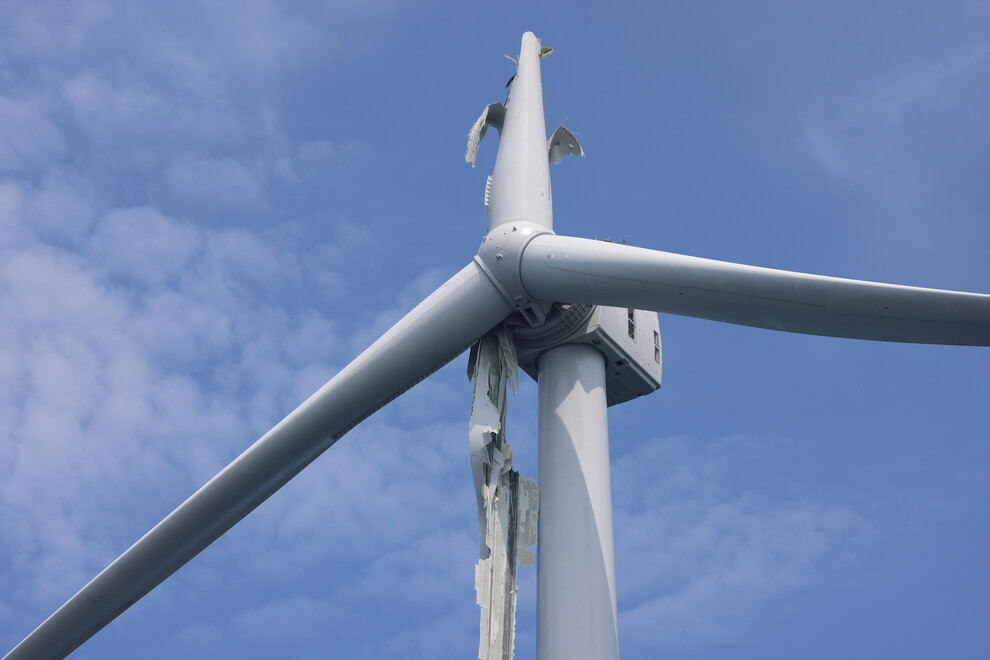
Given the absence of industry and government data on wind turbine incidents, Scotland Against Spin (SAS) has done yeoman’s work in filling the void. SAS gathers information from press reports and official releases. A PDF of the latest SAS update summary (through 2024) is attached. You can view their complete incident compilation (324 pages) here. Kudos to SAS for their diligence.

Be sure to see the introductory text at the top of the attached table. Some key points:

  • The table includes all documented cases of wind turbine incidents which could be found and confirmed through press reports or official information releases.
  • SAS believes that this compendium of accident information may be the most comprehensive available anywhere.
  • SAS believes their table is only the “tip of the iceberg” in terms of numbers of accidents and their frequency:
    • On 11 March 2011 the Daily Telegraph reported that RenewableUK confirmed that there had been 1500 wind turbine incidents in the UK alone in the previous 5 years.
    • In July 2019 EnergyVoice and the Press and Journal reported a total of 81 cases where workers had been injured on the UK’s windfarms since 2014. SAS data includes only 15 of these (<19%).
    • In February 2021, the industry publication Wind Power Engineering and Development admitted to 865 offshore accidents during 2019. SAS data include only 4 of these (<0.5%).
    • SAS includes other examples supporting their “tip of the iceberg” claim.

Although SAS is committed to reforming the Scottish government’s wind energy policy, their incident data summaries are credible. It’s disappointing that the wind industry is unwilling to publish comprehensive incident data that would help protect lives and the environment, and improve the performance of all participants.

Read Full Post »

The response by the Nantucket group’s attorneys is attached. Key excerpt:

NMFS absurdly argues that agency officials, in preparing a biological opinion for a project, must ignore information about impacts on endangered species from other offshore wind turbine projects that are planned and in various stages of development and governmental review. Perhaps even more bizarrely, NMFS contends that, in preparing a biological opinion for a project, it must consider the cumulative impacts of planned state and local projects but ignore the impacts of planned federal projects.

Background:

Read Full Post »

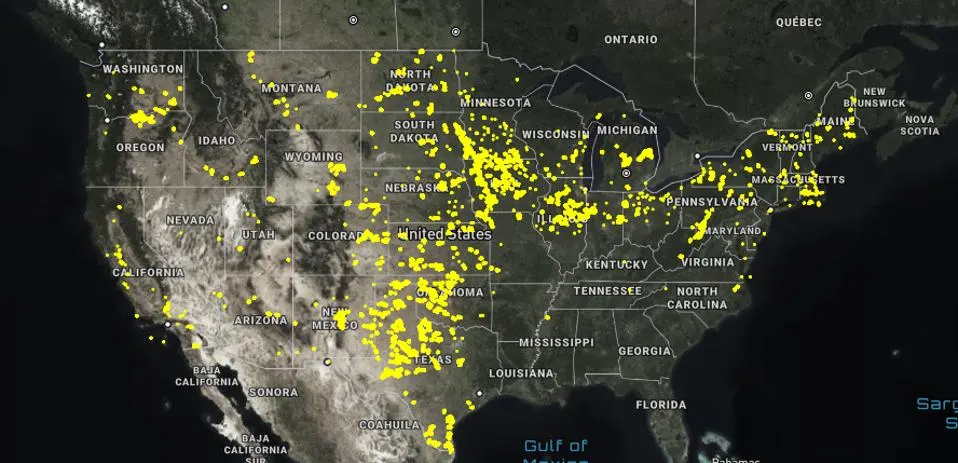
Forbes (USGS map of active wind turbines): “The U.S. Wind Turbine Database contains more than 74,695 wind turbines built since 1980, spread between 1,699 wind power projects in 45 states. However, thousands of wind turbines are reaching the end of their operational lifespan and need to be either repowered to make way for updated (often larger) turbines or entirely decommissioned to allow for new uses of the land they occupy. Unfortunately, there is no uniform legal framework to regulate the steps involved, nor is there an accepted industry-wide set of best practices, and the environmental costs are considerable.”

Forbes:As is often the case when new technologies come to market, unintended downstream consequences are not always immediately obvious to the players. Enthusiasm for clean energy initially pushed the first wind turbines into existence in the U.S. without considering the environmental and monetary costs that would be involved in either upgrading or bringing projects to a close later in their life cycle. “

Similarly, BOEM’s enthusiasm for offshore wind projects has increased decommissioning financial assurance risks for power customers and taxpayers. Their “Rule to Streamline and Modernize Offshore Renewable Energy Development” is intended to “make offshore renewable energy development more efficient, [and] save billions of dollars.” The savings associated with relaxed financial assurance requirements come at the expense of transferring decommissioning risks to those who have received little or no financial benefit from the projects.

Related story: “Osage Tribe Wins Again, Federal Judge Orders “Ejectment” Of 84 Wind Turbines By Next December”

Read Full Post »

From the Protect Our Coast – NJ Facebook page:

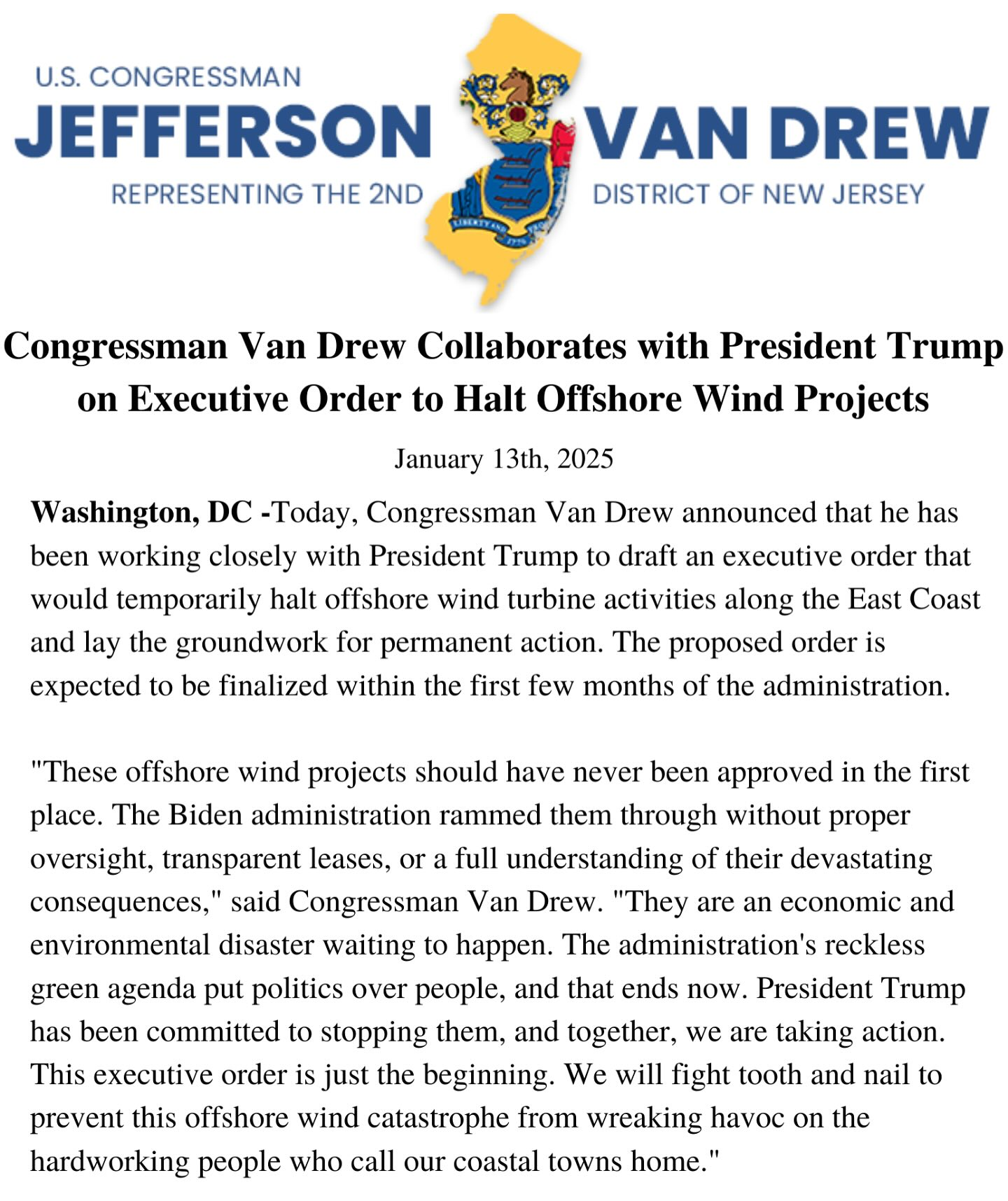
From the Protect Our Coast – NJ Facebook page: “During his interview with Radio Host Dom Giordano on Monday, December 23, NJ Congressman Jeff VanDrew (pictured), stated an executive order, to be signed by President Trump on January 20, 2025 will place a 6 months pause on further construction of Offshore Wind Turbines while our new administration reviews all aspects of these highly controversial structures in our ocean.

We’ll see what transpires, and if this post is accurate, await clarification and reactions.

Read Full Post »

The Dept. of Justice (DOJ) has responded (attached) to the ACK for Whales petition (ACK is the FAA abbreviation for Nantucket) to the Supreme Court to review the First Circuit’s ruling on the Vineyard Wind project. (Also see the amicus brief filed by the Aquinnah Wampanoag Tribe of Gay Head).

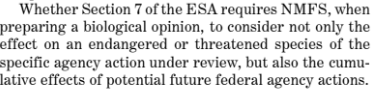
The question before the Supreme Court:

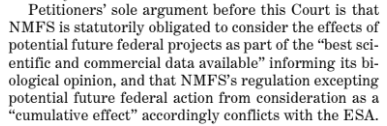
Excerpt from the DOJ filing:

The petitioners’ “sole argument” is rather compelling to this non-attorney. Given that multiple offshore wind projects are planned for Right whale habitat, how do you fulfill your endangered species responsibilities by only considering the first project (I.e. Vineyard Wind 1)?

(In light of Vineyard Wind’s performance to date, one could also argue that the Right whale is jeopardized by the Vineyard Wind project alone.)

Keep in mind that the Federal govt wanted to block all oil and gas leasing in a huge swath of the Gulf of Mexico because of far more speculative concerns about potential impacts to Rice’s whales.

Read Full Post »

Per a provision in the “Inflation Reduction Act,no offshore wind leases may be issued after 12/20/2024, the one year anniversary of the last oil and gas lease sale (no. 261).

Although the 4 leases receiving bids at the most recent wind sale (10/29/2024, Gulf of Maine) have presumably been issued, BOEM’s lease table does not reflect that. If those leases have not been issued, it’s too late now.

Assuming that the Gulf of Maine leases have in fact already been issued, the legislative restriction on issuing new leases should not be an issue. A qualifying oil and gas lease sale will likely be held in the Gulf of Mexico in the first half of 2025.

The bigger question is whether the new administration will hold any wind lease sales. Pre-election energy policy comments imply that new wind sales are unlikely.

Read Full Post »

W&T (lease and facility map above) claims that insurers have colluded to damage the company by jointly demanding additional collateral and premiums.

Comments on excerpts from the W&T press release follow:

At the heart of the dispute are rules from the federal Bureau of Ocean Energy Management – BOEM – which require energy producers in the Outer Continental Shelf to provide a bond to pay for well, platform, pipeline and facilities cleanup if the operating company fails to do so.”

Comment: Despite disagreeing with aspects of the BOEM financial assurance rule, this blog has defended the rule against unfair criticism. Better solutions are achievable, but that will require industry leaders from all factions to come to the table with a commitment to reach a balanced agreement that protects the public interest.

“These insurance companies and their unreasonable demands for increased collateral pose an existential threat to independent operators like W&T.”

Comment: If insuring offshore decommissioning is so risk-free and lucrative, why aren’t other companies entering the market?

Several states, including Texas, are challenging the BOEM rule and in one case they specifically cite W&T as an example of how the rule could be misused to irreparably harm energy producers.

Comment: As previously posted, the concerned States should propose alternative solutions that would promote production while also protecting taxpayer interests. Arguing that decommissioning financial risks are not a problem is neither accurate nor a solution.

“In over 70 years of producer operations in the Gulf of Mexico, the federal government has never been forced to pay for any abandonment cleanup operations associated with well, platform facility, or pipeline operations.”

Comment: Shamefully, from the standpoints of both the offshore industry and the Federal government, that statement is no longer true. The taxpayer has now funded decommissioning operations in the Matagorda Island Area offshore Texas (BSEE photo below) and more significant decommissioning liabilities loom.

Other thoughts:

Read Full Post »

From the Town of Nantucket:

The Town of Nantucket calls on you to help safeguard one of the nation’s most treasured National Historic Landmarks. We ask that you contact the Advisory Council on Historic Preservation (ACHP) and the Massachusetts State Historic Preservation Officer (SHPO) to urge them to decline signing the Section 106 Memorandum of Agreement (MOA) for SouthCoast Wind. Section 106 requires federal agencies to consider the effects on historic properties of projects they carry out, assist, fund, permit, license, or approve throughout the country, and to find ways to avoid, minimize, or mitigate adverse effects on those properties.

Meanwhile, Vineyard Wind turbine blade installation has resumed.

Vineyard Wind posts

Read Full Post »

« Newer Posts - Older Posts »