Feeds:
Posts
Comments

Archive for the ‘Uncategorized’ Category

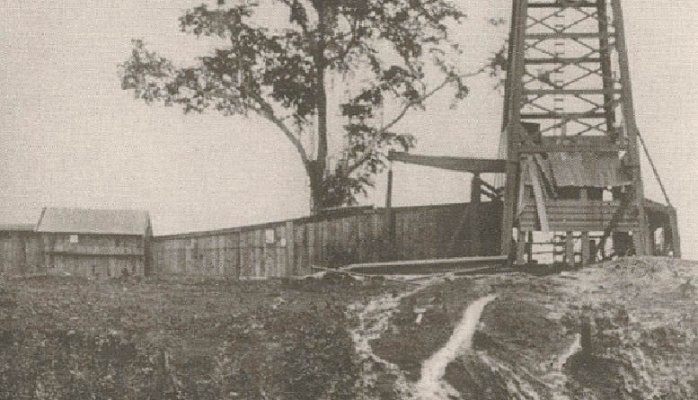
The record shows that the Merrimac Company, registered in 1857, made attempts to produce oil by distillation of pitch, but furthermore in the same year they drilled a well to a depth of about 280 feet, which was a much greater depth than Drake’s well in Pennsylvania – and two years earlier – and produced oil therefrom

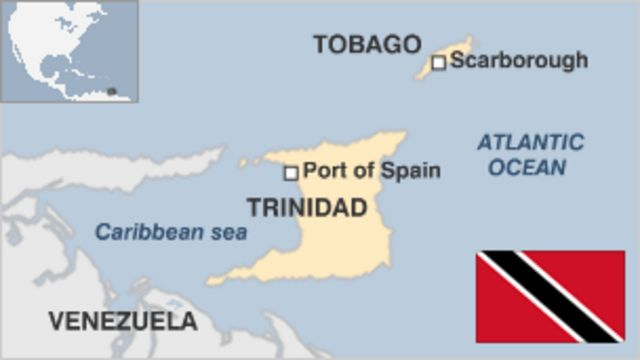
History of Trinidad’s Oil

Here is a list of historical facts for T&T’s petroleum industry.

Central bank of T&T data indicate dry natural gas production of 2.84 BCFD and crude oil production of 57,400 BOPD as of 9/2022.

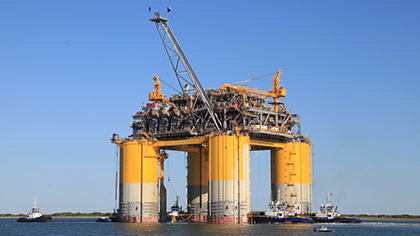
The Ministry of Energy and Energy Industries is currently mulling bids on 4 deepwater blocks contrary to an erroneous press report that those bids had been rejected.

Read Full Post »

I’m posting this link without comment.

Last June, the Navy divers, operating under the cover of a widely publicized mid-summer NATO exercise known as BALTOPS 22, planted the remotely triggered explosives that, three months later, destroyed three of the four Nord Stream pipelines, according to a source with direct knowledge of the operational planning.

Seymour Hersch

Read Full Post »

Read Full Post »

On January 20th, the offshore world lost a superstar when Gary Lore’s courageous battle with pancreatic cancer ended. Gary was the nation’s top expert on offshore oil and gas resources, an outstanding geologist, a natural leader, and a witty and supportive friend and colleague.

Gary grew up in Camden, NJ where he was an outstanding student and athlete at Woodrow Wilson high school. He joined the Dept. of the Interior’s offshore program after earning an M.S. in geology at Rensselaer Polytechnic Institute in 1974.  

During his 32 years with the US offshore program, Gary led resource evaluation units in the Pacific and Gulf of Mexico Regions, and was promoted to Chief of the Resource Evaluation Division at the Minerals Management Service headquarters office in Herndon, VA. A few of Gary’s many career highlights:

  • Authored numerous professional papers on US offshore oil and gas resources and exploration and evaluation models.
  • Advised congressional and cabinet officials on offshore resources and production potential.
  • Directed the use of the complex MONTE CARLO tract evaluation model and was among the few that actually understood it.
  • Participated on the prestigious US oil resources panel convened by DOE and the Univ. of Texas in 1992.
  • Contributed to many special energy assessments including Oil and Gas Technologies for the Arctic and Deepwater.
  • Led the pioneering OCS Connect “e-gov” project that automated governmental transactions with industry, improved timeliness and efficiency, and minimized redundant reporting.

Those of us who worked with him were most fortunate to have had that privilege. RIP Gary, you made a difference.

Gary with Bud and geologist-bagpiper Norm Weaver (This and the previous photo by Keith Good)
Gary and Janet at their wedding 49 years ago

Read Full Post »

“Former U.S. Rep. David Rivera, a well-connected Florida Republican, has been arrested on federal charges that include failing to register as a foreign agent. The case centers on Rivera’s signing of a $50 million contract with Venezuela’s government in early 2017, and his subsequent attempts to thaw Venezuela’s icy relationship with the U.S.”

NPR

Perhaps Mr Rivera’s conduct at a 2012 hearing on Cuban offshore drilling was a hint of things to come. Mr. Rivera inappropriately pressed BSEE, represented by Lars Herbst, to find ways to “bleed” Repsol should there be an incident while they were drilling in Cuban waters.

So, we need to figure out what we can do to inflict maximum pain, maximum punishment, to bleed Repsol of whatever resources they may have if there is a potential for a spill that will affect the U.S. coast. So, I hope you will look into that and verify that for us.”

Congressman David Rivera, 2012 Hearing on Cuban offshore drilling

Read Full Post »

A rare photo of a Big-Fin Squid, caught on camera on November 11th 2007 by a Shell Oil company ROV, at a depth of 2,386 meters (1.5 miles). This species of Squid dwell at extreme depths, and are characterised by their long, thin tentacles. They can reach almost 20ft long when fully grown.

Hasan Jasim

ROV video:

Of course, much of our knowledge about deepwater biology is attributable to oil and gas exploration and the associated environmental studies. This includes the discovery and study of chemosynthetic communities in the Gulf of Mexico:

Some of the same conditions responsible for petroleum deposits also provide the basis for biological communities that receive energy from chemicals through a process called chemosynthesis (in contrast to photosynthesis that provides energy to terrestrial and shallow-water communities through processes in which sunlight is the basic energy source).

NOAA
An aggregation of ice worms inhabiting methane hydrate. These worms eat chemoautotrophic bacteria using chemicals in the hydrate. Image courtesy of the NOAA Office of Ocean Exploration and Research, Gulf of Mexico 2012

Read Full Post »

I was a freshman at Penn State when MLK was assassinated, and I very clearly remember when a fellow resident of Shunk Hall came into my room and told me what happened. Dr. King had spoken at Penn State a few years earlier, shortly after receiving the Nobel Peace Prize, and was much admired at the university.

Dr. King’s passion, leadership, courage, and communication skills were extraordinary, and his commitment to non-violence set him apart. Truly a great man.

Read Full Post »

Konstantin Kisin

Read Full Post »

Read Full Post »

Perched on top of a tall slither of rock, six miles off the coast of Iceland, Þrídrangaviti Lighthouse is considered by many an introvert’s dream home and a wonderful placed to be in case of a zombie apocalypse.

Þrídrangaviti, which translates as “three rocks”, was built in 1939, soon before the start of World War 2. Nowadays, the lighthouse is accessible by helicopter and even features a small helipad to make landing there easier, but back in 1938, when work on it began, helicopters hadn’t yet been invented. Brave workers had to to scale the 120-foot-high rock to reach the pinnacle, where they laid the foundation of the lighthouse by hand, while ensuring that the strong winds and rain didn’t send them plunging into the freezing North Atlantic Ocean.

odditycentral.com

Read Full Post »

« Newer Posts - Older Posts »