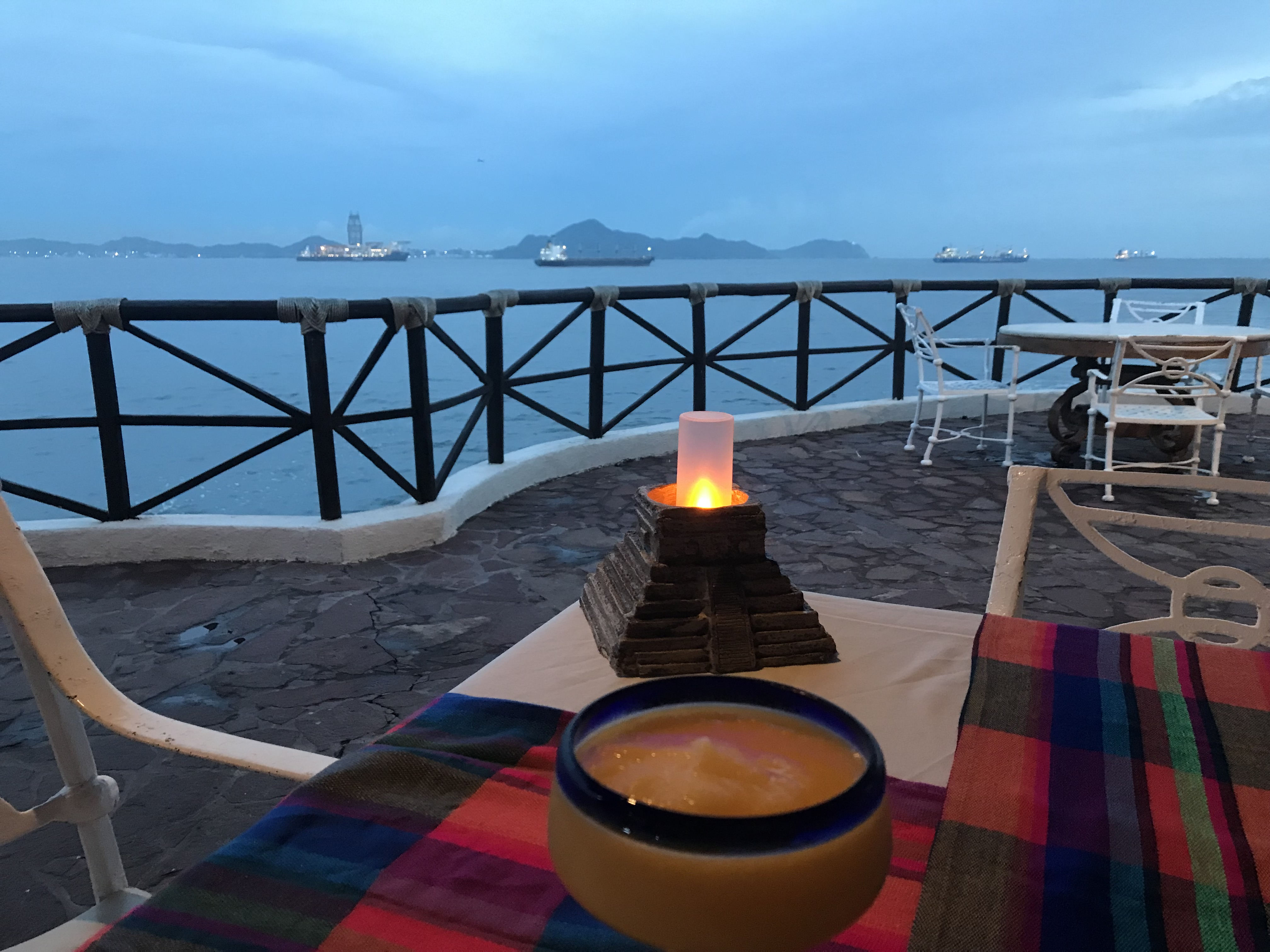
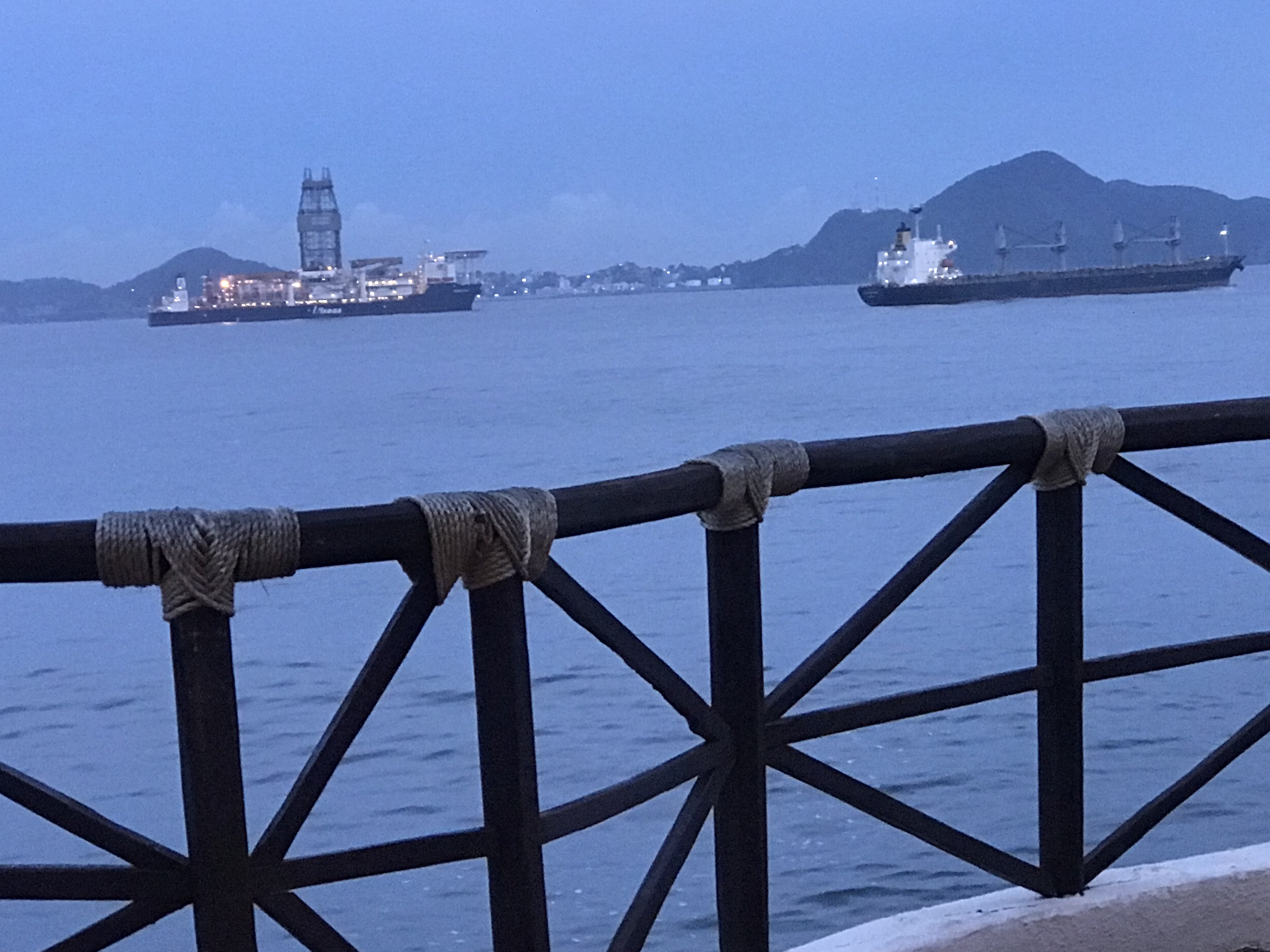
Per TMC’s latest update, the earliest that deepsea mining operations could be conducted is late 2025, so the vessel is likely to remain in Manzanillo for Andrew’s viewing pleasure. Nothing like a water view with a rig on the horizon. 😉
Andrew’s viewing location5X enlargement for a better look at the mining vessel.
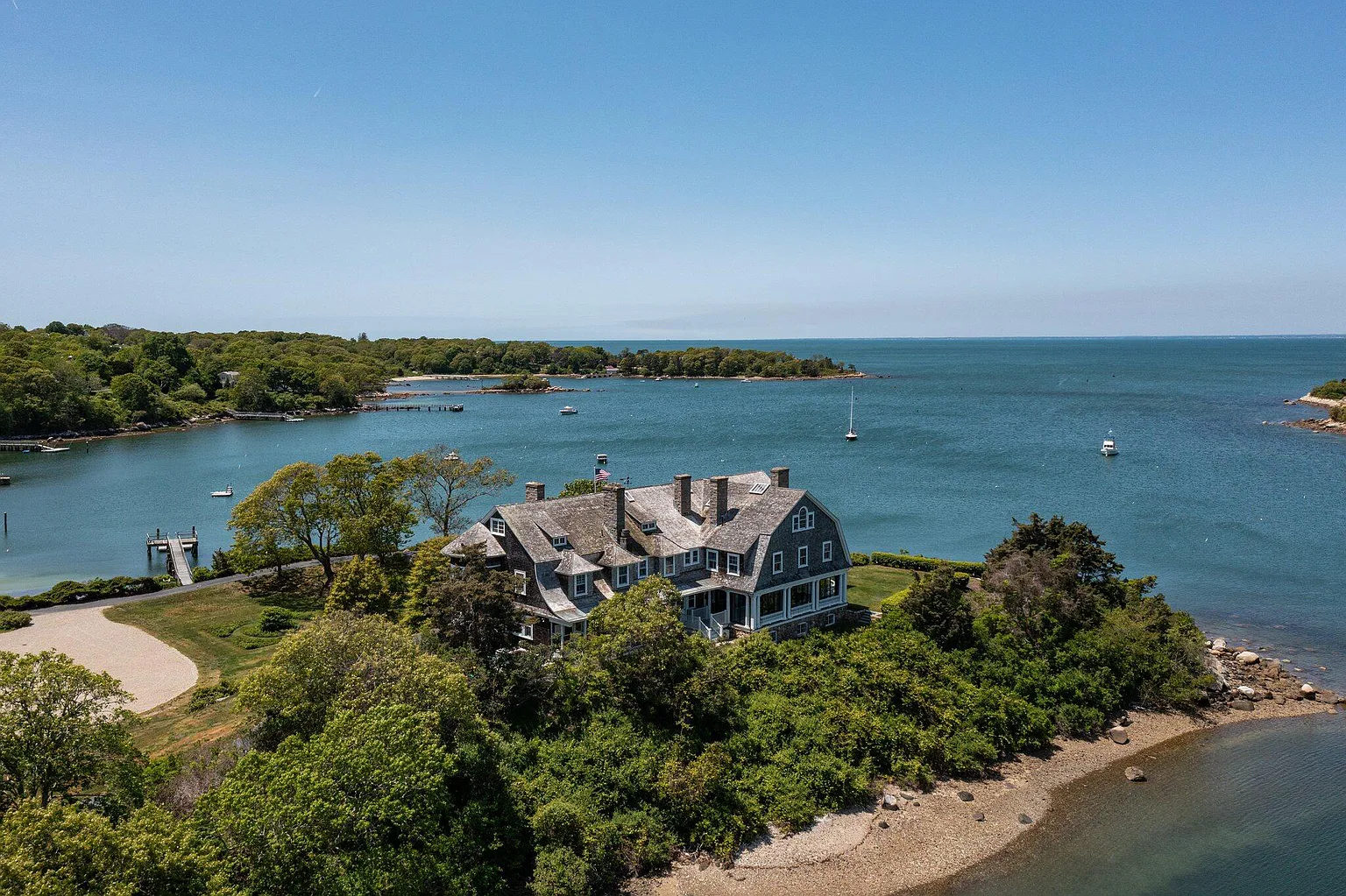
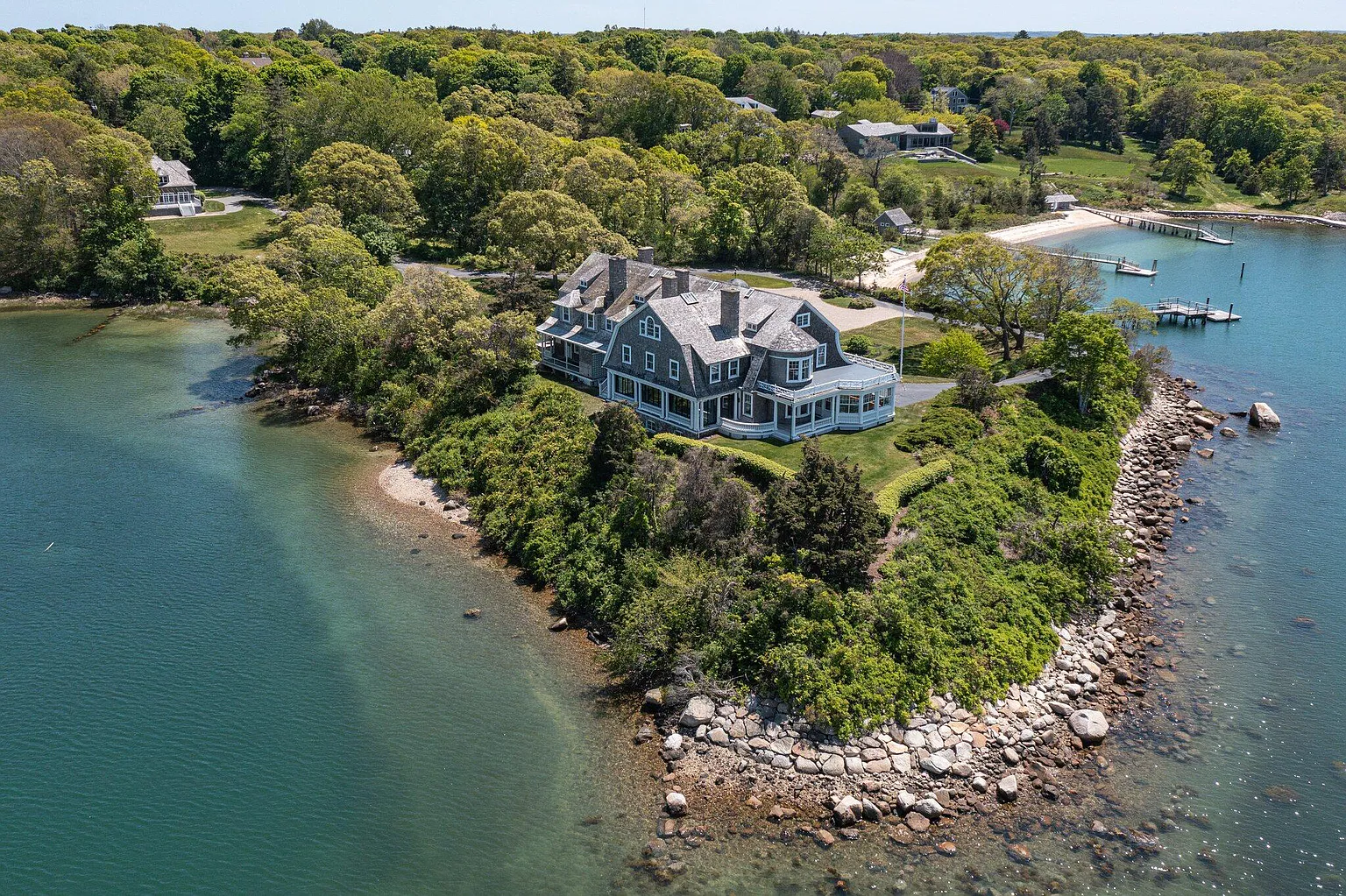
According to Zillow, the National Academies beloved Jonsson Center in Woods Hole was sold on Friday (8/4) for $13.5 million, less than half the original asking price. I have no idea who bought it and how it will be used. The Jonsson Center was an amazing venue for meetings and conferences. The beautiful estate served the marine science and policy communities well for decades.
Jean-Louis Daeschler, a pioneering offshore engineer, has shared this very interesting story about his interaction with George HW Bush (pictured):
One day I was driving in Kennebunkport and told my wife that I met the man who lived in that house on the coastal road – the President George HW Bush!
Early in my career, a new drillship was being built in Port Arthur TX for Zapata Offshore. One morning, the entrance to the shipyard was closed off. A peaceful group of picketers told us we could not enter. Many of us had left work clothes, file drawings, and even passports and money at our camp in the yard. This was before mobile phones and the internet! So we went back home to wait for guidance. 2-3 days later we had to attend a meeting in Houston (a 2 hr drive) at the Pennzoil Tower, and we met Mr Bush. He was very cool and calmed us down. He advised us not to cross the picket line or get into an argument with the workers. He had already made arrangements to use 4-5 rooms at a Holiday Inn near Beaumont. They removed the hotel furniture and provided desks, pencils, and phones. Our personal effects had been collected from the yard and delivered to the our temporary workplace at the Holiday Inn.
My colleagues and I had a great chat with Mr. Bush. In particular he asked me questions about the D-Day invasion at Normandy. However, although I was born there, it was at the end of the war in 1945, so I did not personally experience the invasion. We left the meeting relaxed and with directives on what not to do. He kindly gave me one of his gold Cross pens, before we shook hands and departed.
Years later at a dinner in Aberdeen with Total Fina Elf, I gave that pen to the wife of the Project Manager (without the story). So there we go; a pen from Houston goes to Paris via Aberdeen in 17 years! Sometimes you smile in the oil patch!
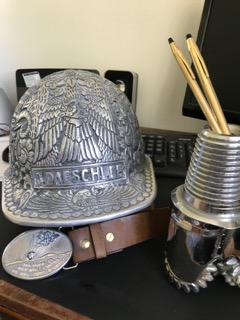
JL Daeschler photo: Red Adair belt with a diamond drill bit from the Beaufort sea, a hardhat from Indonesia, and 2 new Cross pens! Life is good 😀
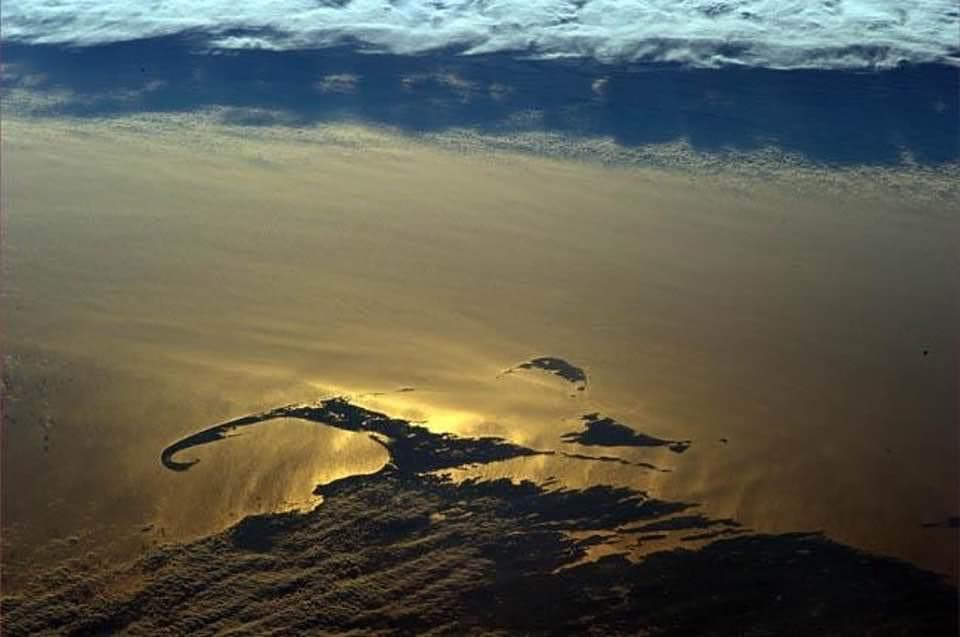
This wonderful satellite image of Cape Cod, Nantucket, and Martha’s Vineyard was posted by a Facebook friend. Cape Cod is quite young, having been formed by a retreating glacier about 20,000 years ago.
I moved to Cape Cod 43 years ago in preparation for the exploratory drilling operations on Georges Bank. I met so many amazing and supportive people during my 4 years there including (most importantly) my wife, State and local officials, congressional representatives, Woods Hole scientists, fishermen, reporters, airport officials, industry representatives, Coast Guard officers, offshore workers, environmental activists, and concerned citizens. All contributed to an outstanding work experience for me and my colleagues.
The 8 exploratory were at locations 112 to 155 miles SE of Nantucket (map below).
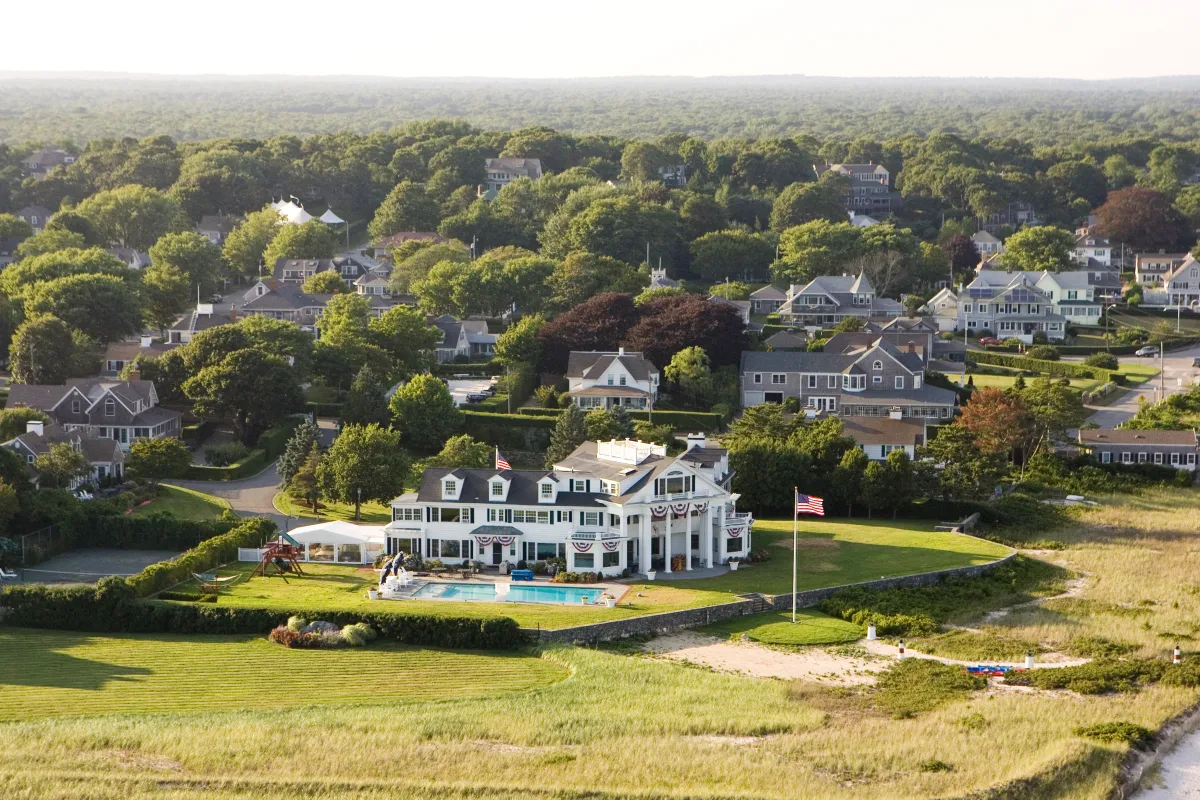
I lived in Hyannis, not far from the Kennedy compound (pictured below) which was on my jogging route. It was an easy bike ride to our office at Barnstable Municipal Airport, where we departed to inspect the exploratory drilling operations.
RFK Jr. talks about the Kennedy compound and the “Camelot years” during JFK’s presidency.
Pioneering subsea engineer, Jean Louis Daeschler, is also an acclaimed artist. He recently shared two paintings that are very much on-topic for this blog. The paintings depict a wind turbine installation with support from a jackup vessel, and a drilling operation with jackup rig. The paintings give a sense of the commonality of these mutually supportive industries.
In 1979 Gulf of Mexico oil production had declined to 263 million barrels and many believed that further declines were inevitable. 40 years later, a record 693 million barrels were produced.
Onshore, lateral drilling and hydraulic fracturing capabilities are continuing. As a result, Exxon and others are predicting projecting higher recovery factors in the Permian Basin. Per Exxon CEO Darren Woods: “We are beginning to see the signs of some very promising new technologies that will significantly improve recovery.”
Opportunity + Ingenuity ➡ Energy Independence + Prosperity
From the outset, deepwater oil and gas exploration and development were not dependent on divers or manned submersibles – far too dangerous. UUVs are used for maintenance, inspections, surveys, positioning equipment, and other operational purposes.
UUV technology advanced with demand as deepwater discoveries drove worldwide exploration and production. In 2021, deepwater (>1000′) leases accounted for 93% of GoM oil production and 76% of the gas production. For comparison, in 1985 only 6.0% of the oil and 0.8% of the gas were from deepwater leases.
In 2021, TechnipFMC won NOIA’s Safety in Seas Award for the Gemini® ROV System which can dive for a month at a time and change tools subsea instead of on deck. The Gemini® ROV System also includes a blowout preventer intervention system that supports well control and pipe shearing functions.
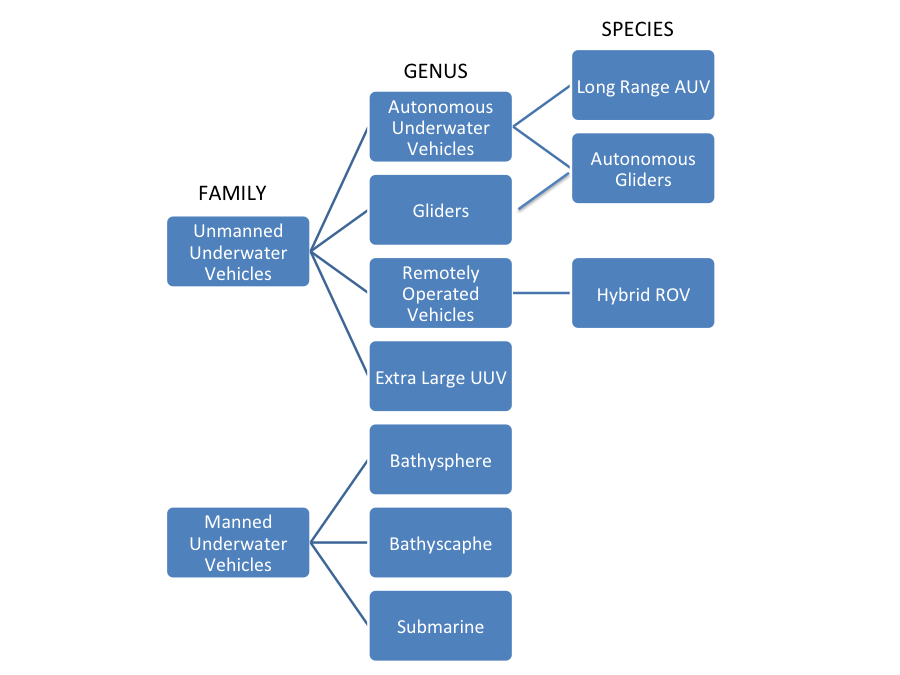
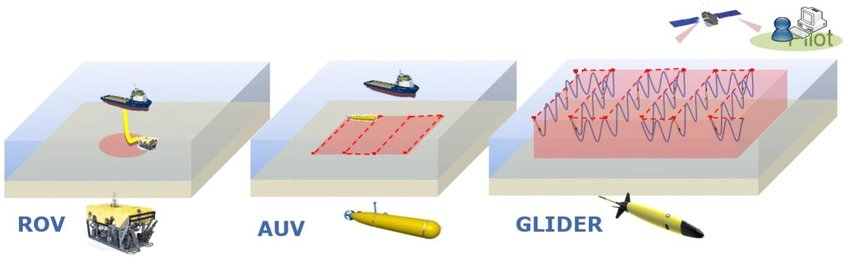
Below is a taxonomy for UUVs. The linked article provides further details. Gliders are particularly useful for surveying given the large distances they can cover (last image).
Last week I had the privilege of attending a retirement party for Jim Bennett. Jim spent most of his 43 year Federal career in the OCS program focusing on environmental reviews and offshore wind. Most recently he served as Chief of the Offshore Renewable Energy Program. Congratulations to Jim on a long and very successful career!
Per an announcement by his family, former Secretary of the Interior James Watt passed away on May 27. The Washington Post provides a good overview of his tenure at DOI during the Reagan administration.
Watt was an outspoken and controversial figure. His aggressive mineral leasing policies proved not to be in the best long-term interest of the OCS program. As their principal target, Watt became an unintended fundraiser for opponents of energy development.
Watt’s indirect Beach Boys ban, which didn’t sit well with Ronald and Nancy Reagan, was perhaps his best remembered faux pas. Per the WP:
He did not explicitly mention the Beach Boys, but they had performed at previous July 4 events, and the group became the focus of outrage over Mr. Watt’s pronouncement. President Reagan called the interior secretary to the Oval Office and presented him with a plaster foot bearing a bullet hole to humorously — but unambiguously — convey the message that he had shot himself in the foot.
Lots of James Watt jokes circulated during his tenure. One that I found amusing went something like this: James loved baseball and dreamed of someday standing in center field at Yankee Stadium ….. drilling for oil 😀.
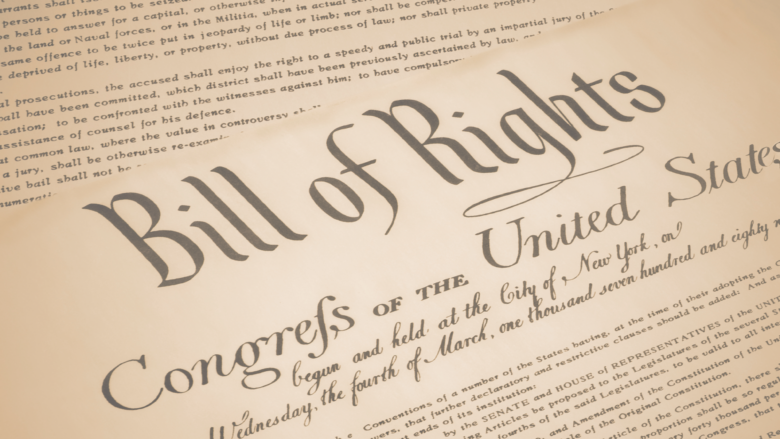
Grateful for those who gave their lives to protect our freedoms, as expressed in the Bill of Rights.
Wary of political and media campaigns that tell us what and how to think, and threaten our freedom to speak openly and express contrary opinions. In that regard, this video posted by Elon Musk is disturbing.







 Bud's Offshore Energy (BOE)