Feeds:
Posts
Comments

Archive for the ‘natural gas’ Category

Elements Newsletter

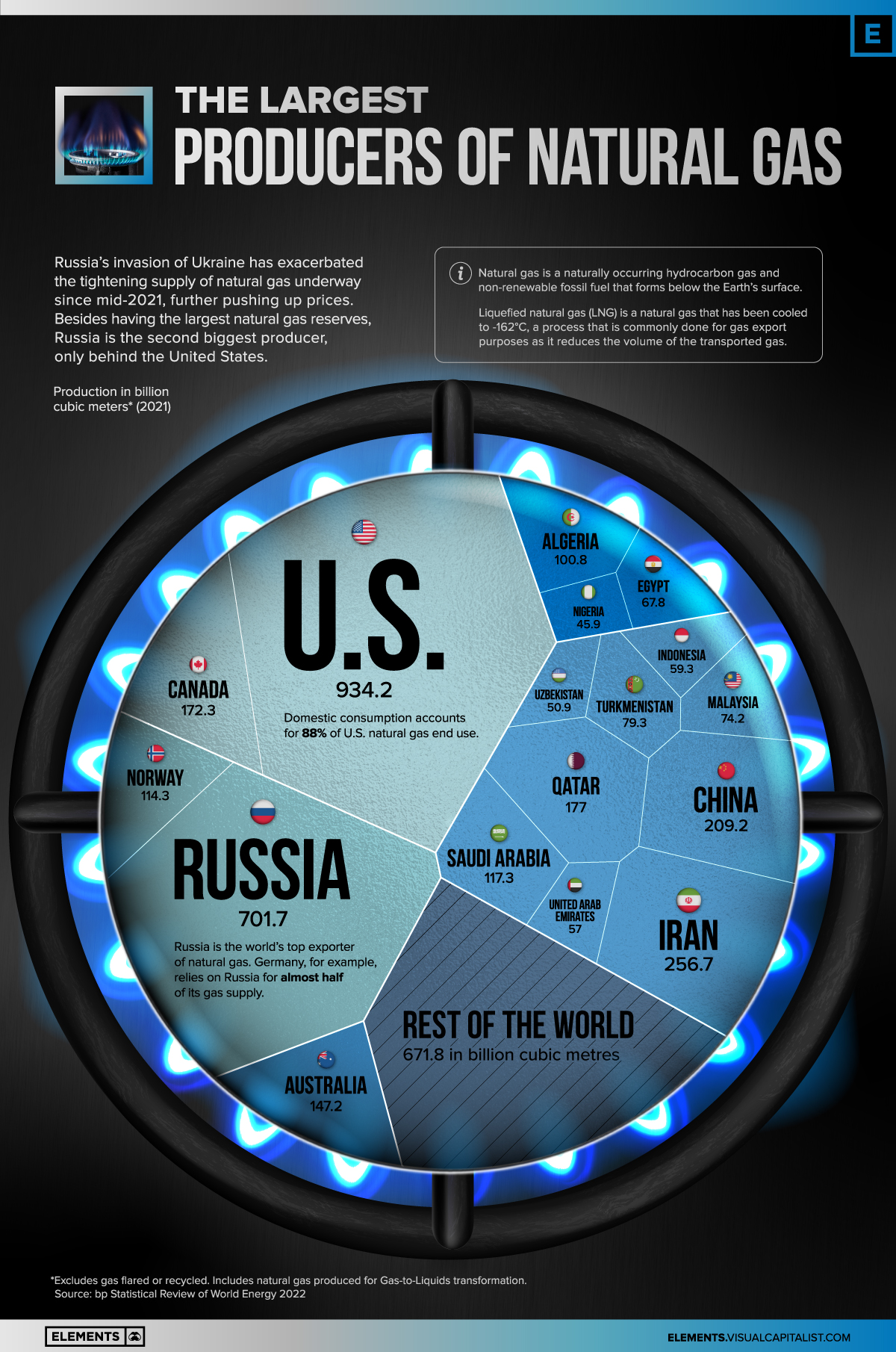
Where would we, and the world, be today without the shale gas revolution? 12.5 years after posting about this amazing success story, I’m still waiting for the national celebration!

For a reminder about the environmental advantages of natural gas in general, and nonassociated offshore gas in particular, see this post.

Read Full Post »

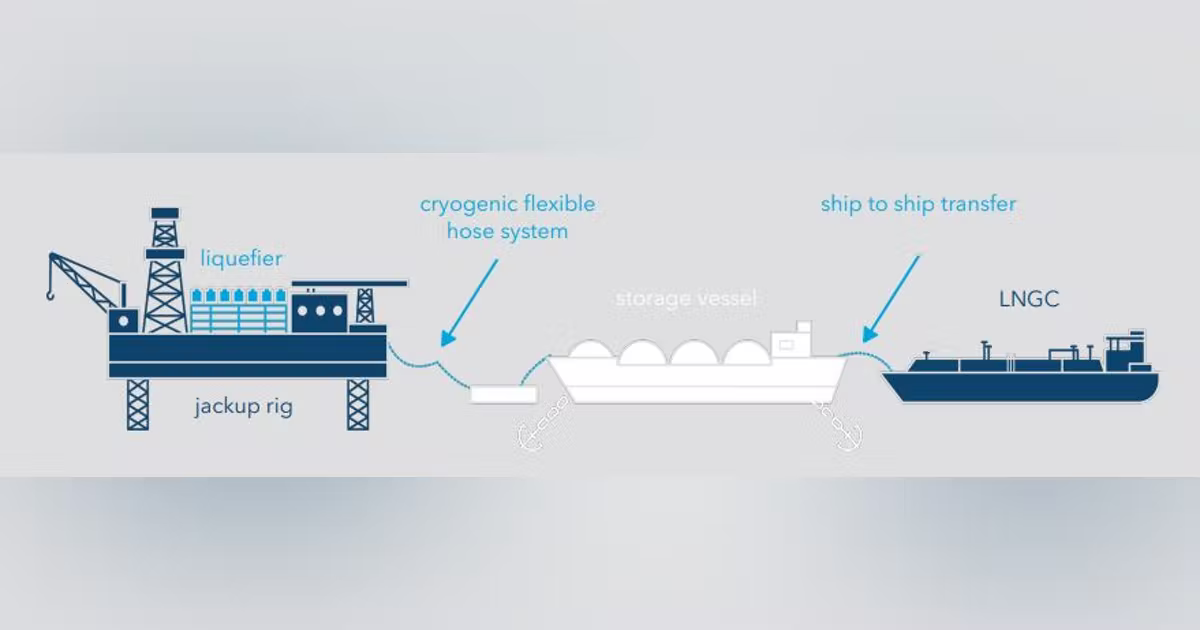
In the past the thought was that we would be importing LNG, i.e. “Rigs-to-Regasification.” Now that we are exporting LNG, we are adding “Rigs-to-Refrigeration” to the alternative use list.

Per our previous post on this topic, New Fortress Energy is moving forward with fast-track LNG projects in the Gulf. Three converted jack-up rigs purchased from Maersk will make up the first “Fast LNG” liquefaction train.

New Fortress is planning to install its first two “Fast LNG” units in West Delta Lease Block 38, located about 16 nm off Grand Isle, Louisiana. The two independent liquefaction trains at this deepwater “port” would export about 1.4 million tonnes per annum (mtpa) of LNG each. Though small by shoreside standards, the plant design would offer a number of advantages, like low cost and speed to market – a critical factor at a time of high demand for LNG. The company says that it should be able to produce each facility on an 18-20 month timescale, from engineering through construction and commissioning. 

Maritime Executive

Given the challenges posed by tropical storms, particularly for jackup units, the design criteria for these “permanent” jack-up liquefaction facilities and the role of classification societies are of particular interest.

Read Full Post »

I vote for stupid comment.

The CEO of Italian power firm Enel has cast doubt on the continued benefit of using gas to produce electricity, telling CNBC it is “stupid” and that cheaper and better alternatives are now available.

“You can produce electricity better, cheaper, without using gas … Gas is a precious molecule and you should leave it for … applications where that is needed,” he added.

Francesco Starace to CNBC

Gas is scarce and expensive in Europe because of bad foreign and energy policy decisions, most notably dependence on Russia and unrealistic expectations regarding renewables. Mr. Starace seems intent on doubling down on the latter. Of course, Enel is a large renewable energy generator and a natural gas purchaser and consumer (not a producer). His comments are thus rather self-serving.

I do agree with Enel on CCS:

Although the company could rely on carbon offsets or carbon capture to hit that target, Bernabei said the technology has failed to take off, despite receiving funding from the EU and national governments. He said there is no reason to expect that situation to change, especially since carbon capture and storage, or CCS, technology is not guaranteed to eliminate 100% of emissions.

“These are very big and complex projects. And at the end, they will not solve the problem,” Bernabei said. “We already tried CCS in the past and it didn’t lead to success. So why do it again?”

SPGlobal

Read Full Post »

Read Full Post »

Given the importance of flaring and venting from both environmental and resource conservation standpoints, accurate and reliable data are necessary and should be readily available to the public. ONRR has advised me that they will begin posting flaring and venting data on their website within 2 months. This is a positive step. Currently, data from the 3 primary sources differ considerably.

Data Sources:

Comments:

  • The EIA (from BSEE) and ONRR flaring/venting numbers should be the same given that the ONRR data are reported in accordance with BSEE regulations, and BSEE is presumably providing ONRR data to EIA. This needs to be clarified.
  • The World Bank’s gas flaring estimates are based on observations from satellites. This explains their lower numbers given that vented gas would not be detected and some flares might be missed.
  • In a 1/2021 interview with World Oil, the exiting BSEE Director commented that the “industry has consistently achieved a ratio of less than 1.25% of flared, vented gas to produced gas.” However, based on EIA flaring and venting data (from BSEE per EIA) and EIA gas production data, the volume of gas flared/vented exceeded 1.25% of the gas produced from 2016-2020 and was as high as 1.8% in 2019. (See the chart below.) Even if the lower ONRR flaring/venting totals are used, those volumes exceeded 1.25% in 2019 (1.5%).
  • BSEE/ONRR should make more detailed flaring/venting data available so that the differences between facilities and sectors (e.g. deepwater vs. shelf) could be assessed. Efforts should also be made to post these data in a more timely manner. At this time, 2021 data are still not available.

Reports of interest:

  • Argonne report for BSEE (2017):
    • p. 17 – “The 2015 BSEE/BOEM study on reducing methane emissions observed that “while natural gas production has declined, …vented and flared gas volumes as a percentage of produced natural gas are increasing” and noted that additional investigation is needed to determine why.” This is consistent with my observations and is probably due in large part to the fact that most gas production is now from oil-wells (e.g. associated gas).
    • p. 24 – “Argonne estimates, in 2015, platform startups for deep-water floating structures accounted for roughly 15% of the total annual flaring volume on the OCS and an additional 20% of the annual total resulted from monthly spikes associated with compressor outage, pipeline maintenance, and well-unloading.”
  • Univ. of Michigan study (2020): “Large, older facilities situated in shallow waters tended to produce episodic, disproportionally high spikes of methane emissions. These facilities, which have more than seven platforms apiece, contribute to nearly 40% of emissions, yet consist of less than 1% of total platforms.” 

Read Full Post »

Wadden Sea

Germany will work with the Dutch exploration and production company, ONE-Dyas, to operate a gas field in the North Sea above Schiermonnikoog and the German Wadden island of Borkum, Dutch broadcaster NOS reported on Wednesday.

The announcement was made on Tuesday by Bernd Althusmann, economy minister of the state of Lower Saxony, NOS reported.

“We cannot afford to ask the Netherlands for more gas and continue to refuse to extract our own gas,” Althusmann said.

EURACTIV

Meanwhile, the US offshore program continues to be paralyzed.

Read Full Post »

Linked is a good article by geologist Gregory Wrightstone about the stunning non-conventional natural gas resource potential of the Appalachian Basin of the eastern US. Unsurprisingly, development of these resources is constrained by pipeline capacity and the legal and administrative challenges associated with new pipeline construction. Also note that New York has blocked development of its natural gas resources. Fortunately, Pennsylvania, West Virginia, and Ohio have shown better judgement.

According to Bill Zagorski, who was given the moniker of the “Father of the Marcellus,” the gas-in-place of the Marcellus dwarfs all conventional fields in the world. The size is so large that the ten largest conventional fields in the world combined do not equal the in-place reserves of the Marcellus. 

Read Full Post »

Five projects have already been approved by FERC in Louisiana, with seven more in Texas and Mississippi.

New Fortress Energy’s Fast LNG liquefaction solution is particularly interesting.

New Fortress Energy Inc. (NASDAQ: NFE) (together with its affiliates, “NFE”) today announced that it has concurrently filed applications with the U.S. Maritime Administration, the U.S. Coast Guard and U.S. Department of Energy to request all necessary permits and regulatory approvals to site, construct and operate a new offshore LNG liquefaction terminal off the coast of Louisiana (“the Project”) with a capacity of exporting approximately 145 billion cubic feet of natural gas per year, equivalent to approximately 2.8 million tons per annum (MTPA) of LNG.

The Project will be located in federal waters approximately 16 miles off the southeast coast of Grand Isle, Louisiana, and will access abundant U.S. gas supply by leveraging existing infrastructure. Procurement of all long-lead materials is complete and modular assembly of equipment is underway. Subject to the receipt of all required permits and approvals, NFE targets beginning operations in the first quarter of 2023.

businesswire

Read Full Post »

Technological advances, most notably horizontal drilling and hydraulic fracturing, and private initiative on private land changed all of that.

“The US is going to emerge this year as the world’s largest LNG exporter, and it is clear that US LNG is a geopolitical asset for the United States and for Europe.”

Daniel Yergin

Read Full Post »

Bad decision by Blackstone; worse timing. Putin and OPEC must be pleased.

Blackstone Inc., once a major player in shale patches, is telling clients its private equity arm will no longer invest in the exploration and production of oil and gas, according to people with knowledge of the talks. The firm’s next energy fund won’t back those upstream investments — a first for the strategy.

Bloomberg

Meanwhile:

As the United States continues to tie its hands with regard to the transportation of natural gas, a fuel that has actually led to a large decrease in CO2 emissions over coal, Russia and China reached an agreement under which Russia will supply 100 million tons of coal to China so that China can continue to open up new coal-fired power plants

Forbes

Embargo Russia, not US producers!

Read Full Post »

« Newer Posts - Older Posts »