This graphic uses 2021 EIA data to compare the volumes of crude oil and petroleum products imported by the US from other countries.
Posted in Canada, energy, energy policy, Uncategorized, tagged Canada, US oil imports on May 20, 2022| Leave a Comment »

This graphic uses 2021 EIA data to compare the volumes of crude oil and petroleum products imported by the US from other countries.
Posted in energy, Gulf of Mexico, Offshore Energy - General, tagged EIA, Gulf of Mexico production, production forecast on April 13, 2022| Leave a Comment »
U.S. crude oil production in the forecast averages 12.0 million b/d in 2022, up 0.8 million b/d from 2021. We forecast production to increase another 0.9 million b/d in 2023 to average almost 13.0 million b/d, surpassing the previous annual average record of 12.3 million b/d set in 2019.
EIA
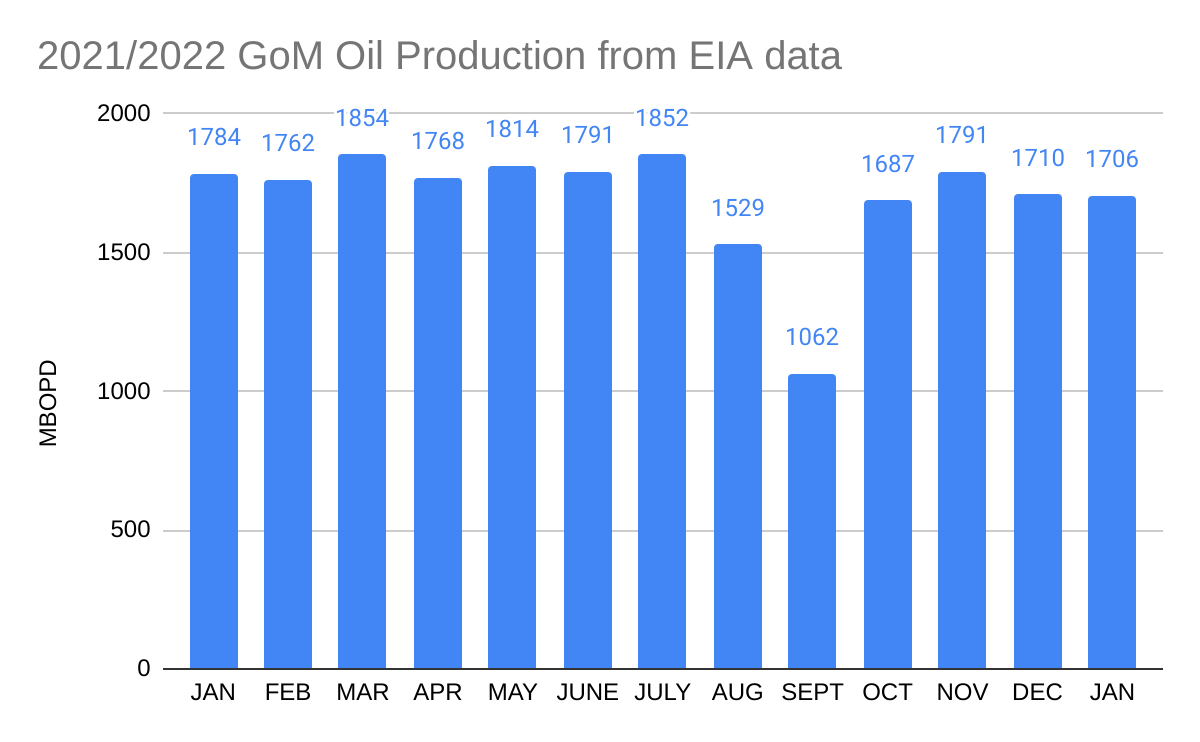
The short-term forecast doesn’t say how much of that production will come from the Gulf of Mexico. Last year, EIA forecast 2022 Gulf production to average 1.75 BOPD which seems about right based on the the most recent production data.


Posted in energy, natural gas, pipelines, tagged Marcellus Shale, Ohio, Pennsylvania, US natural gas, West Virginia on April 13, 2022| Leave a Comment »
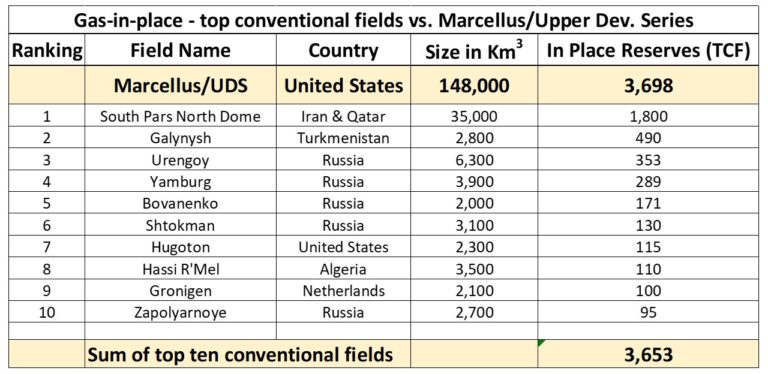
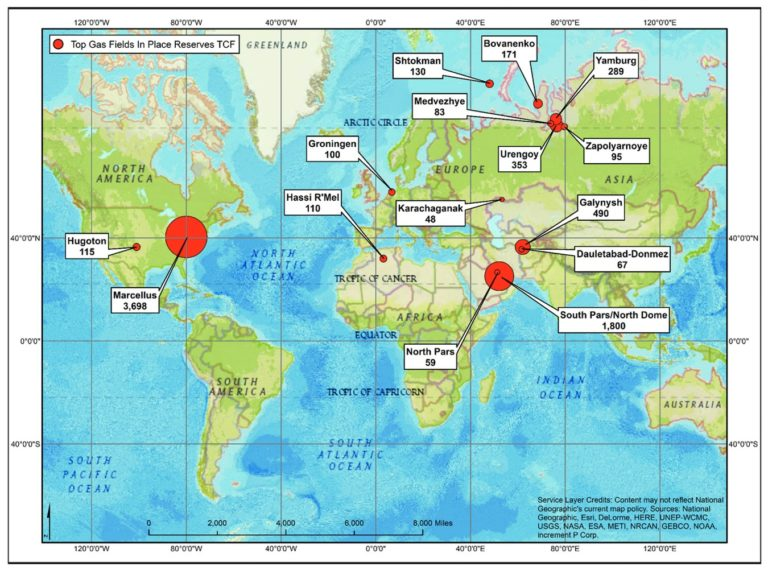
Linked is a good article by geologist Gregory Wrightstone about the stunning non-conventional natural gas resource potential of the Appalachian Basin of the eastern US. Unsurprisingly, development of these resources is constrained by pipeline capacity and the legal and administrative challenges associated with new pipeline construction. Also note that New York has blocked development of its natural gas resources. Fortunately, Pennsylvania, West Virginia, and Ohio have shown better judgement.
According to Bill Zagorski, who was given the moniker of the “Father of the Marcellus,” the gas-in-place of the Marcellus dwarfs all conventional fields in the world. The size is so large that the ten largest conventional fields in the world combined do not equal the in-place reserves of the Marcellus.


Posted in climate, drilling, energy, Uncategorized, tagged Quaise Energy, super-hot geothermal, ultradeep geothermal on March 14, 2022| Leave a Comment »
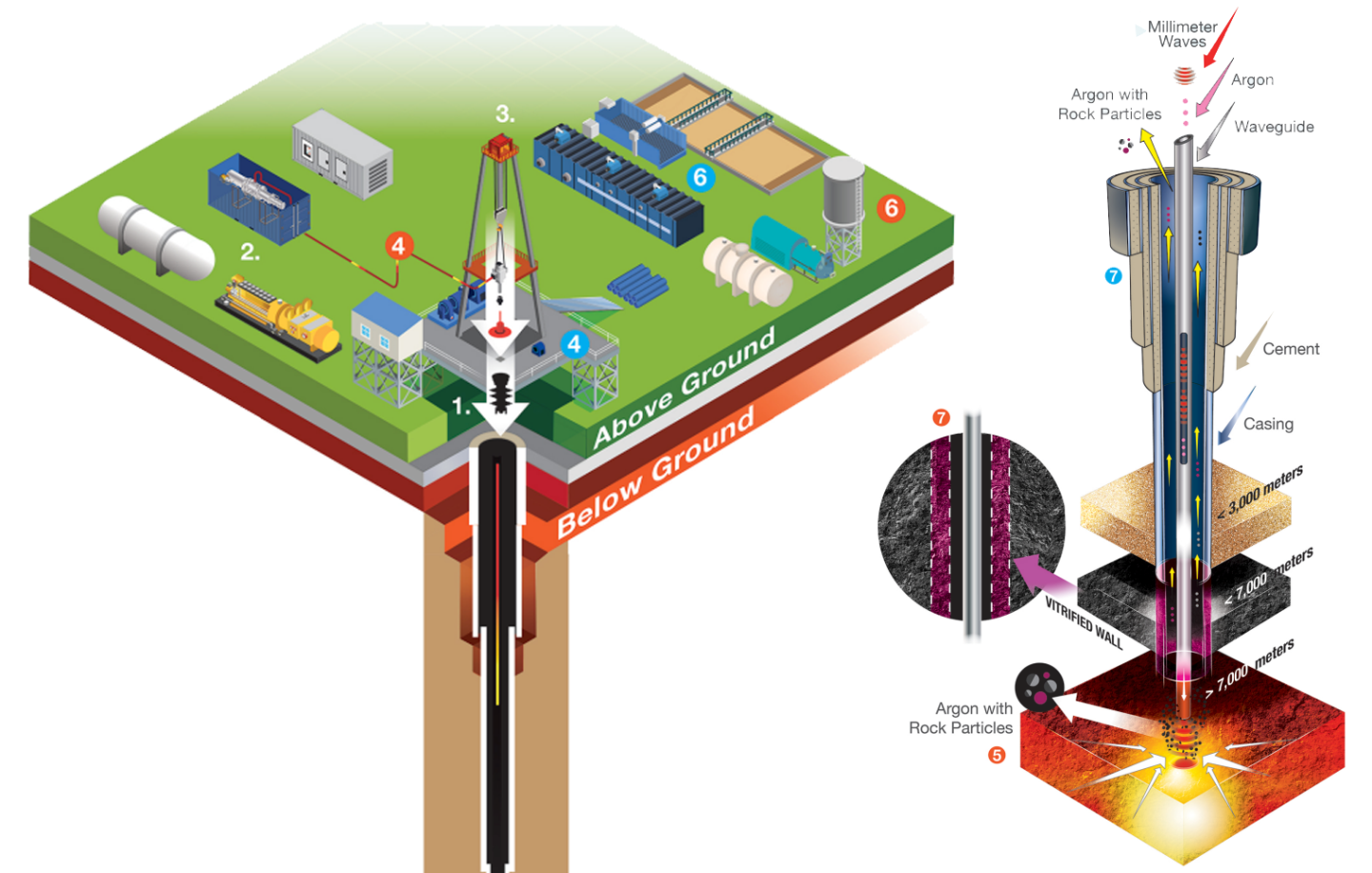
Wind and solar energy are likely to continue growing in importance over the next several decades, but massive space requirements and intermittency may prevent these energy sources from ever being dominant. On the other hand, geothermal power could prove to be the ultimate energy solution if we can effectively drill deep beneath the surface and tap into superheated rock.

Quaise Energy, headed by ex-Schlumberger/MIT engineer Carlos Araque, is developing a radical new approach to ultra-deep drilling. Quaise will use conventional rotary drilling technology to reach basement formations before switching to high-power millimeter waves that vaporize boreholes through rock and provide access to deep geothermal heat. Quaise’s timeline calls for operation of their first full-scale hybrid drilling rig in 2024 and their first super-hot geothermal system in 2028. Those interested in energy solutions should follow their progress.

Here is Quaise’s promotional video:
Posted in drilling, energy, Gulf of Mexico, Offshore Energy - General, tagged Gulf of Mexico, New Mexico, rig counts, Texas on March 13, 2022| Leave a Comment »

Nice bounce in Texas where 320 rigs are now active, up 12 from last week and up 117 from a year ago. Rig activity in New Mexico, where (unlike Texas) most of the Permian is on Federal land, has been less robust. The number of rigs operating in NM actually dropped by 1 to 98.
Posted in energy, energy policy, Offshore Energy - General, Russia, tagged NordStream, Russia, Sakhalin, Shell on February 28, 2022| Leave a Comment »
The Board of Shell plc (“Shell”) today announced its intention to exit its joint ventures with Gazprom and related entities, including its 27.5 percent stake in the Sakhalin-II liquefied natural gas facility, its 50 percent stake in the Salym Petroleum Development and the Gydan energy venture. Shell also intends to end its involvement in the Nord Stream 2 pipeline project.
Shell.com
Posted in energy, energy policy, Offshore Energy - General, tagged European energy crisis, Russia, sanctions on February 22, 2022| Leave a Comment »
From an excellent FT article:
BP owns almost a fifth of Russia’s largest oil producer Rosneft. UK-listed rival Shell controls 27.5 per cent of Gazprom’s huge Sakhalin-2 offshore gas project in Russia’s far east. Exxon has been operating in Russia for 25 years and producing oil and gas in eastern Russia since 2005 in a partnership involving two Rosneft affiliates.
Financial Times
More than 20 European countries import gas from Russia. The Czech Republic and Latvia import 100% of their gas from Russia. Hungary, Slovakia, Bulgaria, Finland, Germany, and Poland import more than half of their gas from Russia.
Clumsy sanctions could send oil and gas prices soaring to Russia’s benefit and the West’s detriment. We should first remove the sanctions that have intentionally and inadvertently been imposed on our own producers, including leasing blockades and permitting obstacles. The Ukraine crisis and its side effects will be with us for years, as will the demand for oil and gas. We need both immediate and longer term supply solutions.
Posted in energy, Health, Norway, Regulation, Uncategorized, tagged Industri Energi, Norway, Oilfield workers, vaccine mandate on January 13, 2022| Leave a Comment »
A Norwegian union representing offshore oil and gas workers has criticized Aker BP’s process to introduce a Covid-19 vaccine mandate for its offshore employees.
offshore-energy.biz
“We agree that we must protect our employees and our suppliers in the best possible way, but it also requires that we are involved in how it should happen and how our employees and suppliers are taken care of in this process.”
Ingard Haugeberg, Industri Energi
Seems like a reasonable position on the part of the workers. As previously reported, many US oilfield workers are skeptical of the vaccine mandate and have warned that they will quit.
Posted in energy, Health, Regulation, tagged appeals court decision, Oilfield workers, vaccine mandate on December 18, 2021| Leave a Comment »
WSJ story on oilfield workers. Highlights:
“I don’t like to be forced to do anything. I almost want to just do the opposite when someone tells me, in that manner, you’ve got to do this.”
WSJ
Posted in energy, energy policy, tagged Colorado Oil and Gas Assoc., the Atlantic, Yergin on December 2, 2021| Leave a Comment »
Dan starts by retelling the story about the North Face hypocrisy that earned the company the Colorado Oil and Gas Association’s first ever Customer Appreciation Award for being an extraordinary oil and gas customer. This award rivals the Not My Job Award as a means of recognizing extraordinary individual and organizational chutzpah. North Face refused to sell jackets to an oil industry service company because doing so would be counter to its “goals and commitments surrounding sustainability and environmental protection.” As the Colorado Oil and Gas Assoc. pointed out:
At least 90 percent of the materials in North Face jackets are made from petrochemicals derived from oil and natural gas. Moreover, many of its jackets and the materials that go into them are made in countries such as China, Vietnam, and Bangladesh, and then shipped to the United States in vessels that are powered by oil. To muddy matters further, not long before North Face rejected the request, its corporate owner had built a new hangar at a Denver airport for its corporate jets, all of which run on jet fuel.
Yergin in The Atlantic
Yergin goes on to point out the extraordinary complexities of energy transitions particularly for developing nations:
Aissatou Sophie Gladima, the energy minister of Senegal, put it more pithily: Restricting lending for oil and gas development, she said, “is like removing the ladder and asking us to jump or fly.”
Yergin in The Atlantic
He talks about other energy transitions:
The 19th century is known as the “century of coal,” but, as the technology scholar Vaclav Smil has noted, not until the beginning of the 20th century did coal actually overtake wood as the world’s No. 1 energy source. Moreover, past energy transitions have also been “energy additions”—one source atop another. Oil, discovered in 1859, did not surpass coal as the world’s primary energy source until the 1960s, yet today the world uses almost three times as much coal as it did in the ’60s.
Yergin in The Atlantic