Feeds:
Posts
Comments

Archive for the ‘drilling’ Category

While US politicians continue to gnash their teeth or express outrage, the International Association of Drilling Contractors (IADC) has been busy promoting constructive dialogue about Cuban exploratory drilling. IADC has overcome major administrative obstacles and arranged for the participation of Cuban regulators in the Environmental Conference which begins tomorrow in Trinidad.

“This will pretty much be the first time the Cuban deepwater drilling project managers will make a presentation of what their regulatory requirements are going to be for the companies that drill in Cuban waters,” said Lee Hunt, president of the Houston-based International Association of Drilling Contractors, which is organizing the conference. Reuters

The Cuba session is scheduled for tomorrow afternoon. I look forward to seeing the news reports and posted presentations.
Read Full Post »

COSCO and Inocean are partnering to build a more compact and cost-effective deepwater drillship.

INO-80 is a compact dynamically positioned drillship with large free deck areas, designed for year-around operations in ultra deep waters. The vessel has well planned utility arrangement with safe and reliable material handling. The hull is shaped for cost efficient and easy fabrication, as well as for challenging conditions during station keeping and transit. INO-80 features for exploration, appraisal and development drilling. 

Design video

Read Full Post »

U.S. District Judge Martin Feldman in New Orleans today ordered offshore energy regulators to act within 30 days on six pending permit applications filed by companies that have contracts with Ensco Offshore Co., the Louisiana drilling company leading the legal challenge to the government’s offshore drilling bans. Bloomberg

Read Full Post »

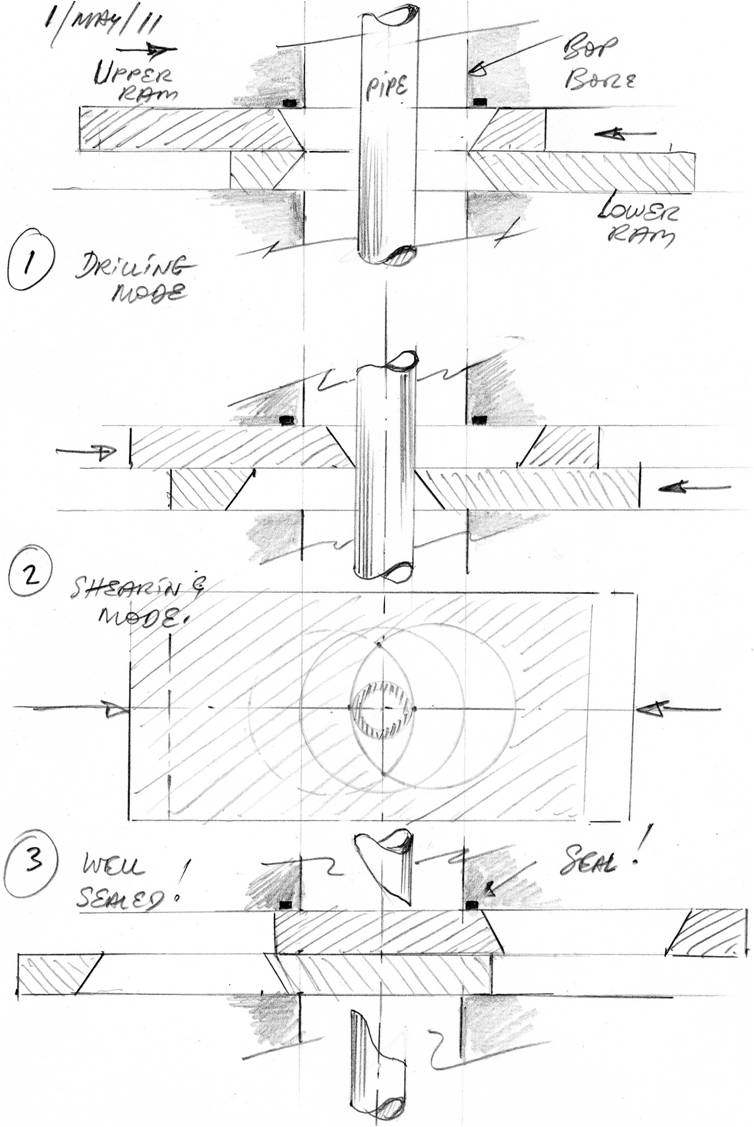
JL Daeschler, subsea engineer and inventor, sent me some preliminary drawings for a new BOP concept.

  • JL’s design concept is based on 2 slab gate valves, one above the other, that move in the opposite direction and are beveled for shearing.
  • The sealing element is fixed (solid, one-piece) to the main body of the BOP, does not move with the rams, and is fully protected in the drilling mode.
  • The hydraulic system would retract the gate rather than close it (fail-safe closed).
  • The upper and lower rams (gate valve type) are self-centered with a guiding system to minimize side movement and deflection.
  • Well pressure assists in forcing the upper ram against the sealing element.
  • JL is considering a similar concept (single shear) for xmas tree workover system.

Read Full Post »

click on image to enlarge

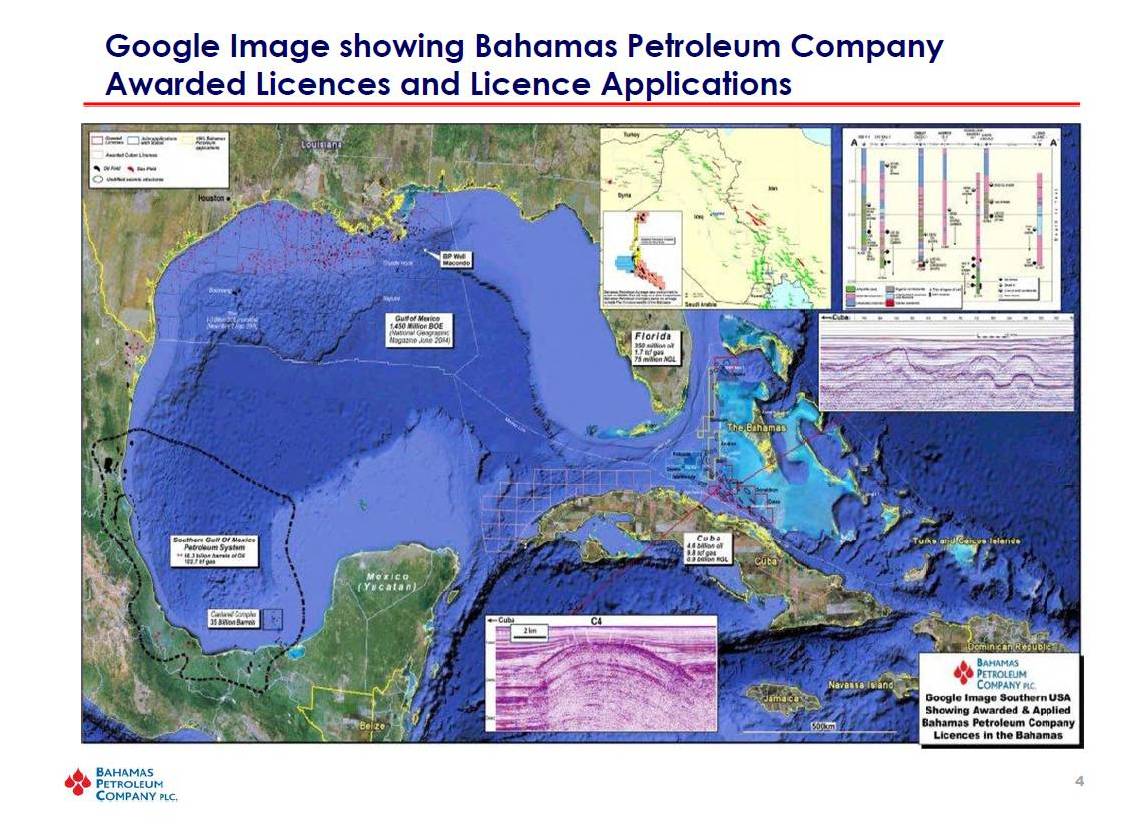
from the Bahamas Tribune:

“We hope that in the second quarter of next year we will be able to be in a position where we can go forward and drill a well. We’ve just raised $75 million on the London market last month to apply towards our exploration purposes,” Dr Crevello said during a meeting of the Rotary Club of Nassau yesterday.

It is doubtful that this timeline will be met as Government has said it will not lift its moratorium on drilling any time soon.

“Well it’s nigh impossible for this (the passing of legislation relating to oil drilling) to be accommodated within this Parliament,” Environment Minister Earl Deveaux told The Tribune last month.

Read Full Post »

CNN Poll

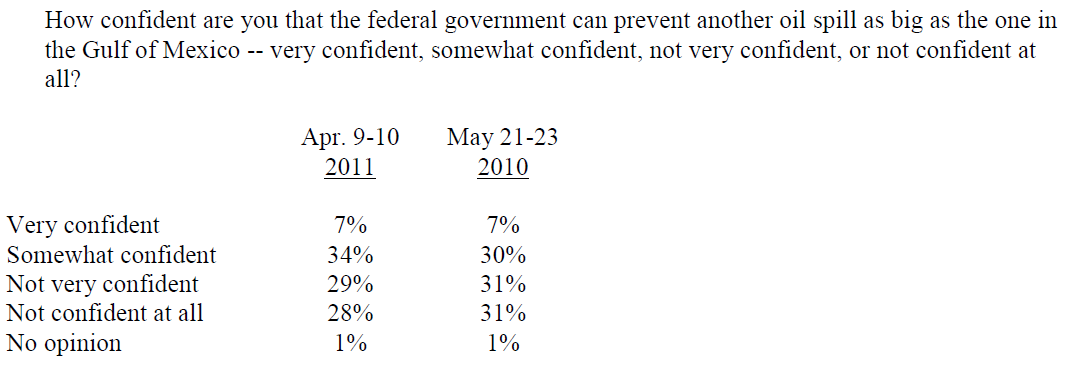
A CNN/Opinion Research Corporation survey released Tuesday indicates that 69 percent of Americans favor increased offshore drilling, with just over three in ten opposed. That 69 percent is up 20 points from last June, while the oil spill was still in progress, and is back to the level of support seen in the summer of 2008.

Confidence in government has shown a less significant increase.

Read Full Post »

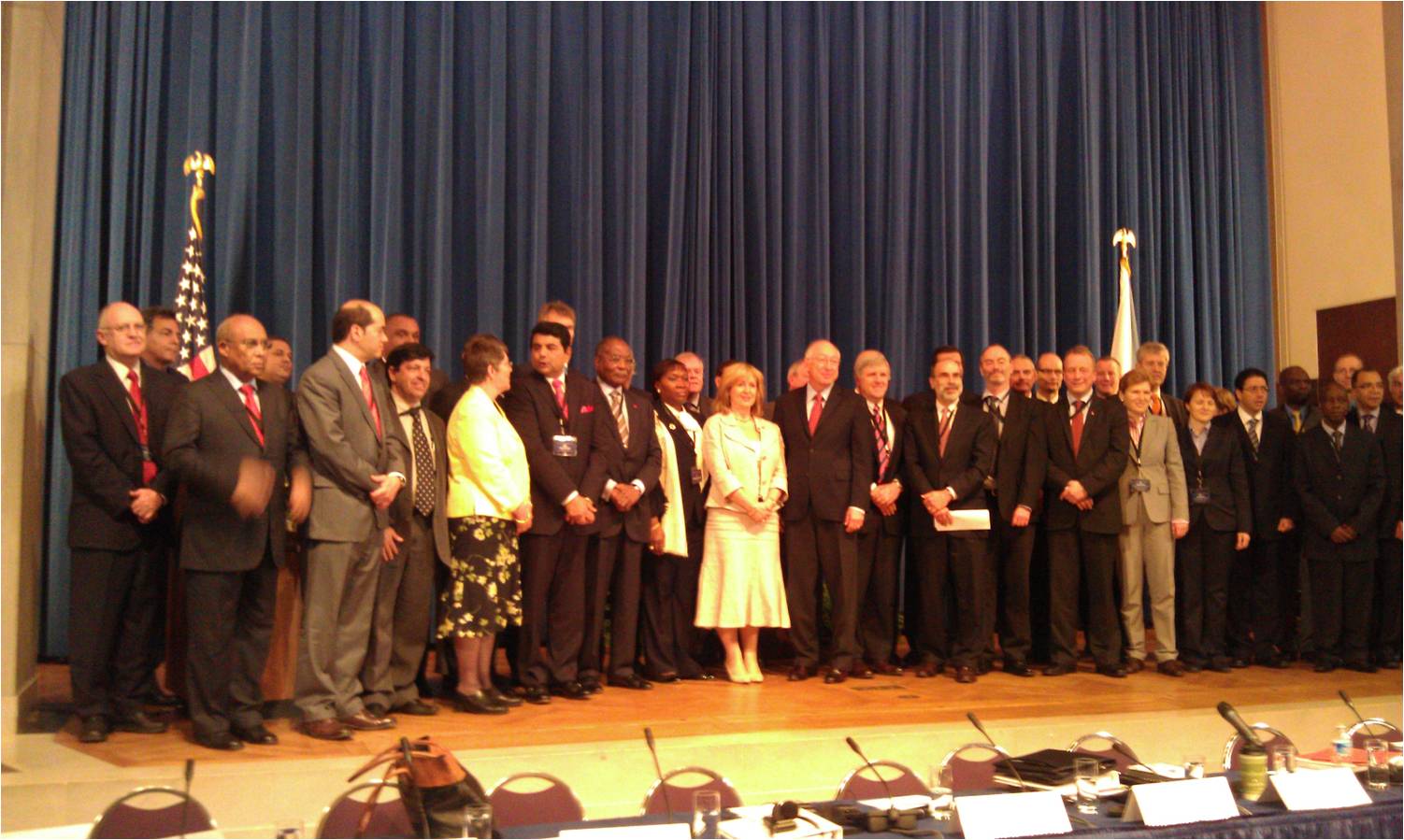
International Guests

  • The conference was nicely organized by the folks in the Department of the Interior and BOEMRE
  • Angola, Australia, Brazil, Canada, India, Mexico, Netherlands, Norway, the United Kingdom, Russia, and the US were represented. The European Union also participated.
  • Brazil was represented by two Petrobras managers, rather than governmental officials. This raised some eyebrows.
  • Australia formally announced yet another offshore regulators’ conference, the International Offshore Petroleum Regulators and Operators Summit in Perth (10-11 August). Do we need better coordination of the coordination conferences? Isn’t the International Regulators’ Forum (IRF) the best means of managing all of this?
  • The need for expanded offshore oil and gas operations was recognized by all participants.
  • Malcolm Webb of Oil and Gas UK, announced that UK operators would have a capping capability for subsea wells by the end of the summer. However,  no well containment system is planned. This omission, which was attributed to North Sea weather and sea conditions, is surprising. Capping is not an option if well integrity concerns prevent a well from being shut-in, either with the BOP or a cap (if the BOP failed). The absence of a well containment option would seem to be a significant gap in their response capability.
  • A working group was formed to consider a new or strengthened international organization for offshore safety and pollution prevention. In my view, the best option would be to enhance existing cooperation mechanisms, most notably the IRF. International cooperation on safety is not a new concept. The IRF, which was mentioned positively by many of the speakers at the Ministerial Forum, has existed since 1994 and has an ongoing international standards effort. A related group, ICRARD, has been coordinating offshore safety research for more than 15 years. Various industry organizations have international programs. ISO has a good system for developing and managing standards. The International Maritime Organization has official committees that address certain offshore safety and pollution issues. Making better use of existing committees and forums would seem to make more sense than starting new ones.

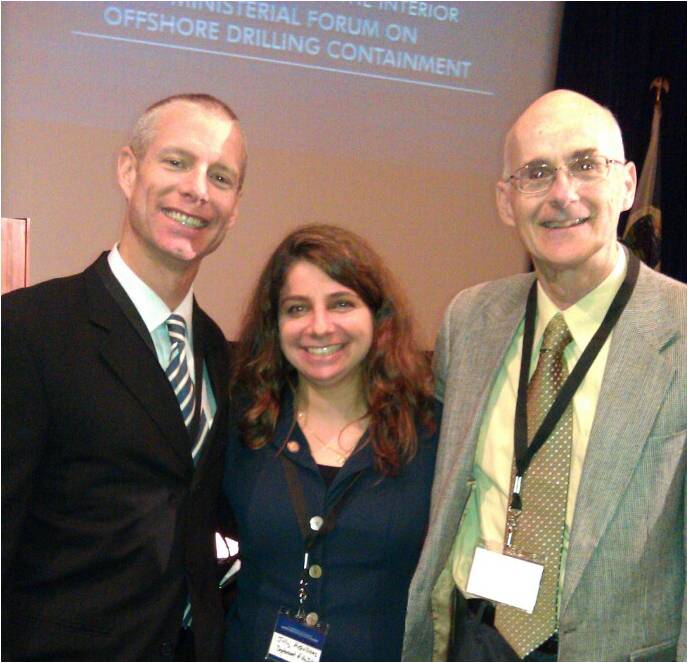
With BOEMRE dynamos - (Kona) Kevin Kunkel and July (Ms. COOL) McQuilliams

link to videos

Read Full Post »

Secretary of the Interior Salazar will be hosting the “Ministerial Forum on Offshore Drilling Containment” on April 14, 2011, in Washington DC. Click for the draft agenda and additional information.

Read Full Post »

from SeabedRig.com

Advances in drilling technology tend to be evolutionary, not revolutionary. Floating rigs, dynamic positioning, top-drive systems, measurement-while-drilling, automated rig floors, and other important advances were logical next steps, not radical makeovers.

Many of us have long been fascinated by the possibility of locating drilling equipment on the seafloor, particularly for deepwater wells. Why operate from a massive floating vessel that requires a sophisticated stationkeeping system and a long riser to connect to the wellhead? Why link surface personnel to seafloor risks? Why increase the complexity of balancing well pressures (without fracturing formations) by adding thousands of feet to the mud column? Why heave and roll on the surface when you can operate from the seafloor?

It’s not that easy, of course, and there are many questions and issues. While fully automated drilling systems are no longer a reach, what about reliability and repairs?  How will casing be set and cemented? How will downhole measurements be transmitted to the control center? Cuttings samples? Coring? Well testing? The list of challenges is daunting.

At least one company, Seabed Rig, is committed to developing and demonstrating seafloor drilling technology. Earlier this month, Seabed Rig reached agreement with NASA to create the first autonomous drilling rig. While a lot of work remains, Seabed Rig and other pioneering companies are applauded for their innovative thinking and willingness to challenge conventional practices and wisdom.

Read Full Post »

2010-2011 Trend: Americans' Support for U.S. Offshore Drilling

Comments:

  1. The most remarkable figure is the 50% support for increased drilling during the Macondo blowout when oil was flowing into the Gulf live on national television
  2. The second most remarkable result is the very low percentage of people who have no opinion.
  3. The percentage in support would likely have been higher if they had not included the words “in US coastal areas” at the end of the question. Most new drilling would not be in what people think of as coastal areas, but far far from shore.

Other interesting Gallup findings:

  1. 49% of Americans support opening ANWR to exploration, a record high.
  2. The wisest Americans (i.e. those over 55 :)) are the strongest supporters (66% in favor).
  3. The youngest age group polled (18-34) also supports increased offshore drilling (52% in favor)
  4. A majority of both sexes support increased offshore drilling.
  5. Even in the East, where we are very comfortable consuming oil but not so keen on producing it, 49% of Americans support increased offshore production.
  6. 49% of Americans also support opening ANWR to exploration, a record high


Read Full Post »

« Newer Posts - Older Posts »