I believe they’re going to try and intercept somewhere around between 16,700 and 17,000 feet. We will confirm that for you and put out a statement tomorrow.
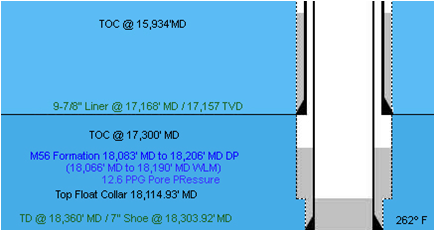
Comment: I pasted that portion of the well cross-section above. It looks like the plan is to drill into the 7″ x 9 7/8″ annulus (the most likely flow path) and secure that annulus. Based on the float and casing shoe issues that have been reported, the flow could also be inside the 7″ production casing or both inside the casing and in the annulus. (Also, sealing the annulus could force flow through possible shoe channels inside the production casing). They will presumably have to drill through the 7″ casing (after the annulus has been secured?) and set a cement plug inside the casing.
They decided not to use the blowout preventer because of the uncertainty regarding the status of the wellbore and what pressure might do going down. That’s the reason they abandoned the Top Kill and the capping exercise at that point.
Comment: Admiral Allen confirms reports that the second BOP option was dropped because of downhole issues. Poor well integrity sure makes things difficult. Concerns have been raised about the strength of the 16″ casing, and possible fracture paths outside casing. If the ROV had been able to actuate the BOP and seal the well, would casing failure and formation fracturing have occurred; or are subsequent events (erosion?) the primary reason for these well integrity concerns?
Secretary Salazar and Secretary Chu had a meeting last week in Washington with other industry representatives beyond BP, other oil-producing companies that are out there, and we’ve actually identified a couple of platforms that are in the area that might be capable of taking the product coming out of the wellbore through pipelines and either producing it or putting it back down into the reservoir. We’re exploring that over the next couple of days.
Comment: Yikes!
 Bud's Offshore Energy (BOE)
Leave a comment