The current level of interest in offshore safety issues is unprecedented, and because of time constraints and other obligations, I have not been able to respond to all of the calls and messages. Please accept my apologies. Bud
Archive for May, 2010
My Apologies
Posted in Uncategorized on May 5, 2010| Leave a Comment »
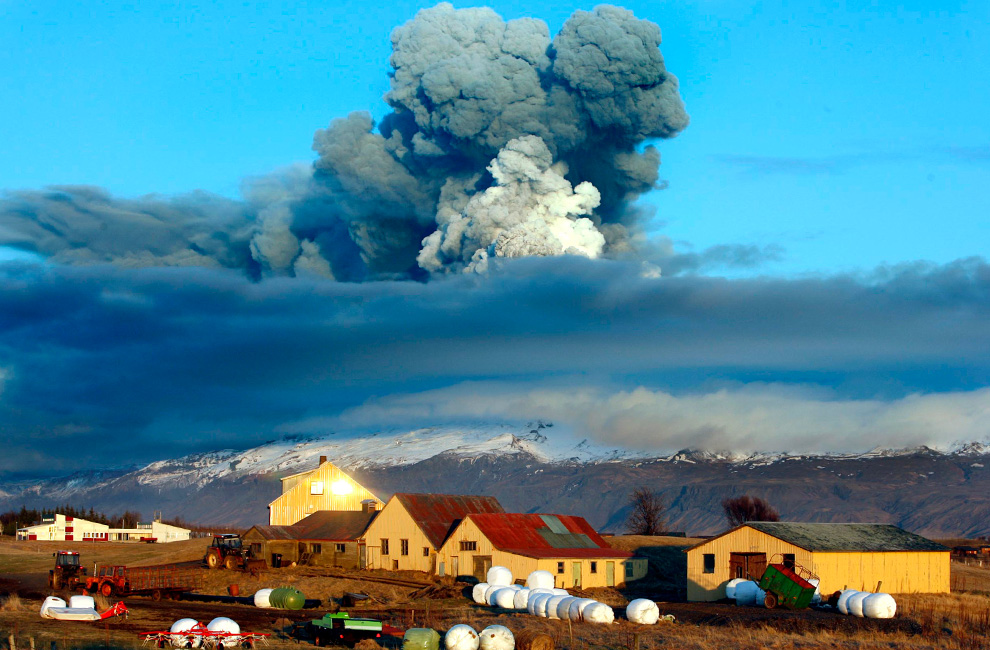
Nice Pictures of Eyjafjallajokull (just rolls off the tongue)
Posted in Uncategorized on May 5, 2010| Leave a Comment »
No BOP, no pollution dome, relief well not recommended, and don’t mess with the responsible party! More great pics
Petroleum Safety Authority Norway Releases Statement on Macondo Blowout
Posted in accidents, Norway, well control incidents, tagged accidents, blowouts, Deepwater Horizon, drilling, Gulf of Mexico, macondo, offshore oil, oil spill, PSA on May 4, 2010| 4 Comments »
The tragic events on the Deepwater Horizon rig in the Gulf of Mexico have attracted great international attention, and have also promoted a flood of questions to the Petroleum Safety Authority Norway (PSA).
The PSA Norway has issued a statement on the Horizon incident, and has appropriately avoided responding to the “can it happen here?” question. Their interest and support are greatly appreciated.
Macondo – Relief Well Spudded, Dome Ready, BOP Questions Remain
Posted in accidents, well control incidents, tagged accidents, blowouts, Deepwater Horizon, drilling, Gulf of Mexico, macondo, offshore oil, oil spill, safety, well control on May 4, 2010| Leave a Comment »

The Deepwater Driller III (pictured) has spudded the first relief well.
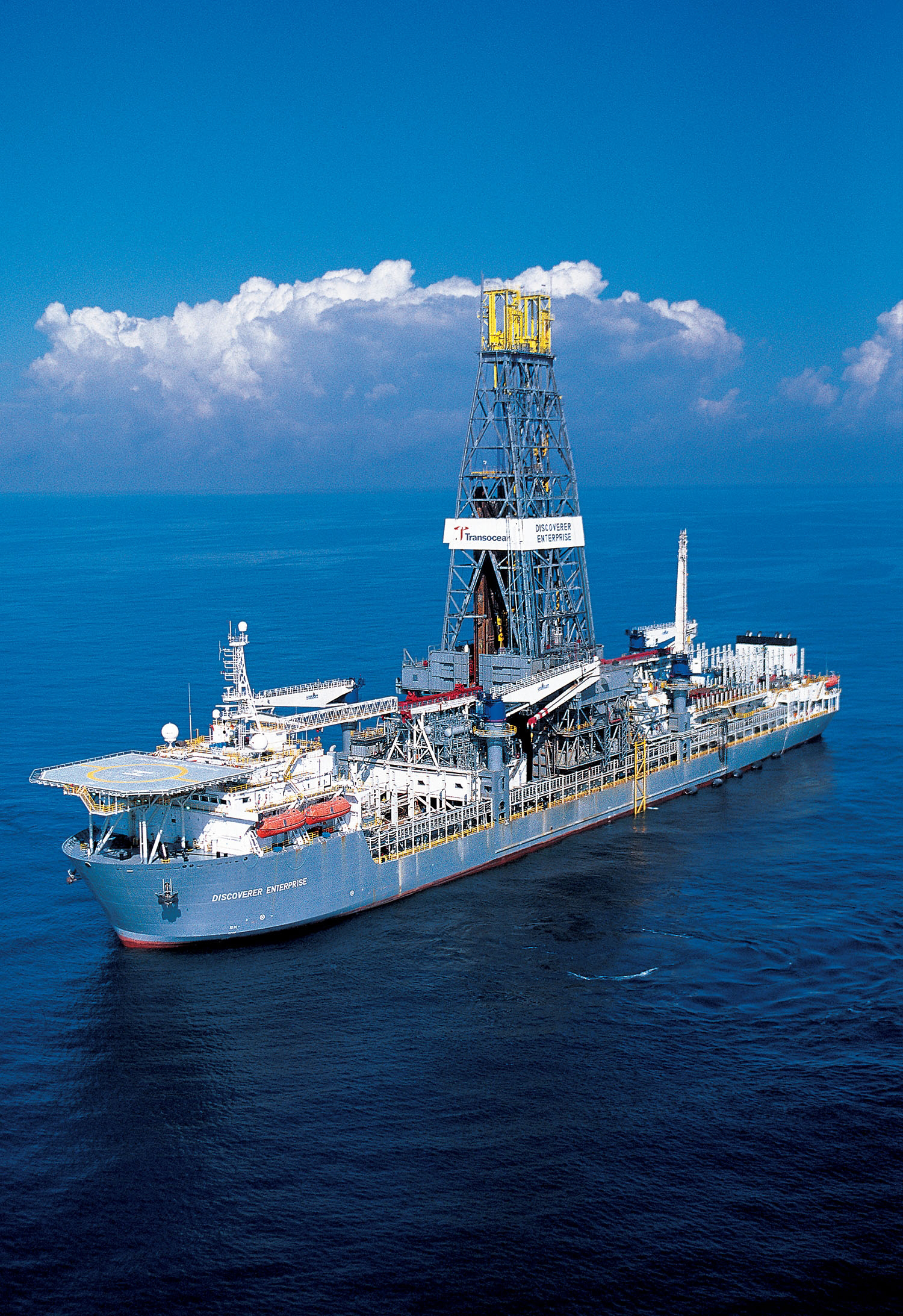
Discoverer Enterprise will support seafloor contaiment system.
While BOE’s eager but poorly managed staff struggles to keep pace, Upstream is providing excellent coverage of the well intervention, relief well, and seafloor containment system stories. This is the news of greatest interest to our small, but highly sophisticated readership. (For extensive coverage of news celebrities standing near the shore or bravely venturing into streamers of oil, turn your attention to the network news.)
Anyway, lots of new developments: the relief well was spudded, another rig is on the way to drill a second relief well, the seafloor containment system is ready to be transported to the site, and plans to install a second BOP stack (on top of the first) proceed. But perhaps of greatest interest to BOE readers is the report that BP had closed the rams but did not stem the flow. The BP spokesman suggested that the rubber portions of the rams may have been eroded and were thus unable to seal the well. This makes sense for the pipe rams and annular preventers (although some flow reduction would still be expected), but what about the shear ram? Was it closed? Was it unable to cut pipe that was inside the stack? What happened when the crew attempted to shut-in the well prior to evacuation? When can we expect a statement from Cameron, the BOP manufacturer?
Searching for Positives
Posted in accidents, well control incidents, tagged accidents, blowouts, Deepwater Horizon, drilling, Gulf of Mexico, macondo, offshore oil, oil spill, safety, well control on May 3, 2010| Leave a Comment »
This blowout is a national tragedy with 11 fatalities, 3 critical injuries, many lives disrupted, and a major ongoing oil spill. Nonetheless, as with every disaster, there are some positives. A few come to mind:
- 115 workers were rescued following the initial explosion.
- The first ever deepwater oil containment and collection system is being built. Should the responders not be able to soon stop flow from the well, this system will be deployed and evaluated.
- An innovative and unprecedented attempt may be made to install and operate a second BOP (above the failed stack).
- New spill cleanup options such as underwater dispersants are being studied. The resulting data will be very useful to oil spill researchers.
- Lessons from Macondo are likely to trigger improvements in BOP systems and well integrity assurance procedures.
Cleanup Costs
Posted in accidents, well control incidents, tagged accidents, blowouts, Deepwater Horizon, drilling, Gulf of Mexico, macondo, offshore oil, oil spill, OPA 90, safety, well control on May 3, 2010| Leave a Comment »
Let me be clear: BP is responsible for the leak; BP will be paying the bill. President Obama
While this is clearly the case for “removal costs,” damage costs are a different matter. The Oil Pollution Act of 1990 establishes liability limits as follows:
for an offshore facility except a deepwater port, the total of all removal costs plus $75,000,000;
With regard to maximum liability, a MODU like the Horizon would be treated the same as an offshore facility. Removal costs are “costs to prevent, minimize, or mitigate oil pollution,” not economic costs to affected parties.
The liability limits do not apply in the event of “(A) gross negligence or willful misconduct of, or (B) the violation of an applicable Federal safety, construction,or operating regulation by,the responsible party, an agent or employee of the responsible party, or a person acting pursuant to a contractual relationship with the responsible party.”
The legal battles have already begun and will last for at least a decade.
Upstream Reporting Plan for Second BOP
Posted in accidents, well control incidents, tagged accidents, blowouts, Deepwater Horizon, drilling, Gulf of Mexico, macondo, offshore oil, oil spill, safety, well control on May 3, 2010| Leave a Comment »
Sunday Notebook
Posted in Uncategorized on May 2, 2010| 2 Comments »
- As if the hurricane-style coverage of the Macondo spill wasn’t sensational enough, we now have an AP report that oil will be on Florida East Coast beaches in “almost no time.”
- Speaking of hurricanes, the official hurricane season begins in 4 weeks. One more thing for responders to be concerned about.
- Food for thought: After listening to the radio interview linked below, our friend Tom from Alaska speculates that gas may have entered the well bore during the BOP test and accumulated under the test plug. Since the well was fully cased, there may not have been concerns about pressure beneath the test plug. The gas would have rushed to the surface at an explosive rate after the test plug was removed, possibly damaging rams in the process.
Reader Input
Posted in accidents, well control incidents, tagged accidents, acoustic BOP, blowouts, Deepwater Horizon, drilling, Gulf of Mexico, macondo, offshore oil, oil spill, safety, well control on May 1, 2010| Leave a Comment »
A couple of points raised by our highly informed readers:
1. With regard to allegations about deficiencies in BP’s Atlantis (deepwater production facility), an industry source closely involved with the project (but not a BP employee) offered the following comment:
Atlantis was by far, in my opinion, the best of the bunch; proceeded as a normal construction project. The PMs were the best I’ve come across
2. While the absence of an acoustic backup system (BOP) no longer seems to be significant in this case, the effectiveness of such systems is an important point of discussion. Some readers have voiced support for acoustic backups. Others believe the ambient noise associated with a seafloor blowout would render these acoustic systems ineffective. Has the noise issue been evaluated? Should a Joint Industry Project be initiated to evaluate the performance of these systems?
Interview with Deepwater Horizon Survivor
Posted in accidents, well control incidents, tagged Australia, blowouts, Deepwater Horizon, drilling, Gulf of Mexico, macondo, offshore oil, safety, well control on May 1, 2010| Leave a Comment »
Mark Levin interviewed a DWH crew member who provides insights regarding the events leading up to the blowout and the evacuation. His comments are generally consistent with the Halliburton release (below) and the “street-talk” about the status of operations at the time of the incident. I suggest that you take a few minutes to listen.
 Bud's Offshore Energy (BOE)