Feeds:
Posts
Comments

Posts Tagged ‘West Delta 106’

The NTSB has finally issued their report (attached) on the 12/29/2022 helicopter crash that resulted in 4 fatalities at Walter’s West Delta 106 A platform. The NTSB report on the Huntington Beach pipeline spill took a comparable amount of time (26 months) to complete. By comparison, the lengthy and complex National Commission, BOEMRE, Chief Counsel, and NAE reports on the Macondo blowout were published 6 to to 17 months after the well was shut-in.

The gist of the NTSB’s findings is pasted below.
The report summarizes operations standards, but does not consider the associated operator/contractor safety management systems that are intended to prevent such incidents. The report notes that:

Was the contractor/operator aware of these deviations from company policy? Should they have been?

The report implies that human (pilot) error was the cause of the dynamic rollover, but fails to assess the organizational controls that are intended to prevent such errors. How was a pilot with 1667.8 flight hours (1343.8 as the PIC), who had made 23 trips to this platform, repeatedly making fundamental positioning and takeoff errors?

The report also notes that:

This is interesting wording given that the perimeter light was identified as the pivot point, one of the 3 requirements for a dynamic rollover. Why wasn’t that violation observed by the operator/contractor and corrected? What helideck inspection procedures were in place? Did NTSB consider the fragmented regulatory regime for helicopter safety, particularly with regard to helidecks?
Read Full Post »

The NTSB has still not issued a final report, which is troubling. However, the detailed Operations Group Factual Report (including attachments) can be accessed in the case docket This and other items in the docket should be of interest to those involved with offshore operations and helicopter safety.

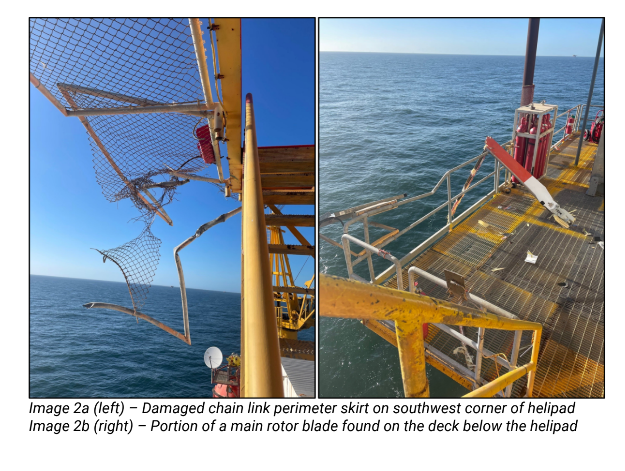
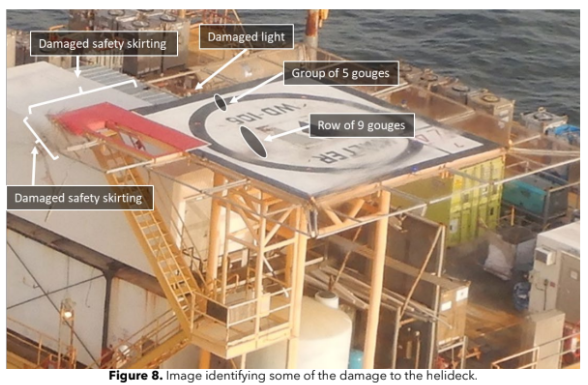
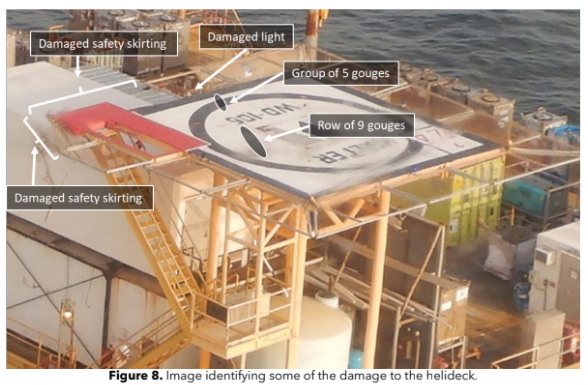
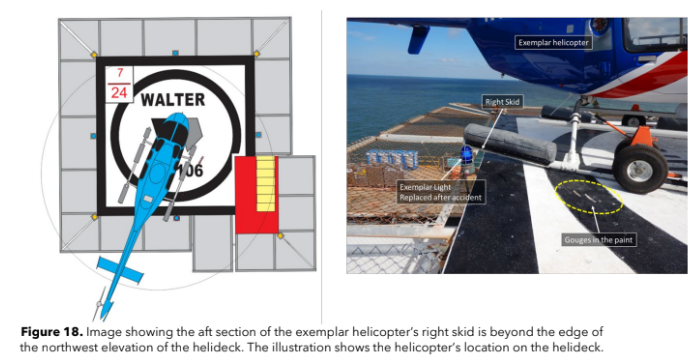
From the factual report, below are graphics showing the helideck damage and assumed final position of the helicopter.

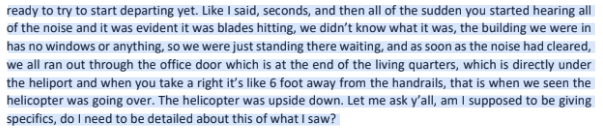
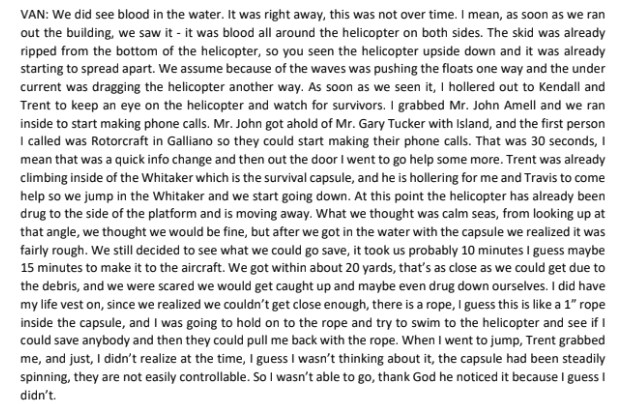
Excerpts from the testimony of a worker at the platform who was part of an attempted search and rescue operation in the platform’s Whitaker escape capsule:

Read Full Post »

As we enter the third month of 2024, BSEE has finally updated the incident tables to include 2022 data.

The OCS program managers I was privileged to work for would never have accepted such delays in posting fundamental safety data. Carolita Kallaur (RIP) wouldn’t tolerate a delay of 14 days in publishing quarterly incident statistics, let alone a delay of 14 months for annual data with no quarterly updates. Transparency and timeliness in informing the public about offshore safety performance was her highest priority. Cynthia Quarterman, Tom Readinger, and other OCS program leaders were similarly insistent on timeliness and transparency in the reporting of incident data.

The belated 2022 BSEE tables also include a glaring error. The most important figure, the number of fatalities, is incorrect. Five workers died from US OCS incidents in 2022, not one. The fatal helicopter crash at the West Delta 106 A helideck on 12/29/2022 that killed four workers (photos below) is inexplicably not included. 

Is the failure to include this fatal incident a regulatory fragmentation issue? OCS safety data should be reported holistically and should not be parsed based on perceived regulatory jurisdiction? In any event, the tragic accident at the West Delta 106 A platform occurred at the helideck, which per the MOA with the Coast Guard is under BSEE jurisdiction.

It’s unfortunate that 2023 data are not available, even in summary form. At a minimum, BSEE should be proudly reporting that 2023 was the first zero fatality year on the US OCS since at least 1963! While acknowledging that this outstanding achievement will be difficult to repeat, it most certainly deserves public attention.

Lastly, what about incident data for the offshore wind program? When will these data be posted?

Read Full Post »