Feeds:
Posts
Comments

Posts Tagged ‘RIght Whale’

  • The UK Met Office told Recharge that the historic trend of wind speeds in Britain was downwards. “The UK annual mean wind speed from 1969 to 2024 shows a downward trend, consistent with that observed globally. There have been fewer occurrences of maximum gust speeds exceeding 40/50/60 knots in the last two decades compared to the 1980s and 1990s.”
  • Citigroup informs that load factors for both onshore and offshore wind are falling behind capacity growth in Britain’s turbine fleet.
  • Per the Citigroup analysts, the increasing focus on wind wakes in UK waters has led to a ballooning number of disputes between developers.
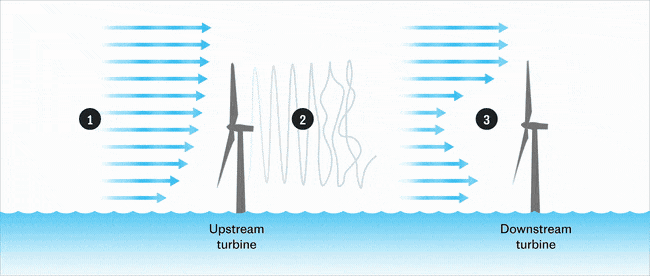
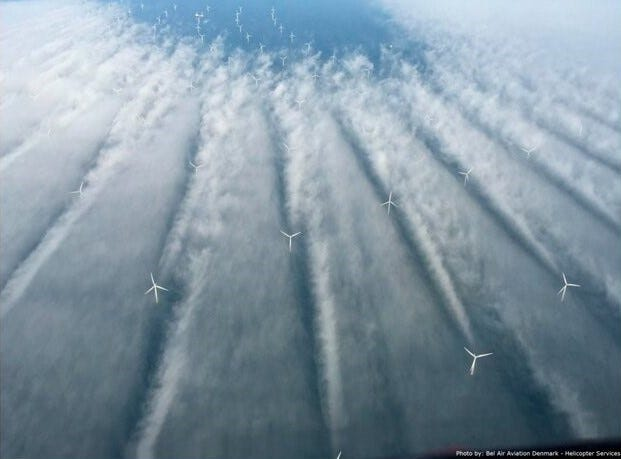
  • Entire wind farms can influence each other through large-scale wake effects. These farm wakes have been observed to extend more than 100 km downstream from a wind farm and can cut the yield of turbines in the wake by tens of percents.
  • In addition to wake losses, local turbulence in the wake regions creates significant unsteady fatigue loads on the downstream turbines, which shorten their working life.
  • Wind wakes grow with turbine size. Bigger wind turbines deliver financial economies of scale, but don’t greatly increase the total power per unit area because they must be spaced farther apart
  • recent study shows that hydrodynamic conditions in the ocean altered by wind wakes can strongly influence marine primary production (phytoplankton).
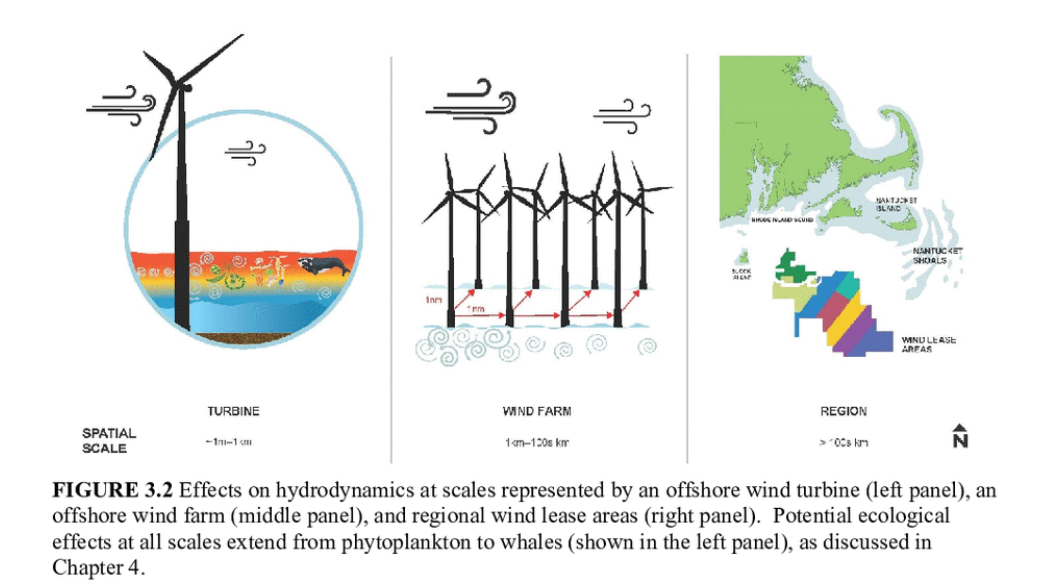
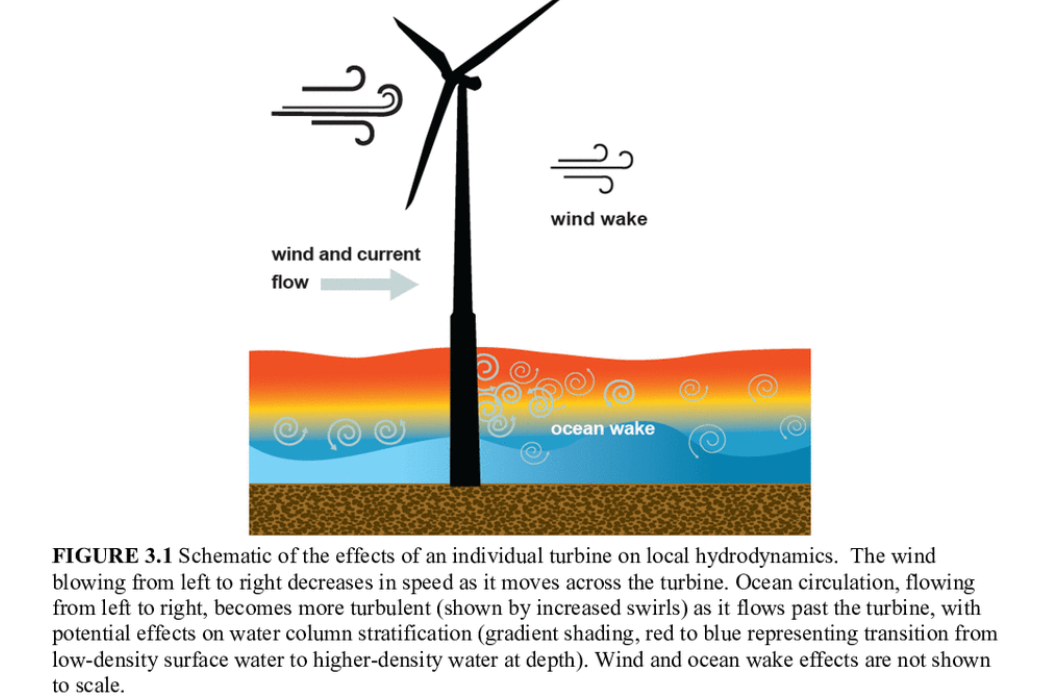
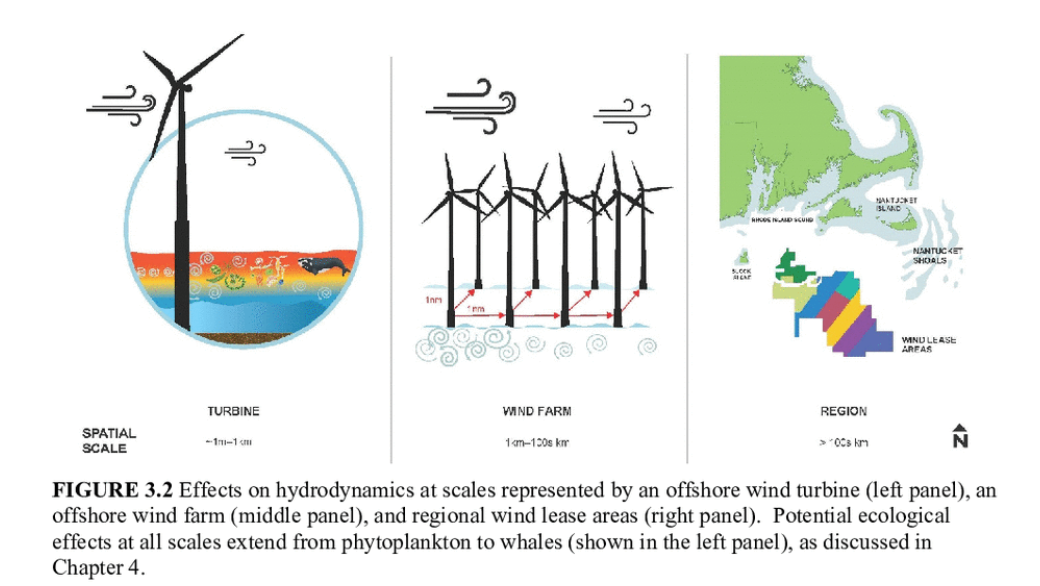
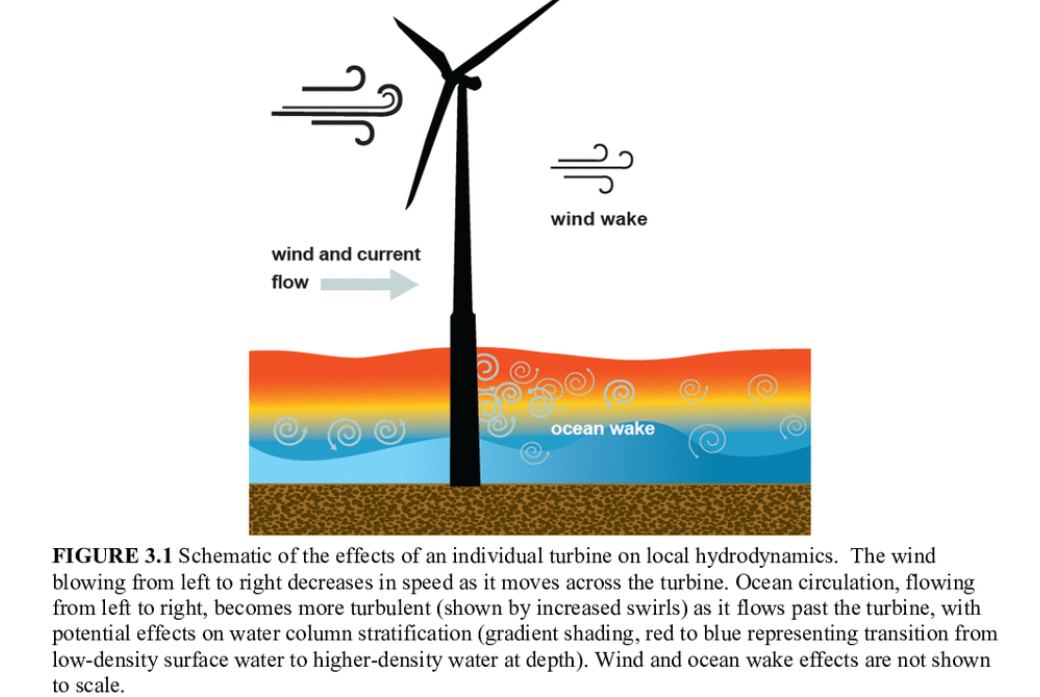
  • The US National Academy of Sciences advised BOEM about the hydrodynamic effects of wind turbines and the potential implications for the endangered North Atlantic right whale (see figure below).
Wind resource management is reminiscent of the early years of oil production when the “law of capture” reigned supreme and wasteful production practices were a self-defense mechanism.
Read Full Post »

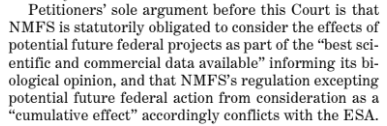
The Dept. of Justice (DOJ) has responded (attached) to the ACK for Whales petition (ACK is the FAA abbreviation for Nantucket) to the Supreme Court to review the First Circuit’s ruling on the Vineyard Wind project. (Also see the amicus brief filed by the Aquinnah Wampanoag Tribe of Gay Head).

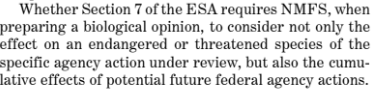
The question before the Supreme Court:

Excerpt from the DOJ filing:

The petitioners’ “sole argument” is rather compelling to this non-attorney. Given that multiple offshore wind projects are planned for Right whale habitat, how do you fulfill your endangered species responsibilities by only considering the first project (I.e. Vineyard Wind 1)?

(In light of Vineyard Wind’s performance to date, one could also argue that the Right whale is jeopardized by the Vineyard Wind project alone.)

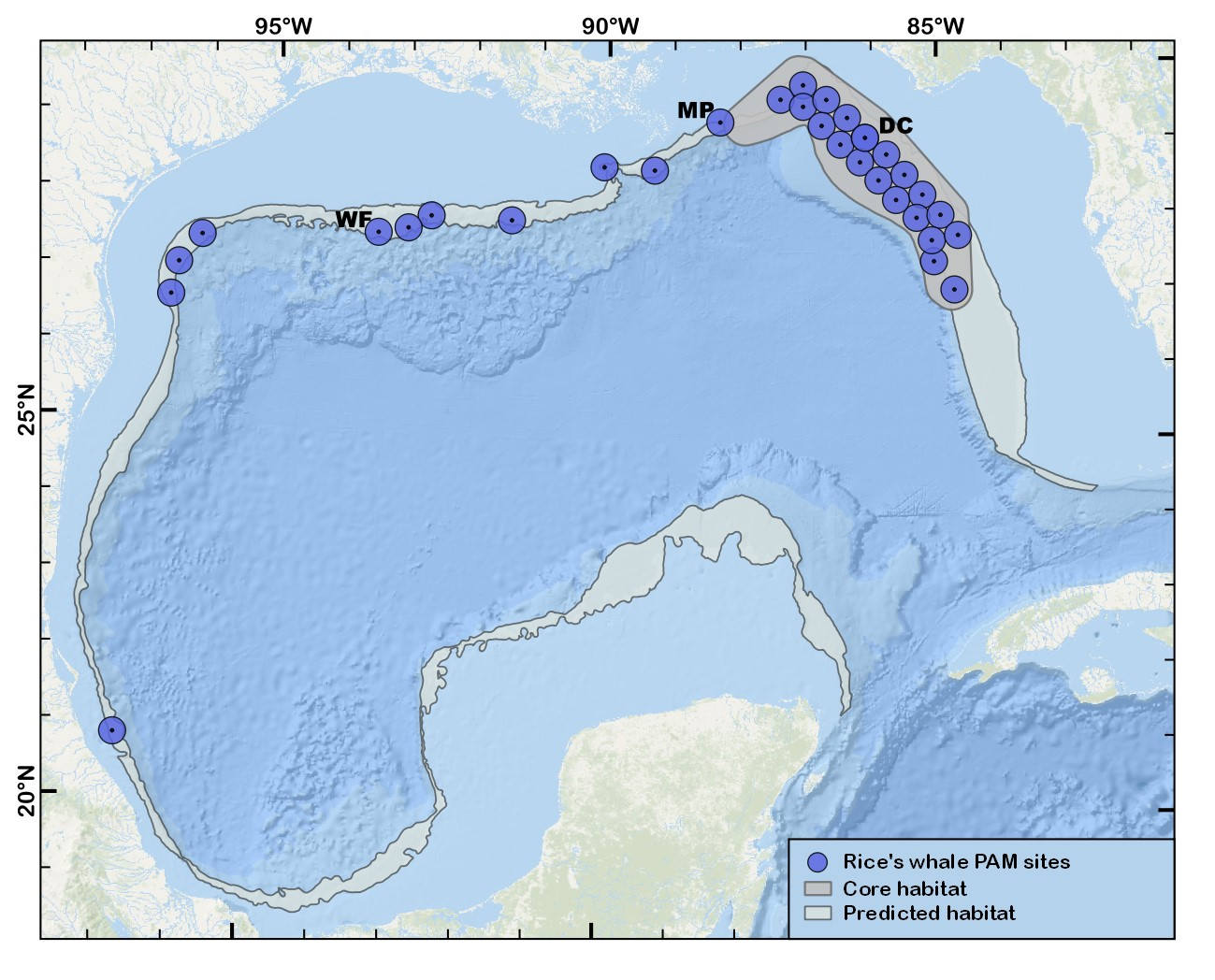
Keep in mind that the Federal govt wanted to block all oil and gas leasing in a huge swath of the Gulf of Mexico because of far more speculative concerns about potential impacts to Rice’s whales.

Read Full Post »

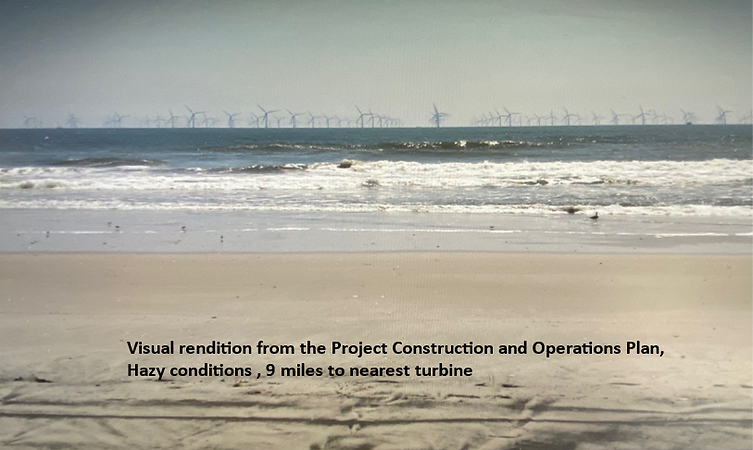
As a boy, my grandfather owned a home “down the shore” on Long Beach Island (LBI). From the beach, all we saw were swimmers, surf fishers, porpoises, and an occasional vessel on the horizon. The offshore wind industrialization will change the island dramatically.

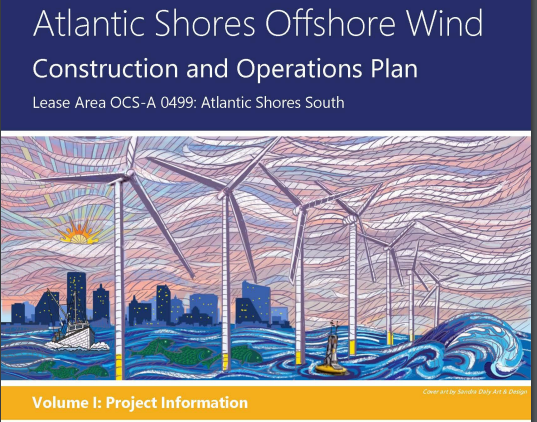
Attached is the release announcing Save LBI’s intent to sue. Their issues are summarized below:

  • Constructing and operating hundreds of wind turbines directly in a prime migration path for the critically endangered North Atlantic right whale.
  • Operational noise from the larger and noisier turbines Atlantic Shores plans to build.
  • Cumulative impact of the East Coast wind-turbine projects on the right whale’s migration.
  • Interference with other uses of the ocean including fishing and national security.
  • No plan or capability, technically or monetarily, to remove turbines and other facilities at the end of their useful life, upon their failure during normal operation, or in the aftermath of a hurricane or other extreme storm event.
  • Failure to account for structural failures such as the Vineyard Wind turbine blade incident, the damage from such failures to the ocean and beaches, and how that damage will be remediated.
  • Excessive electric bill increases under the State’s Offshore Wind Energy Development Act.

The Endangered Species Act issues are similar to those that the Nantucket group ACK for Whales is trying to elevate to the Supreme Court.

Perhaps not the best choice of graphic if you want to sell the project as being environmentally benign and compatible with other uses.

Read Full Post »

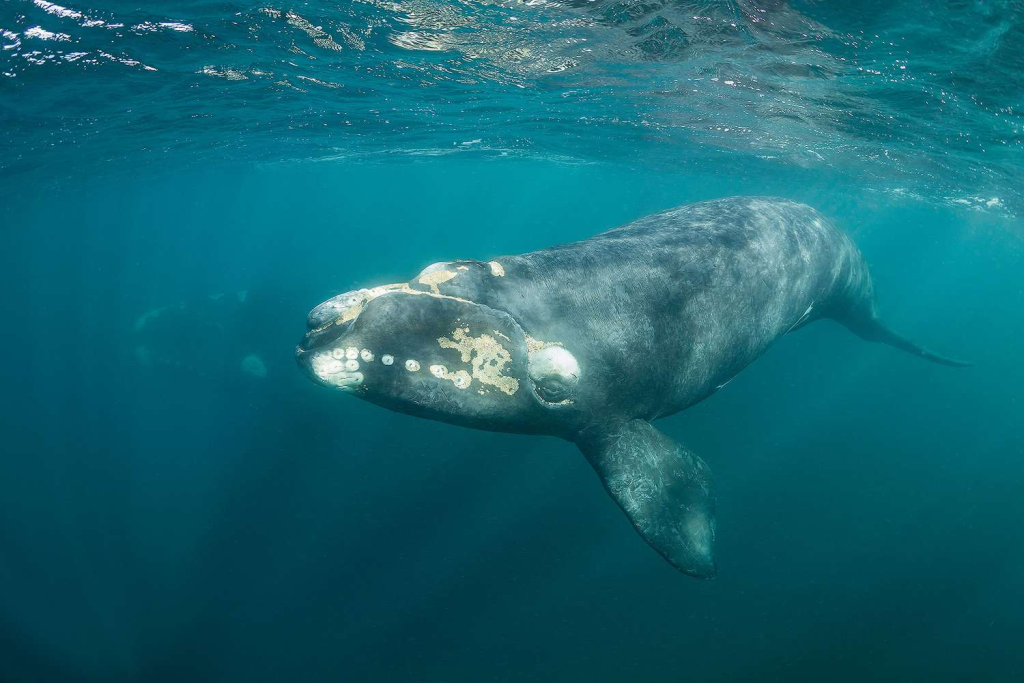
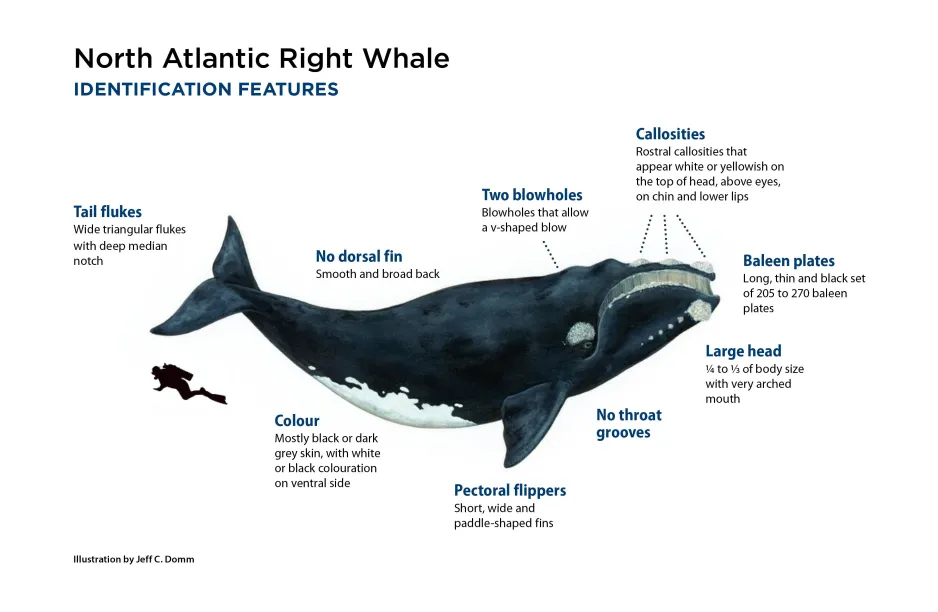
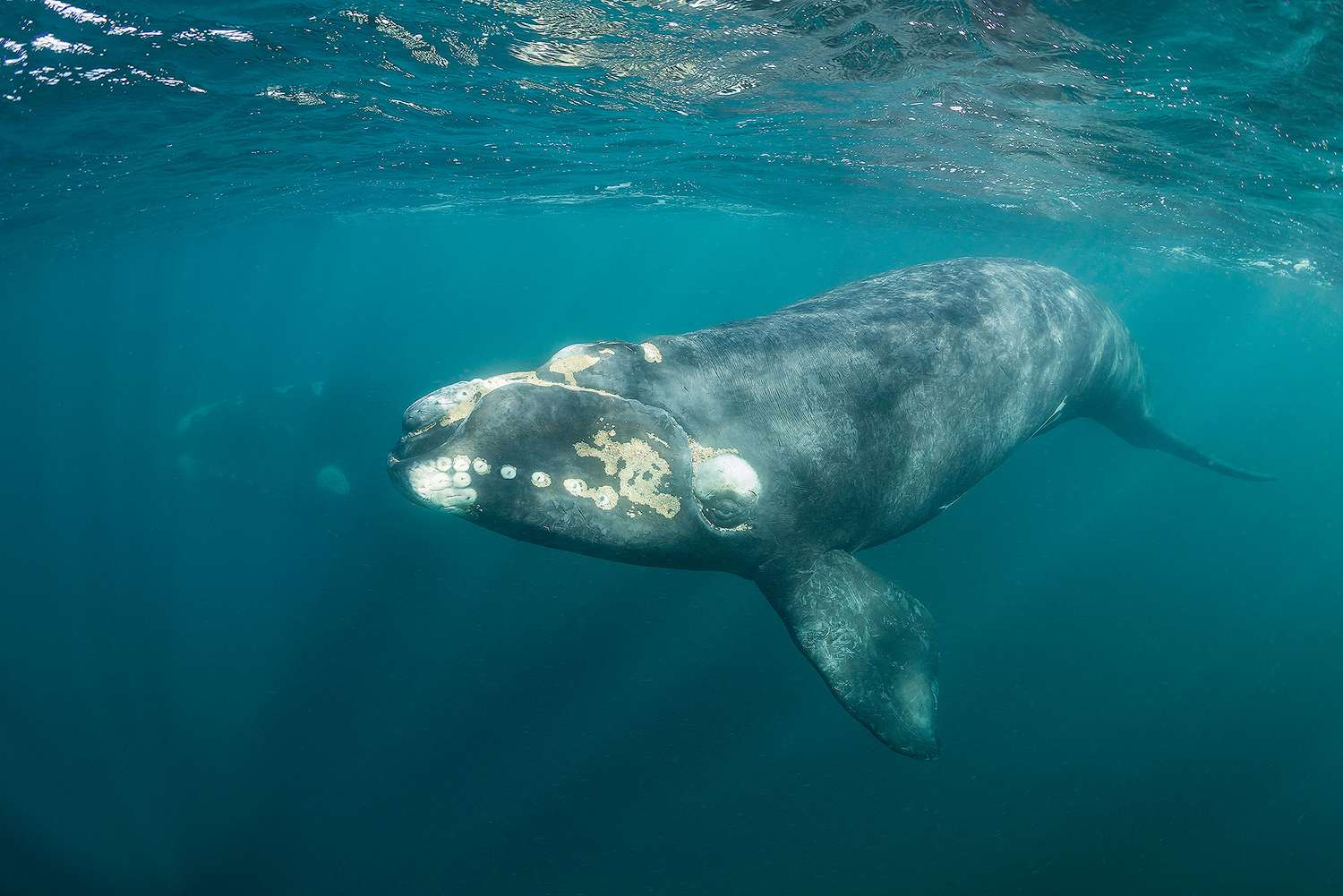
North Atlantic Right Whale

A new NOAA biological opinion finds that that pile-driving noise associated with the Vineyard Wind project is likely to adversely affect, but not likely to jeopardize, the continued existence of whales, fish or sea turtles listed under the Endangered Species Act (ESA).

This opinion was predictable. On the one hand, denying the adverse effects from extensive pile driving would have been unacceptable to NOAA scientists. On the other hand, a jeopardy finding would have been unacceptable to their political leadership.

If you are wondering how NOAA managed to thread that needle, you will have to wait until their report is publicly available. On Aug. 23, NOAA said the opinion would be available in their library in about 10 days, but the opinion has still not been posted. How do you announce such significant findings without, at the same time, releasing the report?

Understandably, the Nantucket environmental organization ACK for whales is not pleased with either NOAA’s announcement or their failure to release the report:

We are disappointed NOAA announced the conclusions of its bi-op on the Vineyard Wind 1 construction without releasing the report or the data on which it relied,” ACK For Whales stated. “NOAA’s own data show that in 2023, there were 151 marine mammal strandings in Massachusetts alone with 75 occurring from Jun 2023 to Dec 2023, the months that pile driving was active. This compares to 77 strandings for all of 2015, before OSW activity started – essentially a 100 percent increase. Most of those strandings in 2023 (n=55) occurred from Oct to Dec when VW was racing to get foundations installed. Out of the 47 bases installed in 2023, 68 percent were installed in the last three months of the year.”

In January, BOE raised concerns about the collaborative BOEM-NOAA-wind industry strategy to protect the right whale. Per that strategy, BOEM and NOAA view themselves as partners with the wind industry. Is this biological opinion an example of NOAA working with their partners in accordance with their joint strategy? While regulator-industry collaboration is essential for effective offshore development, be it wind or oil and gas, regulators and operating companies have distinctly different missions and responsibilities, and should not be viewed as partners.

The sharp contrasts between the operating restrictions for the right whale (Atlantic wind) and the Rice’s whale (Gulf of Mexico oil and gas) demonstrate the inconsistencies in ESA regulation. Are major energy companies partners when developing wind projects and adversaries when producing oil and gas?

Lastly, a letter from NOAA’s Lead Biologist that is attached to that post further points to a disconnect between scientific concerns and wind energy regulatory policy, and is thus germane to this discussion.

Read Full Post »

In the wake of the Vineyard Wind turbine blade incident, it’s important to note that marine debris is a significant risk factor for mammals. This is a particular concern for baleen whales, like the endangered right whale, which filter large amounts of water. Per NOAA:

Marine Mammals: Many species of marine mammals have also been confirmed to eat marine debris. A review by Kühn and van Franeker found that 69 species of marine mammals have been found to ingest debris – that’s 56% of all marine mammals! This includes 44 species of odontocetes (toothed whales), manatees, and multiple seal species. Marine mammals are highly protected, which can make it difficult to research them. Most research on marine mammals takes place after an animal dies, making it difficult to understand what marine debris live animals eat. However, we do know that because baleen whales filter extremely large amounts of water while feeding, they may get plastic debris entangled in their baleen plates. 

An Argentinian study describes the “finding of plastic litter in the digestive tract of a southern right whale (Eubalaena australis) juvenile male, which was found dead on the shores of Golfo Nuevo, Chubut, Argentina in 2014.”

Read Full Post »

North Atlantic Right Whale

Key takeaways after reviewing the BOEM/NOAA strategy document:

NARW status (pages 7-14):

  • Roughly 237 NARWs have died since the population peaked at 481 in 2011, exceeding the potential biological removal (PBR) level on average by more than 40 times for the past 5 years (Pace III et al. 2021).
  • Human-caused mortality is so high that no adult NARW has been confirmed to have died from natural causes in several decades (Hayes et al. 2023).
  • Most NARWs have a low probability of surviving past 40 years even though the NARW can live up to a century.
  • There were no first-time mothers in 2022.
  • About 42% of the population is known to be in reduced health (Hamilton et al. 2021)
  • A NASEM study confirmed that offshore wind has the potential to alter local and regional hydrodynamics
  • “Effects to NARWs could result from stressors generated from a single project; there is potential for these effects to be compounded by exposure to multiple projects.” (p. 14)

BOEM/NOAA strategy:

  • No new mitigation is recommended pending further study.
  • “BOEM and NOAA Fisheries will work together alongside our partners (including the OSW industry) to further develop the information and science the agencies will use to inform their decisions to responsibly develop OSW while protecting and recovering NARWs.” (Comment: While regulator-industry collaboration is essential for effective offshore development, be it wind or oil and gas, regulators and operating companies have distinctly different missions and responsibilities and should not be viewed as partners.)
  • (p. 15): “As the OSW industry continues to grow and as projects begin construction, BOEM and NOAA Fisheries will continue to work with our partners to evaluate existing strategies and to further collect and apply newly available information to inform future decisions. This Strategy is an integral step to organize BOEM, NOAA Fisheries, and their partners around a shared vision and clear path to effectively study and manage this issue moving forward.” (???)
  • (p.17): BOEM will “attempt to avoid issuing new leases in areas that may impact potential high-value habitat and/or high use areas for important life history functions such as NARW foraging, migrating, mating, or calving. For areas that are leased, permitting activities should minimize any known or potential threat to NARWs and their habitats, and developers and BOEM should support research and monitoring.”

Questions:

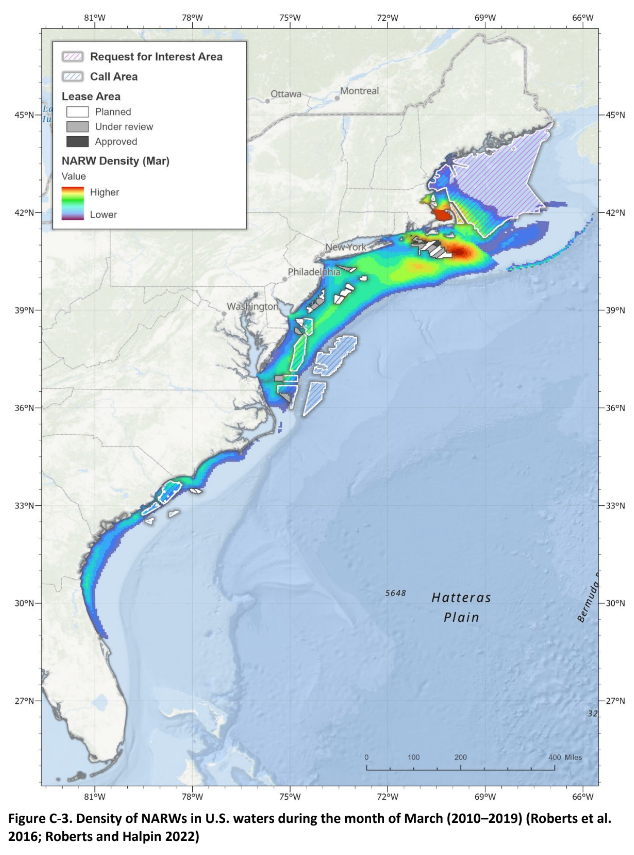
Pictured below: density of NARWs near wind leases and hydrodynamic effects of turbines

Read Full Post »

This impressive NOAA study confirms the importance of Nantucket Shoals as a feeding ground for right whales and implies a need for protective measures in months (October through December) when the existing restrictions do not apply.

The importance of Nantucket Shoals as a feeding ground for the critically endangered North Atlantic right whales within the southern New England wind energy is well understood (Leiter et al., 2017; Quintana-Rizzo et al., 2021; Estabrook et al., 2022). Similarly, year round presence of this species has been demonstrated since as early as 2011 (Quintana-Rizzo et al., 2021; Estabrook et al., 2022), showing that North Atlantic right whales have consistently used this region for well over a decade. Currently, the National Marine Fisheries Services and Bureau of Ocean Energy Managements policy is to exclude pile driving during the months of January through April in the southern New England wind energy area. Evaluation of the need for further management protections are needed for North Atlantic right whales especially in October through December, along with further assessment of risk to this species (Southall et al., 2023).

A map of the southern New England planned offshore wind energy lease areas off the East Coast of the United States (insert). Passive acoustic recorders (SoundTrap and F-POD recorders) were deployed for varying time periods (see Table 1) between January 2020 and November 2022 at seven sites surrounding the wind energy areas.

Note (below) the acoustic presence of the North Atlantic Right Whale (NARW) from Oct. through April.

Weekly acoustic presence summary of eight cetacean species (harbour porpoise, sperm whale, humpback whale, minke whale, North Atlantic right whale (NARW), sei whale, fin whale, blue whale) and one family (Delphinid sp.). The boxplots represent the median number of days of acoustic presence per calendar week across all data at four recording sites, in the southern New England offshore wind energy area. Only recorders with 2 or more years of data (NS01, NS02, COX01, and COX02) were used. Horizontal lines within the boxes indicate the median, box boundaries indicate the 25th (lower quartile) and 75th (upper quartile) percentiles, vertical lines indicate the largest (upper whisker) and smallest (lower whisker) values no further than 1.5 times the interquartile range, and black dots represent outliers.

Read Full Post »

Study: Potential Hydrodynamic Impacts of Offshore Wind Energy on Nantucket Shoals Regional Ecology: An Evaluation from Wind to Whales, National Academies of Sciences, Engineering, and Medicine.

Comments:

  • Kudos to BOEM for sponsoring this important study which identifies the potential ecological effects of offshore wind farms on the endangered North Atlantic Right Whale.
  • BOEM must now consider, and presumably implement, the committee’s recommendations. This could prove to be especially challenging given BOEM’s prominent wind advocacy role.
  • All 9 of the study committee members are scientists with appropriate backgrounds and specialties (see Appendix A of the report).
  • As a rule, the NAS notes potential conflicts of interest in the biographical statements. Two possible conflicts were identified: one committee member was a “compensated member of a review panel for Ortsted’s Offshore Wind Research Plan in 2021,” and another works for a firm that “has been partially funded by offshore wind development companies.”
  • The panel recommends robust monitoring during all phases of wind development and operations in the North Atlantic region. Is that sufficient given that hundreds of turbines could be installed before the data have been acquired and analyzed?
  • The concerns raised by the NAS committee are not new. 18 months ago, NOAA’s Chief of Protected Species cited some of the same concerns in recommending a conservation buffer zone adjacent to Nantucket Shoals.

. Background graphics, excerpts, and recommendations are pasted below.

Important excerpts:

  • p.2: A single offshore wind turbine can alter local hydrodynamics by interrupting circulation processes through a wake effect and induce turbulence in the water column surrounding and downstream of the turbine supporting structure, the pile. Moving away from single turbine effects and looking at arrays of turbines in a wind farm or at multiple adjacent offshore wind farms, these effects become more complex with implications for both local and regional circulation.
  • p.4: At the wind farm scale, the potential impacts include reductions in ocean current speeds, stratification, ocean surface wind speed, and deflection of the pycnocline. At the regional scale, perturbations due to offshore wind turbines are difficult to quantify because of the natural processes that drive significant environmental variability across the region.
  • p.6: Recommendation: The Bureau of Ocean Energy Management, National Oceanic Atmospheric Administration, and others should support, and where possible require, the collection of oceanographic and ecological observations through robust integrated monitoring programs within the Nantucket Shoals region and in the region surrounding wind energy areas before and during all phases of wind energy development: surveying, construction, operation, and decommissioning. This is especially important as right whale use of the Nantucket Shoals region continues to evolve due to oceanographic changes and/or the activities and conditions relevant to offshore wind farms.
  • p.7: Recommendation: The Bureau of Ocean Energy Management, National Oceanic Atmospheric Administration, and others should support, and where possible require, oceanographic and ecological modeling of the Nantucket Shoals region before and during all phases of wind energy development: surveying, construction, operation, and decommissioning. This critical information will help guide regional policies that protect right whales and improve predictions of ecological impacts from wind development at other lease sites.

Read Full Post »

Right whale – Atlantic
Rice’s whale – Gulf of Mexico

Both species are endangered, but the operating restrictions differ significantly:

North Atlantic wind leases: right whale restrictions GoM Lease sale 261: Rice’s whale restrictions
No leasing prohibitions or turbine-free areas have been established despite concerns raised by NOAA (see attached letter)All of the expanded Rice’s whale area is excluded from leasing (i.e. the entire area between the 100 and 400 m isobaths across the GoM)
seasonal 10 kt max speed for vessels > 65′year round 10 kt max for all vessels
vessel separation distance of 500 m for any sighted right whale or unidentified large marine mammalseparation distance of 500 m for any sighted Rice’s whale; if unsure, must assume whale is Rice’s
no visibility restrictions for vessel operationsvessels must avoid transit between dusk and dawn and other times of low visibility
no automatic identification system (AIS) requirementsvessels > 65′ must have AIS functioning at all times
no documentation requirementsmust maintain records to document compliance

Note (below) the proximity of existing and planned wind leases to moderate to high density RIght whale areas compared to the more speculative expanded Rice’s whale area in the central and western GoM that is predicted based on passive acoustic recordings.

Read Full Post »

Vineyard Wind false start?

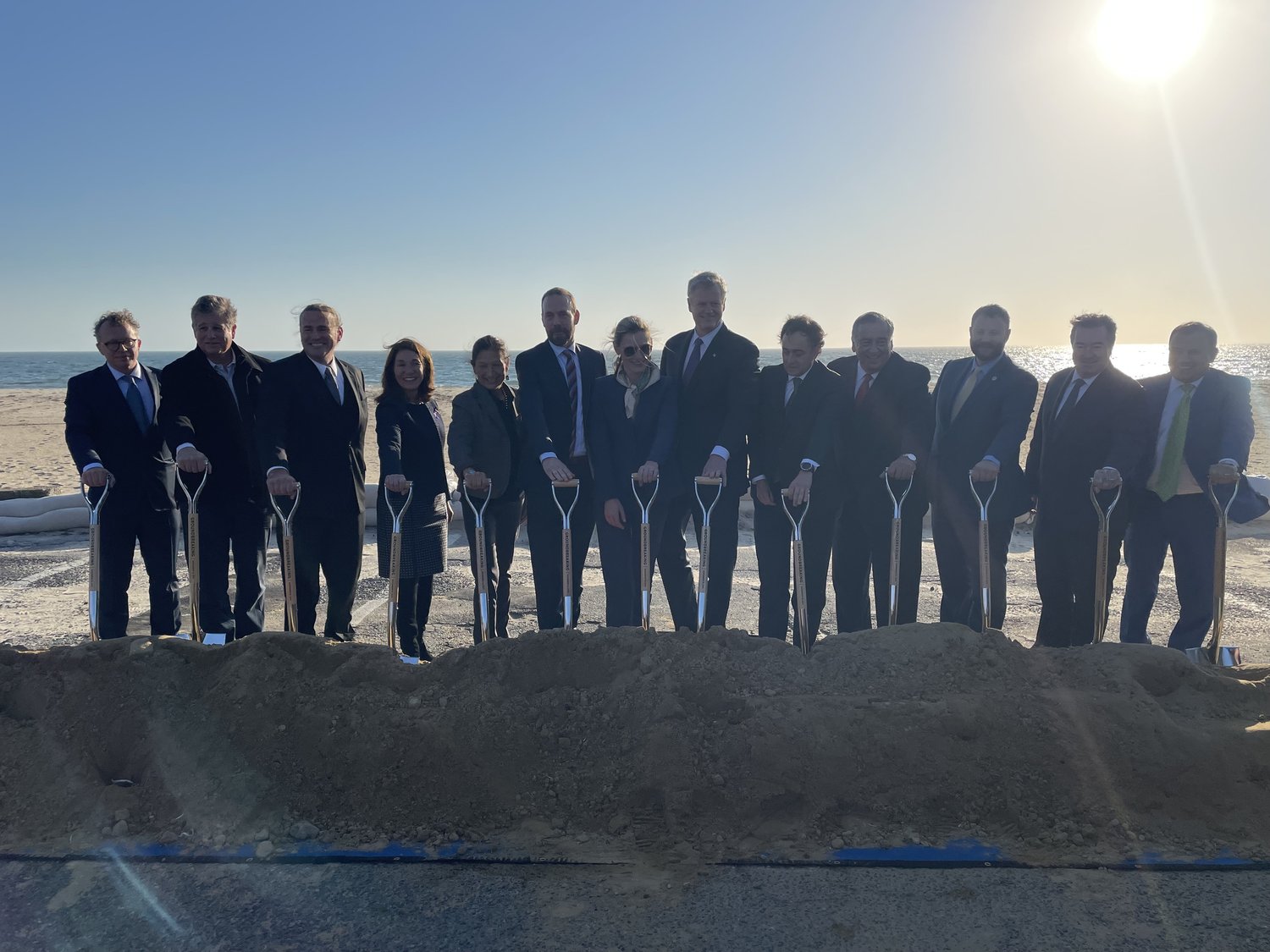
Nearly 17 years after the Energy Policy Act of 2005 (incorporating language drafted by Minerals Management Service staff) authorized wind energy projects in Federal offshore waters, commercial offshore wind power is not imminent. Despite enthusiastic political support and promised State and Federal subsidies, no commercial scale offshore wind development has commenced. The groundbreaking ceremony for Vineyard Wind I (pictured above), the first project approved by BOEM, may prove to have been premature. The project faces multiple lawsuits from commercial fishing organizations and an organization concerned about possible impacts to the endangered right whale.

North Atlantic right whale - Whale & Dolphin Conservation USA
North Atlantic Right Whale

Read Full Post »