Remembering the 123 offshore workers who lost their lives on this dayin 1980 in one of the offshore industry’s great tragedies 🙏
See the excellent interview with Magne Ognedal that describes the evolution of Norway’s highly regarded offshore regulatory regime following the Alexander Kielland tragedy.
A recent fatal incident involving a person working on an offshore oil and gas facility has provided a tragic reminder of the risks of work involving the rigging, manipulation and movement of loads, including people and equipment.
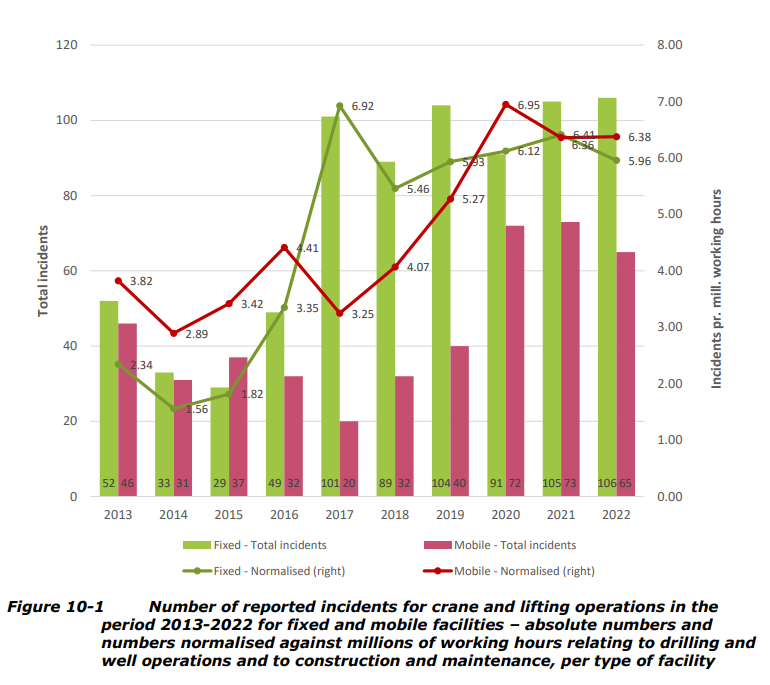
Despite the international focus on lifting operations over the past 30 years, Norwegian and US data do not suggest improved performance. PSA Norway’s “Trends in risk level on the Norwegian Continental Shelf” report shows an increase in lifting incident rates for both fixed and mobile facilities over the past 10 years (first chart below).
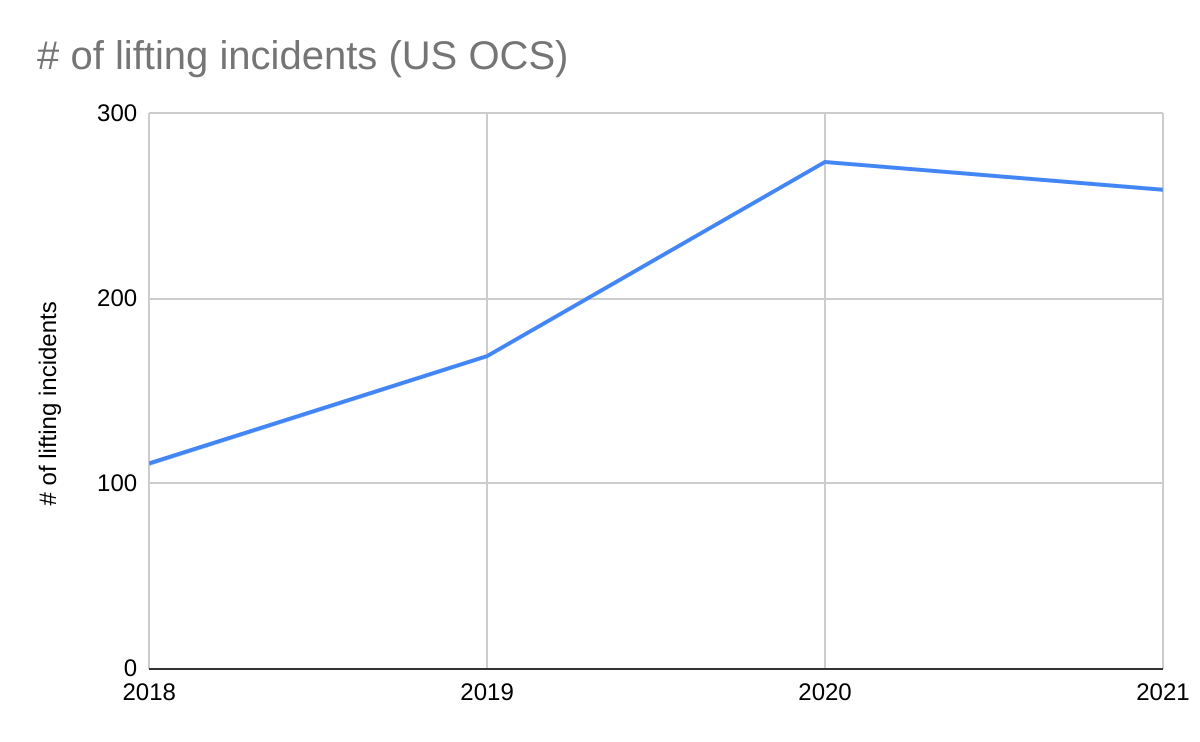
Similarly, recent lifting data from BSEE’s incident tables (summary below) and Jason Mathew’s June 2022 presentation (pages 48-63) suggest that lifting risks are not being effectively mitigated. Why are industy/regulator messages regarding hazard identification and controls not achieving the desired results? Perhaps a fresh look and renewed dialogue are needed.
Crane or personnel/material handling incident (as used in 30 CFR 250.188(a)(8)) refers to an incident involving damage to, or a failure of, the crane itself (e.g., the boom, cables, winches, ballring), other lifting apparatuses (e.g., air tuggers, chain pulls), the rigging hardware (e.g., slings, shackles, turnbuckles), or the load (e.g., striking personnel, dropping the load, damaging the load, damaging the facility) at any time during exploration, development, or production operations on the OCS. This includes all incidents of shock loading that, upon inspection, reveals damage to any part of the crane, lifting apparatus, rigging hardware, or load. Personnel handling incidents include events involving swing ropes, personnel baskets, and any other means to move personnel. Material handling incidents include any activities involving the loading and unloading of material and moving it on, off, or around an OCS facility.
-The government has decided to implement measures to strengthen preparedness related to infrastructure, land facilities and installations on the Norwegian continental shelf.
-Part of the background for the increased preparedness is reports of increased drone activity on the Norwegian continental shelf that we have seen in recent weeks. It concerns drones of various sizes. Activity has been increasing, especially in September.
Circumstances where drones have violated safety zones around facilities are now being investigated by the police. We refer to Sør-Vest Police District for questions about this.
-On Tuesday, it became known that the Nord Stream 1 and 2 gas pipelines were damaged, probably due to sabotage. The Norwegian Petroleum Safety Authority does not want to speculate on who is behind it, or other circumstances related to the incident.
-On Thursday 29 September, we invited the parties in the oil and gas industry to an extraordinary meeting in the Security Forum to discuss the ongoing events
Good article from our friends at the Petroleum Safety Authority of Norway. When old guys reminisce, people need to listen 😉
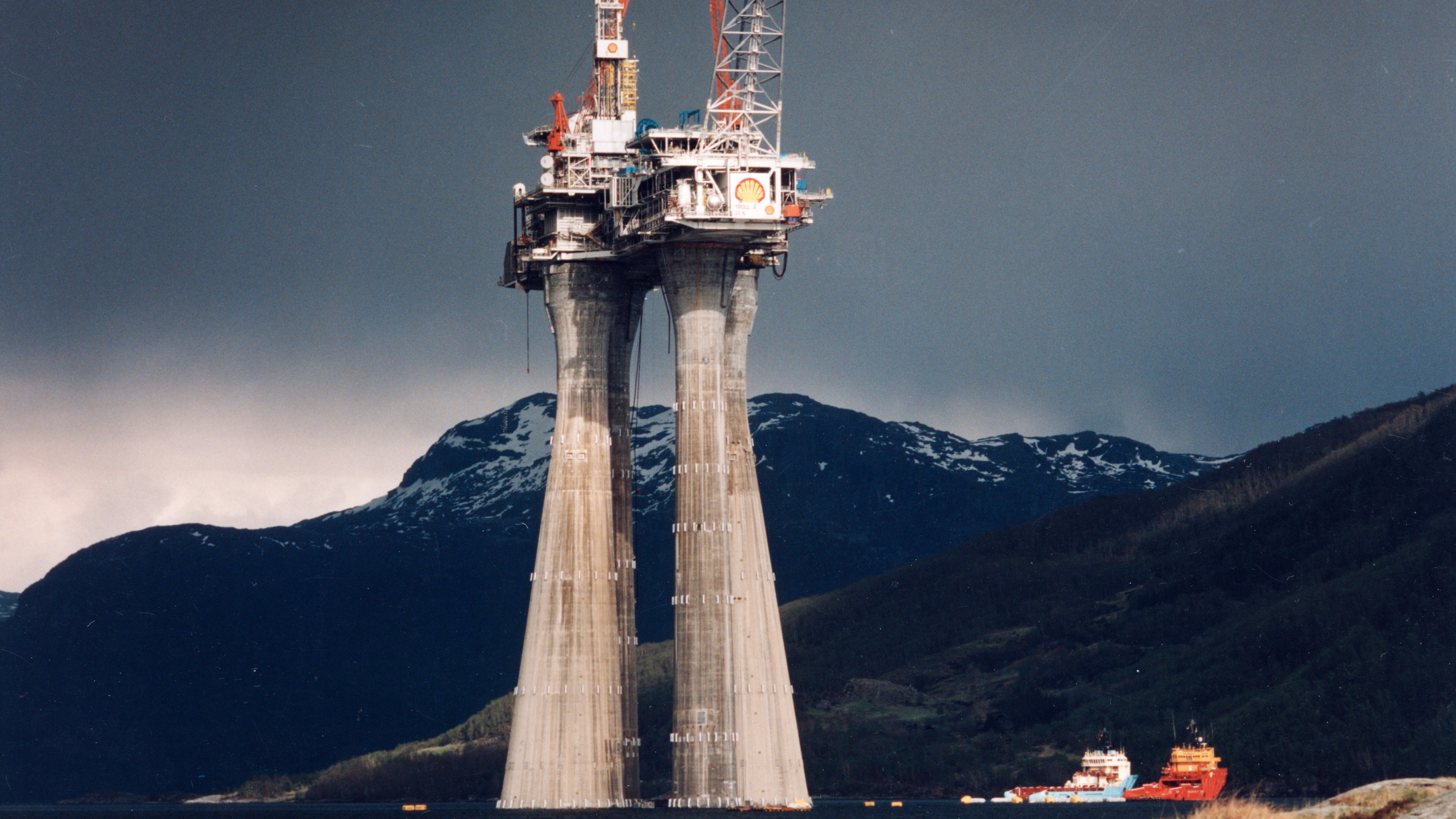
“Reagan feared that the world, and especially Europe, would become too dependent on Soviet gas, and saw Troll as an opportunity to create greater independence.”
“Lerøen sees parallels to the current situation, with Russia’s invasion of Ukraine, and the importance Norwegian gas has for the EU, which wants to become independent of Russian gas.”
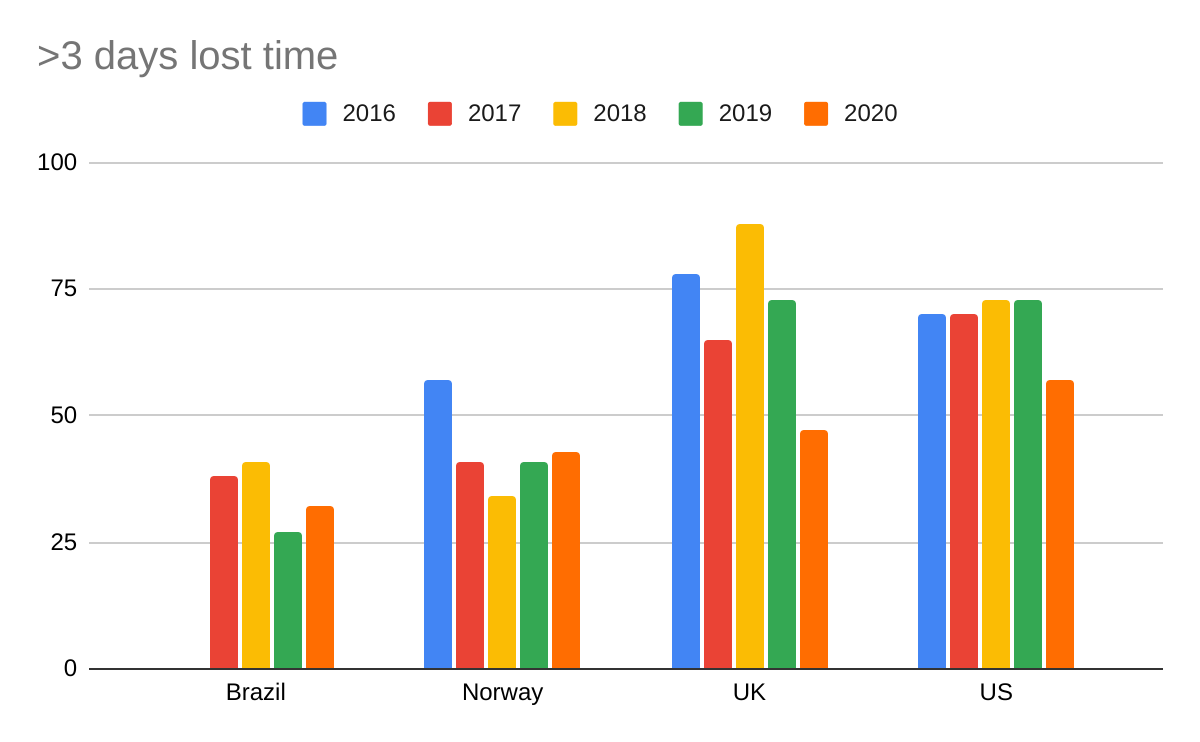
The International Regulators’ Forum (IRF) does a good job of compiling safety performance data for offshore oil and gas operations in member countries. Because these data are collected by the respective regulators and compiled in accordance with established guidelines, we consider the IRF compilations to be the most credible international incident summary data for the offshore industry.
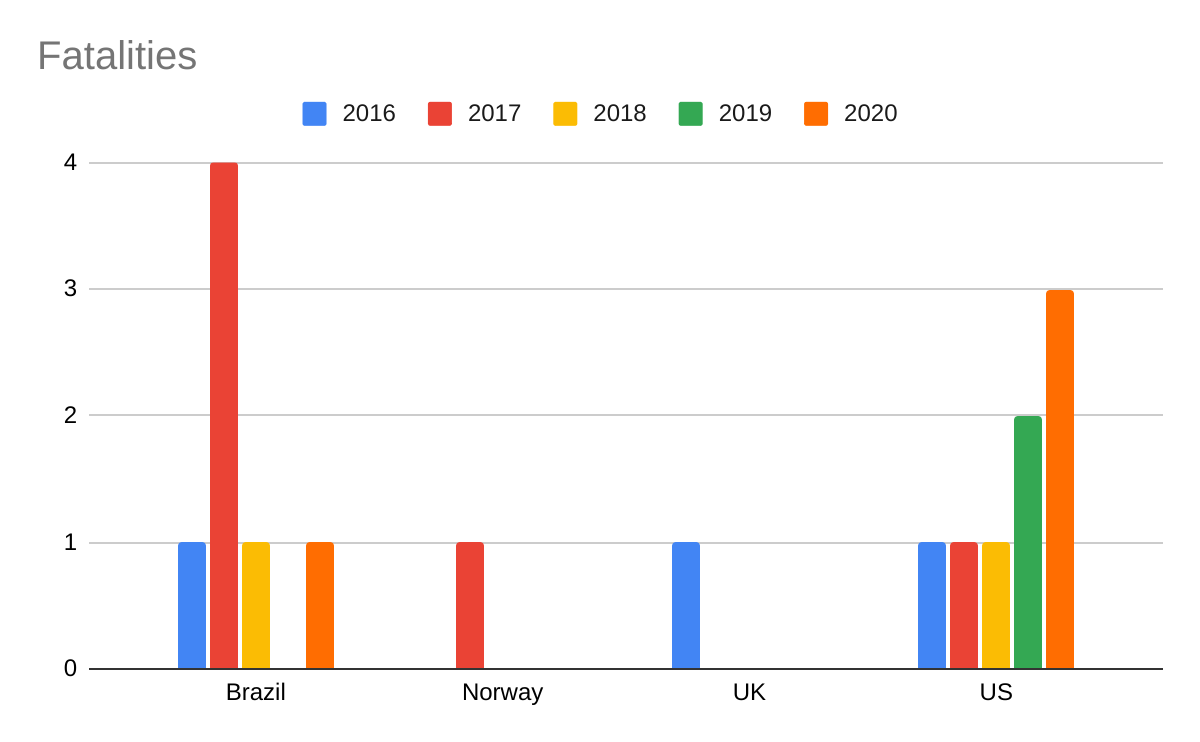
BOE looked at the numbers for the IRF countries with the highest level of activity in terms of hours worked – Brazil, Norway, UK, and US. These countries accounted for 90% of the total hours worked in 2020, the last year for which data are available. The 2020 hours worked (millions) were also relatively similar for the 4 countries: Norway – 41.2, UK – 42.4, US – 50.4, Brazil – 50.7. The differences in hours worked were somewhat greater in the prior years, but not dramatically so.
We charted the fatality and lost-time (>3 days) data (below). Our intent at this point is to draw attention to the IRF data sets, not to assess and compare performance. We do think the overall safety performance in these and other IRF countries, while far from perfect, is quite good given the hundreds of millions of hours worked, complexity of operations, logistical challenges, and difficult operating environments. We recommend that the IRF prioritize the timely posting of these data, and begin providing causation information so that companies and other interested parties can better identify performance issues and safety trends.
Here is the link. I took the liberty of copying this response from the Petroleum Safety Authority Norway because it succinctly captures Charles’ collaborative spirit and so effectively characterizes his career in the offshore energy world.
We are very sorry to hear of Charles death. The international petroleum industry, and particularly the Petroleum Safety Authority of Norway are in great debt to him for his important work in establishing arenas for interactions and cooperation between regulators. Particularly the international research and development network ICRARD, but also the international regulators forum (IRF). He was a master of building such professional networks, and he always made sure that the learnings were shared with other regulators. He has for many years been regarded as a friend to the Petroleum Safety Authority Norway, previously the safety division of the Norwegian Petroleum Directorate. I got to know him as a caring and helping person when I started working for the Norwegian Petroleum Directorate. I had the pleasure to meet with him several times during OMAE conferences where he was a key member of the organizing team and regular contributor to the conference. Øyvind Tuntland and I also had the pleasure to get to know his wife, Elaine. Øyvind remembers kindly staying with Charles and Elaine at their home. We want to express our deepest condolences to Elaine and the family for their loss. We will miss him deeply as a friend, mentor and a knowledgeable colleague. Gerhard Ersdal on behalf of the Petroleum Safety Authority Norway, 13 December 2021.

 Bud's Offshore Energy (BOE)