Feeds:
Posts
Comments

Posts Tagged ‘Pemex’

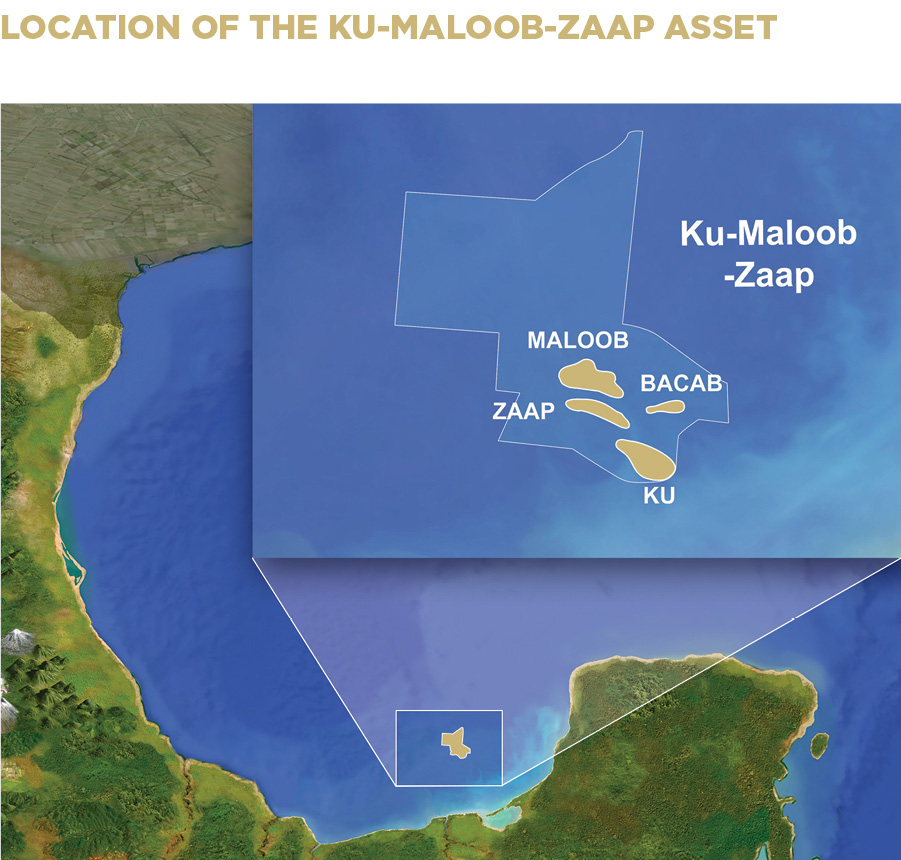
Mexico’s state-owned oil company, Pétroleos Mexicanos (Pemex), has confirmed an attack on a platform in the Ku-Maloob-Zaap (KMZ) oil complex located off the coast of Campeche state.

From the Pemex statement:

  • On the night of 13 February, eight unauthorised individuals boarded the Zaap-D platform in the KMZ.
  • The intruders stole radio equipment, various tools, and breathing apparatus.
  • No employees were physically harmed, although two workers were evacuated due to stress-related concerns.
  • In response, the company has strengthened security, deploying additional security personnel and coordinating with the navy ministry (Semar). (Question: What security measures were in place prior to the incidents?)
  • Mexican President Claudia Sheinbaum confirmed that the navy was “supporting Pemex in monitoring and responding to any assault on offshore platforms.” (Question: Did they apprehend the perpetrators?)

Not mentioned by Pemex, but reported elsewhere:

  • Two platforms, Ku-H and Zaap Delta, were attacked 
  • The pirates were armed
  • There were at least 5 gunmen
  • Oil platforms in Campeche and Tabasco, 12 cargo ships, five fishing boats and ten smaller vessels accounted for 56 robberies in 2022.

More:

  • The Ku Maloob Zaap complex accounts for nearly 40% of PEMEX’s production
  • The field became the Mexico’s primary oil asset in 2009, reaching a production peak of 874.731Mb/d in 2018.
  • By October 2023, production dropped 246Mb/d, reaching 616.2Mb/d. 
  • PEMEX’s overall oil production has fallen by 12.1%, decreasing from 1.81MMb/d in 2018 to 1.59MMb/d in 2023. 

Read Full Post »

  • Field: Trion
  • Operator: Woodside
  • Partner: Pemex
  • Water depth: 2500 m (Mexico’s first ultra-deepwater project)
  • Distance from US maritime border: 30 km
  • Distance offshore: 180 km
  • Reserves: 324.7 million BOE proved, 478.7 million BOE probable
  • Production: Floating Production Unit with an oil production capacity of 100,000 B/D connected to an FSO vessel with a capacity of 950,000 bbl. Gas not used to power FPU will be reinjected
  • First oil: 2028
  • Only mentioned here 😉: The predicted Rice’s whale habitat extends southward between the 100 and 400 m isobaths into Mexican waters. Background.

Read Full Post »

Mexico Map

As I understand it:

  1. The Zama field, with estimated reserves of ~700 million barrels, has a common reservoir that underlies Talos Block 7 and a contiguous Pemex block.
  2. Talos drilled the discovery well and 3 delineation wells. Pemex has not drilled a well.
  3. The companies were unable to concur on the terms of a unit agreement.
  4. A third party study for the purpose of initial tract participation, determined that Pemex has a 50.4% share of the reserves. Talos has criticized this study. A previous study had determined that the Talos group has 59.6% of the reserves.
  5. On July 2, 2021, the Mexican Ministry of Energy (SENER) selected Pemex as operator. Talos is disputing that decision.

Thoughts:

  • One of the few energy policy mistakes that the US has not made is the formation of a national oil company. There have been attempts, most notably the 1975 Senate proposal to establish the Federal Oil and Gas Corporation or FOGCO. (I’m not making this up!).
  • When Mexico’s national oil company is one of the competitors, SENER shouldn’t be determining the unit operator. Instead, an arbitration or independent review process should be established.
  • Pemex appears to have been largely a Zama field passenger to date. The discovery well and all delineation wells were drilled by Talos. If the “rule of capture” applied, Talos would be proceeding with development and Pemex would be negotiating with very little leverage.
  • If Mexico wants to discourage foreign investment in their offshore sector, this is a good way to do it.

Read Full Post »

Jupiter Flotel

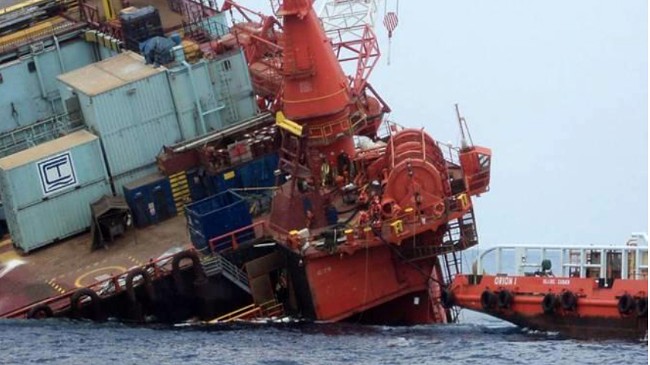
….interest in offshore accidents quickly diminishes.  The Pemex Jupiter semisubmersible quarters facility sank last week with 713 workers aboard (fortunately all were safely evacuated). This stunning near-disaster received minimal coverage. Follow-up reports are non-existent.  As our friend JL Daeschler asked, how does a flotel capsize in calm conditions and shallow water? What went wrong and why? Let’s hope that a comprehensive investigation is conducted and that the findings are shared worldwide (unlike Venezuela’s handling of the Aban Pearl sinking).

As we have noted before, Macondo would have disappeared from the news within a week if the deadly fire and explosion had not been followed by a sustained oil spill. The only investigation would have been by Coast Guard and the Minerals Management Service (which would likely still exist). There would have been no National Commission, National Academy, Chemical Safety Board, or congressional investigations, and prosecution by the Justice Department would have been unlikely.

In the US, offshore spills are media events; other accidents are not. How much attention did the horrific fire and explosion that killed seven workers on the South Pass 60 B Platform receive in 1989? Virtually none. How about the lives lost in helicopter crashes? While the crash that killed 17 off Newfoundland in 2009 has been well studied and reported, offshore helicopter crashes in the US receive almost no attention. Ditto for crane accidents. If we want to build a proper safety culture, we need to pay as much attention to the low-profile accidents as we do the pollution spectaculars, and everyone needs to participate.

Read Full Post »