We need exploration and new discoveries to maintain the production of oil and gas over time, which is important both for Norway and Europe. The applications in TFO 2022 show very good interest among the companies active on the Norwegian continental shelf in looking for new petroleum resources. This is very gratifying, says Oil and Energy Minister Terje Aasland (Ap)
“Norwegian offshore oil and gas workers went on strike Tuesday. The stoppage could reduce the country’s gas output by almost a quarter and intensify supply chain shortages due to Russian gas boycotts by EU nations.”
Norwegian offshore worker disputes tend to be resolved without major work stoppages, and fortunately that appears to be the case with the latest dispute. This would not have been a good time to take Norway’s 1.8 million BOPD and 11.5 BCFD of gas off the market, even briefly.
Tiå går og di seie tiå lege adle sår Men ein mista bror e sår som aldri gror Kanskje vil dårr gå vinter og vår Sei oss klart kor dokker står Håpte på at han sko komma At han sko komma hjem igjen
Time is gone, they said; time would heal all wounds But to lose a brother is a wound that will never heal It could take as long as the never-ending winter and spring [i.e., never] I hope that he should come That he should come home again
“Norway cannot escape the unpleasant fact: this is a form of war profit”, daily paper Dagbladet wrote in an editorial. “While Ukraine is being destroyed, and most other countries are mainly feeling the negative effects of the war, such as higher energy prices, higher food prices and general inflation, we are making a gain”, it said.
On Sunday, the Norwegian government announced that its sovereign wealth fund, the world’s largest, wwould divest its Russian assets, worth around 25 billion Norwegian crowns ($2.80 billion).
Reuters
“In the current situation, we regard our position as untenable,” Equinor Chief Executive Anders Opedal said in a statement. “We will now stop new investments into our Russian business, and we will start the process of exiting our joint ventures in a manner that is consistent with our values.”
Reuters
British oil giant BP said Sunday that it is “exiting” its $14 billion stake in Russian oil giant Rosneft over Moscow’s invasion of Ukraine in one of the biggest signs yet that the Western business world is cutting ties over the Kremlin’s invasion of Ukraine.
A. There’s also plenty of oil leases that are not being tapped into by oil companies, so you should talk to them about that and why.
Hopefully, this was a glib response that is not indicative of the Administration’s understanding of oil and gas exploration and development.
When you acquire a lease, you aren’t buying a certain amount of oil and gas in the ground that you can simply produce at your leisure. You are buying the opportunity to explore for and, if you are fortunate, produce oil and gas.
Exploration begins with the acquisition, processing, and evaluation of geophysical and other data. If these data are encouraging, you seek internal, partner, and regulatory approvals to drill exploratory wells. The drilling of unnecessary wells makes no sense from any standpoint: financial, safety, or environmental.
You have a limited amount of time to initiate production depending on the terms of your lease. Otherwise you lose the lease. The Federal regulators are strict about this, as they should be.
Predictability about which areas it is possible to apply for in APA (allocation in predefined areas; i.e. leasing or licensing) and regular replenishment of new area is important to achieve an effective exploration. APA rounds are therefore conducted annually.
The combination of high production of oil and gas from a total of 94 fields, significant demand and high commodity prices led to a historically high level on the State’s revenues from petroleum.
Production in 2021 came to 102 million standard cubic metres of oil (642 million barrels) and 113 billion standard cubic metres of gas. This corresponds to about four million barrels of oil equivalent per day, a minor increase from the previous year.
Norway wisely eased the petroleum tax burden during the pandemic with favorable results.
The temporary change in the petroleum tax has most likely led to an increase in project activity. The projects would most likely have been carried out even without the tax package, but some of them would have been postponed.
An aspect of Norwegian offshore policy that is confusing to this outside observer is the emphasis on transmitting electric power from shore to offshore platforms (see quote below). In most cases, offshore platforms produce sufficient gas to support their power demands. Should platforms be powered from shore, gas that is not used for platform operations would presumably be marketed for consumption elsewhere or reinjected. If the gas is marketed and consumed elsewhere, there is essentially no net (global) CO2 emissions reduction benefit. Gas that is reinjected is wasted unless there is an enhanced oil recovery benefit. So it would seem that importing electric power from shore would only make sense if the net reduction in offshore gas consumption increased ultimate oil production (which could be viewed as undesirable if you take carbon management to the extreme).
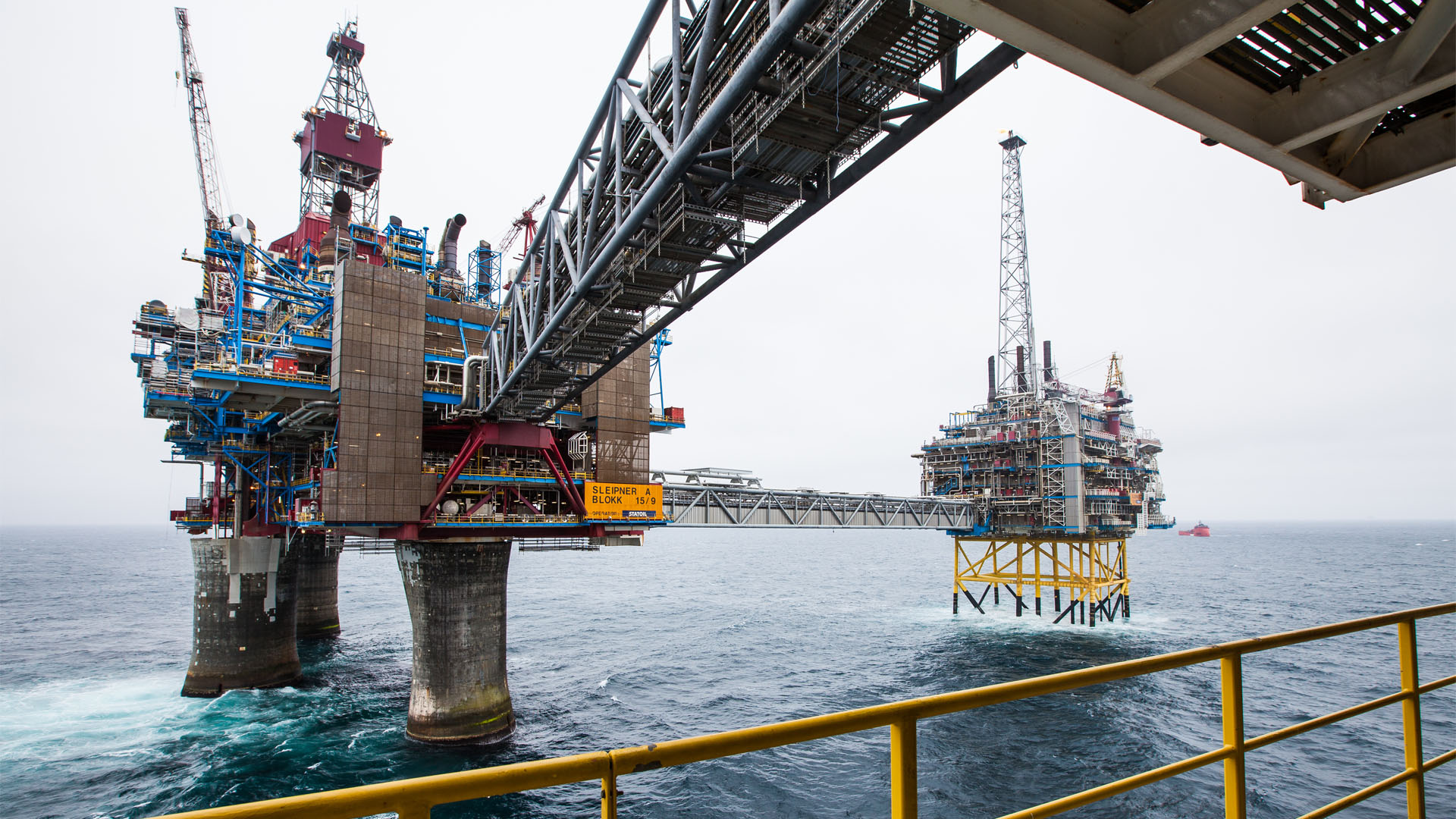
While production remains high, CO2 emissions are dropping. The most important reason for this is the use of power from shore. The objective is to cut emissions in half by 2030 compared with the level in 2005.
In a separate article, NPD notes that power from shore increases the cost of platform operations and will also lead to an increase in electricity prices in Norway. Given these considerations, the very small net global reduction in CO2 emissions seems costly.
Platform electrification no doubt helps Norway achieve domestic emission reduction commitments. However, from a global perspective, how important is it for a minor CO2 emitter like Norway to achieve further reductions? Also, isn’t it somewhat contradictory for a major oil and gas exporter to take such extreme measures to reduce the emissions associated with the production of these resources?
Deb Haaland, US Secretary of the InteriorErling Braut Haaland
As a result of her mother’s heritage, Deb Haaland is the first Native American to serve as a US cabinet secretary. However, her father, a decorated Marine Corps officer was a Norwegian American. She thus has the same surname as Erling Braut Haaland, the star striker for Norway and BVB Dortmund in the German Bundesliga.
Although most Americans cannot name the Secretary of the Interior (James Watt was an exception thanks to his attempt to ban the Beach Boys from the 4th of July concert in Washington😃), Deb Haaland is probably slightly better known in the US than Erling Haaland. However, thanks to the popularity of football/fussball/futbol/soccer, Erling is much better known internationally.
What does this have to do with offshore energy? Well Norway, which just announced record oil and gas revenues, has managed to sustain leasing, exploration, and production throughout the pandemic without compromising safety and environmental objectives. They also wisely eased the petroleum tax burden during the pandemic with favorable results.
The temporary change in the petroleum tax has most likely led to an increase in project activity. The projects would most likely have been carried out even without the tax package, but some of them would have been postponed.
A Norwegian union representing offshore oil and gas workers has criticized Aker BP’s process to introduce a Covid-19 vaccine mandate for its offshore employees.
“We agree that we must protect our employees and our suppliers in the best possible way, but it also requires that we are involved in how it should happen and how our employees and suppliers are taken care of in this process.”
Seems like a reasonable position on the part of the workers. As previously reported, many US oilfield workers are skeptical of the vaccine mandate and have warned that they will quit.




 Bud's Offshore Energy (BOE)