Feeds:
Posts
Comments

Posts Tagged ‘marine minerals’

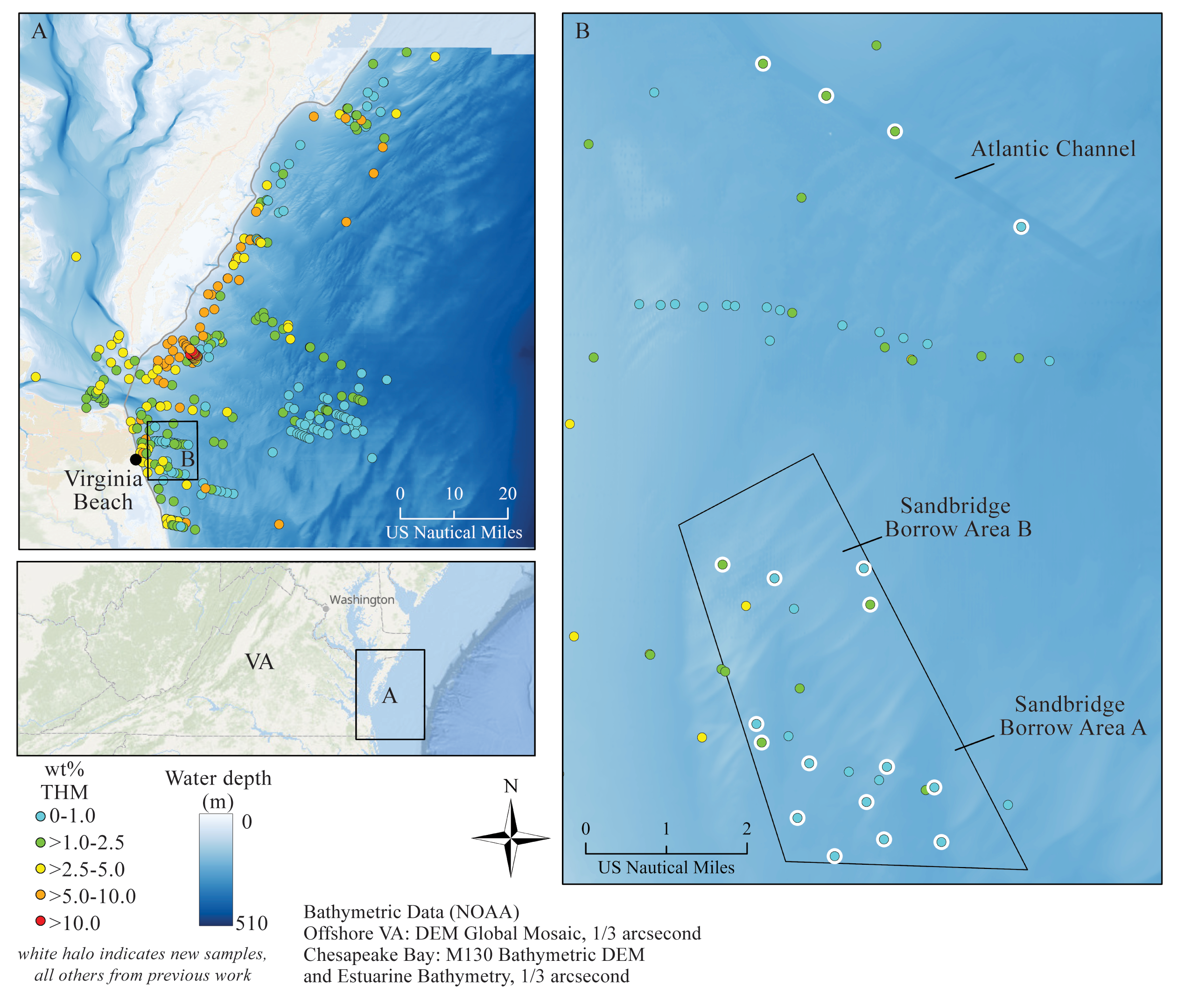
Heavy mineral geodatabase showing marine samples offshore of Virginia. A: 620 samples with heavy mineral data from previous projects, symbol colors determined by the percent of total heavy minerals (THM) obtained through gravity spiral separation methods. B: M21AC00010 samples (indicated with white halo) from Sandbridge Shoal and Atlantic Channel vibracores for THM and mineralogical analyses.

The Bureau of Ocean Energy Management (BOEM) has initiated the process for a potential mineral lease sale in Federal waters off Virginia. BOEM’s action is in response to a request by Odyssey Marine for a critical minerals sale.

Odyssey’s primary targets are phosphate, which is now on the critical minerals list, and rare earth element’s titanium and zirconium. This would be a shelf dredging operation, in partnership with Great Lakes Dredge & Dock Company, rather than the deepwater module collection being proposed for the Pacific.

The fact that the sand recovered during the dredging process could be used for beach nourishment should appeal to adjacent coastal communities.

Odyssey Marine’s CEO discusses the proposed Virginia offshore program starting at the 4:00 minute mark in the video below.

Read Full Post »

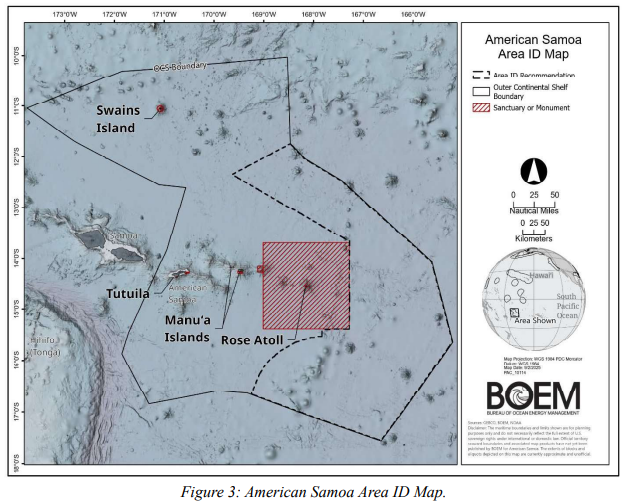
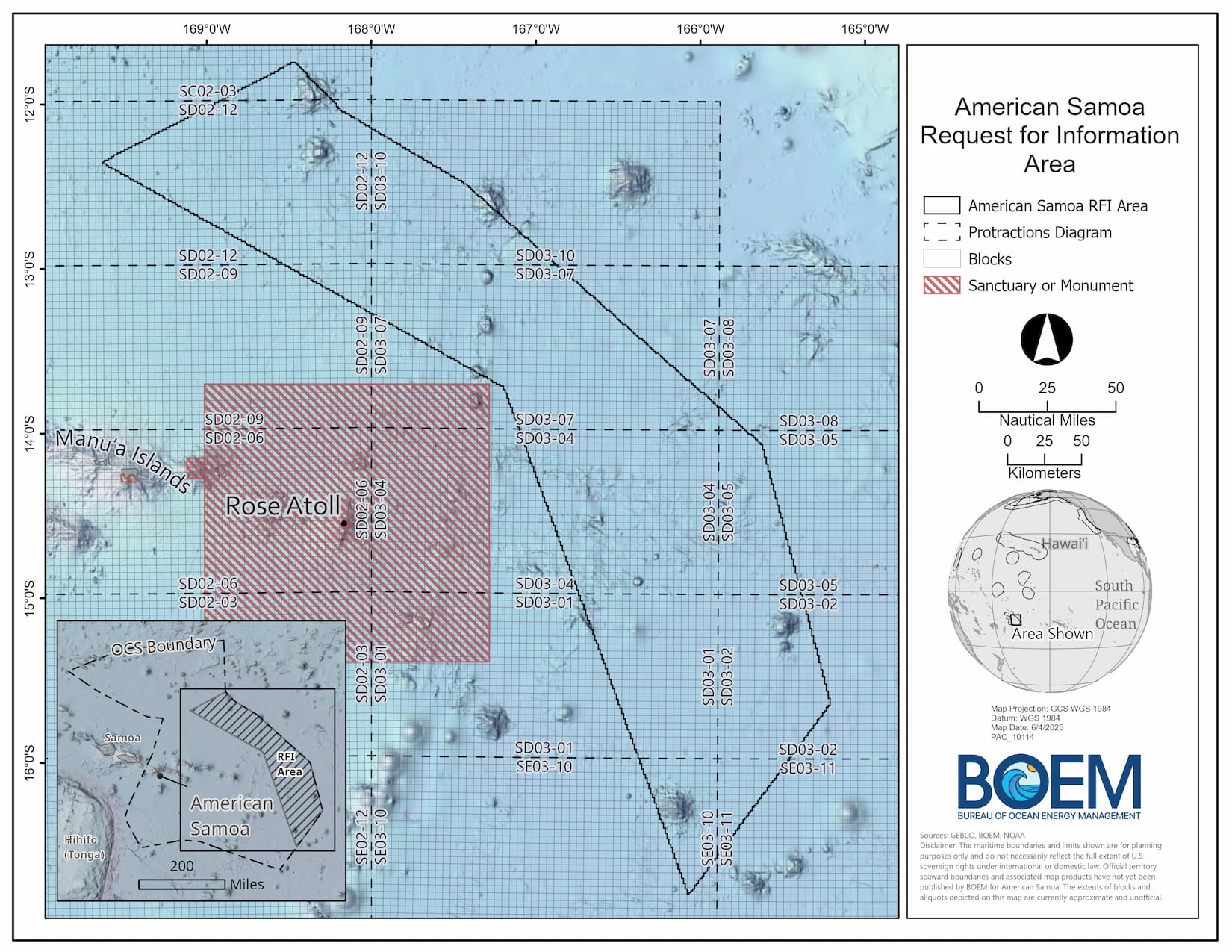
BOEM completed the area identification (outlined in diagram above) for marine minerals offshore American Samoa. The full decision memorandum is attached.

In response to BOEM’s Request for Information, Impossible Metals confirmed their interest in the identified area. Several other companies also expressed interest. The Governor and a number of other parties submitted interesting comments, which are summarized on p. 2 of the attachment.

The first two steps in a process that could ultimately lead to a mineral lease sale have thus been completed. Steps 3 to 6 remain. (See below)

  1. Request for Information and Interest (RFI) published in the Federal Register. complete
  2. Identification of Areas to be considered for leasing. complete
  3. Environmental Analysis for the lease sale.
  4. Proposed Leasing Notice Published in the Federal Register.
  5. Leasing Notice Published in the Federal Register.
  6. Competitive Lease Sale

Meanwhile, Odyssey Marine has requested a critical minerals lease sale in the Atlantic.

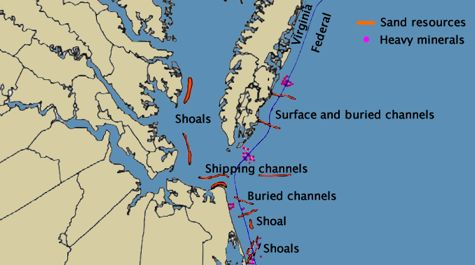
The proposed lease area, located within the U.S. outer continental shelf (OCS) off the Mid-Atlantic coast, is highly prospective for heavy mineral sands rich in titanium, zirconium, rare earth elements (REEs), and phosphate.

This would be a shelf dredging operation rather than the deepwater module collection being proposed for the Pacific.

Read Full Post »

For those who want to provide input on an American Samoa marine minerals sale, now is your chance. See the attached Request for Information and Interest.

Read Full Post »

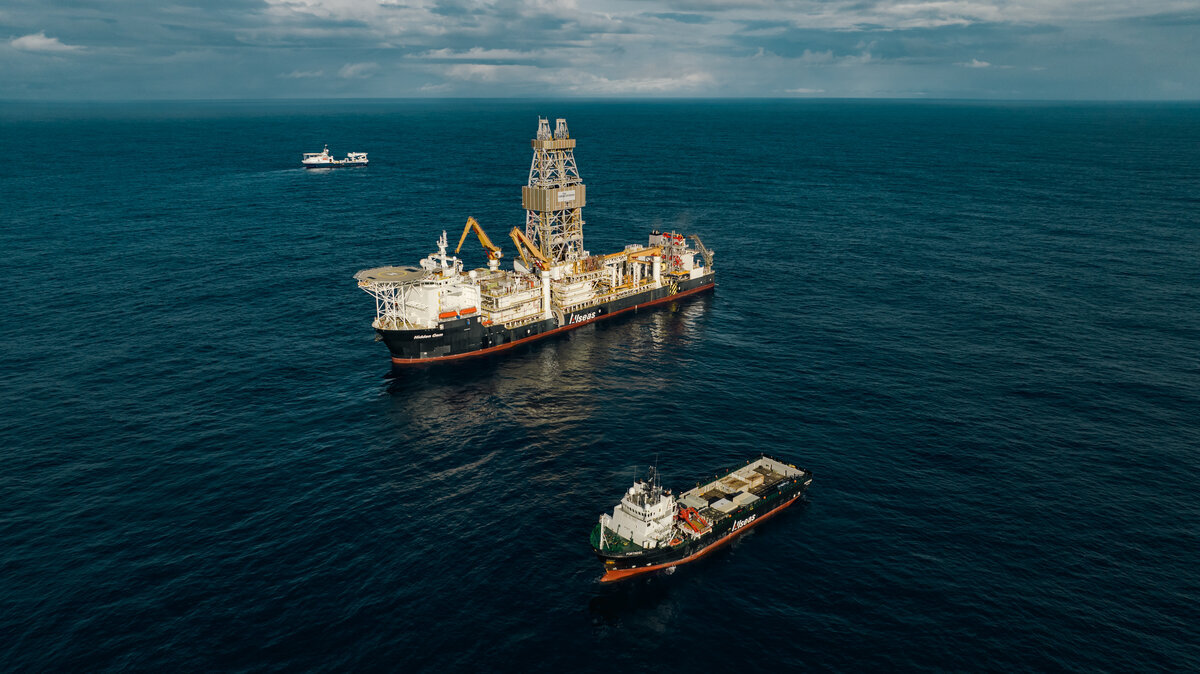
pictured:TMC pilot nodule recovery trials

According to a Financial Times report, the White House is drafting an executive order that will facilitate the stockpiling of critical metals found in the Pacific. The Administration is intent on countering China’s rare earth supply chains and battery mineral dominance.

This is good news for TMC, a Canadian company that plans to apply for deepsea mining permits under US authority, not proposed international regulations.

Read Full Post »

I’m posting Sunday’s 60 Minutes segment that focused on deep sea mining and the failure of the US to ratify the UN Convention on the Law of the Sea (UNCLOS). Supplementary comments:

  • Most Federal employees involved with ocean energy policy, past and present, have supported US government ratification of UNCLOS.
  • The offshore industry has long supported UNCLOS. Industry trade associations, including API, IADC, and NOIA, are on the record as favoring ratification.
  • While concerns about UN management of deep sea mining access are understandable, some coordinated administrative structure is needed.
  • The Metals Company and other companies pursuing deep sea mining opportunities clearly disagree with the assertion that ocean floor mineral harvesting is not economically viable.
  • While it’s too soon to draw firm conclusions, there are reasons to believe that deep sea mining is environmentally preferable to onshore mining.

Read Full Post »