Feeds:
Posts
Comments

Posts Tagged ‘Cape May County’

Attached are the full results of a Stockton University poll that assessed New Jersey voters’ support for offshore wind development. Stockton’s methodology is explained on the last page of the attachment (also pasted below).

Observations:

  • The poll does not appear to be agenda driven, either for or against offshore wind development.
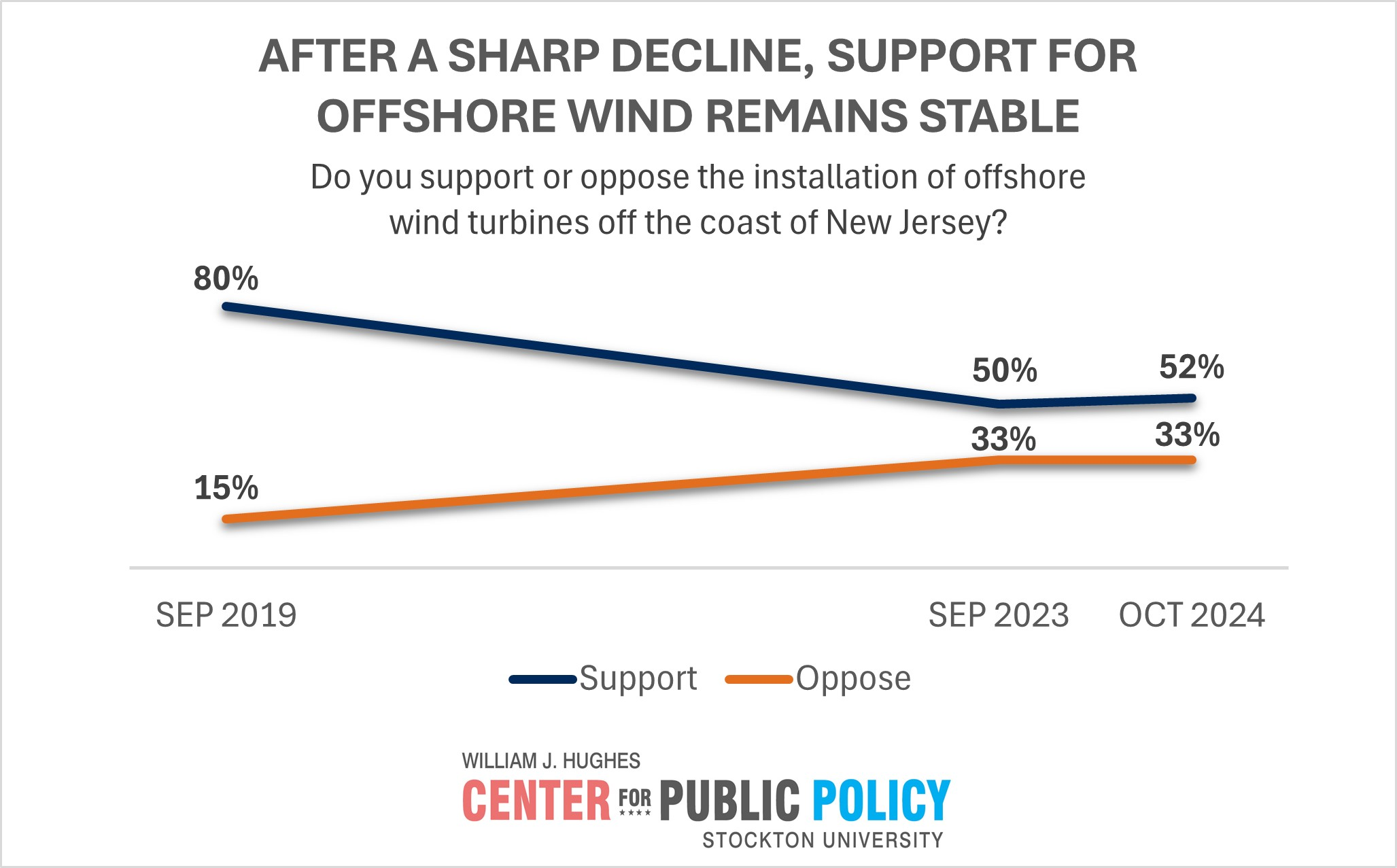
  • The sharp decline in public support (first slide below) was contrary to the advocacy flow in that it occurred during a period of strong and persistent State and Federal promotion of offshore wind energy.
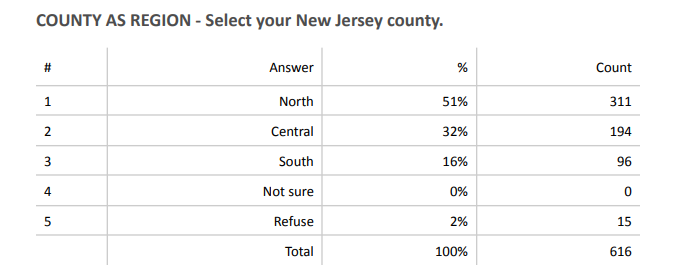
  • More than half of the respondents were from North Jersey, the region that is more closely aligned politically with the Governor and the Federal Administration. Only 16% of the respondents were from South Jersey where opposition to offshore wind projects is the strongest. The imbalance is understandable in that it is consistent with the regional imbalance in population.
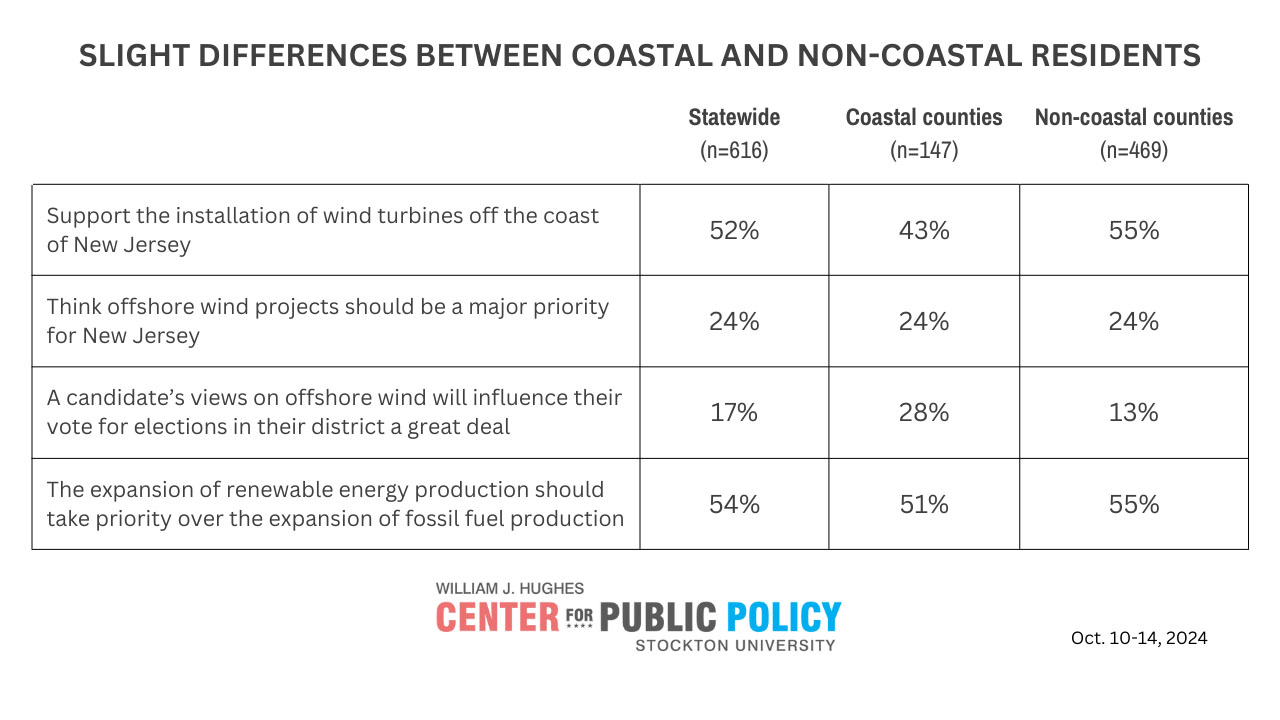
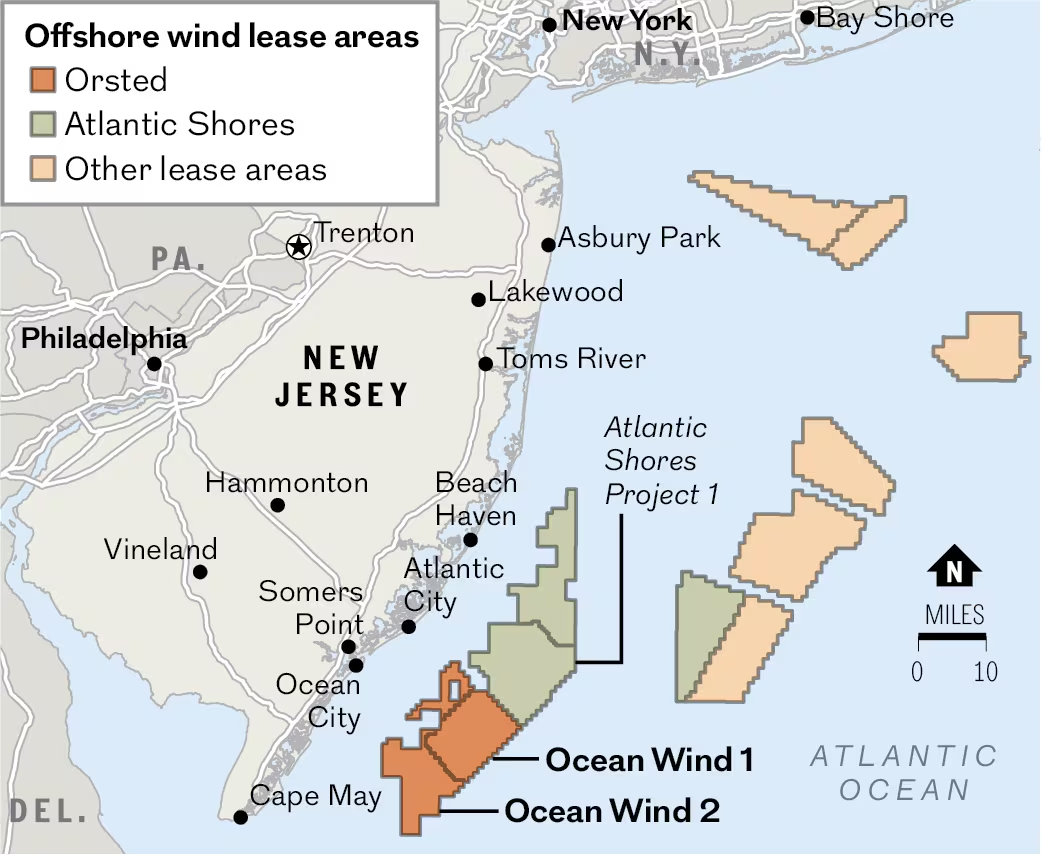
  • Unsurprisingly, support for offshore wind is lowest in coastal counties. In that regard, more granularity would have been nice. Cape May County is the US epicenter of resistance to offshore wind development and is engaged in litigation with the Federal government over the Ocean Wind 1 project. Polling specific to Cape May and each of the other coastal counties would be beneficial.
  • The polling data suggest that offshore wind projects are not a priority for most New Jersey voters. Only 24% of both coastal and non-coastal residents view offshore wind as a major priority (third slide below).
Methodology
The poll of New Jersey registered voters was conducted by the Stockton Polling Institute of the William J. Hughes Center for Public Policy from Oct. 10-14, 2024. Stockton University students texted cell phones with invitations to take the survey online and Opinion Services supplemented the dialing portion of the fieldwork, which consisted of cell and landline telephone calls. Overall, 91% of interviews were conducted on cell phones and 9% on landline phones. In terms of mode, 65% were reached via dialing and 35% were reached via text-to-web. A random sample of 616 New Jersey registered voters were interviewed. Both cell and landline samples consisted of random digit dialing (RDD) and voter list sample from MSG. Data are weighted based on U.S.Census Bureau ACS 2023 data for the citizen voting age population in New Jersey on variables ofage, race, education level, and sex. The poll’s margin of error is +/- 3.9 percentage points at a95% confidence level. MOE is higher for subsets. Sampling error does not account for other potential sources of bias in polls such as measurement error or non-response.
Read Full Post »

  • 10/31/2023: Citing economic factors, Orsted announces they “will cease development of the Ocean Wind 1 and Ocean Wind 2 projects.” (This should have resulted in termination of the leases.)
  • 1/19/2024: Orsted requests a 2 year “suspension of operations” to extend the leases they had ceased developing. (Presumably, this was a hedge with hopes of marketing the leases or getting better terms.)
  • 2/29/2024: True to form, BOEM approves the questionable 2 year suspension request. The approval letter was dated one day before the leases’ 8th anniversary when they would have presumably expired. (This is unconfirmed because the lease document and BOEM’s wind regulations lack clarity regarding lease expiration.)
  • BOEM’s approval letter (attached) curiously asserts that “suspension of the operations term is necessary for the Lessee’s full enjoyment of the lease in this circumstance to ensure sufficient time for project operations in support of the Project’s economic viability.” (Interesting wording that expresses the accommodative and promotional philosophy of the Federal wind program.)
  • 8/14/2024: The New Jersey Board of Public Utilities formally vacated all of its Orders that approved the Ocean Wind One and Ocean Wind Two offshore wind projects.
  • 8/14/2024: Cape May County comments that they are likely to amend their Federal Court filings “since the actions of the NJBPU would appear to have nullified Orsted’s federal permits.”
  • 8/27/2024: Despite the fact that Orsted has ceased development and New Jersey has vacated its approvals, the Federal leases are still active.
  • Good luck keeping an oil and gas lease if you cease development and request a suspension of operations. BSEE will rightfully deny your request.

Read Full Post »

Decommissioning Vindeby wind project, Denmark

BOEM’s “Rule to Streamline and Modernize Offshore Renewable Energy Development” is intended to “make offshore renewable energy development more efficient, [and] save billions of dollars. Unfortunately, the savings associated with relaxed decommissioning financial assurance requirements translates to increased risk for customers and taxpayers.

BOEM signaled their intentions on offshore wind (OSW) decommissioning three years ago when they granted a precedent setting financial assurance waiver to Vineyard Wind. Despite compelling concerns raised by commenters, the “streamlining” regulations have codified this decision.

Cape May County, New Jersey, was among the commenters objecting to BOEM’s departure from the prudent “pay as you build” financial assurance requirement. The County commented as follows (full comment letter attached):

“[e]nergy-utility projects are in essence traditional public-private partnerships where technical and financial risks are transferred to the private sector in exchange for the opportunity to generate revenues and profit. Under the proposed rule, the Federal government is instead transferring risks associated with decommissioning to the consumer rather than to the private sector.

Cape May added:

[w]hile BOEM believes that if a developer becomes insolvent during commercial activity that a solvent entity would assume or purchase control, the County believes this is a risky assumption as the most likely reason for default is that a constructed wind farm developer is unable to meet its contractual obligations set forth under a Power Purchase Agreement (PPA) because its energy production revenues are not in excess of its operating costs. A change of hands would not remove these circumstances or make the project profitable.”

Cape May and others also commented on the threat of premature decommissioning as a result of storm damage. In response, BOEM asserts that these risks have been addressed in the latest standard for North American offshore wind turbines (Offshore Compliance Recommended Practices: 2022 Edition (OCRP-1-2022)). However, design standards, particularly those for offshore facilities, are not static. The recommended practice for OSW is likely to change multiple times in the coming years as storm, operating, and turbine performance data are updated and analyzed. The design standard for Gulf of Mexico platforms has been repeatedly refined and improved and is now in its 22nd edition.

In their response to public comments on the decommissioning risks, BOEM repeatedly asserts that they can adjust the amount and timing of required financial assurance as they monitor a lessee’s financial health. Unfortunately, a company’s finances can change quickly and BOEM’s options will be limited when it does. Increasing the financial burden on a struggling company that is providing power to a regional power grid will not be a simple proposition.

Strong comments from Cape May County:

Read Full Post »