Feeds:
Posts
Comments

Posts Tagged ‘Bayou St. Denis’

Now that Chile, with the help of the international community (including two companies from the Commonwealth of Pennsylvania where the drilling industry began), has rescued the 33 miners, can we drill into the Australian government and rescue the Montara and Varanus Island reports?

While we are at it, can we learn more about these accidents?

Let’s learn from past accidents, so we don’t need dramatic rescues in the future.

The offshore safety record will be suspect until industry and governments have credible, internationally accepted programs and policies for ensuring that accidents are independently investigated and that investigation updates and reports are released in a timely manner.

Read Full Post »

Aban Pearl

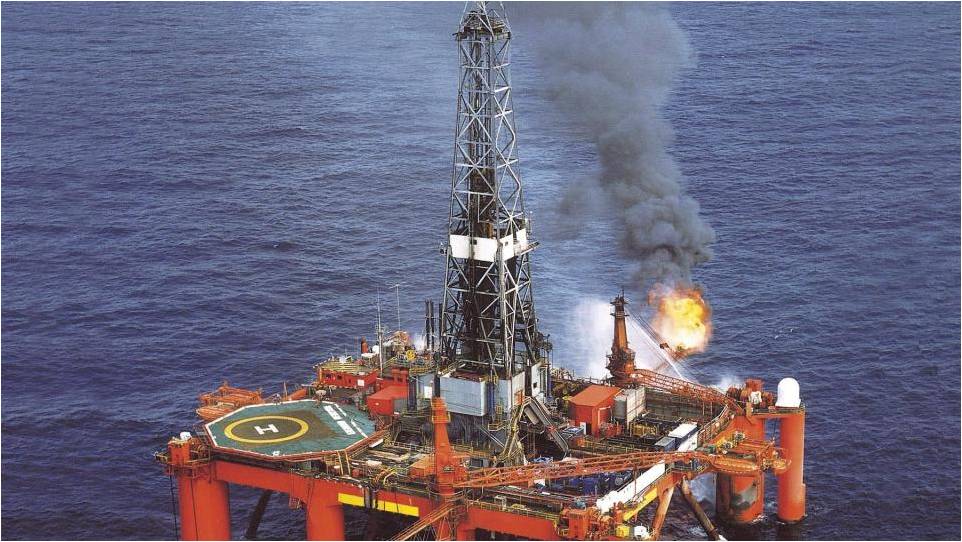
According to our 15 May post,  Venezuela established a special commission to investigate the sinking of the Aban Pearl, a semi-submersible rig that sank on 13 May 2010.  In the subsequent 3 months, we have not seen any updates on that commission or the status of the investigation.

BOE will also be tracking any reports on the recent crane failure and apparent fatality on the Jack Ryan, and the Bayou St. Denis blowout.  Let us know if there are other major offshore accidents that we should be tracking. With regard to the Jack Ryan, a description of the tragic crane accident is posted in a thread on the Oil Rig Photos site (see the 3 August post).

Read Full Post »

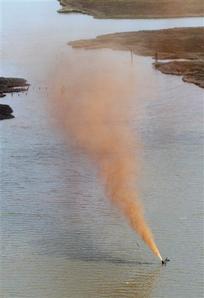
Per Nola.com, the Bayou St. Denis blowout has been capped.

“The Unified Command was able to accomplish this in less than a week due to the fantastic cooperation between the federal, state and local officials and efforts of the contractors,” Capt. John Arenstam, the Coast Guard Federal On Scene Coordinator, said in a news release.

The fact that this incident occurred at all is not so fantastic.  The Coast Guard is investigating.  We look forward to seeing the report.

Read Full Post »

This incident isn’t receiving much attention, perhaps because the volumes being discharged are small by comparison to Macondo and there is no “supermajor” to criticize.  I expect that there would be a tad more coverage if BP was the operator. In any event, we thank the folks at NOLA.com for tracking this one.

Despite the dearth of media attention, this is a very disturbing leak/discharge/blowout (you choose) from a safety and environmental management standpoint.  The well was apparently no longer producing and was left without any downhole barriers that would prevent flow in the event of hurricane damage, a fire, or a vessel collision (what happened).  While pollution spectaculars like Macondo deserve the notoriety, industry should be just as determined to address more systemic problems like this one.

Read Full Post »
AP Photo/Patrick Semansky

From NOLA.com:

CEDYCO Inc. of Houston owns the wellhead, but the company declared it “orphaned” under the Louisiana Department of Natural Resources “orphaned well” program in 2008.
That program allows companies to abdicate some responsibility for the well and gives the state permission to plug it and prepare the site for redevelopment.

Comments:

  1. Lots of explaining to do on this one.  What barriers were in place in the well bore?
  2. How can you “orphan” a well that hasn’t been temporarily abandoned or equipped with downhole plugs, especially in an area with vessel traffic?
  3. No “deep pockets” responsible party on this one.  Cleanup costs will be paid from the Oil Spill Liability Trust Fund.  Good luck collecting damage costs.
  4. Bad practices yield bad results, regardless of location or water depth.

Read Full Post »