March 7, 2010 by offshoreenergy

The case for increasing production offshore California is relatively straightforward:
- The oil is there and production could be increased relatively quickly.
- Because of existing infrastructure and advances in extended reach drilling technology, additional offshore facility needs would be minimal.
- The safety and environmental record, while not perfect, has been exceptional. (Opponents and supporters of California offshore production should fully agree on one point: We must never forget the 1969 blowout, and must challenge operating practices that make these type of incidents possible.)
- An effective regulatory regime is in place.
- Both the State and Federal governments need the revenue.
- Importing 50+% of our petroleum is detrimental to our economy and has significant national security implications.
- 25 years of offshore leasing moratoria demonstrated that you don’t reduce domestic consumption by restricting domestic production.
- Because of common infrastructure and support service needs, offshore oil and gas operations are complementary to (and may accelerate) wind and hydrokinetic energy development.
Posted in California, gas, Offshore Energy - General, oil, seeps | Tagged California, offshore oil, seeps | 1 Comment »
February 25, 2010 by offshoreenergy

We strongly caution natural gas power plants and other industries against the venting of high-pressure natural gas in or near work sites. This practice, although common, is inherently unsafe.
The U.S. Chemical Safety Board has issued an update on their investigation of the tragic explosion that killed six workers at a gas-fired power plant in Middletown, Connecticut. The update includes important information for all facilities that handle natural gas and engage in gas purging.
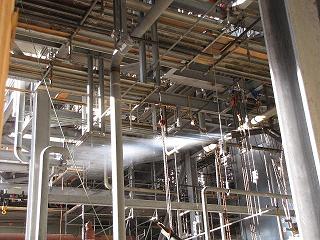
This accident occurred during a planned work activity to clean debris from natural gas pipes at the plant. To remove the debris, workers used natural gas at a high pressure of approximately 650 pounds per square inch. The high velocity of the natural gas flow was intended to remove any debris in the new piping. At pre-determined locations, this gas was vented to the atmosphere through open pipe ends which were located less than 20 feet off the ground. These vents were adjacent to the main power generation building and along the south wall. The open pipe ends are visible here in the photographs.

gas venting from open pipe
In their investigation report, CSB will likely recommend alternative cleaning practices.
Posted in accidents, natural gas | Leave a Comment »
February 21, 2010 by offshoreenergy
Those who don’t think natural gas is a renewable energy resource haven’t paid much attention to biomethane. Biomethane can be collected from sewage sludge, landfills, grass, food waste, and agricultural waste. Biomethane collection has 2 major benefits: (1) greenhouse gases emissions are prevented and (2) relatively clean energy is provided. See this great article in Renewable Energy World.

Kudos to the city of Olso, which plans to fuel buses with biomethane. The Oslo program has generated some clever headlines:
The city’s two sewage plants have enough biomethane to provide fuel for the 80 buses, and if the trial is successful Oslo city council plans to convert all 400 of the public buses to run on biogas.
Posted in natural gas, Uncategorized | Tagged biomethane, natural gas, renewables | Leave a Comment »
February 15, 2010 by offshoreenergy

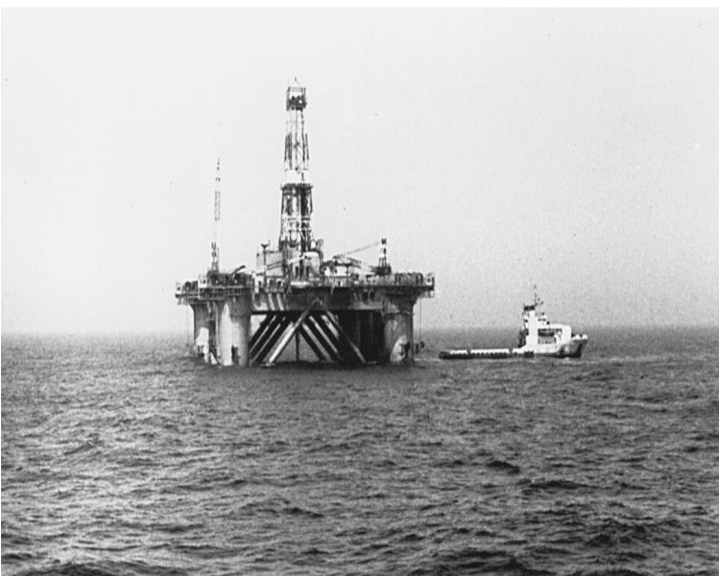
Ocean Ranger
Exactly 28 years ago (15 February 1982), the Ocean Ranger sank on the Grand Banks east of Newfoundland in one of the worst tragedies in the history of the offshore industry. Everyone associated with oil and gas operations was stung by the loss. Those of us in the USGS/MMS North Atlantic District were particularly touched by this tragic incident. We had seen what the North Atlantic can offer – “routine” 100 mph winds and 40-foot seas that tested equipment and personnel. The 84 men who died were our brothers, working in one of the world’s most challenging environments to support their families and help meet North America’s energy needs. The sinking of the Ocean Ranger and other offshore tragedies are not mere matters of chance. We must remember these incidents and work together to prevent their recurrence.
Posted in accidents | Tagged accidents, Canada, Newfoundland, Ocean Ranger | Leave a Comment »
February 10, 2010 by offshoreenergy
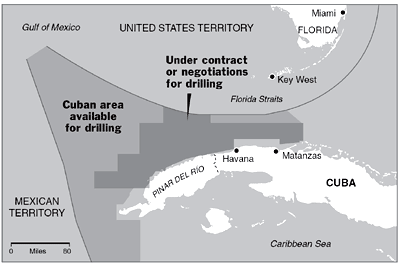
 Cuba’s only deepwater well was drilled in July 2004 by Repsol, a Spanish company. Repsol reported a non-commercial oil discovery 95 miles southwest of Key West. For the past 5 years, there have been a series of announcements from Havana, but no offshore drilling activity.
Here is what we know about Cuba’s offshore oil and gas potential:
– USGS (2005) estimates that Cuba’s northern offshore basin could contain 4.6 billion (mean) barrels of oil, with a 5% probability of discovering 9.4 billion barrels. Mean natural gas resources are estimated to be 9.8 trillion cubic feet.
– Cuban government officials believe the USGS estimates are low. They indicate that Cuba may have more than 20 billion barrels of recoverable oil.
–Cuba’s 2008 oil production was estimated at 61,300 barrels per day.
Will the offshore activity and results ever match the inflated rhetoric? We will be watching.
Posted in cuba, drilling | Tagged cuba, drilling, oil | Leave a Comment »
February 5, 2010 by offshoreenergy

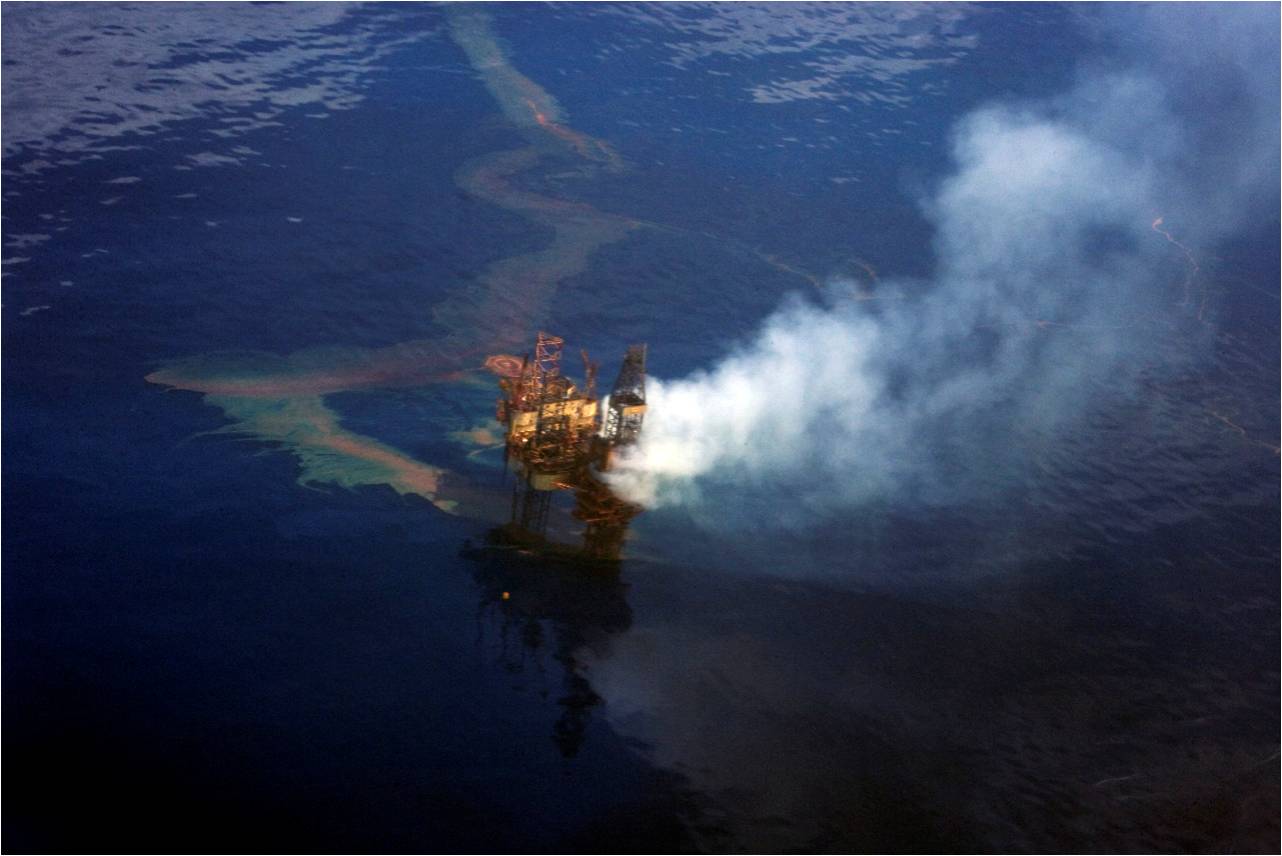
BOE has reviewed reports and comments submitted to the Australian Commission of Inquiry. Submissions by the operator, PTTEP, and the drilling contractor, Atlas, confirm the “street talk” about cementing issues and the absence of a second barrier in the suspended well. BOE is troubled by a number of issues associated with this incident and has provided comments to the Commission. We will continue to track reports on this and other offshore incidents.
Posted in accidents, Uncategorized, well control incidents | Tagged accidents, Australia, blowouts, well control | Leave a Comment »
February 5, 2010 by offshoreenergy

Magne Ognedal
BOE is pleased and honored that Magne Ognedal, Director General of the Petroleum Safety Authority – Norway, has agreed to the blog’s first interview. Magne is an internationally recognized authority on offshore safety and regulatory policy. He has been a leader of the International Regulators’ Forum since its inception in 1994, has assisted governments with emerging offshore energy programs, and served as program and steering committee chair for major international conferences. He was recently appointed by the King’s cabinet to a second 6-year term as Director General. I’m sure you will be interested in Magne’s candid and informative comments about offshore safety, regulatory policy, and international cooperation.
I am glad Norway is one Kingdom!
Posted in Interviews, Norway, Offshore Energy - General | Tagged Norway, Ognedal, PSA, regulator, safety | Leave a Comment »
February 4, 2010 by offshoreenergy

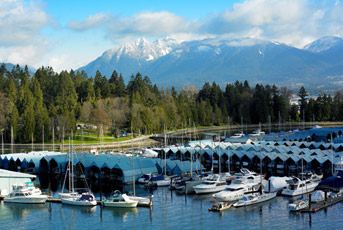
See you in Vancouver! Don't miss this one!
The Winter Olympics are just the warm-up act for the really big event that is coming to Vancouver from October 18-20: the International Regulators’ Offshore Safety Conference. Join the world’s leading experts on offshore operations, safety, leadership, and regulatory policy to learn more about how we can work together to reduce safety risks and improve operational efficiency. Reserve early! I look forward to seeing you there! Bud
Posted in conferences | Tagged conference, offshore, safety, vancouver | 2 Comments »
February 4, 2010 by offshoreenergy

Measuring and comparing international safety performance is not possible without consistent, verifiable data. Most existing data sets suffer from one or more of the following shortcomings:
- Some workers (e.g. contractors) are excluded
- Dependent on voluntary submissions
- No verification process
- Inconsistent definitions and classification procedures
The International Regulators’ Forum has taken a major step forward in measuring and comparing safety performance. Detailed definitions and guidelines have been established for classifying offshore safety incidents and compiling the data. These criteria are now being used to compile incident data for IRF countries. The IRF definitions and classification procedures could be broadly applied by industry and regulators to better assess safety performance and identify operational concerns. Learn more.
Posted in accidents, IRF | Tagged accidents, international, IRF, offshore, safety | Leave a Comment »
February 4, 2010 by offshoreenergy

The acronym is awkward but the International Committee on Regulatory Authority Research and Development is a great source of information about offshore safety and pollution prevention research. If you need more information about a design, operational, or management issue, there’s a good chance that an ICRARD member has conducted a relevant study. Go to the ICRARD site and give it a try!
Posted in IRF, offshore, Offshore Energy - General | Tagged ICRARD, offshore, regulator, safety | Leave a Comment »
« Newer Posts - Older Posts »