The dashed red line outlines China’s claim. Needless to say, Brunei, Indonesia, Malaysia, the Philippines, Taiwan, and Vietnam differ with China’s creative interpretation.
Map Source: CENTER FOR STRATEGIC AND INTERNATIONAL STUDIES, PERMANENT COURT OF ARBITRATION
In recent years, satellite imagery has shown China’s increased efforts to reclaim land in the South China Sea by physically increasing the size of islands or creating new islands altogether. In addition to piling sand onto existing reefs, China has constructed ports, military installations, and airstrips—particularly in the Paracel and Spratly Islands, where it has twenty and seven outposts, respectively.
Never mind that Beijing’s claims are fundamentally incompatible with established international law on maritime boundaries, the United Nations Convention on the Law of the Sea, which China has ratified and by which it professes to abide. Never mind, as well, that the claims have been ruled fraudulent by an international tribunal in The Hague.
Tucked into the end of the nearly $370 billion deal struck last week by Senate Majority Leader Chuck Schumer (D-N.Y.) and Senate Energy and Natural Resources Chair Joe Manchin (D-W.Va.) is a requirement for the Interior Department to reinstate a massive 80 million-acre Gulf of Mexico lease sale that a federal judge blocked earlier this year for violating NEPA.
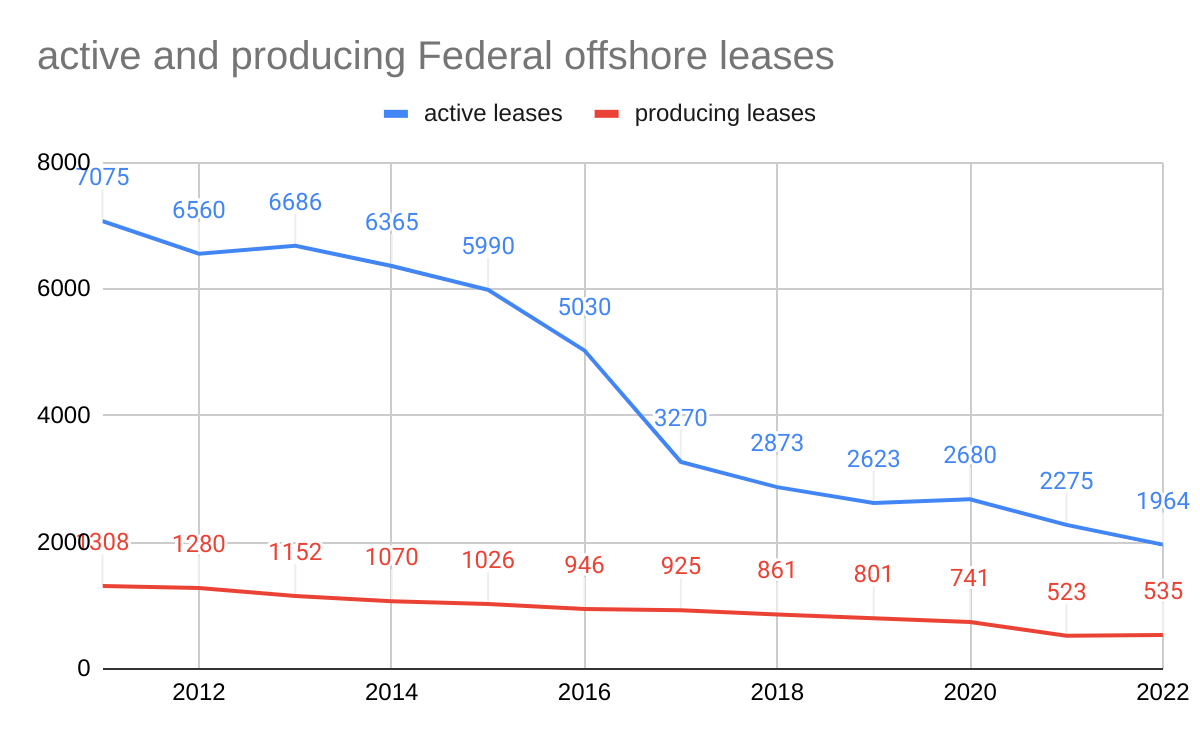
Tracts covering 1.7 million acres received bids at Lease Sale 257. 30.5% of those tracts received bids for CCS purposes, leaving about 1.2 million acres receiving bids for oil and gas exploration. Nonetheless, some continue to distort the magnitude of this rather ordinary lease sale. It’s also important to note that the number of active US offshore leases has declined by 72% since 2011, and is now under 2000 for the first time in decades.
Westwood has highlighted 13 wells planned for the remainder of 2022 as ‘key wells to watch’. These include a number of frontier play tests, for example Raia offshore Mozambique, and Pensacola, offshore UK; extensions of proven plays, including Zanderij offshore Suriname and Hoodoo, US Gulf of Mexico; and large prospects in proven plays, such as Wei, offshore Guyana.
The Hoodoo prospect cited by Westwood is operated by BHP and is in East Breaks Blocks 699 and 700. At Sale 257 (11/17/2021), BHP was the sole bidder on 4 blocks just to the north of this prospect. The lease sale was vacated by a Federal judge in January. If the vacature of Sale 257 is not reversed, either by appeal or legislation, one or both of the following outcomes could easily occur:
BHP loses the opportunity to potentially develop those blocks as part of or in conjunction with the Hoodoo project.
Based on their knowledge of the BHP bids, which are public information, other companies could submit bids for these blocks in a future sale. BHP would have to defensively raise their bids or lose the blocks to another company.
Either outcome would be unfair to BHP and would discourage investment in OCS exploration and development.
WASHINGTON, D.C. — The Biden-Harris Administration, through the U.S. Department of Energy (DOE), today announced $26 million to fund projects that will demonstratethat America’s electricity grid can reliably run with a mix of solar, wind, energy storage, and other clean distributed energy resources.
Shouldn’t the research precede DOE’s declaration of victory?
Rest assured that none of the studies will question the reliability of a grid dependent on DOE’s preferred energy mix; nor will they raise concerns about the associated economic, national security, or environmental risks. These are the types of projects that the WSJ calls “Green Pork.”
The subject legislation requires the Secretary of the Interior to accept the highest valid bid that was received for each tract offered in OCS Lease Sale 257. Exxon was the sole bidder on 94 tracts on the nearshore Texas shelf. The leases were to be acquired for carbon sequestration purposes.
The CCS bids should not be considered valid given that:
Sale 257 was an oil and gas lease sale. The Notice of Sale said nothing about carbon sequestration and did not offer the opportunity to acquire leases for that purpose. Therefore, the public notice requirements for CCS leasing (30 CFR § 556.308) were not fulfilled.
Because there was no draft or final Notice of Sale, interested parties and the public did not have the opportunity to consider and comment on CCS leasing, tract exclusions, bidding parameters, and other factors.
30 CFR § 556.308 requires publication of a lease form. No CCS lease form was posted or published for comment.
CCS operations were not considered in the environmental assessments conducted prior to the sale.
No evaluation criteria for CCS bids have been published.
Unexpectedly, the Infrastructure Bill, signed on 11/15/2021 (just 2 days before Sale 257) included a provision for OCS carbon sequestration. However, that legislation did not require CCS leasing or authorize DOI to sell CCS leases as part of an oil and gas lease sale; nor did it exempt DOI from complying with its leasing regulations. Instead, It gave the Secretary a year (until 11/15/2022) to promulgate necessary implementing regulations. If carbon sequestration in the Gulf of Mexico is deemed to be desirable, a separate CCS sale should be held when the regulatory framework has been established.
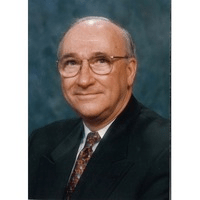
The offshore world lost an important figure over the weekend with the passing of John Gregory Fitzgerald. As Chairman and CEO of the Canada Newfoundland Offshore Petroleum Board in the late 1990’s, John presided over the first production from the massive Hibernia field. He also approved the pioneering Terra Nova project, the first FPSO development in a harsh, iceberg laden environment.
John worked closely with his international counterparts and hosted an important offshore safety meeting in St. John’s in 1996. It was an honor to be associated with such an outstanding individual and dedicated safety leader.
RIP John, your contributions will not be forgotten.

 Bud's Offshore Energy (BOE)