As has been previously discussed on this blog, the renewable energy source that shows the greatest promise for generating the power needed to support economic growth is ultradeep geothermal.
This JPT article nicely describes the opportunities and challenges
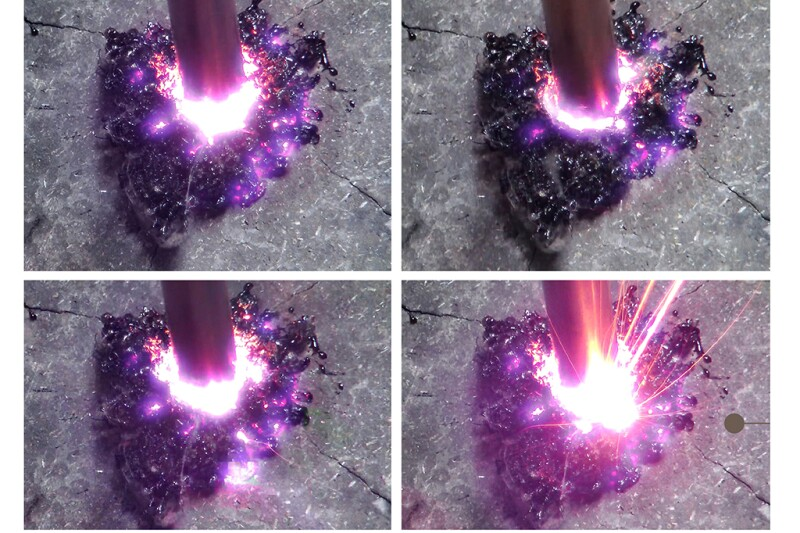
Microwave drilling test. Source JPT/Quaise Energy
Good comparison of drilling into hard basement rock with conventional and millimeter wave (microwave) technologies:
The technical readiness level (TRL) for microwave drilling reflects that it has yet to be field tested. The drilling rate includes an estimated amount of flat time. The levelized cost of energy (LCOE) is an all-in estimate of the cost per megawatt-hour (MWh). Source: JPT/Quaise Energy.
Quaise Energy’s first full-scale testing of a hybrid drilling rig combining conventional rotary drilling and millimeter wave drilling capabilities is scheduled for 2024.
Some northeast states and their public utilities may be in a bit of a bind. Either they accept higher electric rates and the likely public backlash, or they deviate from their staunch anti-gas, anti-nuclear orthodoxy. Similarly, oil companies that have invested heavily in offshore wind may find that they are not just less profitable, but (even) less popular.
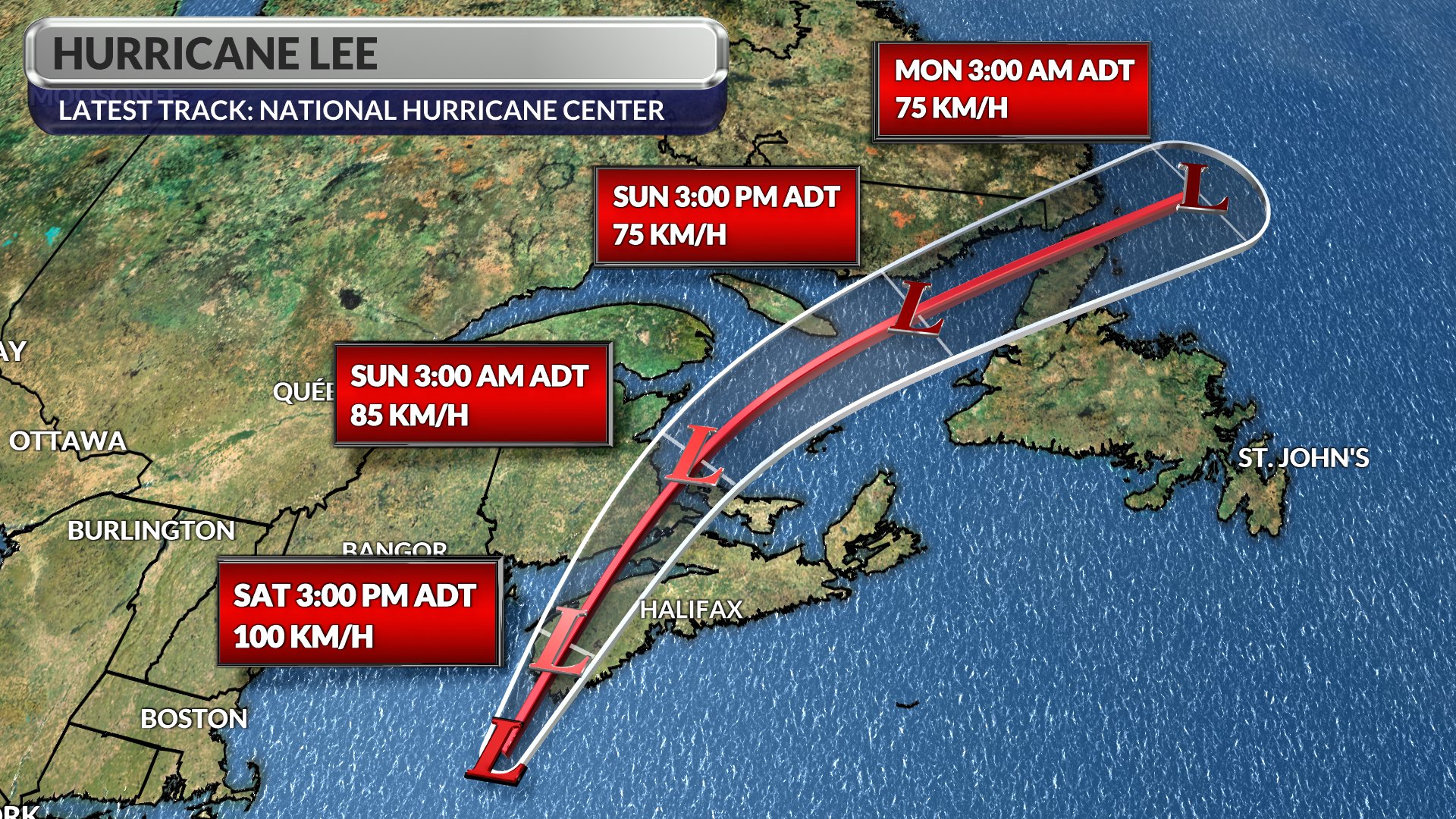
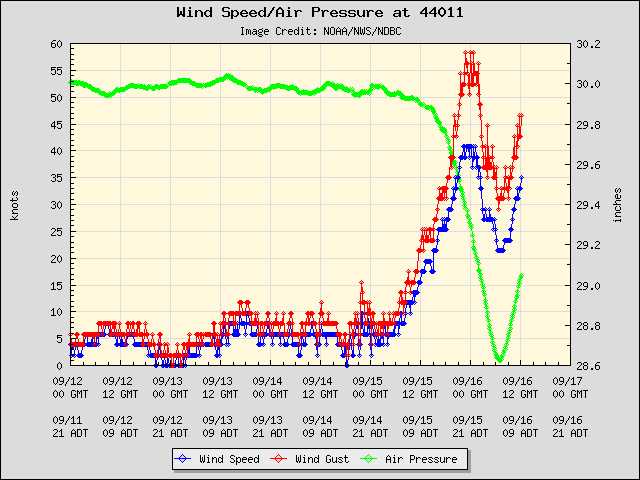
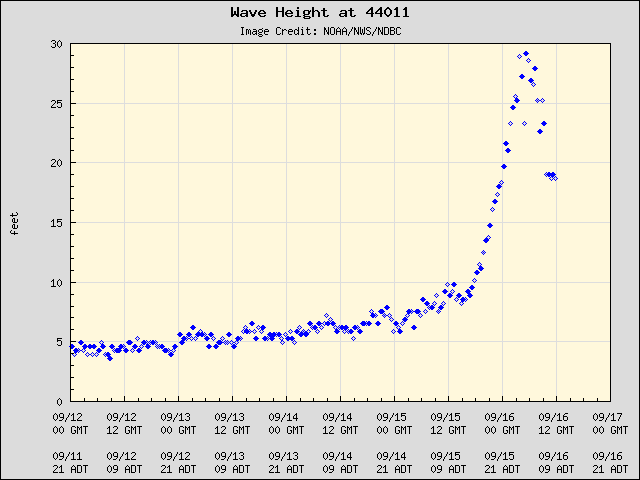
The worst conditions were relatively common by Georges Bank standards. Per the NOAA data buoy (see plots below), the wind speed peaked at 40.8 kts, gusts at 58.3 kts, and wave height at 29.2 ft.
Looking back at my Georges Bank Exploratory Drilling paper (1983), a spring storm in April 1982 generated 105 mph winds and 35 foot swells. I’ll post information on the rig performance issues during those operations at a later date.
Venus is very impressive in the pre-dawn September sky and will peak in brightness over the next week days. Worth checking out!
Venus will be brightest in the morning sky around September 19, 2023, and will reach 44 degrees elongation from the sun by the end of the month. Venus will brighten from magnitude -4.6 to -4.8 during the month.
The reason that the planet Venus is so dazzlingly bright is because it is completely enshrouded in thick clouds that reflect sunlight at us.
In ancient times, mariners looked up to the night sky for guidance, and one celestial body held a special role in their navigation: Venus. With its bright and consistent appearance, Venus served as a reliable reference point for sailors venturing across vast oceans. This article explores the significant role that Venus played in early navigation, guiding mariners safely to their destinations and paving the way for future advancements in seafaring.
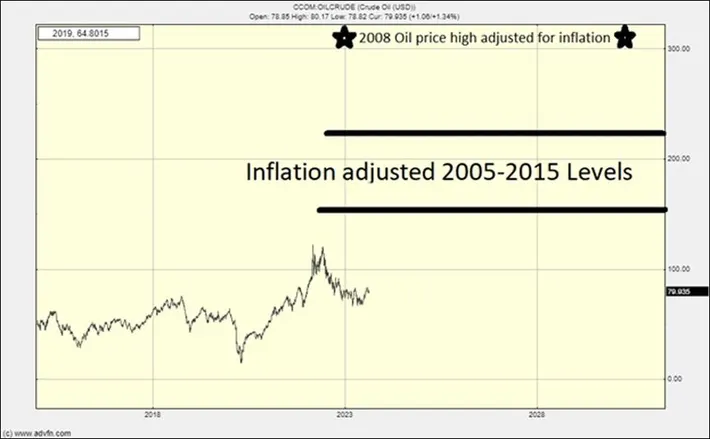
The title grabs your attention, but the justification isn’t terribly compelling. The author simply adjusts the brief 2008 price spike ($200/barrel) for inflation to justify his forecast.
Per the author:
The thing about commodities like oil is that while they can be acutely volatile because of supply and demand and political events, long term their price is a function of the technology needed to create them and the state of inflation in the denominating economy.
As a followup to the post on the sale of the Quissett estate, previously owned by the National Academies and used for conferences and meetings, the purchasers are William F Scannell and his wife Elizabeth A Scannell. Bill Scannell is President of Global Sales & Customer Operations at Dell Technologies.
The property was on the market for 2 years, and the purchase price was only about half of what NASEM was asking. NASEM must have really wanted to unload this great property which served the marine science community well for nearly 50 years
My former colleague Jim Lane, who shared the original Not My Job Award photo many years ago, has forwarded impressive evidence (below) that the NMJA work ethic is still proudly on display. 😉
Jim commented that the freshly painted raccoon is a more modern and universal NMJA symbol than the old armadillo.
Either image, properly presented, is appropriate recognition for proud Not-My-Jobbers in your organization or industry. 😉
USS Oriskany (CV-34) holds the distinction of being the final Essex-class aircraft carrier ever completed. Instead of being decommissioned and scrapped, the ship was intentionally sunk approximately 25 miles south of Pensacola, Florida. This unique decision transformed the USS Oriskany into the largest ship ever used to create an artificial reef. Due to this extraordinary use, the carrier has earned the affectionate nickname “The Great Carrier Reef.”from Military Tactics
Savvy marketing? Looking for mandates and incentives? Taxation opportunity?
Burps are the top source of methane emissions from cattle. Semex, the genetics company that sold Loewith the semen, said adoption of the low-methane trait could reduce methane emissions from Canada’s dairy herd by 1.5% annually, and up to 20%-30% by 2050.
The Canadian government currently offers no incentives for low-methane cattle breeding, but the agriculture department said in an email that Ottawa is working to introduce offset credits for reducing methane through better manure management.
New Zealand will begin taxing farmers for methane from cattle in 2025.
Juha Nousiainen, senior vice-president at Valio, a Finnish dairy, warned that breeding cattle to burp less methane could create digestive problems. Methane is produced by microbes in the cow’s gut as it digests fibre, not by the animal itself, he said.
We have our own genetically engineered livestock offshore. 😀
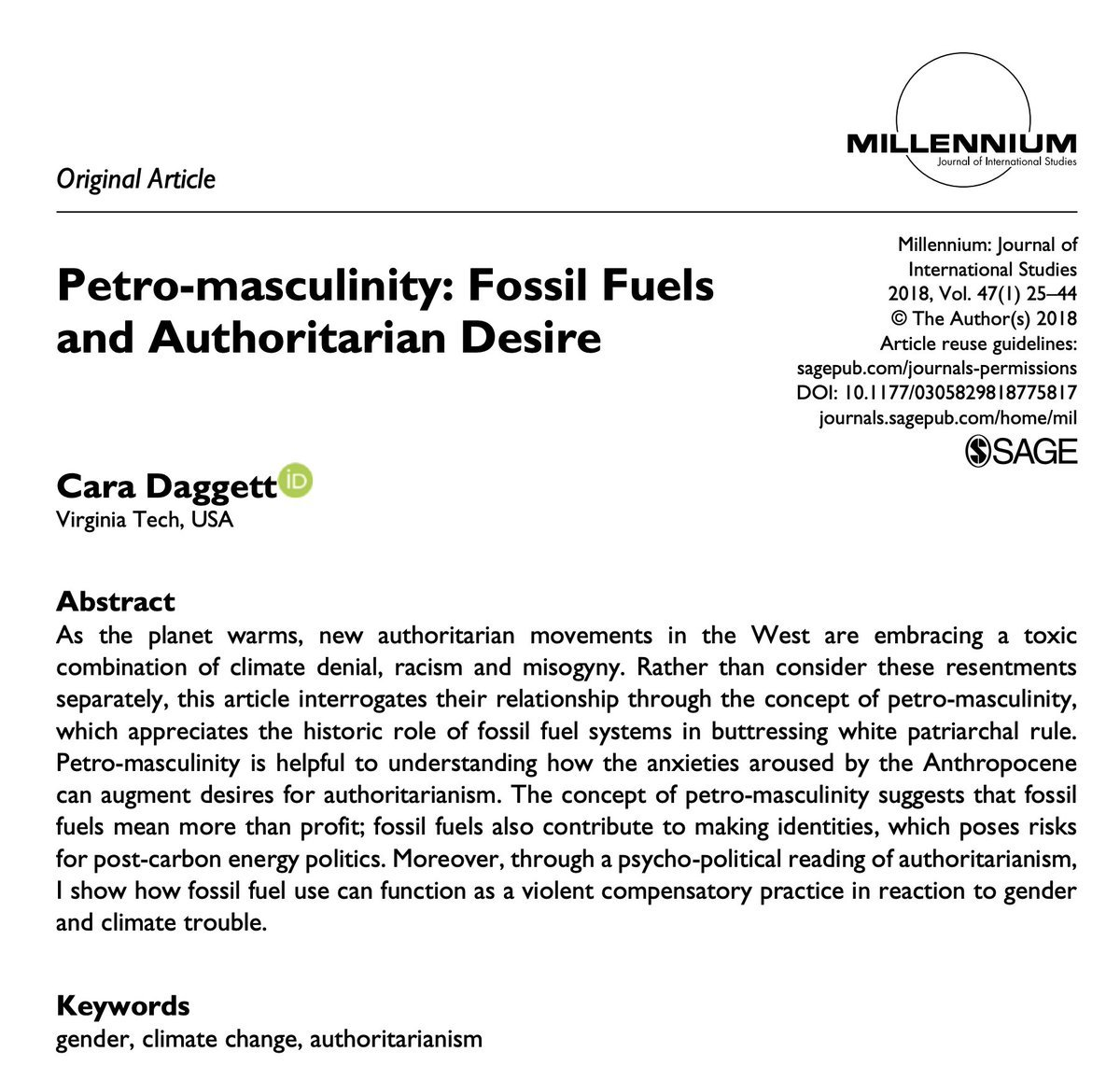
The paper is short on facts and long on dogma and political rhetoric, but is not entirely without merit. The author acknowledges, albeit in a backhanded manner, the massive social benefits that fossil fuels have provided (quote below). Would our economy have been strong enough to support academic pursuits such as hers were it not for fossil fuels and “petro-masculine” ingenuity and labor?
“Fossil fuels built the modern world. There remains an appreciation for fossil fuels – or, at least, for the high energy consumption they provided – as a catalyst of mass liberal democracy. This is evident in ecomodernist calls for a good Anthropocene that would decouple the benefits of fossil fuels from the fuels themselves. After all, while industrialisation wreaks planetary destruction, its spread was coterminous with humanist victories like the abolition of slavery, increased literacy rates, gender equality and poverty reduction. Dipesh Chakrabarty notes that this cannot be a coincidence, and that ‘the mansion of modern freedoms stands on an ever-expanding base of fossil-fuel use. Most of our freedoms so far have been energy-intensive.“







 Bud's Offshore Energy (BOE)