Feeds:
Posts
Comments

Archive for the ‘pipelines’ Category

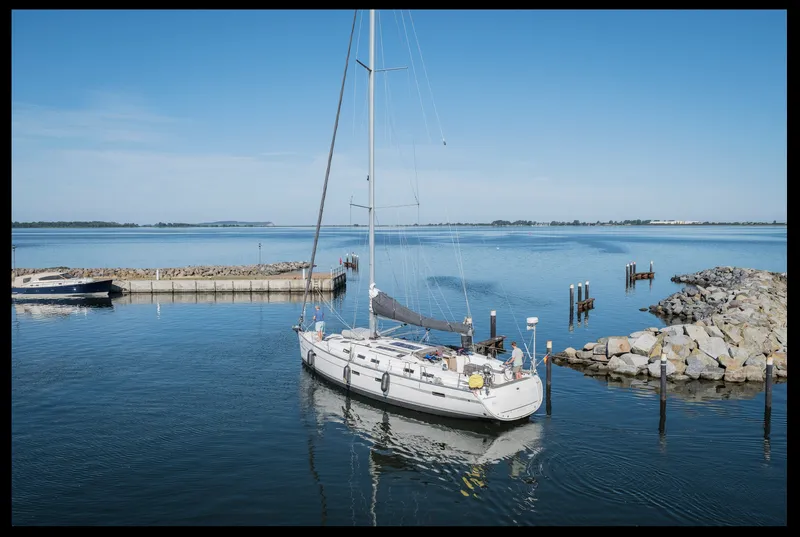
Above: Pigable Y connector for the 6.5-mile 18-inch pipeline extending from a subsea connection in MP289 to a subsea connection with MPOG in MP268 with a capacity of up to 80,000 barrels per day.

A colleague shared his research on the November 2023 Main Pass Oil Gathering (MPOG) connector leak in the Gulf of Mexico. Given the extraordinary amount of time it takes to produce accident reports these days, it may be a while before we see the NTSB report. (Keep in mind that we are still waiting for their final report on the December 2022 helicopter crash at the West Delta 106 A platform.)

The pipeline associated with the leak is BSEE Segment No. 11015, an 18” oil line permitted under Panther Operating Company, LLC . MPOG and Panther are owned by Third Coast ( MAIN PASS OIL GATHERING PROJECT COMPLETION (third-coast.com) . Information on this company website shows that a project was completed for the installation of a new segment 20793 and the new line placed in service on August 20, 2022.

The picture shown in the website for this project (pasted above) shows what looks like a subsea pigable Y connection, which means the main line had to be cut for this connector to be installed. The location of this subsea tie-in for the new segment is in MP 268 and the approximate distance from the Mississippi River delta is 44 miles.

As for other subsea connections, the nearest to shore is in MP 144 about 27 miles from the delta. The report on the leak says that it occurred 19 miles from delta, so not sure if there are any connectors. This distance from the delta would be in the vicinity of MP 72 and mapping information shows no connections in this area, only pipeline crossings. See attached map for PSN 11015.

Read Full Post »

According to the Texas General Lands Office, which provided the above photos, a patch has been applied to the leaking pipeline riser on an abandoned platform in High Island Block 98-L. The gas condensate spray has been stopped.

Crews from the U.S. Coast Guard, Texas General Land Office, and the Texas Railroad Commission monitored the operation. It’s unclear who the responsible party is and who funded and performed the work.

Read Full Post »

Danish Tax Minister Jeppe Bruus boasts that other countries will be inspired by the world’s first tax on livestock emissions. Are you inspired?

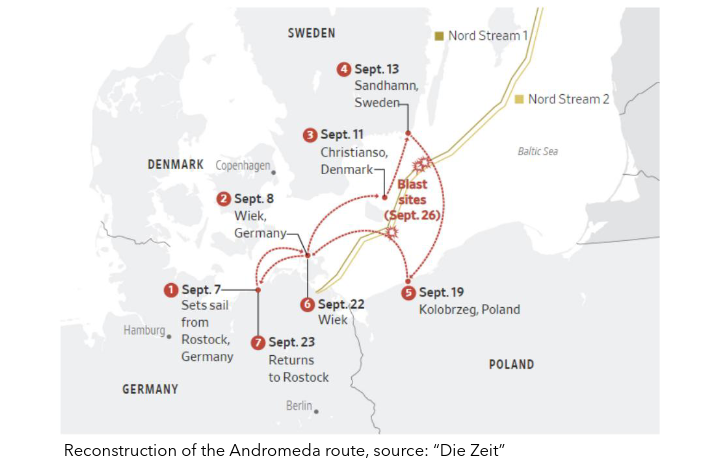
Not at all inspiring was Denmark’s weak-kneed response to the sabotage of the Nord Stream pipelines near the Danish island of Bornholm. After 17 months of investigation, Denmark meekly declined to pursue criminal charges or even to release a report on their findings. How does the “world’s climate leader” simply shrug its shoulders after investigating a massive methane release in their waters?

A recent professional paper concludes that 478,000 tons of methane were released to the atmosphere as a result of the Nord Stream sabotage, making this “the world’s largest natural gas leak.” The Nord Stream sabotage thus released 3.6 times the amount of methane (133,000 tons) contributed by Danish livestock in an entire year. The total amount of methane released by the Nord Stream pipelines is also 2.5 times the entire amount attributed by EPA to all Gulf of Mexico producers in 2020.

Denmark and Sweden have concluded that “there was deliberate sabotage of the gas pipelines.” The Nord Stream insurers claim that “a government did it.” So which government was it? Why are sovereign governments of affected nations afraid or otherwise unwilling to comment on such a consequential attack?

Read Full Post »

March production (1823 MBOPD) has been added to the GoM summary chart (below).

The Main Pass Oil Gathering (MPOG) system reportedly remained shut-in until early April. We should learn more about the impact of that shut-in when the EIA releases the April production figure at the end of June. Meanwhile, we are still waiting for information from the NTSB on the MPOG incident. To date, the NTSB has only posted a short summary

Note that BOEM’s 2024 forecast called for production to average 2,013 MBOPD, which is above the 2023 peak of 1,997 MBOPD in September.

Most forecasts call for an active 2024 hurricane season, so interruptions in production are likely. There were no production shut-ins from tropical storms in 2023.

Read Full Post »

Nord Stream AG has responded to their insurers’ a goverment did it, so we don’t have to pay” defense. Nord Stream’s full response, courtesy of Swedish engineer Erik Andersson, a leader in seeking the truth about the the pipeline sabotage, is linked.

Key excerpts from the Nord Stream AG filing (p.5):

(a) On their proper construction, in the context of Exclusion 2.i as a whole, the words “destruction of or damage to property by or under the order of any government or public or local authority” relate only to destruction or damage that arises out of or is related to the confiscation, nationalisation or requisition of therelevant property (and/or attempts thereat). In the premises, those words do not apply to the Damage.

(b) Alternatively, in the event that the Defendants establish that the Damage does constitute destruction of or damage to property by or under the order of any government, then it is therefore covered by the Deliberate Damage clause because it would have been “loss, damage, liability, cost or expense caused or inflicted by order of any governmental or regulatory body or agency” and Exclusion 2(i) to Section I does not apply: paragraphs 8 and 9.2 above are repeated.

If the insurers contend that one or more governments were responsible, shouldn’t they have to identify the government(s)? That would be nice. However, Erik doesn’t think the Nord Stream AG response puts the insurers in that politically difficult position. I agree. This case is about getting the insurers to pay for the damages, not identifying the responsible parties, something that the Swedes, Danes, and Germans have shied away from.

Read Full Post »

To what extent was the Main Pass Oil Gathering (MPOG) system shut-in responsible for the Nov. to Feb. production decline (chart below)? The MPOG wasn’t cleared for production until earlier this month, so we may not know until the investigation report is published and the EIA posts April 2024 production data (2 month lag).

The NTSB is leading the investigation on the MPOG spill. This short summary is all they have posted so far, but we should see a preliminary report soon. The NTSB’s final reports are frequently delayed. They still haven’t finalized their report on the Dec. 2022 Gulf of Mexico helicopter crash.

Read Full Post »

Our last Nord Stream pipeline post discussed the Nord Stream AG suit to recover damage costs from insurers Lloyd’s and Arch.

In a court document (excerpt below) obtained by Swedish engineer Erik Andersson, Lloyd’s and Arch assert that the damage was inflicted by, or under order of, a government , and therefore the insurers are not liable.

Given that the suspect governments have denied responsibility, shouldn’t the insurers have to prove that a government did it, and identify the government? That is what Nord Stream AG is asserting in their filing (except below).

Long, but interesting video with Erik Andersson:

Read Full Post »

After 5 months of investigation, the Main Pass Oil Gathering (MPOG) system has finally been cleared for production. (The Coast Guard update only says that the pipeline passed the integrity test, but I assume the operators may resume production though the MPOG system.)

Only a small connector leak that was previously reported was identified during the extensive integrity testing. The Coast Guard had advised that the connector leak was not the source of the large sheen that was observed in November.

So what was the source of the November sheen and what was the basis for the 1.1 million gallon spill volume estimate? The sheen was not indicative of a spill of that magnitude. Did the Coast Guard et al assume a worst case loss from the MPOG system, even though no leak had been identified?

Is this the most oversight ever for a pipeline integrity test?

The removal and replacement of the spool piece and the subsequent integrity test of the MPOG line were conducted under the close supervision of the Unified Command and Pipeline and Hazardous Materials Safety Administration. During both operations, spill response vessels were on site, along with divers, remotely operated vehicles, helicopters equipped with trained oil observers and multi-spectral imaging cameras, and other containment and recovery equipment. No material discharge of oil was observed during these operations.

Unified Command

The NTSB has the lead in the investigation into the source of the sheen. Don’t expect any findings soon.

Read Full Post »

Average GoM oil production from Nov. to Jan. was more than 130,000 BOPD below the July to Oct. average. Production in Jan. 2024 was 245,000 BOPD lower than Sept. 2023 production. (See the table and chart below.)

The production shut-ins associated with the mysterious November sheen in the Main Pass area were no doubt a contributing factor to the decline, but the magnitude and duration of those shut-ins has not been disclosed. The source of the sheen has apparently still not been determined, nor has any information been provided on the status of the Federal investigation. The absence of transparency is disappointing.

production monthGoM oil production (BOPD, 1000’s)
Jan. 20241752
Dec. 20231829
Nov. 20231845
Oct. 20231950
Sept 20231997
Aug. 20231890
July 20231935
EIA data

Read Full Post »

Pictured: pig for cleaning gas pipelines. Will Nord Stream’s suit against the insurers unplug investigation findings?

Nord Stream AG has sued insurers Lloyds and Arch in the English High Court for failing to pay for pipeline damage incurred during the Sept. 2022 Baltic Sea explosions. The estimated pipeline repair costs range from €1.2 to €1.35 billion, and Nord Stream is seeking €400 million from the insurers.

Could this litigation help us learn more about the findings of the official Nord Stream investigations? After 17 months of investigation, Denmark recently concluded that “there are not sufficient grounds to pursue a criminal case in Denmark.” Only nineteen days before Sweden had announced that “Swedish jurisdiction does not apply and that the investigation therefore should be closed.” These weak announcements at the end of lengthy investigations seem too convenient, and may lend credence to Hersh’s Nord Stream account or a recent variation that implicates the UK. Germany is presumably still investigating, and it remains to be seen whether they will release findings.

Could the parties in the Nord Stream case pursue documents or testimony from the Swedish, Danish, or German investigation teams? Both sides in this case, Nord Stream AG and the insurers, would benefit from details that could help identify the responsible parties.

It’s more than a little hypocritical for Western governments and their NGO partners to rail against offshore oil and gas operations while quietly accepting (without investigation) the economic and environmental consequences of the Nord Stream sabotage. Compare the Nord Stream methane emissions with those associated with Gulf of Mexico operations.

Read Full Post »

« Newer Posts - Older Posts »