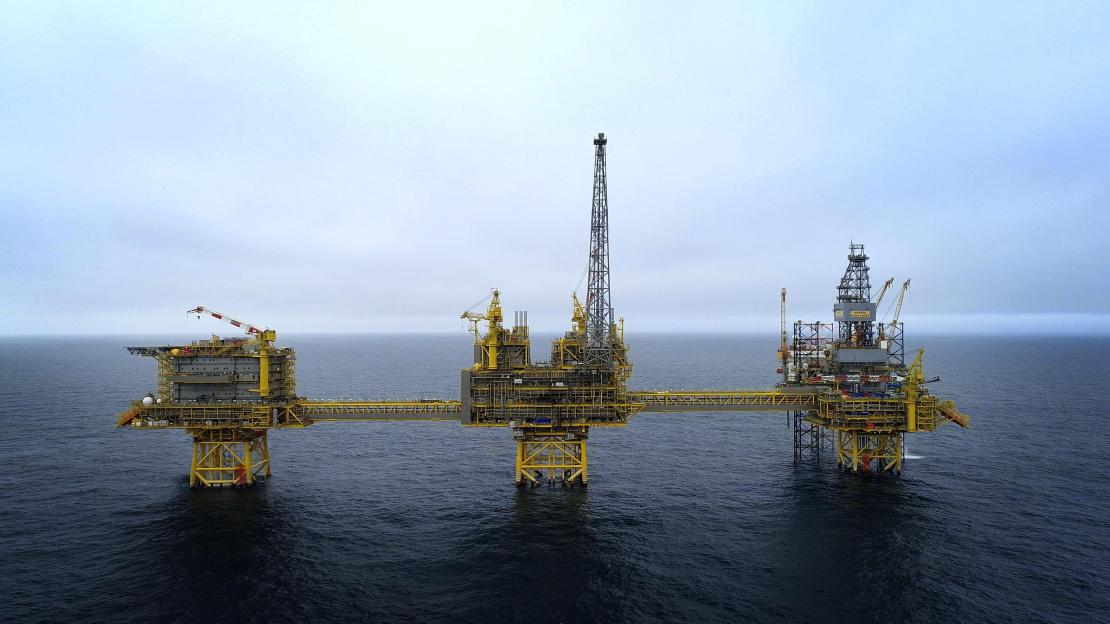
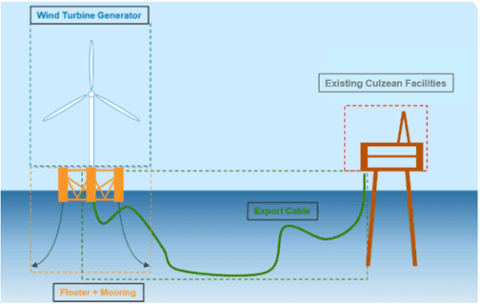
Total has announced plans to install a 3 MW floating wind turbine 2 km west of the Culzean platform, 220 km off the coast of Scotland. This turbine, expected to be fully operational by the end of 2025, will supply around 20% of Culzean’s power requirement. This project is interesting from an R&D standpoint, but makes little sense otherwise. Here’s why:
- Culzean is a gas condensate field that is capable of meeting 5% of the UK’s gas demand. There is thus ample produced gas to reliably and economically power the platform.
- Gas will be required to meet 80% of the power requirement even after the wind turbine is operating.
- In light of installation, maintenance, and decommissioning costs for the floating turbine, the cost of the intermittent wind power will no doubt be much higher than the cost of the power generated by platform gas.
- Some tax benefits may be associated with adding the wind turbine, but this won’t affect the real costs, other than to perhaps make them higher.
- In addition to affecting profitability, higher operational costs could reduce the ultimate recovery of gas and condensate from the field.
- Gas not consumed at the offshore facilities will be marketed and consumed onshore, so there is essentially no net reduction in global CO2 emissions.
- As JL Daeschler reminds me, the floating turbine complicates operations and could create safety issues: obstruction for helicopters and supply boats to avoid, trenching and installing power cable in a spare “J” tube, and feeding power to an electrical distribution system in accordance with standards and platform specifications. As JL notes, “I think we have plenty to do offshore already!”
- And what if there are mooring failures and the turbine drifts toward the platforms? Turbine blade failures?
- Bottom line: adding costs and risks for no apparent benefit.
 Bud's Offshore Energy (BOE)
But think of the virtue signals!
Exactly. Expensive and risky virtue signaling.