Feeds:
Posts
Comments

Archive for 2023

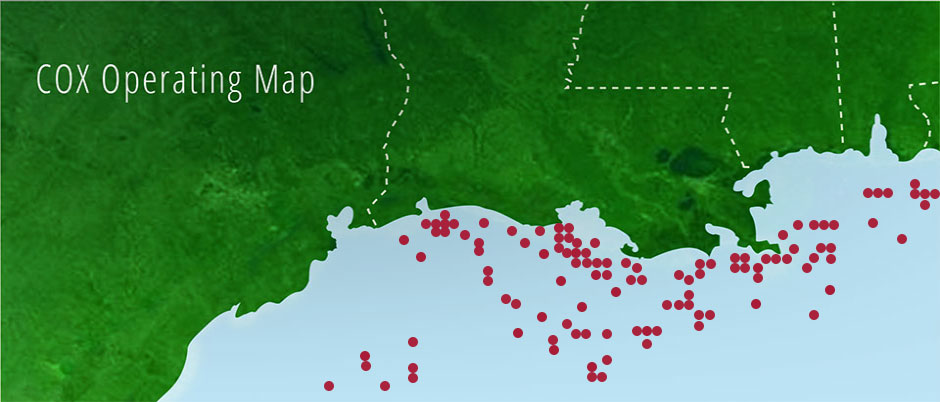
A Metairie-based oil company that’s one of the largest independent operators still working in the state’s shallow coastal waters has filed for bankruptcy protection, leaving dozens of south Louisiana service and supply companies facing potential bankruptcies of their own.

Bankruptcy court documents show Cox’s estimated liabilities are close to $500 million – more than $200 million of which is owed to small businesses in the Houma-Thibodeaux and Acadiana areas.

Court documents indicate that Cox followed a path that led to financial trouble for other companies in recent years: using debt to acquire large fields of aging wells in shallow Gulf waters.

Nola.com

This blog is primarily concerned with the potential impacts of the bankruptcy on safety performance, the plugging of wells, and the decommissioning of old facilities. Per BOEM’s data base, Cox currently operates 276 Gulf of Mexico platforms, all in shallow shelf waters. The company is reported (Nola.com) to owe $8 million in bond premiums needed to support well plugging operations.

Cox has not been an active driller of late with only 2 well starts since 1/1/2022 (BSEE borehole file).

Cox has been a major generator of INCs (incidents of noncompliance) with 437 INCs YTD. Cox has been responsible for 47% of all GoM INCs in 2023. Cox’s INC to inspection ratio was 2.46 vs. a combined ratio of 0.50 (490/972) for all other GoM operators.

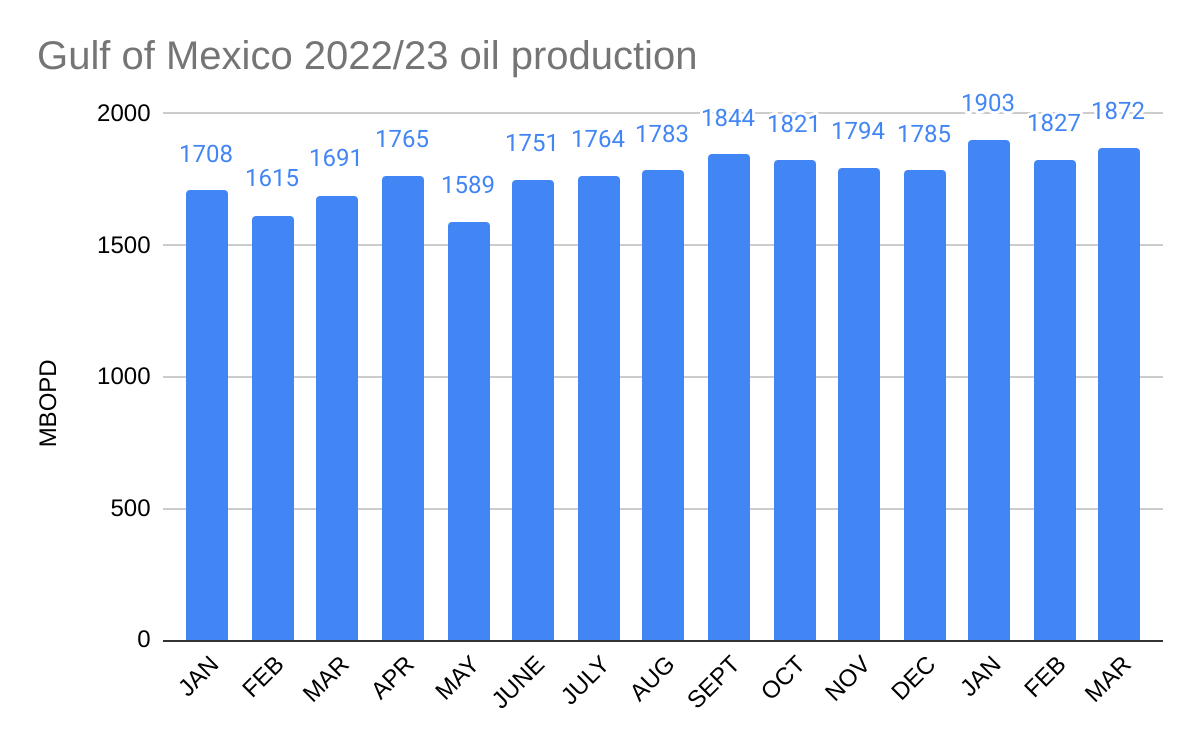
Cox is currently ranked 11th and 18th respectively in GoM gas and oil production with 7.2 billion cu ft and 1.8 million barrels produced YTD.

BOE previously commented on Cox’s pursuit of Dept. of Energy funds to develop a carbon sequestration hub in the Gulf.

Read Full Post »

Per BOEM’s latest update, 137 of the 313 Sale 259 tracts receiving bids have now been accepted. No decision has been made on the other 176 high bids, including the 69 bids for carbon sequestration purposes. For the reasons previously expressed, I continue to believe those sequestration bids were invalid.

Also, no decision has been made on Green Canyon 777, another block of particular interest.

Read Full Post »

Per an announcement by his family, former Secretary of the Interior James Watt passed away on May 27. The Washington Post provides a good overview of his tenure at DOI during the Reagan administration.

Watt was an outspoken and controversial figure. His aggressive mineral leasing policies proved not to be in the best long-term interest of the OCS program. As their principal target, Watt became an unintended fundraiser for opponents of energy development.

Watt’s indirect Beach Boys ban, which didn’t sit well with Ronald and Nancy Reagan, was perhaps his best remembered faux pas. Per the WP:

He did not explicitly mention the Beach Boys, but they had performed at previous July 4 events, and the group became the focus of outrage over Mr. Watt’s pronouncement. President Reagan called the interior secretary to the Oval Office and presented him with a plaster foot bearing a bullet hole to humorously — but unambiguously — convey the message that he had shot himself in the foot.

Watt’s hideous and insensitive comment about the composition of the Linowes Commission seemed to be the final straw, and he resigned shortly after he made those comments. The “cripple” in that remark happened to be someone I knew, a highly regarded mineral economist named Richard Gordon who was one of my favorite graduate school professors.

Lots of James Watt jokes circulated during his tenure. One that I found amusing went something like this: James loved baseball and dreamed of someday standing in center field at Yankee Stadium ….. drilling for oil 😀.

RIP Secretary Watt.

Read Full Post »

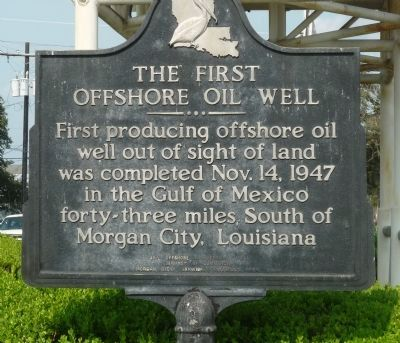
I believe the OOC is the world’s oldest trade association for the offshore oil and gas industry. The OOC was formed in 1948, five years before the enactment of the OCS Lands Act and just one year after the first Gulf of Mexico well was completed out of sight of land.

For much of their history, OOC had just a single, part-time employee. The organization has matured, but still operates in the same efficient manner, relying on subject matter experts from their member companies. Since the days of the OCS Orders, the OOC has consistently provided informed comments on operating regulations. As a regulator, I had issues with some of their comments over the years, but the dialogue was (almost😉) always polite and professional.

Congratulations to the OOC for the support they have provided for US offshore energy! Although many have had important roles, these former OOC representatives come immediately to mind for their contributions to offshore safety: John Rullman, Steve Brooks, Mark Witten, Sandi Fury, Dave Wisch, Ken Arnold, Charlie Williams, Phil Smith, Peter Velez, Allen Verret, Wanda Parker, Cort Cooper, Charlie Duhon, Jodie Connor, Craig Castille, Susan Hathcock, and Pat O’Connor. Many of these retired safety leaders, and current OOC Executive Director Evan Zimmerman, were recipients of MMS Offshore Leadership Awards.

Read Full Post »

Just as I was lamenting the absence of scientific surveying in the Atlantic, my former colleague Renee Orr brought this NOAA announcement to my attention. Researchers from the University of Texas Institute of Geophysics and Lamont-Doherty Earth Observatory, with funding from the National Science Foundation, propose to conduct seismic surveys in the Blake Plateau area of the South Atlantic (map below).

The proposed study would acquire two-dimensional (2-D) seismic reflection and seismic refraction data to examine the structure and evolution of the rifted margins of the southeastern United States, including the rift dynamics during the formation of the Carolina Trough and Blake Plateau.

The survey will lead to a better understanding of “the interaction between tectonic and magmatic processes that led to continental breakup and the onset of seafloor spreading in the central Atlantic Ocean 200 million years ago.” The investigators are particularly interested in the “stratigraphy of sediments that formed during and after rifting, the degree of crustal stretching at the continental margins, crustal faults that formed during extension of the margin, and the geometry of lava flows that were placed on the crust before the start of seafloor spreading.”

While not a primary purpose, the research should improve our understanding of the relationship between productive oil and gas fields offshore Africa and US analogs. Paul Post and his BOEM team estimated that the US Atlantic could contain >20 billion BOE (link to the latest report).

NOAA has conducted a detailed review of the proposal and made a “preliminary determination that the impacts resulting from this activity are not expected to adversely affect any of the species or stocks through effects on annual rates of recruitment or survival.”

Read Full Post »

Rick was one of the first Americans on Utah Beach during the D-Day invasion, helped to protect the endangered American Bald Eagle, and was an offshore energy (green hydrogen) pioneer. More about Rick.

Read Full Post »

The Supreme Court has decided to allow the 9th Circuit decision on offshore well stimulation to stand.

From a regulatory and technical standpoint, the 9th Circuit decision is highly questionable. The limited well stimulation operations offshore California were conducted 9-31 years ago and were carefully reviewed and monitored. No fluids were released or escaped to the marine environment.

During the Obama administration (and under the capable leadership of Directors Brian Salerno and Abigail Ross Hopper), BSEE and BOEM conducted a Programmatic Environmental Assessment (EA) and issued a Finding of No Significant Impact (FONSI) from the use of specific well stimulation treatments in oil and gas activities on the Pacific OCS. The 9th Circuit decided that wasn’t enough and the SCOTUS chose not to review their decision.

Given the current state of Pacific offshore operations, the court decisions will have little or no effect on well activity now or in the foreseeable future. If the BSEE well permitting site is up-to-date, there have been no Pacific well operations in the past 3 years. For the 2 years prior to that, the only well operations were for plugging and abandonment purposes. Therefore, the main concerns are the decision to require an EIS prior to any future well stimulation operations, and perhaps more importantly, the implications of the decision on offshore operations elsewhere.

Read Full Post »

In the attached paper, John Smith and Robert Byrd summarize the daunting decommissioning challenges facing California offshore operators:

  1. Large, deep-water structures.
  2. Lack of decommissioning infrastructure and services locally.
  3. High HLV mobilization costs.
  4. Jones Act restrictions.
  5. Limited onshore processing and disposal options.
  6. Air quality compliance costs.
  7. Site clearance and debris removal requirements.
  8. Environmental and space use operating constraints.
  9. A complex regulatory framework and risk of litigation.
  10. An unworkable reefing law and lack of a State approved artificial reefing program.

Does the regulatory framework prevent you from doing what the regulations require? Catch-22?

Read Full Post »

All we know at this point is that a Woodside contractor died during work activities at noon today (AWST).

The North Rankin complex is in 135 km offshore from Dampier on the northwest coast of Australia and is in 125 m of water.

More to follow.

North Rankin complex

Read Full Post »

Read Full Post »

« Newer Posts - Older Posts »