Feeds:
Posts
Comments

Archive for February, 2023

From a Hersh interview with Fabian Scheidler of the Berliner Zeitung:

  • 8 “bombs” were placed near the island of Bornholm in the Baltic Sea, six of which exploded in a rather flat area. The explosives destroyed three of the four Nord Stream 1 and 2 gas pipelines. (This explains why one of the four pipelines wasn’t damaged. Presumably, concerns about the unexploded ordinance have been addressed by Sweden.)
  • Norway identified a relatively shallow area (80m water depth) near Bornholm.
  • It only took a few hours to place the explosives
  • No one in Congress was informed of the plan
  • In response to criticism about his reliance on unidentified sources, Hersh said that many of his articles were dependent on such sources. If his sources were named, they would be fired or worse.

Below is a very good Jeffrey Sachs interview (new) with appropriate pushback from the host Freddie Sayers. Nothing really new, but both Sachs and Sayers are informed and articulate. Worth viewing.

Read Full Post »

41 years ago today, 84 men lost their lives on the Ocean Ranger. BOE’s 40th anniversary posts can be viewed here and here. The excellent 40th anniversary tribute video is embedded below. Remember these heroes.

Read Full Post »

The Nord Stream sabotage likely released more methane than the complete lifecycle of a GoM lease sale (upstream and downstream). Also, the Nord Stream explosions may have released more methane than is emitted by all US offshore producers in an entire year. Here are the numbers:

Source of MethaneCH4 emissions (1000s of tons)
Nord Stream (probable range)100-400
Nord Stream (maximum)500
Nord Stream – first 48 hrs (CAMS est)175
all US offshore production in 2020 (EPA)193
all US on- and offshore exploration in 2020 (EPA)12
lifecycle upstream emissions from a typical GoM lease sale (BOEM)118
lifecycle up- and downstream emissions from a typical GoM sale (BOEM)151

Finally, remember that offshore oil and gas leasing results in a net reduction in GHG emissions.

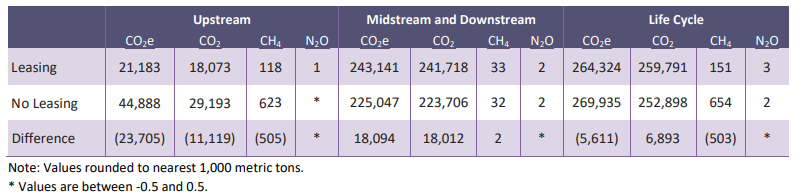
The No Leasing scenario results in roughly double the CO2e emissions for upstream activities compared to those of the Leasing scenario, given that, collectively, the substitute energy sources have higher GHG emissions per unit of production (also known as “GHG intensity”) compared to the forgone domestically produced OCS oil and natural gas of the Leasing scenario.

BOEM

Even when mid- and downstream emissions are included, leasing is preferable to no leasing. See the table below from the BOEM report:

Bottom line: we need more energy leasing and less military aggression!

Read Full Post »

Read Full Post »

link to the podcast

Much of the discussion was about his career and the state of journalism. Some of Hersh’s comments on his Nord Stream story:

  • He will protect his sources as he always has
  • The Nord Stream Pipeline sabotage was “stupid beyond belief”
  • “Pipeline industry knows what happened”
  • Only one major news show (Tucker Carlson) has contacted him and Hersh chose not to be interviewed
  • He was shocked that no other news organization pursued the story
  • He has received 1600 emails in 2.5 days since the article was published

Read Full Post »

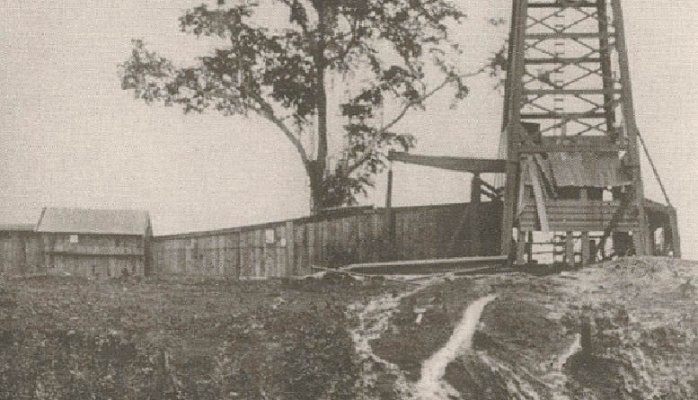
The record shows that the Merrimac Company, registered in 1857, made attempts to produce oil by distillation of pitch, but furthermore in the same year they drilled a well to a depth of about 280 feet, which was a much greater depth than Drake’s well in Pennsylvania – and two years earlier – and produced oil therefrom

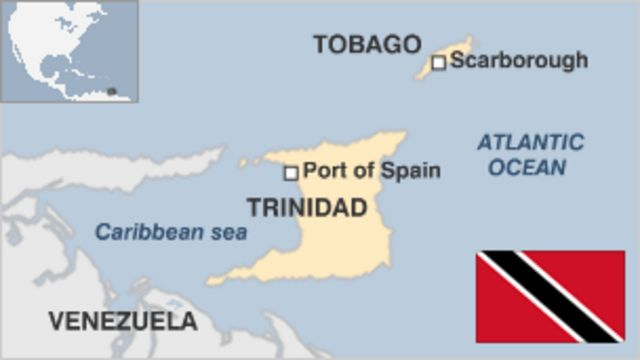
History of Trinidad’s Oil

Here is a list of historical facts for T&T’s petroleum industry.

Central bank of T&T data indicate dry natural gas production of 2.84 BCFD and crude oil production of 57,400 BOPD as of 9/2022.

The Ministry of Energy and Energy Industries is currently mulling bids on 4 deepwater blocks contrary to an erroneous press report that those bids had been rejected.

Read Full Post »

…especially when the market price is higher than the price the government wants to pay. Per EIA data, the “tank” has been flat-lined at half-full for the past month.

So far, the agency has not repurchased any barrels. The DOE announced earlier this month (Jan.) that it would not finalize a proposed buyback of 3 million bbl, because it did not receive offers that met its terms for price or quality.

Energy Intelligence

Read Full Post »

The National Academies of Sciences, Engineering, and Medicine will establish a standing committee to provide ongoing assistance to the Department of the Interior’s Bureau of Ocean Energy Management (BOEM) in its efforts to manage development of the nation’s offshore wind energy resources and their potential effects on fisheries

NASEM

This seems to be a positive step and the committee members have excellent credentials, but how do you establish such a committee without any representation from the wind industry? Here are the 12 members of the committee.

Read Full Post »

I’m posting this link without comment.

Last June, the Navy divers, operating under the cover of a widely publicized mid-summer NATO exercise known as BALTOPS 22, planted the remotely triggered explosives that, three months later, destroyed three of the four Nord Stream pipelines, according to a source with direct knowledge of the operational planning.

Seymour Hersch

Read Full Post »

Now that the 2021 US OCS incident spreadsheet has been posted and I have commented on the fatalities, I’ll be looking at some incidents by category starting with losses of well control (LWCs). Incident summaries and links to investigation reports follow the bullet points.

  • 4 LWCs incidents in 2021
  • None posed a significant threat to worker safety or the environment
  • All were deepwater wells
  • 3 were during exploratory drilling and 1 was during completion operations
  • All 3 drilling incidents involved water flows after setting 22″ surface casing.
  • The completion LWC was the result of the inadvertent opening of fluid control devices. The report on this incident provides important information for well completion risk assessments.

Incident summaries

Spreadsheet incident 19: Well completion operation. Inadvertent shearing and opening of the fluid loss control devices were not adequately assessed during the planning and review phases of the completion. While displacing the wellbore from 14.8 ZnBr to 14.8 packer fluid, the downhole equivalent circulating density sheared the upper and lower fluid loss control devices. The rig immediately began to experience fluid losses of 600 bph. A 50 bbl fluid loss pill was spotted and losses slowed to 345 bph. A second fluid loss pill was pumped which significantly decreased the losses eventually resulting in zero losses. After losses stopped, the rig experienced approximately a 14 bbl gain on the trip tank. The well was shut in on the annular and circulated out using the driller’s method. Oil was observed in the returns. While waiting on additional fluids and materials, wellhead pressure was managed by bullheading 14.8 brine when required. The well was killed via bullheading down the annulus followed by bullheading down the workstring with 3 CaCo3 pills. investigation report

BOE comment: While the cause of this incident is classified as “human error,” the failure to properly assess and plan for risks associated with the inadvertent shearing and opening of the fluid loss control devices is an organizational/management issue.

Incident 186: Shallow water flow during exploration drilling. Lost well. A shallow water flow was observed from one of the ports in the 38″ wellhead housing following cementation of the 22″ riserless casing string at Caramel Keg (GB 962 #1). Additional wireline logging (casing bond log and temperature log) runs were performed to gain additional insights into the potential source/location of the flow, as well as the quality and presence of cement behind the 22″ casing string. Approval from BSEE Lafayette district was received on April 1st to proceed with running the riser/BOP and continue with subsequent planned operations. Flow from the wellhead was monitored and a general reduction trend in flow from wellhead port was observed. Approval was received from BSEE on April 19th to install and close ball valves on two wellhead ports to isolate flow from wellbore. On April 20th, the ball valves were closed and flow from the wellbore ceased approximately 23 days after initial observation. Approval to temporarily abandon the well was received from BSEE on April 25, along with a monitoring plan of the wellbore and the surrounding area. TA operations concluded on April 27th. The ongoing monitoring program has since identified no indications of flow/broaching at or near the GB 962 #1 wellbore as of May 7th. No personnel were injured or evacuated as a result of this subsurface shallow water flow. report

Comment: The BSEE incident investigation team determined that salt contamination probably caused the cement to go under-balanced triggering flow and channeling behind the 22-in casing.

Incident 478: Exploration well – 7188′ WD; exploration. The 22″ casing cement job went as planned with positive cement returns to the mudline from dye and pH meter. The rig observed post cementing flow. Flow was predominantly gas. The flow started with a single source from the seabed, about 20 ft away from the wellhead. Within the next 2-3 hours, two other flow sources developed, one immediately adjacent to the jetpipe while another flow source surfaced about 10ft away from the wellhead. The rig continued to monitor the post cementing flow and completed multiple ROV wagon wheel surveys. No new seafloor anomalies or active flow points were identified away from the wellhead. Minor flow of water and gas continued at the wellhead. No investigation report.

Incident 507: Post Cement Flow Summary: The 22″ casing was cemented in place at 2:30 AM on August 18, 2021. At approximately 5:45 AM, a minor post cementing flow was observed by the ROV. The flow was only observed from 1 cement port/ball valve connected to the 28″x22″ annulus. The flow composition was predominately cement and absent hydrocarbons. The ROV continued to monitor the flow. No investigation report.

Read Full Post »
« Newer Posts - Older Posts »