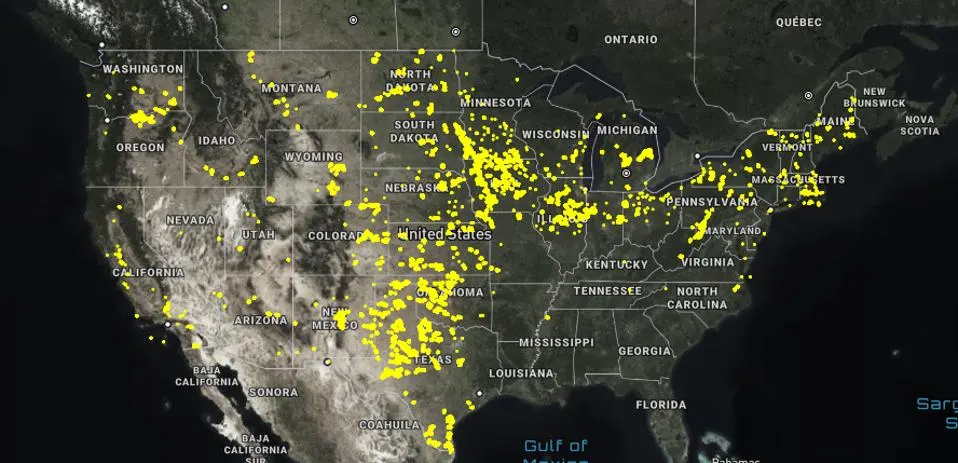
Forbes (USGS map of active wind turbines): “The U.S. Wind Turbine Database contains more than74,695 wind turbines built since 1980, spread between 1,699 wind power projects in 45 states. However, thousands of wind turbines are reaching the end of their operational lifespan and need to be either repowered to make way for updated (often larger) turbines or entirely decommissioned to allow for new uses of the land they occupy. Unfortunately, there is no uniform legal framework to regulate the steps involved, nor is there an accepted industry-wide set of best practices, and the environmental costs are considerable.”
Forbes: “As is often the case when new technologies come to market, unintended downstream consequences are not always immediately obvious to the players. Enthusiasm for clean energy initially pushed the first wind turbines into existence in the U.S. without considering the environmental and monetary costs that would be involved in either upgrading or bringing projects to a close later in their life cycle. “
BOEM’s land rush approach to offshore wind leasing will add up to 1086 turbine towers and 28 offshore substations (OSSs) in the Atlantic just from active projects with approved Records of Decision (RODs). (See the table below.) Another 17 active Atlantic commercial projects have yet to reach the ROD stage. Those projects should increase the total number of structures to >3000. Five more Atlantic wind lease sales are scheduled.
project
turbine towers
offshore substations
Coastal VA Offshore Wind
202
3
Revolution Wind
100
2
Sunrise Wind
94
1
Atlantic Shores South
200
up to 10
Ocean Wind 1
98
up to 3
Vineyard Wind 1
100
2
Empire Wind 1 & 2
147
2
New England Wind (phases 1&2)
150
5
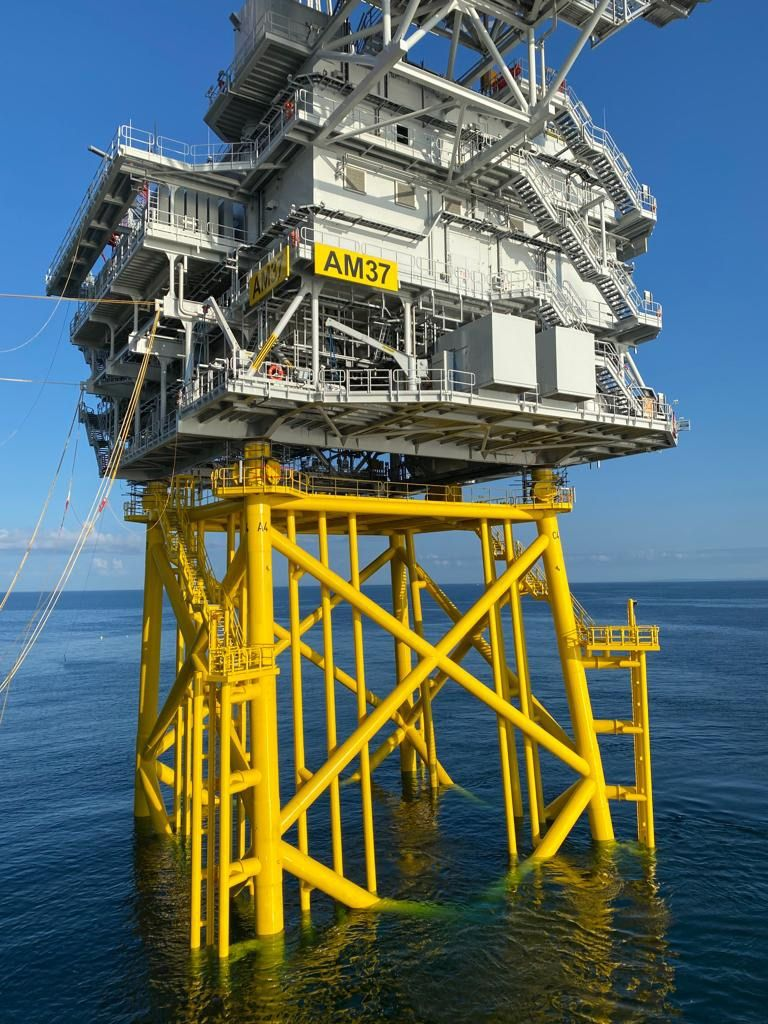
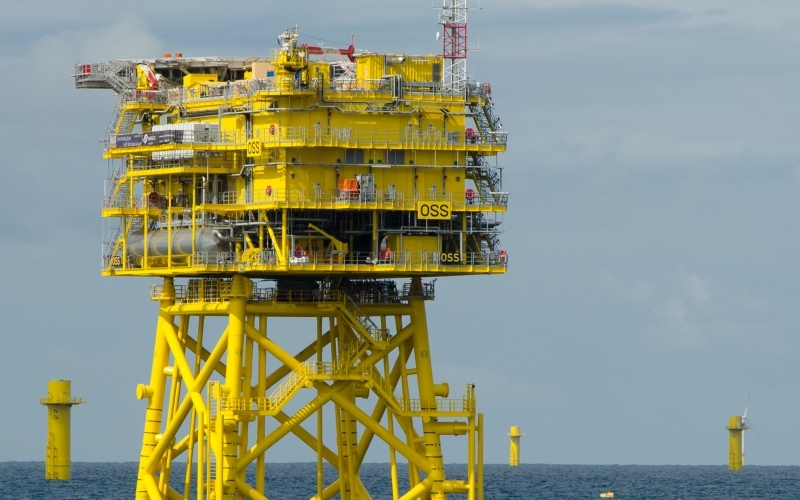
Per the Construction and Operations Plan (COP) for Vineyard Wind, the topsides for a conventional electrical service platform (ESP) (also known as an offshore substation or OSS) are 45 x 70 x 38 m, which is larger in surface area than a typical 6-pile oil and gas platform (~30 x 30 m), and is comparable in size to a large jackup drilling rig.
The Atlantic Shores plan calls for 10 small, 5 medium, or 4 large OSSs. (Uncertainty regarding the number and types of structures seems rather common in wind COPs.) The large OSSs have topsides that are 90 m by 50 m and rise to 63 m above MLLW. These are large offshore structures whether for wind or oil and gas.
Per BOEM, the “Rule to Streamline and Modernize Offshore Renewable Energy Development” is intended to “make offshore renewable energy development more efficient, [and] save billions of dollars. Unfortunately, the savings associated with relaxed financial assurance requirements translates to increased risk for power customers and taxpayers.
BOEM signaled their intentions on offshore wind (OSW) decommissioning three years ago when they granted a precedent setting financial assurance waiver to Vineyard Wind. Despite compelling concerns raised by commenters, the “streamlining” regulations codified this decision.
No one knows what the financial future will be for wind projects and the responsible companies. Financial assurance should therefore be established when the structures are installed, not years into the future as allowed by the revised regulations. What leverage will BOEM have then?
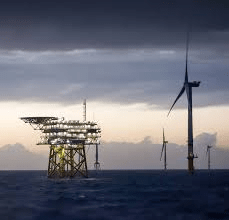
Nordsee One substation, Germany. Rystad Energy projects 137 new power substations offshore continental Europe this decade, requiring $20 billion in total investment.
 Bud's Offshore Energy (BOE)