Feeds:
Posts
Comments

Posts Tagged ‘vancouver’

When an investigation has been completed and corrective action is necessary, the PSA (Norway) approach is to make the operator take ownership of the problem. The operator is directed to develop solutions and implementation schedules that are acceptable to the regulator. See the PSA directive to Statoil below following the investigation of the Gullfaks B gas release.

In contrast, there is a tendency in the US for the regulator to take ownership of the problem and thus assume responsibility for developing solutions. The regulator dictates these solutions to the operator (and perhaps the entire industry), sometimes without sufficient discussion or analysis. Of course, US regulators may not have a choice in the matter as the political system often demands that the regulator take action, perhaps before the investigation is even completed (or started!).

Which approach presents the greater opportunity for success? Most regulators would say the former, and that was the consensus view at the International Regulators’ Offshore Safety Conference in Vancouver.


Read Full Post »

Be sure to check them out!

Read Full Post »

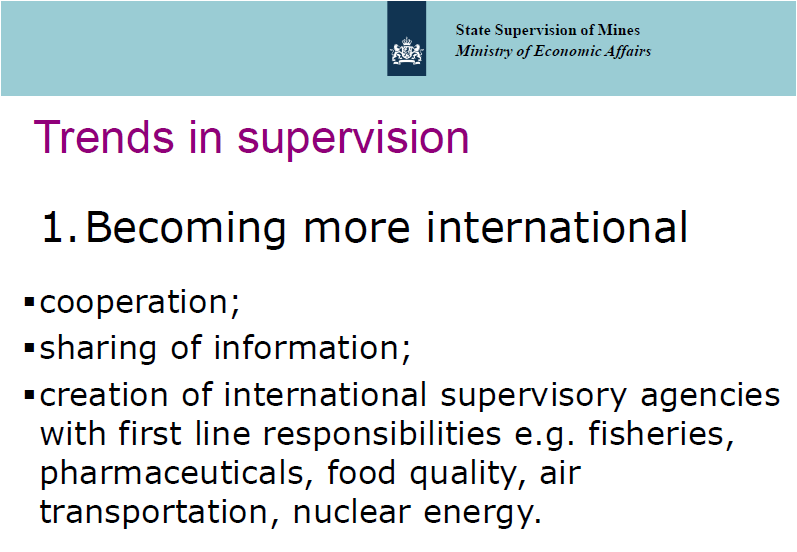
The above slide is from the excellent presentation that Jan de Jong (Inspector General, State Supervision of Mines, the Netherlands) never got to deliver in Vancouver. As session chair, Jan graciously yielded his time to his panelists.

Jan’s presentation notes the growing importance of international cooperation. This trend has the potential to improve regulatory capabilities, expand data availability and access, reduce regulatory costs through the sharing of resources, reduce costs for industry through greater international consistency and regulatory certainty, and improve international relations.  The Netherlands, Russia, Norway, Cuba, the US, and everyone else should be on the same team when it comes to offshore safety and pollution prevention.  Some near-term suggestions follow:

  • Except where regional conditions dictate otherwise, the same standards should be applied worldwide.  Government and industry should be collectively questioning, testing, and improving these standards. Remember that the goal is continuous improvement, not mere compliance.
  • An international information system should provide for the collection and verification of incident and performance data.
  • Using international data and expertise, a cooperative risk assessment program should be initiated.
  • An organized international audit capability should be established to evaluate operators and regulators.
  • To improve access to expertise and reduce costs, a network of specialists should assist regulators worldwide.
  • Industry training requirements should be uniform and consistently applied, and regulator training programs should be consolidated regionally or internationally.
  • The international research network should be expanded.
  • To ensure that accidents are investigated independently and to minimize the potential for political influences on the investigation process, an international accident investigation capability should be established.
  • The safety culture message should be promoted worldwide.  Successes and failures should be cooperatively examined.

Read Full Post »

The conference summary is now posted.

Presentations

Read Full Post »

The following are the consensus findings and recommendations of the 200 operations, safety, and regulatory specialists who participated in the International Regulators’ Offshore Safety Conference (18-20 October, Vancouver):

  • Regulatory regimes function most effectively when a single entity has broad safety and pollution prevention responsibility.  Gaps, overlap, and confusion are not in the interest of safety or regulatory efficiency.
  • The regulator’s core responsibilities and objectives must be clearly identified.  Managers must minimize distractions so that regulatory personnel can focus on these objectives.
  • Safety management and regulatory priorities should be identified through a comprehensive risk assessment program.   Training and competency development programs should be updated to reflect the new risk information.  Contracting strategies should be reviewed to assess their safety and risk implications.
  • Government and industry should promote an improvement mentality, not a compliance mentality. Continuous communication among regulators, operators, contractors, workers, industry associations and public interest groups is essential for continuous improvement.
  • Operators and contractors must manage their companies to achieve safety objectives and must continually assess the effectiveness of their management programs. Regulators should challenge industry to resolve potential safety problems rather than seek to resolve the problems for them.
  • Regulators should serve as catalysts for learning by distributing information, hosting workshops, participating in research, and identifying gaps in standards and best practices.  Wherever possible, the best standards should be identified and applied internationally.
  • Accident investigations should be conducted independently and findings should be promptly and broadly distributed.  Industry or government should maintain comprehensive and verified incident data bases.  Offshore companies should regularly discuss the causes and implications of past accidents with their employees.
  • Industry and government cannot rely solely on incident data to identify risks.  New indicators must be explored and assessed, particularly for major hazards and safety culture. Worker input is also essential.
  • Peer-based audit programs should be considered for both regulators and operators.
  • Industry and regulators should make better use of technology for real time monitoring of safety parameters.
  • Sustaining outstanding safety performance is critical to the reputation of industry and government.  All personnel should be trained to be safety leaders and should be empowered to stop work without blame.
  • Industry and government should Investigate other actions and programs that might help promote, sustain, and monitor a culture of safety achievement.

This is very good, fundamental guidance for all governments and companies.

Read Full Post »

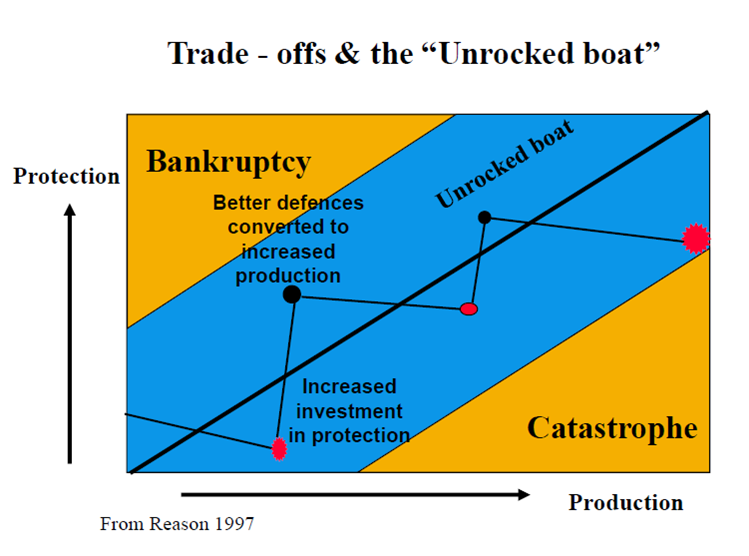
This slide presented by Dr. Mark Fleming during his excellent presentation in Vancouver piqued my interest, so I looked for a bit more information.  I found this interesting observation in a paper by Gonzales and Sawicka:

The role of risk perception is particularly interesting. First, performance in both safety and security settings is well characterized by the “unrocked boat” metaphor: Organizations become accustomed to their apparently safe state, thus misperceiving risk and allowing themselves to drift into regions of greater vulnerability, until (near) accidents temporarily induce greater risk awareness. The resulting pattern is oscillatory, with varying amplitude and typically leading to disaster.

The above quote seems to describe the situation on the Deepwater Horizon. Perhaps there was a sense of invulnerability among some employees (including managers) and finishing the job took precedence over safety.  As Mark Fleming remarked in his presentation, offshore workers know their employer is in business to produce barrels of oil, not barrels of safety.  Concerns about production (or in this case timely suspension of the well) can easily supersede concerns about safety.

A very important paper by James Reason, the person responsible for the “Unrocked Boat” diagram, had this to say:

The same cultural drivers-time pressure, cost-cutting, indifference to hazards and the blinkered pursuit of commercial advantage-act to propel different people down the same error-provoking pathways to suffer the same kinds of accidents. Each organization gets the repeated accidents it deserves. Unless these drivers are changed and the local traps removed, the same accidents will continue to happen.

Reason goes on to recommend a data collection program that is currently absent, at least on an industry-wide basis:

In the absence of sufficient accidents to steer by, the only way to sustain a level of intelligent and respectful wariness is by creating a safety information system that collects, analyzes, and disseminates the knowledge gained from accidents, near misses, and other sources of ‘free lessons.’

I would suggest that another way to sustain wariness is to present information on past accidents and why they can happen again. How many industry employees know what happened at Santa Barbara, Bay Marchand, Main Pass 41, Ixtoc, the Alexander Kielland, Ocean Ranger, Brent B, South Pass 60 B, and even Piper Alpha?

Finally, Reason reaches this critically important and completely relevant conclusion (keep in mind that this paper is 12-years old):

It need not be necessary to suffer a corporate near-death experience before acknowledging the threat of operational dangers-though that does appear to have been the norm in the past. If we understand what comprises an informed culture, we can socially engineer its development. Achieving a safe culture does not have to be akin to a religious conversion-as it is sometimes represented. There is nothing mystical about it. It can be acquired through the day-to-day application of practical down-to-earth measures. Nor is safety culture a single entity. It is made up of a number of interacting elements, or ways of doing, thinking and managing, that have enhanced resistance to operational dangers as their natural by-product.

Read Full Post »

Click here to view the presentations from the International Regulators’ Offshore Safety Conference in Vancouver.

Read Full Post »

Peoples attitudes and opinions have been formed over decades of life and cannot be changed by having a few meetings or giving a few lectures. Mao Tse Tung (from Mark Fleming’s presentation linked below)

Sometimes presentations don’t fulfill the lofty expectations of the audience, particularly when the titles are catchy.  That definitely was not the case with Dr. Mark Fleming’s outstanding presentation at the Vancouver conference.  Mark’s presentation entitled Know where you are going rather than where you have been! A Leaders’ guide to continuous safety performance measurement effectively drove home the safety culture message.  I strongly suggest that you take a close look at the presentation (not yet posted, but I’ll provide a link as soon as it is).

In the meantime, you can look at this excellent paper that Mark prepared for Petroleum Research Atlantic Canada and a presentation he made at the Centre for Occupational Health/Safety. Good, thought provoking stuff for you safety gurus!


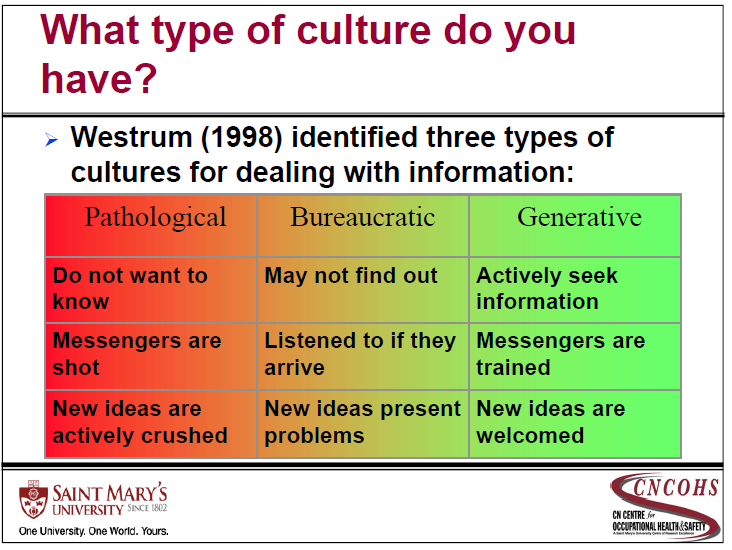
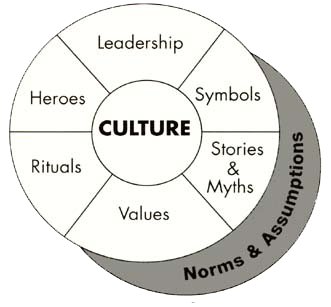
from Dr. Fleming's presentation linked above


You have to love “New ideas present problems” from the Bureaucratic column.  So true.  It’s not that new ideas are not welcome, it’s that bureaucracies (public and private) are incapable of dealing with them and are built with insurmountable barriers that prevent their consideration.

Read Full Post »

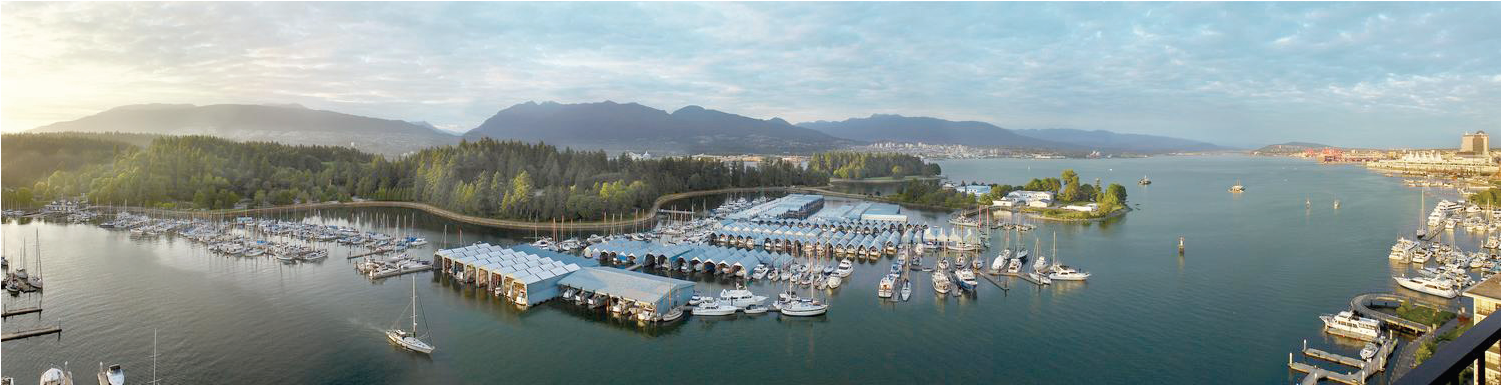
Viewed in Vancouver

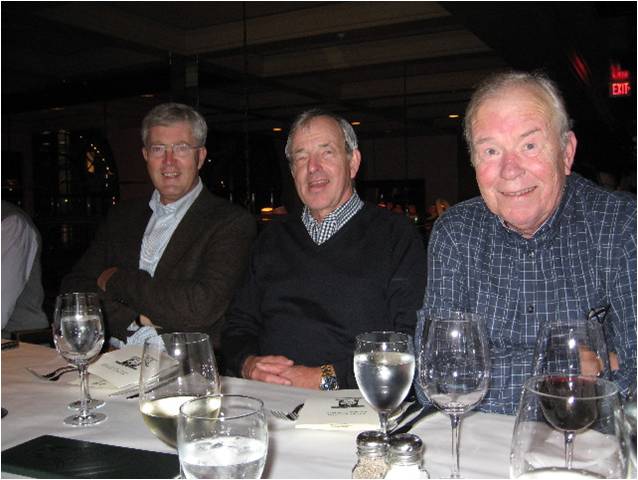
Jan de Jong (Inspector General, State Supervision of Mines, the Netherlands), Max Ruelokke (CEO, Canada - Newfoundland and Labrador Offshore Petroleum Board), and Odd Finnestad (BOE Executive VP for International Programs and IRF Historian)

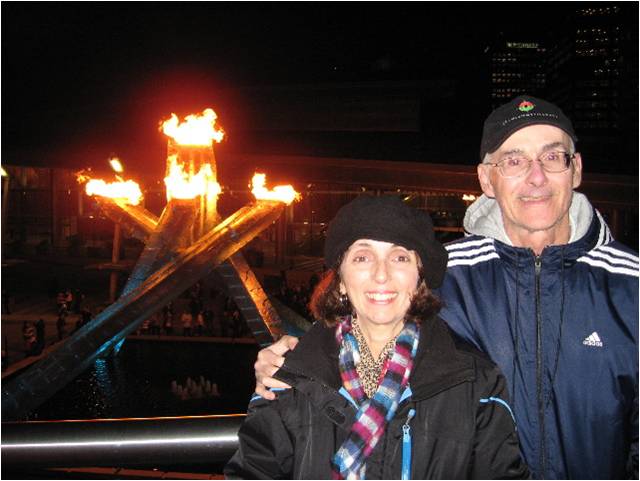
They re-lit the Olympic Torch in our honor. Well, not exactly. The torch was lit for a ceremony naming the plaza after Jack Poole, a driving force in bringing the Olympics to Vancouver. Sadly, Jack died of cancer a few months before the games opened.

While we are awaiting the official pictures of the Vancouver conference, you can look at some of Karen’s by clicking here.

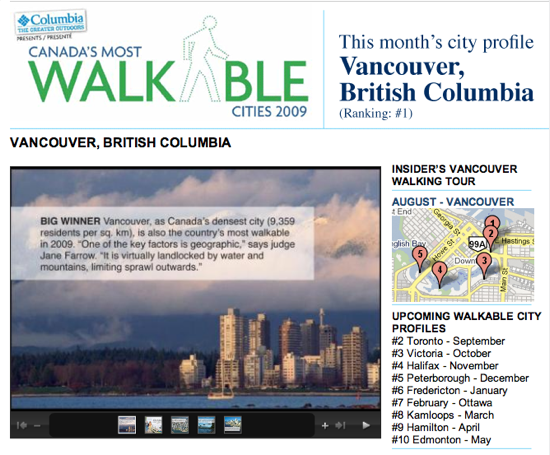
Vancouver is a great city and the weather was pretty close to perfect.  I like walkable cities with interesting neighborhoods, and Vancouver ranks near the tops.  If you get a chance, check it out.

Read Full Post »

Firstly, major kudos to the Canadians for organizing a great conference in Vancouver, a wonderful city.  The Newfoundland-Labrador and Nova Scotia Petroleum Boards, and the National Energy Board were outstanding hosts, and Max, Howard, Stuart, Sean, Bharat, and the folks at Venue West did a great job with the arrangements. The International Regulators’ Offshore Safety Conference was a huge success thanks to their efforts.

The international leaders in Vancouver were in full agreement that the key to long term safety achievement is the strength and vitality of the safety culture in the operating companies, contractors, and regulatory organizations.  How is such a culture encouraged and achieved?  As NOPSA CEO Jane Cutler has said “safety culture is what you do when no one is watching.”  Inspections are a necessary regulatory tool, but if they are too frequent they send the message that the government is responsible for safety, and that operators and workers can relax their guard.  As Magne Ognedal (PSA-Norway) has frequently said, safety must be managed by the “owner” of the facility and the risk, with the government holding the owner accountable and insisting on excellence.

Steve Walker, UK HSE chief, said that regulators must encourage a “beyond compliance” culture and serve as catalysts for learning and achievement. Regulators can never be satisfied; they should be negative thinkers searching for the operations, processes, and behaviors that might trigger the next major accident.  Dr. Mark Fleming from St. Mary’s University in Halifax believes that safety culture can in fact be regulated, not in the traditional sense, but by requiring companies to have systems in place for promoting and measuring the organizational culture.

Regulators must also look at their own safety culture.  Are they focused solely on compliance and “command and control,” or are they investigating risks, assessing management programs, and evaluating performance?  Are regulatory employees free to investigate and inquire, or are they mere implementers of management directives?  Are employees rewarded for sustaining the hierarchy or challenging  the status quo?  Are they expected to explain why accidents can’t happen again or figure out how they can?

Much more on these and other Vancouver topics in the near future.

Read Full Post »

Older Posts »