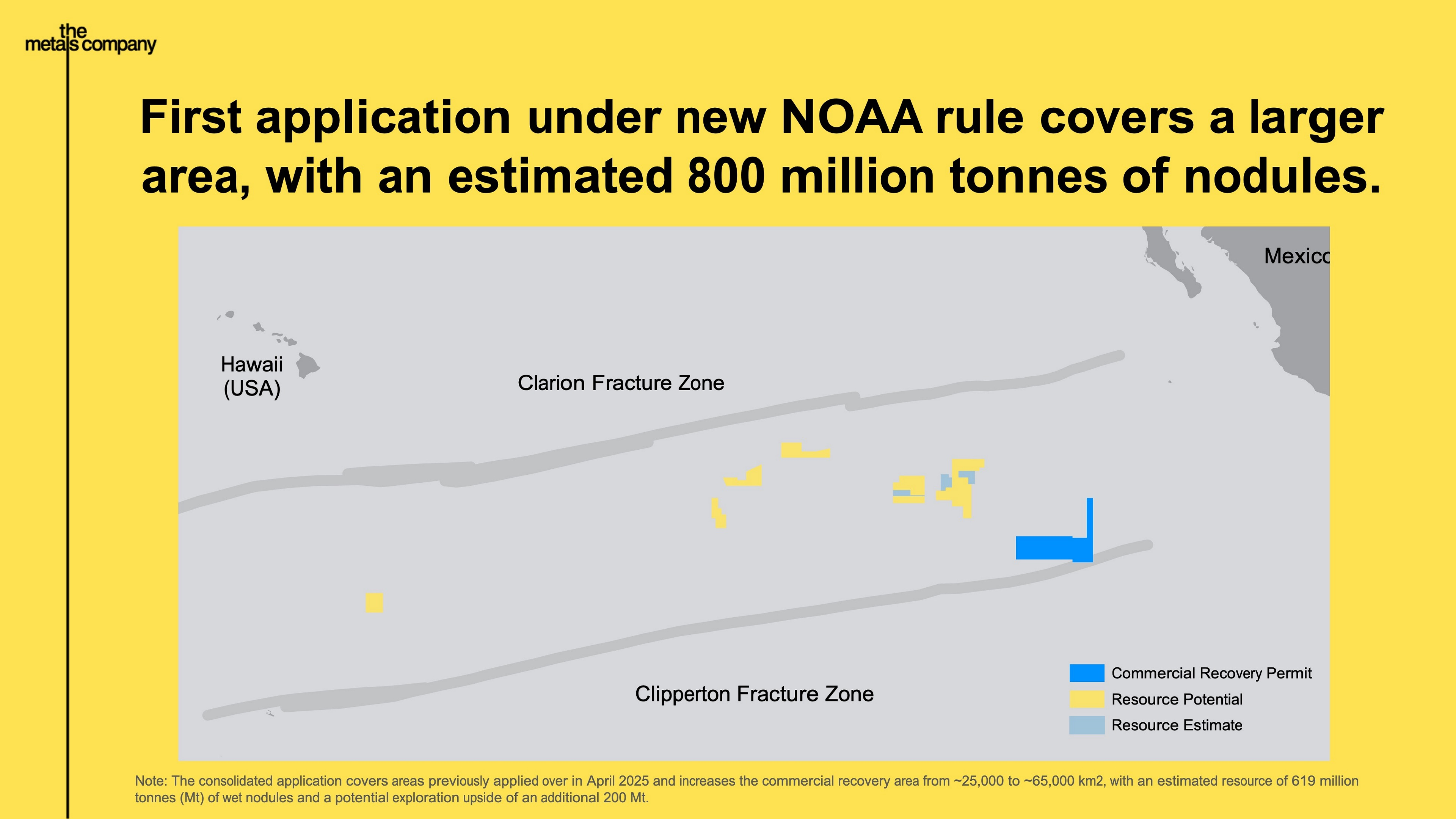
The Metals Company has filed the first consolidated application for an exploration license and commercial recovery permit under NOAA’s new regulations.
Posted in deep sea mining, energy policy, Regulation, tagged deepsea minerals, DSHMRA, first application, NOAA, The Metals Company, TMC on January 23, 2026| Leave a Comment »
The Metals Company has filed the first consolidated application for an exploration license and commercial recovery permit under NOAA’s new regulations.
Posted in deep sea mining, energy policy, tagged deep sea mining, first production, ISA, Naura, NOAA, NORI, permitting, TMC on August 18, 2025| Leave a Comment »

Highlights from TMC’s Q2 update:
Meanwhile, after missing deadlines in 2020 and 2023, the International Seabed Authority (ISA) again failed to deliver a Mining Code as communicated in their 2023 roadmap during the second part of their 30th session in July 2025. No new roadmap or new target date for adopting the final Mining Code has been agreed. The next ISA meeting is scheduled for March 2026. (Hence the importance of direct permitting through the US/NOAA.)

Posted in deep sea mining, energy policy, Offshore Energy - General, tagged China, marine minerals, new executive order, TMC, trade dispute on April 17, 2025| Leave a Comment »

According to a Financial Times report, the White House is drafting an executive order that will facilitate the stockpiling of critical metals found in the Pacific. The Administration is intent on countering China’s rare earth supply chains and battery mineral dominance.
This is good news for TMC, a Canadian company that plans to apply for deepsea mining permits under US authority, not proposed international regulations.
Posted in deep sea mining, energy policy, Offshore Energy - General, tagged deepsea mining, ISA, NOAA, The Metals Company, TMC, UNCLOS, US permitting on March 31, 2025| Leave a Comment »

Lars Herbst brought this bold and rather surprising deepsea mining development to my attention. Let the screaming begin!
NEW YORK, March 27, 2025 (GLOBE NEWSWIRE) (emphasis added) — TMC the metals company Inc. (Nasdaq: TMC) (“TMC” or the “Company”), an explorer of the world’s largest undeveloped resource of critical metals for building infrastructure, power generation, transmission, and batteries, today announced that its subsidiary The Metals Company USA LLC (“TMC USA”) has formally initiated a process with NOAA under the U.S. Department of Commerce to apply for exploration licenses and commercial recovery permits under existing U.S. legislation, the Deep Seabed Hard Mineral Resources Act of 1980 (DSHMRA).
Following extensive legal diligence on DSHMRA, NOAA’s implementing regulations and other applicable environmental protection legislation, the Company strongly believes that the U.S. seabed mining code offers the greatest probability of securing a permit for commercial recovery of deep-sea mineral resources in a timely manner.
Gerard Barron, Chairman & CEO of The Metals Company, commented: “Over the last decade, we’ve invested over half a billion dollars to understand and responsibly develop the nodule resource in our contract areas. We built the world’s largest environmental dataset on the CCZ, carefully designed and tested an offshore collection system that minimizes the environmental impacts and followed every step required by the International Seabed Authority. But, despite collaborating in good faith with the ISA for over a decade, it has not yet adopted the Regulations on the Exploitation of Mineral Resources in the Area in breach of its express treaty obligations under UNCLOS and the 1994 Agreement.”
“We believe we have sufficient knowledge to get started and prove we can manage environmental risks. What we need is a regulator with a robust regulatory regime, and who is willing to give our application a fair hearing. That’s why we’ve formally initiated the process of applying for licenses and permits under the existing U.S. seabed mining code. After extensive legal review and constructive engagement with NOAA and other officials across the U.S. government, we believe the United States offers a stable, transparent, and enforceable regulatory path. TMC USA expects to submit applications to NOAA in the second quarter of 2025. We’re encouraged by the growing recognition in Washington that nodules represent a strategic opportunity for America—and we’re moving forward with urgency.”
Posted in deep sea mining, energy policy, Offshore Energy - General, tagged deep sea mining, Lisa Murkowski, NDAA, NORI, Norway, Norwegian Offshore Directorate, polymetallic nodules, TMC on January 16, 2024| Leave a Comment »

“the committee directs the Assistant Secretary of Defense for Industrial Base Policy shall, by March 1, 2024, submit a report to the House Armed Services Committee assessing the processing of seabed resources of polymetallic nodules domestically. The report shall include, at a minimum, the following:
NDAA, p. 230
(1) a review of current resources and controlling parties in securing seabed resources of polymetallic nodules;
(2) an assessment of current domestic deep-sea mining and material processing capabilities; and
(3) a roadmap recommending how the United States can have the ability to source and/or process critical minerals in innovative arenas, such as deep-sea mining, to decrease reliance on sources from foreign adversaries and bolster domestic competencies.
Posted in Offshore Energy - General, Uncategorized, tagged court order, deep sea mining, Georges Bank, Greenpeace, TMC, Zapata Saratoga on December 1, 2023| Leave a Comment »
TMC
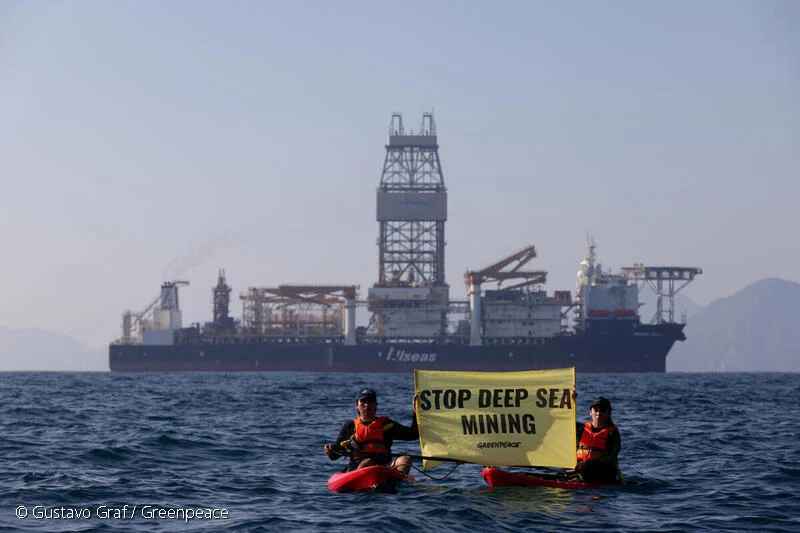
- The District Court of Amsterdam has ordered Greenpeace International to immediately disembark from the research vessel commissioned by TMC subsidiary Nauru Ocean Resources Inc (NORI) to conduct legally-mandated environmental impact assessments requested by the Legal and Technical Commission of the International Seabed Authority (ISA)
- Since November 23rd, Greenpeace’s unsafe and unlawful activities have hindered independent scientists in conducting environmental and scientific studies to assess ecosystem function and recovery one year on from NORI’s pilot nodule collection system test
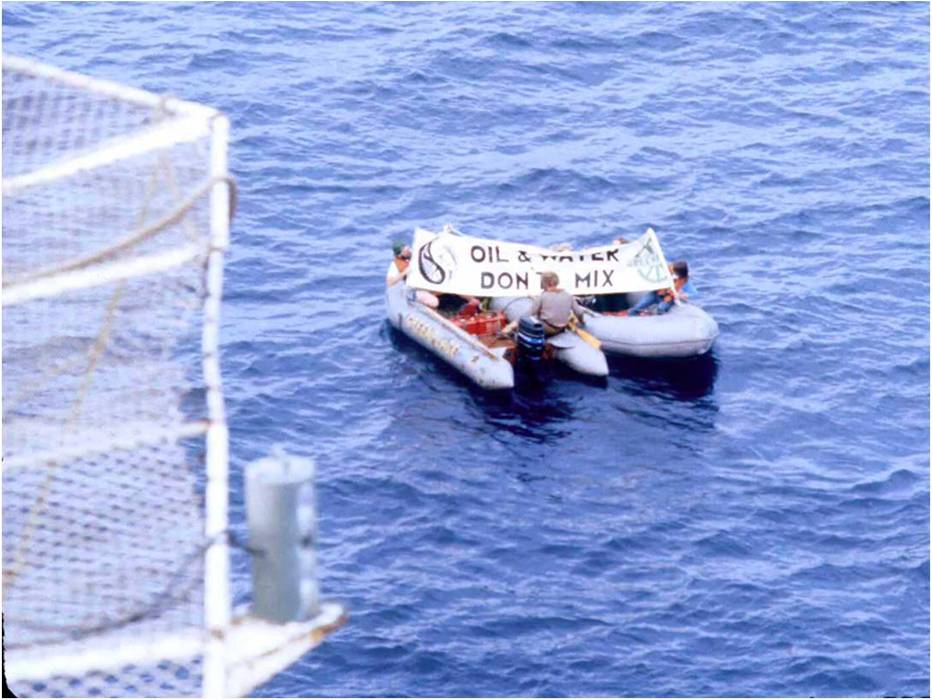
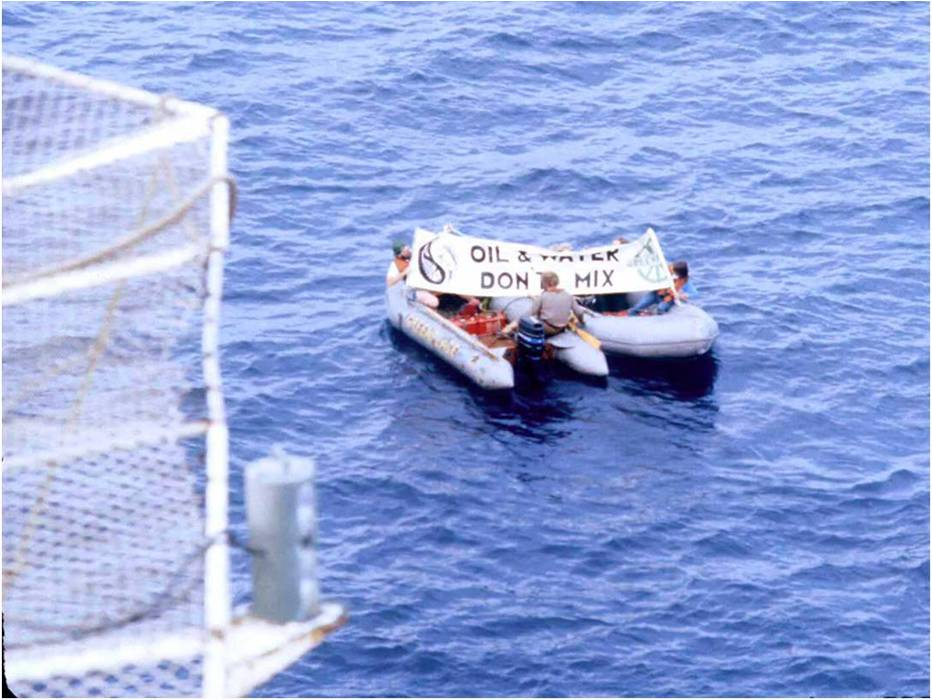
A bit of history: We experienced Greenpeace protesters on Georges Bank way back in 1981. They were dispatched from the Rainbow Warrior which visited the Zapata Saratoga, 155 miles SE of Nantucket. Given the remote location, the protest was unexpected. However, the drilling operation was not disrupted and no action was taken against Greenpeace. Four years later, the Rainbow Warrior was bombed by French commandos while in port in Auckland, NZ prior to planned protests against French nuclear testing in the South Pacific. Sadly, one crew member was killed during this incident.
Posted in Mexico, Offshore Energy - General, Uncategorized, tagged Andrew Konczvald, deepsea mining, Hidden Gem, Manzanillo, Mexico, TMC on August 9, 2023| 1 Comment »
Our Mexican correspondent, Andrew Konczvald, reports that the Hidden Gem, a deepsea mining vessel owned by The Metals Company (TMC) is still parked offshore Manzanillo. The ship has moved a couple of miles and is now near a shipping lane. See Andrew’s pictures below.
Per TMC’s latest update, the earliest that deepsea mining operations could be conducted is late 2025, so the vessel is likely to remain in Manzanillo for Andrew’s viewing pleasure. Nothing like a water view with a rig on the horizon. 😉


Posted in Mexico, Offshore Energy - General, Uncategorized, tagged California, Hidden Gem, Manzanillo, nodules, seafloor mining, TMC on March 21, 2023| Leave a Comment »
Relax; just kidding about the California part (or am I? 😉).
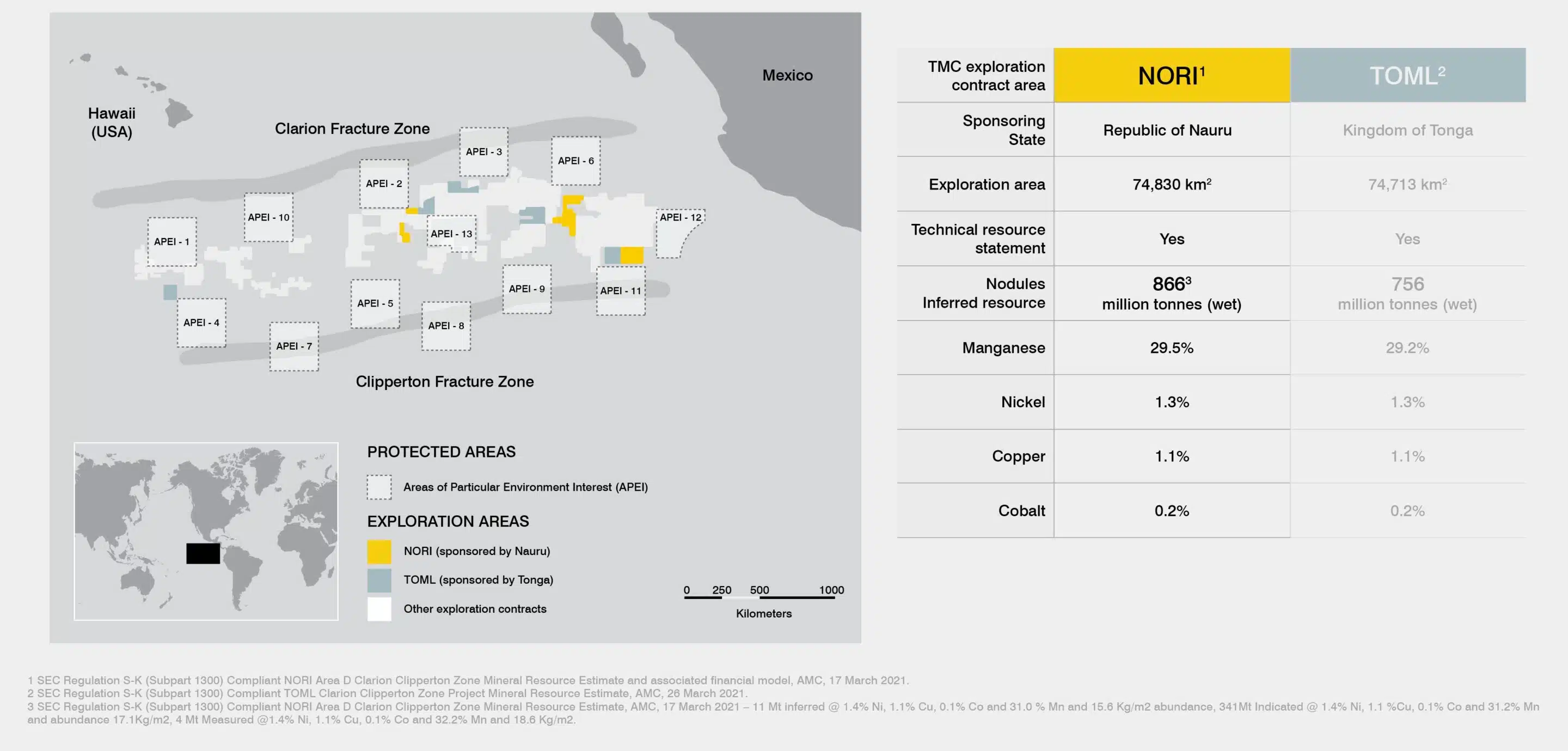
BOE’s Mexican correspondent, Andrew Konczvald, took pictures of what looks like a deepwater drillship parked near the beautiful Pacific coast resort town of Manzanillo. Upon further review, our crack investigators determined that the rig is the Hidden Gem, a deepsea mining vessel, owned by The Metals Company (TMC). Last year, TMC conducted a pilot nodule collection program in the Clarion Clipperton Zone between Hawaii and Mexico.



 Bud's Offshore Energy (BOE)