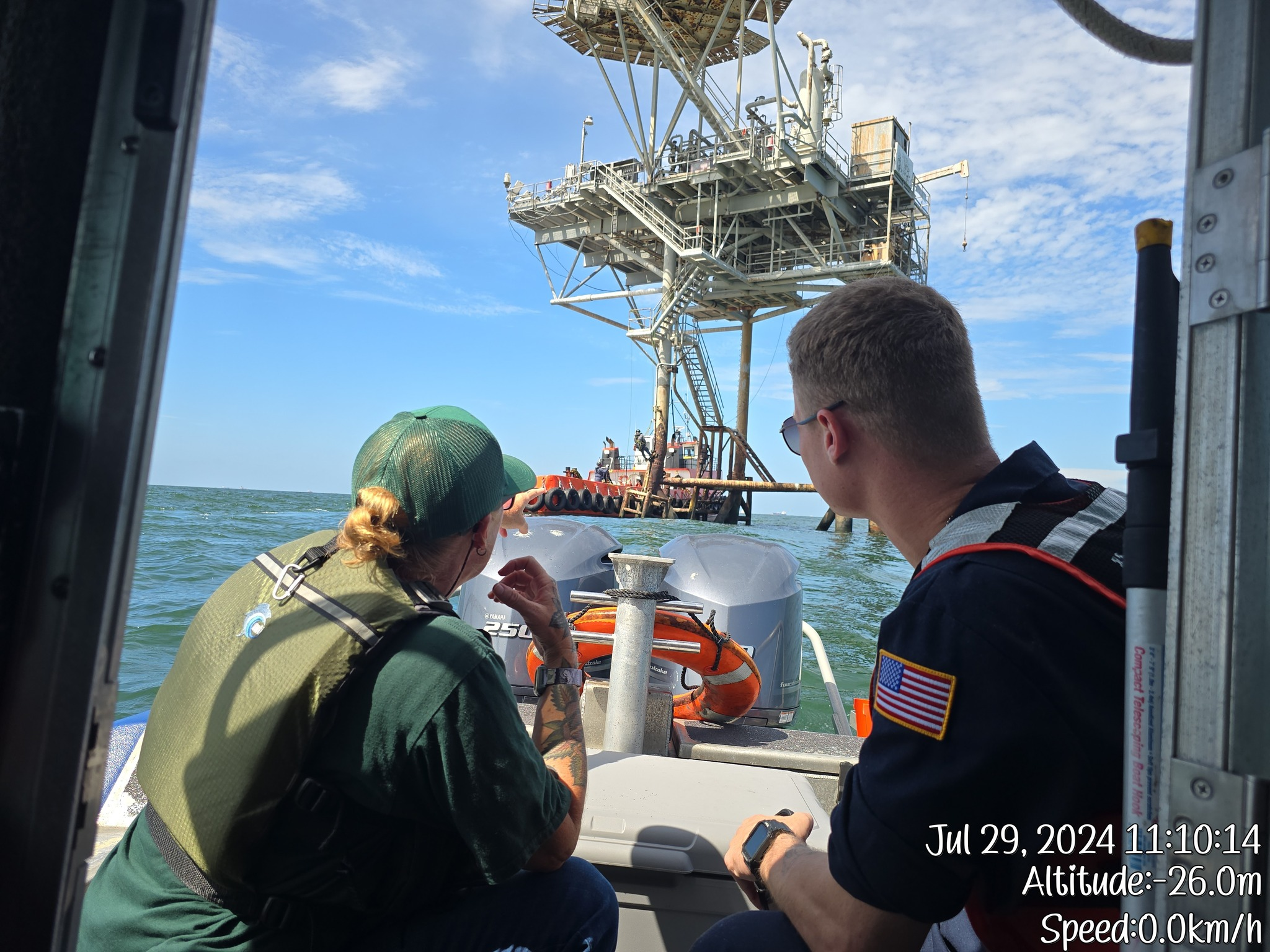
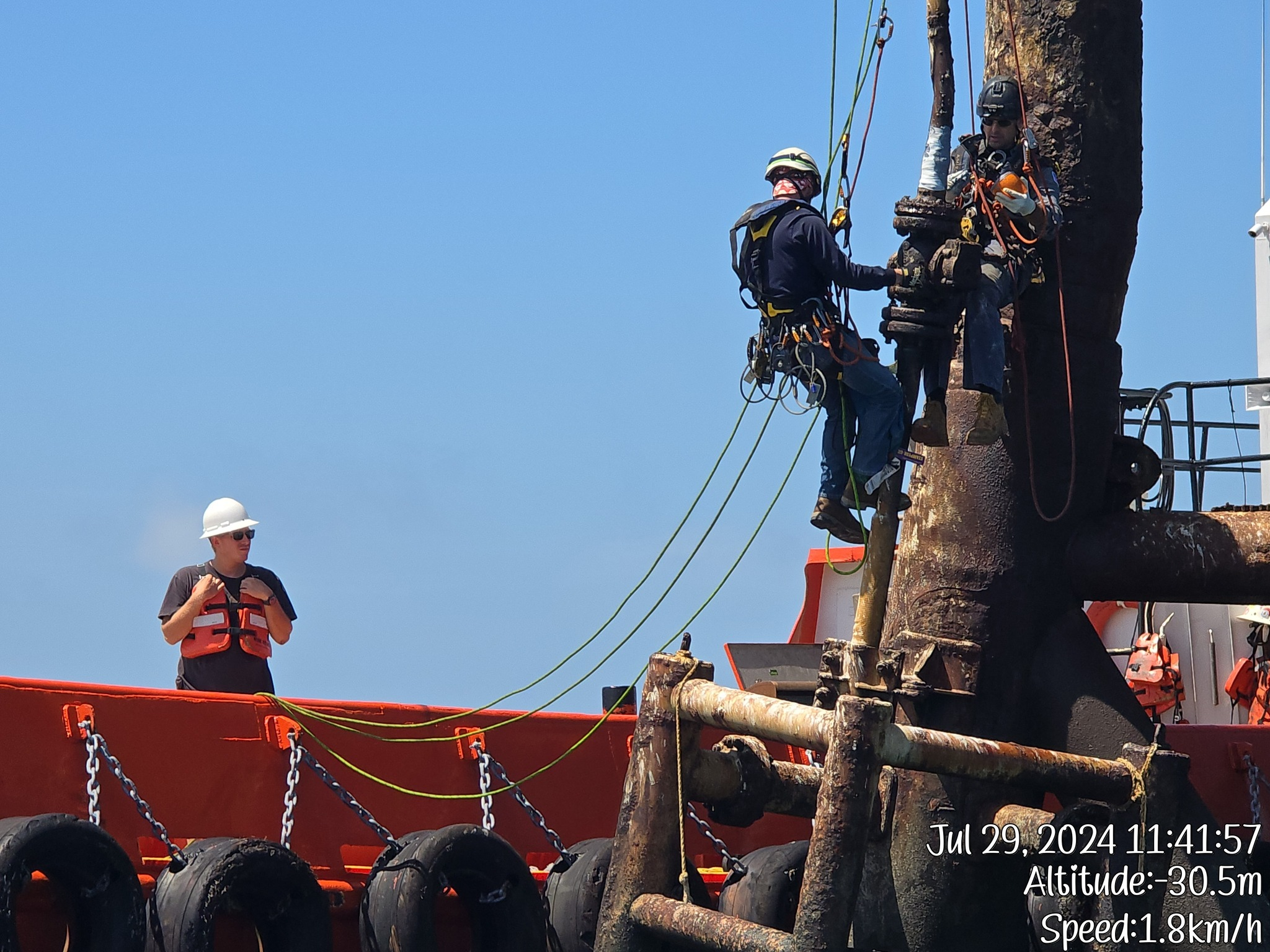
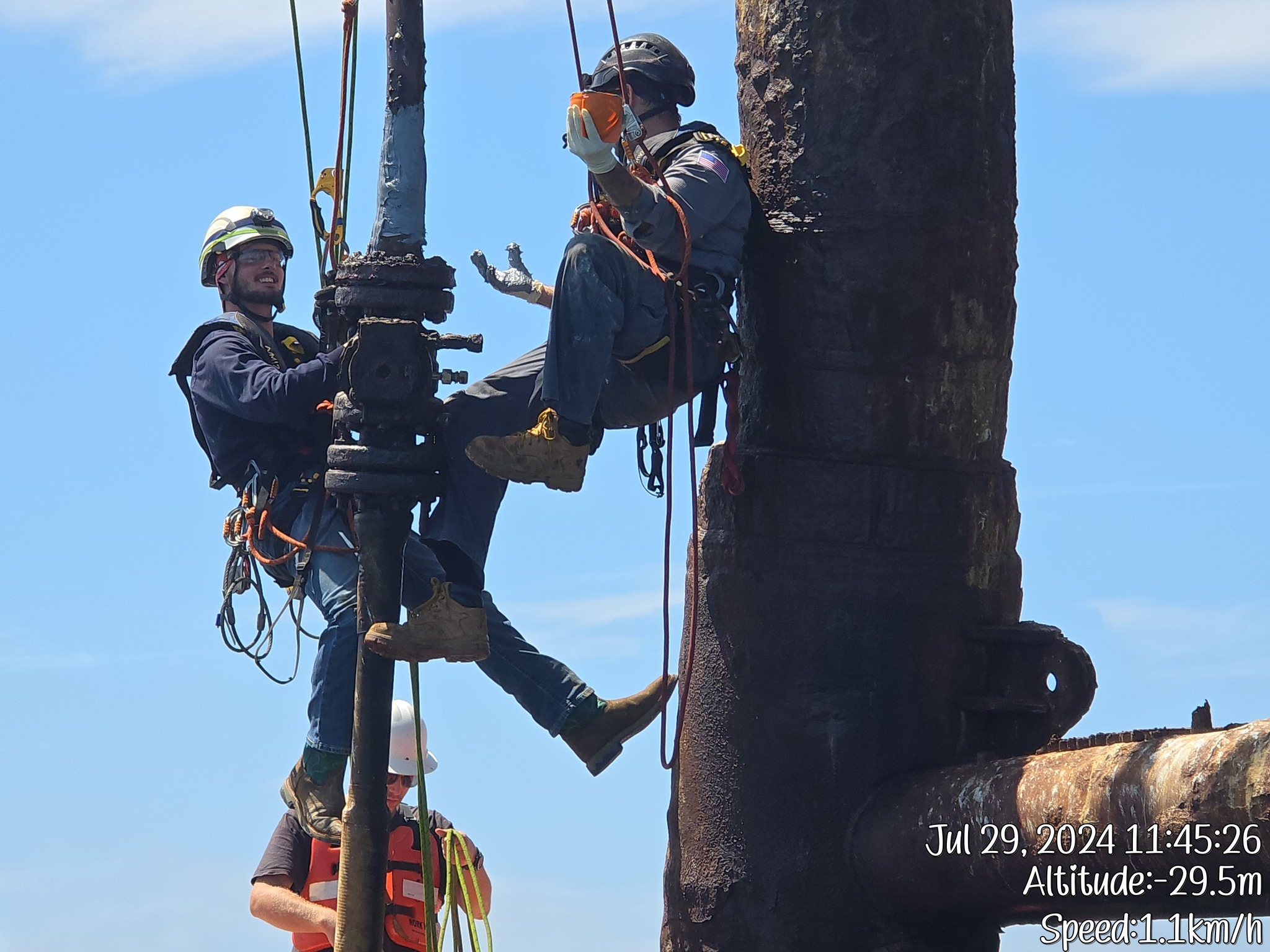
Crews from the U.S. Coast Guard, Texas General Land Office, and the Texas Railroad Commission monitored the operation. It’s unclear who the responsible party is and who funded and performed the work.
This is yet another example of the importance of proper well plugging, platform removal, and decommissioning financial assurance. It’s noteworthy that Texas is among the states suing to block BOEM’s financial assurance rule for Federal waters.A serious collaborative Federal, State, and industry effort to address decommissioning issues is long, long overdue.
8 miles offshore Galveston County (TX State waters extend 3 marine leagues/9 nautical miles/10.35 statue miles offshore)
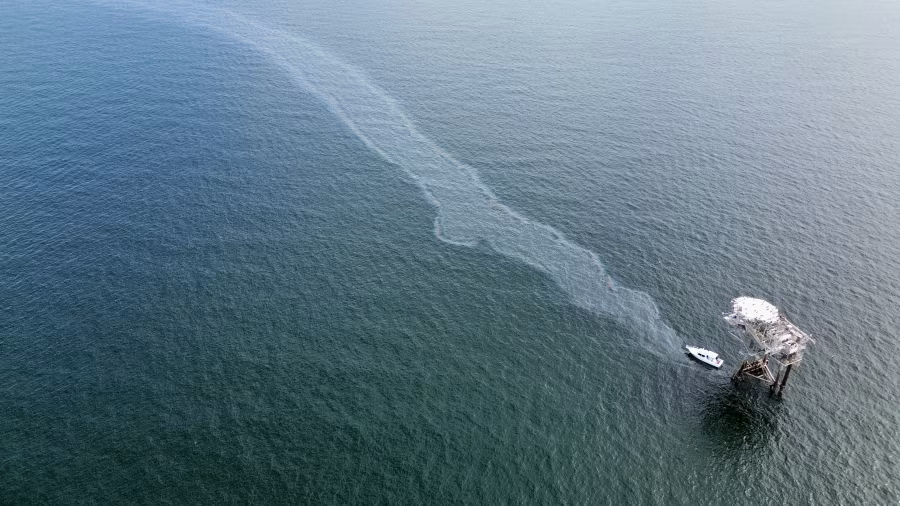
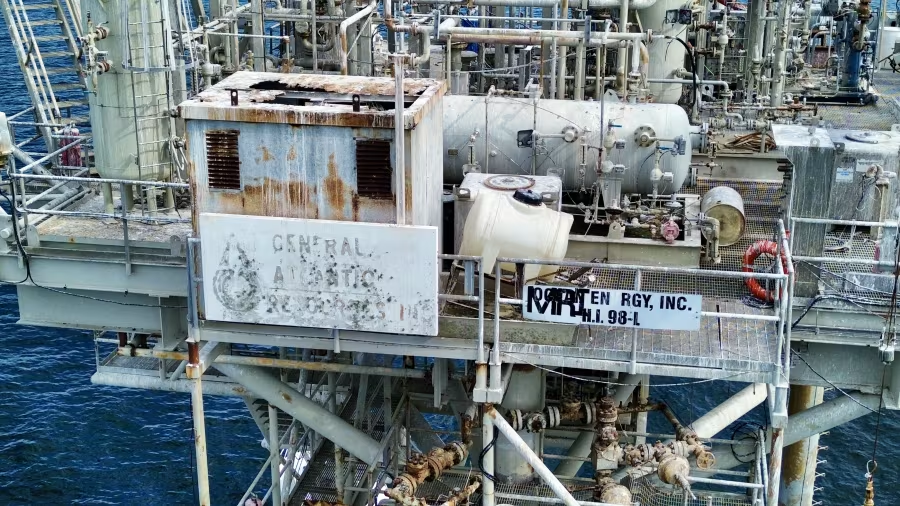
flowline riser leaking natural gas and condensate (badly corroded platform)
no recoverable oil
abandoned platform
additional research is needed to fully determine ownership of the leak source (???)
HIGH ISLAND BLOCK 98-L INCIDENT :
The Texas General Land Office (GLO) is sharing the following information:
On Sunday, July 14, 2024, at 8:00 pm, the Oil Spill La Porte Office Response Officer received notification of a natural gas/oil discharge off the coast of Crystal Beach, Galveston County. The spill was reported to be from a platform in High Island Block 98-L, about eight miles offshore in the Gulf of Mexico. Oil Spill personnel traveled via response boat to investigate on Monday morning and determined the discharge to be from a flowline riser leaking natural gas and condensate. Although the leak can be seen from the water, no recoverable oil was visible. The platform is abandoned, as defined by the Texas Railroad Commission, placing it within the Railroad Commission’s statutory authority for administration. The wells are not covered as part of the GLO’s current well plugging MOU with the Railroad Commission. The platform and associated wells are documented in the Oil Spill program’s abandoned well listings.
On Wednesday, July 17, La Porte office staff, with US Coast Guard and Railroad Commission personnel, inspected the platform area again. The leak is still present but has not increased. Railroad Commission staff stated that additional research is needed to fully determine ownership of the leak source.
The Coast Guard reports receiving a call from Channel 2-KPRC (NBC) in Houston regarding the leak and also seeing social media posts by a local area fishing group.
At this time: No injuries reported, No impact to commerce, No impact to wildlife.
The above map shows the offshore carbon disposal leases acquired by Repsol from the Texas General Land Office (GLO) and the adjacent Federal tracts Repsol bid on at OCS Lease Sale 261. There should be absolutely no confusion regarding Repsol intentions at Sale 261. They plan to develop a large CO2 disposal hub offshore Corpus Christi and bid improperly at an OCS oil and gas lease sale to support that objective.
So what about the Exxon nearshore Texas leases that have already been issued? Given that Exxon misled the Federal government and improperly acquired carbon disposal leases at an oil and gas lease sale, those bids should be cancelled pursuant to 30 CFR § 556.1102:
(c)BOEM may cancel your lease if it determines that the lease was obtained by fraud or misrepresentation. You will have notice and an opportunity to be heard before BOEM cancels your lease.
While Exxon’s oil production increases in the Permian Basin and offshore Guyana are impressive, is it not hypocritical for Exxon and other major producers to capitalize on the capture and disposal of emissions associated with the consumption of their products? Is it not just a bit unsavory for oil companies to cash in on (and virtue signal about) carbon collection and disposal at the public’s expense? Perhaps companies that believe oil and gas production is harmful to society should be reducing production rather than engaging in enterprises intended to sustain it.

 Bud's Offshore Energy (BOE)