Feeds:
Posts
Comments

Posts Tagged ‘S&P Global’

While a graduate student more than 50 years ago, I wrote a paper entitled “The Use of Natural Gas in Improving Air Quality.”  My professor, Dr. Richard Gordon (RIP), a terrific economist who greatly influenced my thinking about energy, liked the paper but thought I was too optimistic about the availability of gas. 

The sense at the time was that natural gas was a premium energy source in short supply. I was blissfully ignorant and thought we geologists and petroleum engineers would find and produce the gas. The Shale Boom, for which I can take zero credit, has proven me correct, so I’m taking another victory lap. 😀

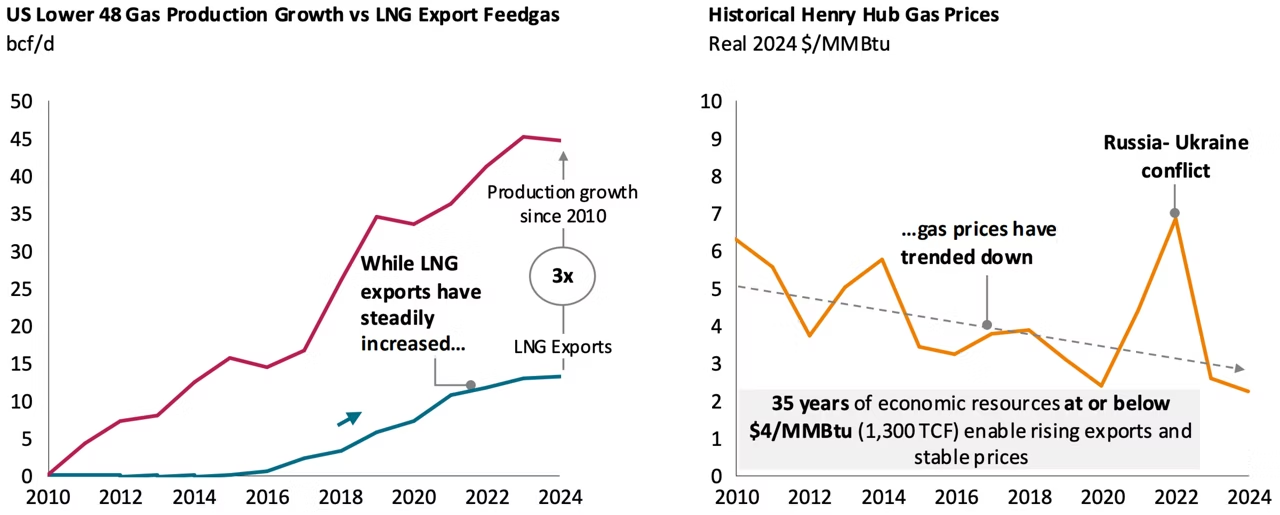
Last week, the great Dan Yergin and his team at S&P Global issued a report that explains how economically and environmentally important natural gas has become. Key findings from the report are pasted below:

Environmental Benefits:

  • Higher US LNG exports lead to lower overall global emissions by displacing the more GHG intensive fuels that would replace them.
  • End use combustion is responsible for 57–87% of GHG intensity for coal, oil, gas and LNG, with supply chain methane emissions the key driver of variation between fuels (e.g., domestic vs. international LNG, domestic versus piped natural gas imports, or different crude oil streams).
  • Coal emits roughly 70% more greenhouse gases than the US LNG it would replace across all the alternatives analyzed.

Economic Benefits:

  • US LNG’s unprecedented growth is enabled by an extended cross-state value chain, that reaches beyond the core-producing states – about 90% of every dollar spent remains within United States supply chains
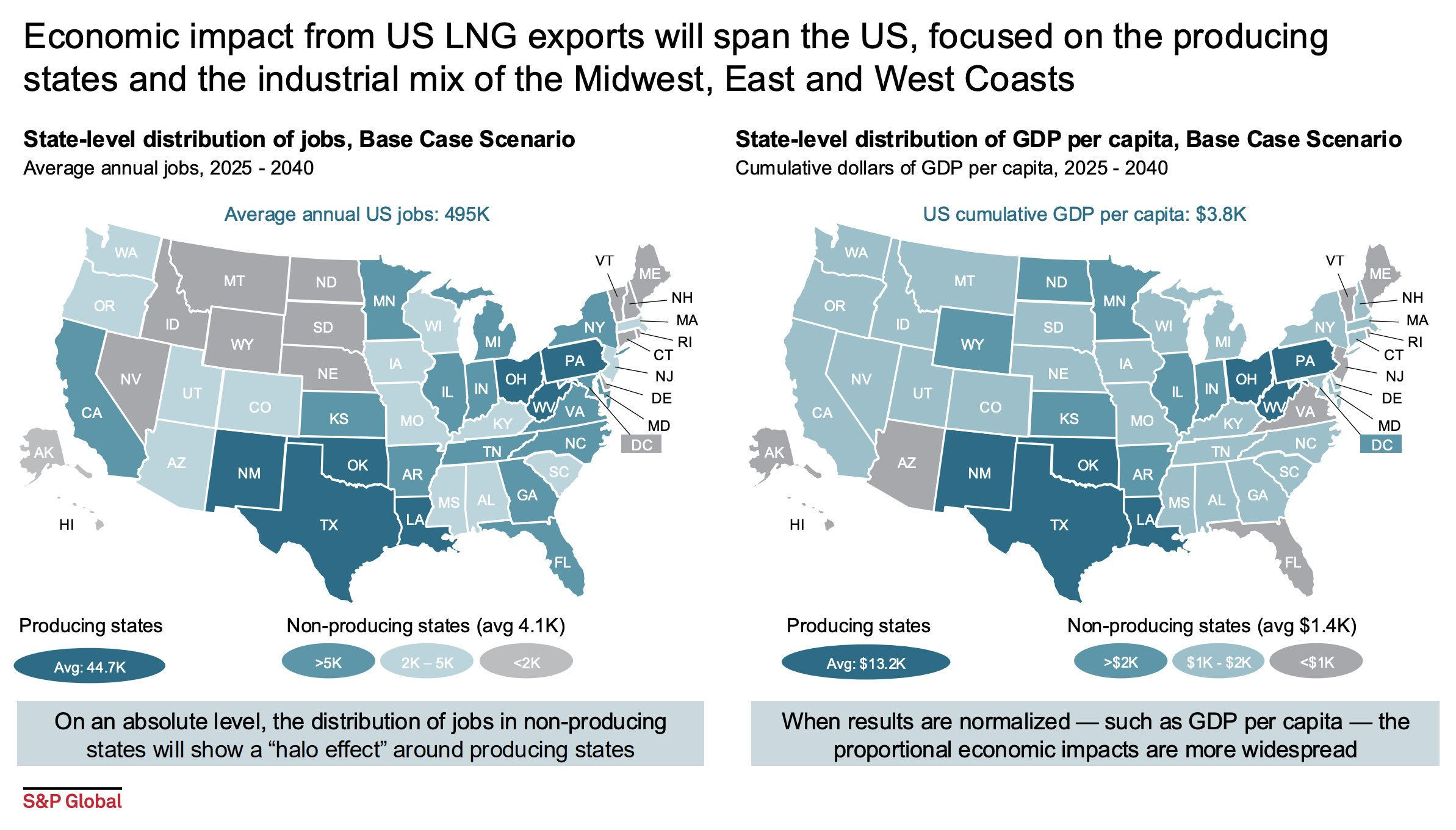
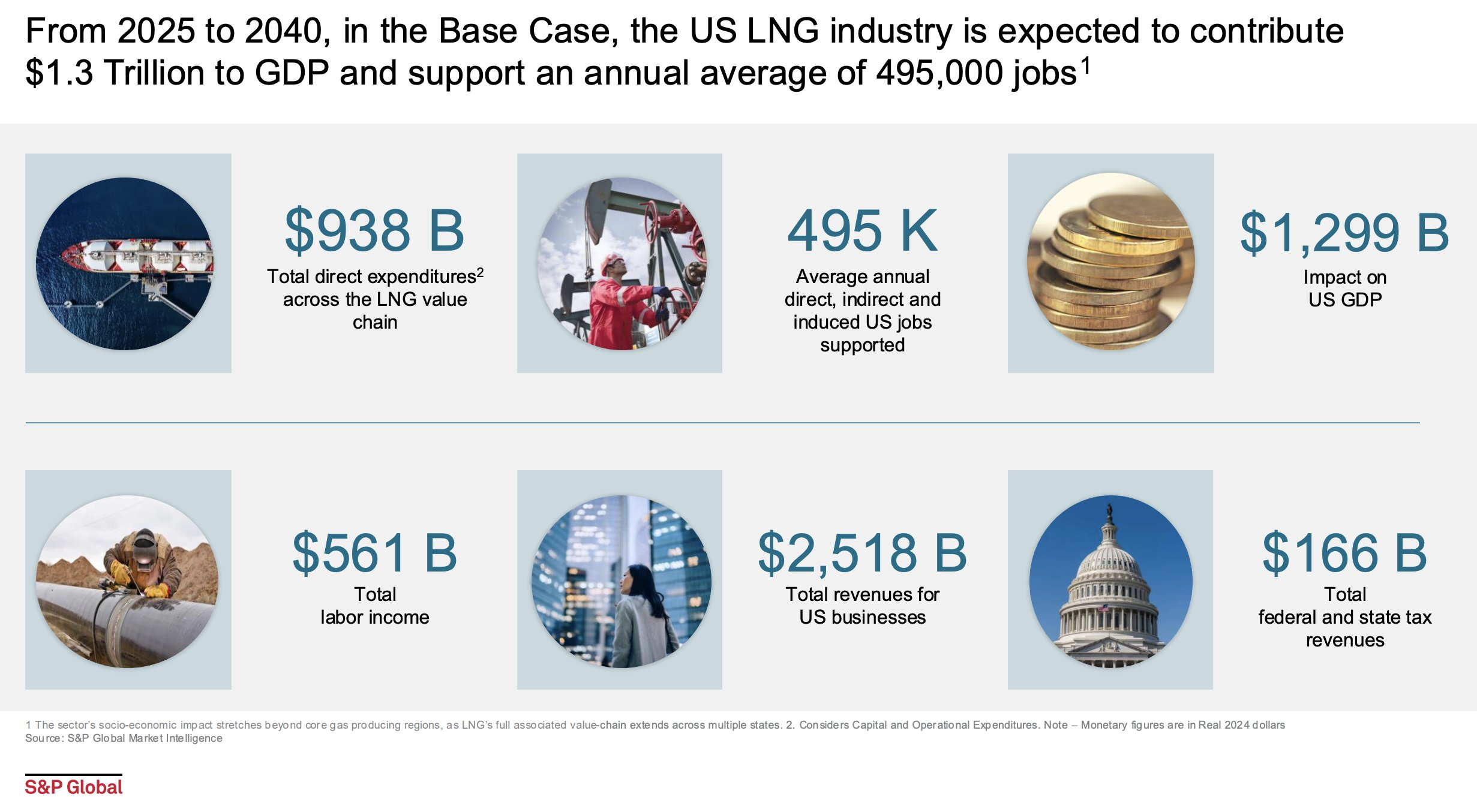
  • Of the annual average of 495,000 US jobs supported through 2040, 37% will be in non-producing states. As many jobs will be supported in on-producing states as in Texas
  • Over the same period, LNG Exports will contribute $1.3 trillion in GDP, with $383 billion or 30% in non-producing states. On a per capita basis, producing states benefit from a cumulative $13.2K GDP per capita
  • The US Northeast (NE) has vast amounts of low-cost gas reserves in the Marcellus and Utica formations (New York, Pennsylvania, West Virginia, Ohio), sufficient to meet nationwide demand for ~17 years
  • Due to pipeline constraints these reserves are being developed at a suboptimal rate, pushing gas prices at Boston, Chicago and New York City Gates up 160% higher than the national gas market in peak months
  • Expanding NE pipeline capacity by 6.1 Bcf/d could reduce HH gas prices by $0.20/MMBtu and significantly lower prices across the region. Cumulative nationwide consumer savings could reach $76 billion through 2040

Should you be interested in learning more, the above findings are well supported by detailed information in the report.
Read Full Post »

This important S&P Global study is particularly breathtaking for those of us who remember when Gulf of Mexico LNG import facilities were in the advanced planning stages. The shale gas pioneers completely reversed the scenario!

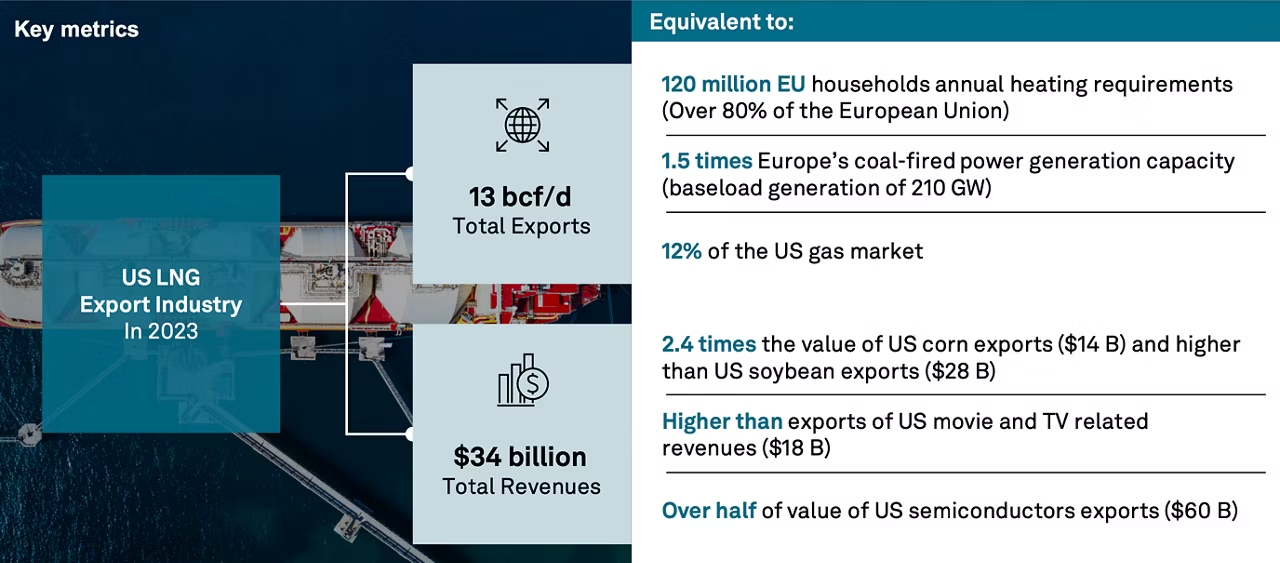
The LNG industry is critical to serving the world’s energy needs and has rapidly become an integral contributor to the US economy.

Let’s not repeat the harmful pause in the construction of LNG export facilities. Per S&P Global:

The impact of an ‘extended halt’ in new US LNG development due to legal and regulatory risks is striking. In this scenario, more than $250 billion in lost contribution to GDP and an average of >100,000 US jobs are at risk. Gas price savings in an ‘extended halt’ are minimal for domestic consumers, with less than 1% gas cost impact per household. Furthermore, 85% of the energy gap from lost US LNG is expected to be filled by fossil fuels from non-US sources.”

Read Full Post »

Washington Post article (mainly commentary) on the Hess acquisition. Excerpts:

WP: “Chevron is acquiring oil driller Hess in a $53 billion all-stock deal announced Monday, bringing the energy giant deeper into the fossil fuel business at a time when policymakers are pressing for a broader transition to renewables.”

Comment: Many who live and work outside of the Post’s policy bubble differ on the urgency and practicality of the transition. Their primary concerns are reliable, secure, and affordable energy. Many elected representatives agree, which is why there is little national support for legislation restricting fossil fuels and imposing rigid transition timelines. Administrative actions, like the 5 year leasing plan, that handicap US offshore production are also being questioned.

And what are we transitioning to? Wind and solar are intermittent energy sources that can complement fossil fuel power generation, but not replace it. Nuclear energy has strong proponents, but faces stiff opposition, much of which is from the same groups that oppose fossil fuels. Other energy alternatives like ultradeep geothermal are very promising but are still years away.

WP: “The investments run counter to U.S. and global climate policies, which aim to rapidly phase out the internal combustion engine and shift power grids to zero emissions energy. The International Energy Agency reported last month that demand for oil, gas and coal will peak by 2030 before going into a steady decline, leading its executive director, Fatih Birol, to warn oil company executives that decisions to double down on fossil fuel infrastructure could prove misguided.

Comment: Fortunately, IEA does not dictate corporate investment decisions. Perhaps IEA should look more closely at their own forecasts which show essentially no decline in oil or gas demand through 2050. Their assertion that demand for all fossil fuels will peak by 2030 is based on their speculative forecast calling for a sharp decline in coal demand, even though coal consumption is currently at record levels. IEA’s forecasts are also dependent on questionable assumptions such as this: “50% of new US car registrations will be electric in 2030.”

S&P Global sees oil demand rising by about 7 million b/d to 109.3 million b/d in 2030, before a gentle decline in the latter half of the 2030s, with oil falling to 100.8 million b/d in 2050. OPEC expects global oil demand to rise to 110 million barrels per day (bpd) and overall energy demand to rise 23% by 2045.

WP: “Still, the massive acquisitions from both Chevron and Exxon indicate their executives believe fossil fuels will continue to drive their business well into the future. Emphasizing affordability, company executives have said they see oil and gas alongside renewables.”

Comment: Spot-on. The WP could have shortened their commentary to these 2 sentences.

WP: Alex Witt, senior adviser for oil and gas at the advocacy group Climate Power, said the Hess acquisition shows the company’s true priorities. “Today’s news proves what we already knew — Chevron executives only care about the short-term, putting potential profits over the lives of families and the future of our planet,” Witt said in a statement Monday.

Comment: Or perhaps both Chevron and the lives of families will benefit, as they have in the past.

Read Full Post »