Feeds:
Posts
Comments

Posts Tagged ‘Permian’

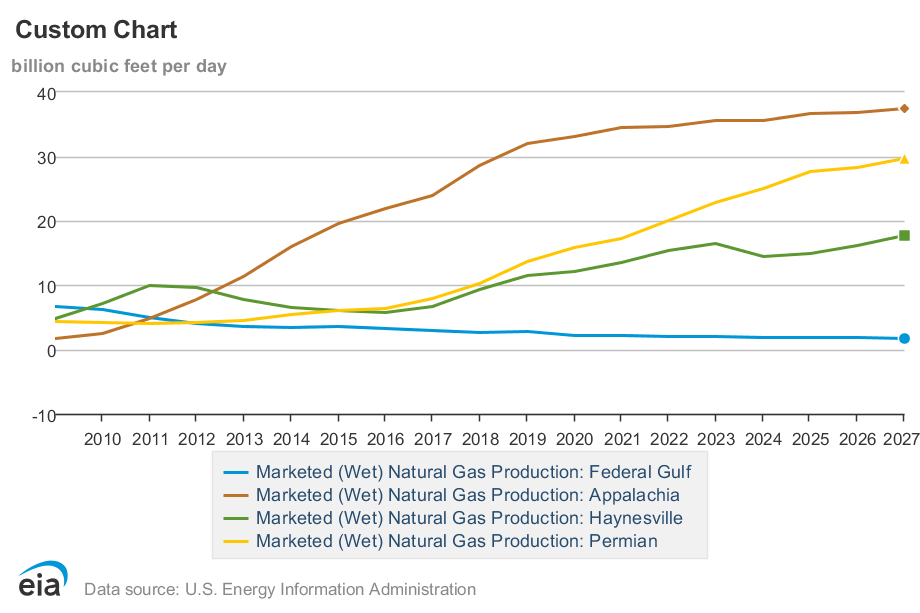
Per EIA data, the Appalachia, Permian, and Haynesville regions accounted for 67% of the total marketed gas production in the US in 2025 and 81% of the growth last year.

In 2025, more natural gas was produced in the Appalachia region of the Northeast than in any other US region, accounting for 31% of marketed natural gas production. (See the chart below.) Were it not for pipeline capacity limitations, recent growth in Appalachia production would have been greater.
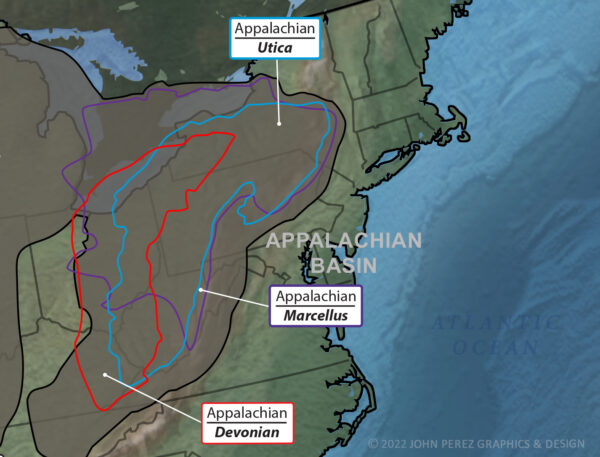
Appalachia production is primarily from the Marcellus and Utica shales in PA, WV, and Ohio.

OCS gas production, 80% of which is now associated gas from deepwater oil wells, continues to lag the shale basins. This is a big change from 25 years ago when the OCS produced more gas than any state but Texas. (See the chart below.) Interest in ultradeep (subsurface) OCS shelf gas prospects remains scant despite favorable demand forecasts and technological advances.

.
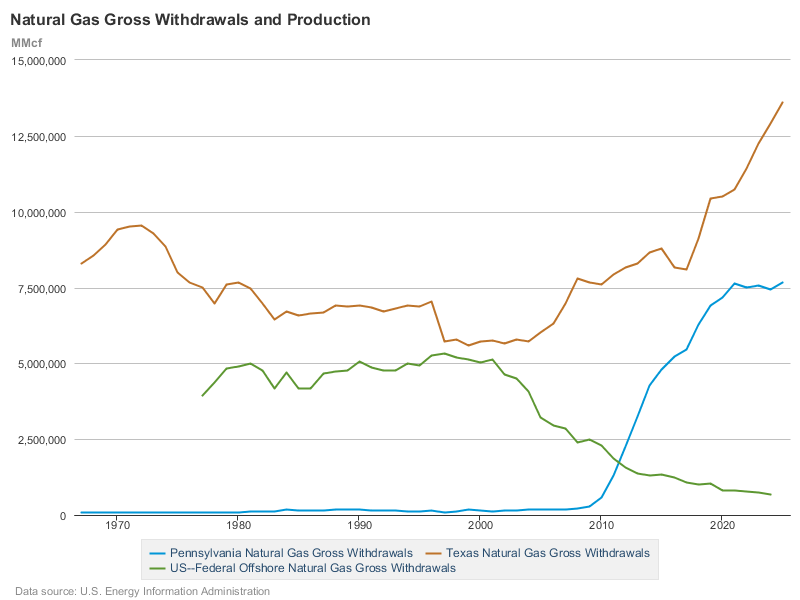
Meanwhile, New York continues to block development of the State’s ample shale gas resources. foregoing the economic and environmental benefits.

Read Full Post »

A Fortune article about Autry Stephens, Endeavor Energy Resources CEO, pegs him as the world’s richest oilman following the sale of his company to Diamondback Energy. His story reinforces many of the success messages previously discussed on BOE:

  • Humble beginnings: As the son of peanut-and-melon farmers, his work ethic was no doubt established at a young age.
  • Diverse experience starting with entry level positions: He “wore nearly every hat in the oil industry, from trucker to driller to engineer.”
  • Private land: Stephens started buying Texas Permian rights early in his career.
  • Technology leader: His company embraced the horizontal drilling and advanced well stimulation practices critical to Permian success.
  • Contrarian who stuck with his plan: When major oil companies left for more lucrative opportunities overseas, he continued adding Permian leases acquiring a total of 344,000 acres.
  • Low debt: His insistence on using cash to acquire drilling rights helped him survive the 2008 financial crisis, which crushed oil demand and bankrupted some US operators.
  • Lean organization: He focused on maintaining a lean staff and efficient operations, which no doubt facilitated effective communication and instilled common values.
  • Take care of your employees: He insisted that none of Endeavor’s 1200 employees be let go after the merger with Diamondback.
  • Support the community: Served Midland and merged with the company that was located right across the street.
  • Former Federal employee πŸ˜‰: Not known as a key to success, but I’ll take it πŸ˜€. (Stephens once worked for the Army Corps of Engineers.)

Read Full Post »

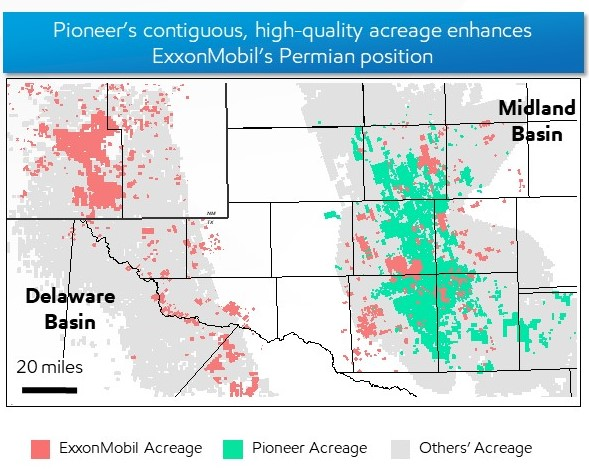
Impressive acquisition:

Hypocrisy?

  • Exxon is clearly intent on maximizing production in the Permian. This makes good business sense and is good for the US economy.
  • Contradictorily, Exxon intends to establish a CO2 disposal business (“carbon sequestration”) in the Gulf of Mexico. Is their goal to profit from emissions resulting from the consumption of the production that they are maximizing?
  • If Exxon believes the consumption of oil and gas is harmful to society, as suggested by their CO2 disposal plans, perhaps they should be curtailing their oil and gas production business rather than expanding it.
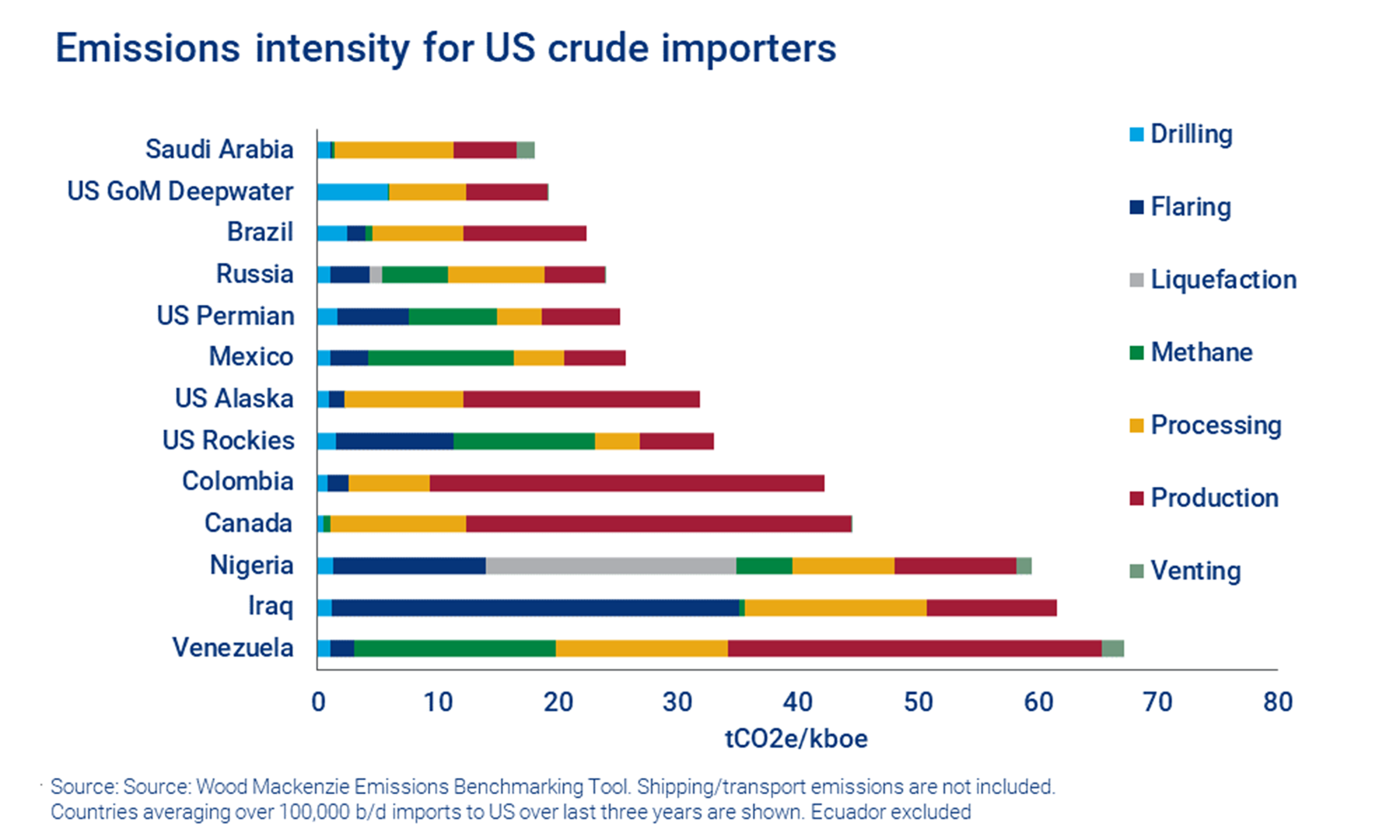
  • Deepwater Gulf of Mexico production, which Exxon has shunned, has much lower carbon intensity than Permian production, but Exxon’s sole GoM interest is CO2 disposal. Shouldn’t a company that is intent on reducing upstream GHG emissions be active in the leading offshore region in that regard, the region that is adjacent to their world headquarters?

Read Full Post »