Feeds:
Posts
Comments

Posts Tagged ‘Oregon’

I am disappointed that BOEM’s accelerated process over the last year has further divided stakeholder communities, and put the Confederated Tribes of the Coos, Lower Umpqua and Siuslaw Indians in the position of challenging BOEM in federal district court. Oregon’s legislative Coastal Caucus is likewise now in full opposition to BOEM’s proposed lease.

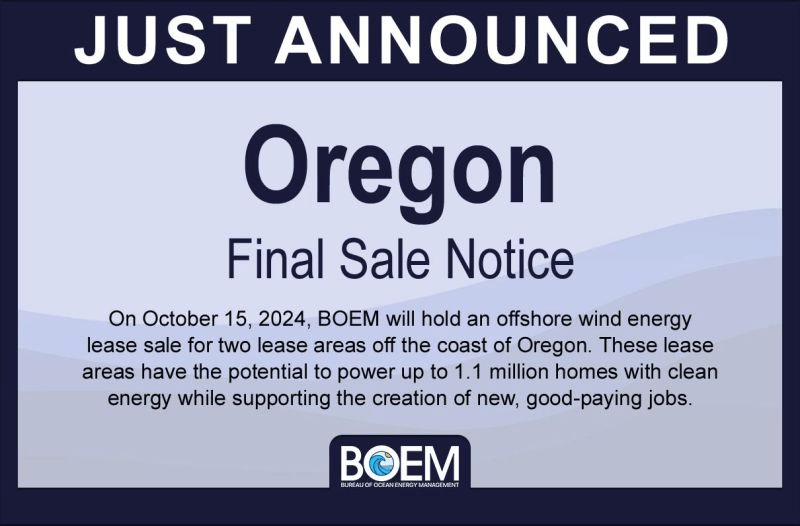
Despite the usual hype about the number of homes that could be powered and “good-paying jobs,” the upcoming Oregon wind lease appears to be very much in doubt. If legal action by Oregon tribes doesn’t halt or delay the sale, the absence of bidders may.

OregonLive reports that only one company, NewSun Energy, continues to be interested in participating in the sale. NewSun is primarily a solar energy developer with no apparent offshore wind experience.

Wind development offshore Oregon would be complex and very expensive given the need for floating turbines and new high-voltage transmission lines over the Coast Range. At least two counties, Coos and Curry, are set to vote on whether to publicly oppose offshore wind development off their coast.

If the sale is delayed such that BOEM is not able to issue leases before 12/20/2024, the leases cannot be issued until a qualifying oil and gas lease sale is held.

Read Full Post »

The Confederated Tribes of the Coos, Lower Umpqua and Siuslaw Indians (“Tribe”) filed a lawsuit against BOEM in Oregon Federal District Court.   The lawsuit (attached) challenges BOEM’s cursory environmental review for the development of private offshore wind energy facilities in two areas off the Oregon Coast near Coos Bay and Brookings.  

The Tribe has consistently urged that BOEM delay moving forward with wind energy development until a better understanding is made of the impacts to fish, wildlife, the marine environment, and cultural resources important to the Tribe,” said Tribal Council Chair Brad Kneaper.  “No one, including BOEM has an understanding on how wind development will impact the fragile marine environment.  BOEM developed an environmental assessment document that narrowly focused on the impacts of the lease sale and completely turned a blind eye to the inevitable impacts that construction and operation of these private energy facilities will have on Coastal resources, the Tribe, and other residents.”

The timeframe for wind development appears to be driven by politics, rather than what is best for Coastal residents and the environmental,” said Chair Kneaper.

This suit and the Aquinnah Wampanoag tribe’s call for a moratorium on offshore wind development have to be uncomfortable for Secretary of the Interior Deb Haaland given her Native American heritage.

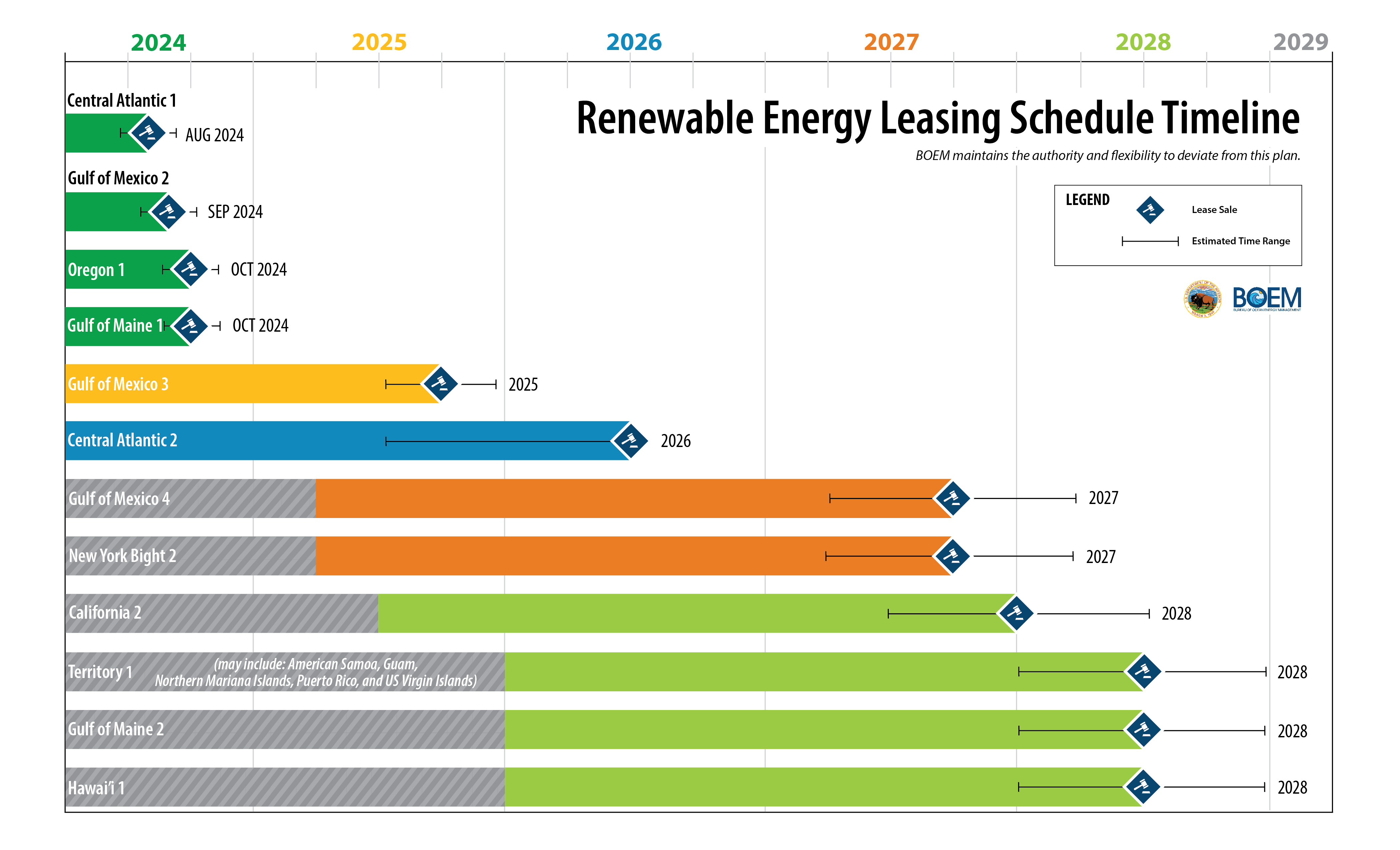
BOEM’s front-loaded 5 year wind leasing plan (graphic below) may have been influenced by (1) the possibility that the upcoming elections could affect offshore wind policy, and (2) the legislative prohibition on issuing wind leases after 12/20/2024 unless an oil and gas lease sale is held prior to that date.

Given that the next oil and gas lease sale will be in 2025 or later, BOEM was perhaps motivated to hold wind sales prior to the 12/20/2024 deadline (with a bit of a buffer to issue the lease documents). Indeed, the wind leasing plan proposed 4 sales between August and October of 2024 and only a single 2025 sale. That 2025 wind sale is in the Gulf of Mexico, where industry interest in wind leases is, at best, tepid.

Read Full Post »