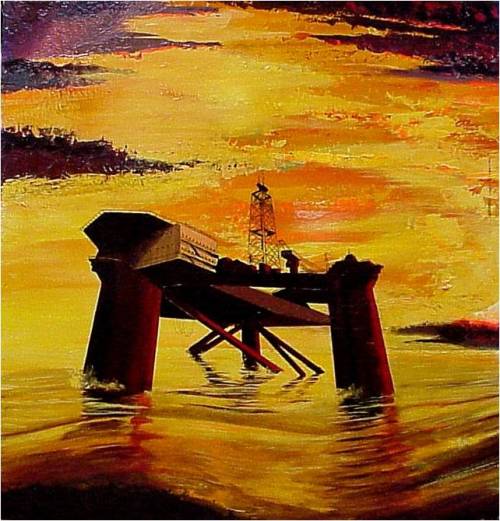
Posted with the approval of the Rig at Sunset Foundation
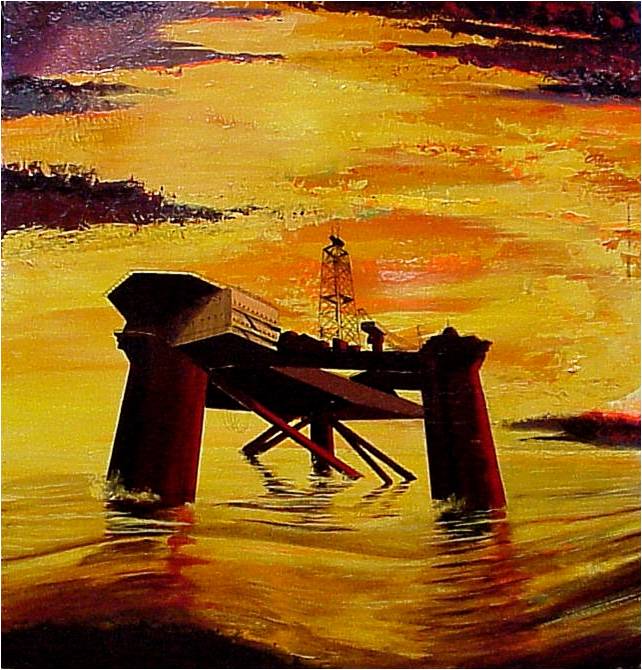
As a holiday gift to our readers, BOE has obtained exclusive rights to post this picture of the masterpiece “Rig at Sunset,” the world’s most famous and artistically significant painting of an offshore drilling rig.
“Rig at Sunset” was painted 45 years ago by a US Geological Survey (USGS) employee who has chosen to remain anonymous. Initially, the masterpiece was presented to USGS (later MMS) engineers and scientists who had made important contributions to the offshore oil and gas program. Understandably, the intended recipients were so humbled by the magnificence of the painting that they could not accept it. As the painting grew in value and international prominence, framed copies were presented to retirees and the original painting was kept at an undisclosed location.
Great museums have an eye for artwork that is bold and unique, and curators soon lined up for an opportunity to exhibit “Rig at Sunset.” The masterpiece has now appeared at the world’s top art museums including the Louvre, the National Gallery, the Tate in London, the Rijksmuseum in Amsterdam, the Norwegian Petroleum Museum in Stavanger, and the Jo Ann Rose Gallery at the Reston Community Center. While the permanent home of the painting is a well kept secret, it is rumored to be a maximum security facility in historic (and heavenly) Herndon, Virginia, the gateway to Dulles International Airport.
At a later date, BOE will explore the painting’s symbolism and artistic significance, but for now we just want you to appreciate its stunning beauty. Enjoy the holidays!
Read Full Post »

 Bud's Offshore Energy (BOE)