“You cannot make this stuff up. The Murphy administration already burned through billions of your tax dollars on offshore wind projects that never worked. They pushed it on us even when towns were saying no, fishermen were saying no, and the tourism industry was saying no. They looked the other way while whales washed up on our beaches. They ignored the Pentagon when it said it was a national security risk. The NJ Ratepayer Advocate said it would raise utility bills. The Government Accountability Office (GAO) said the cons outweighed the pros. They did not listen to anyone. And now, after all that, they want to throw even more taxpayer dollars at it in court. It truly is a slap in the face to every taxpayer and every family struggling to pay their energy bill.”
All 17 of the States that filed the offshore wind law suit have Democrat governors. However, 6 States with Democrat governors are not parties in the suit (see table below). Two of those governors, Andy Breshear, and Josh Shapiro, are leading moderates within the Democrat party.
WSJ: “How many multibillion-dollar projects must go bust before a Governor comes to his senses? The answer is blowing in the wind, but New Jersey’s Phil Murphy doesn’t seem to be listening.”
Ouch!:Note how it’s always the developers that give up on these projects and never the state, despite the awful prospects for ratepayers. Gov. Murphy has treated renewable energy as a sacred cause no matter the costs since 2018. That includes a bill he signed to let Ørsted pocket federal credits it had promised to pass on to customers, though he clawed money back when the projects died.”
“The NJ Board of Public Utilities will not proceed with an award in New Jersey’s fourth offshore wind solicitation,” said Christine Guhl-Sadovy, President, New Jersey Board of Public Utilities.
Not a single offshore wind turbine will be installed offshore New Jersey during the reign of Gov. Murphy, a leading proponent of offshore wind. How much did his wind advocacy cost NJ taxpayers?
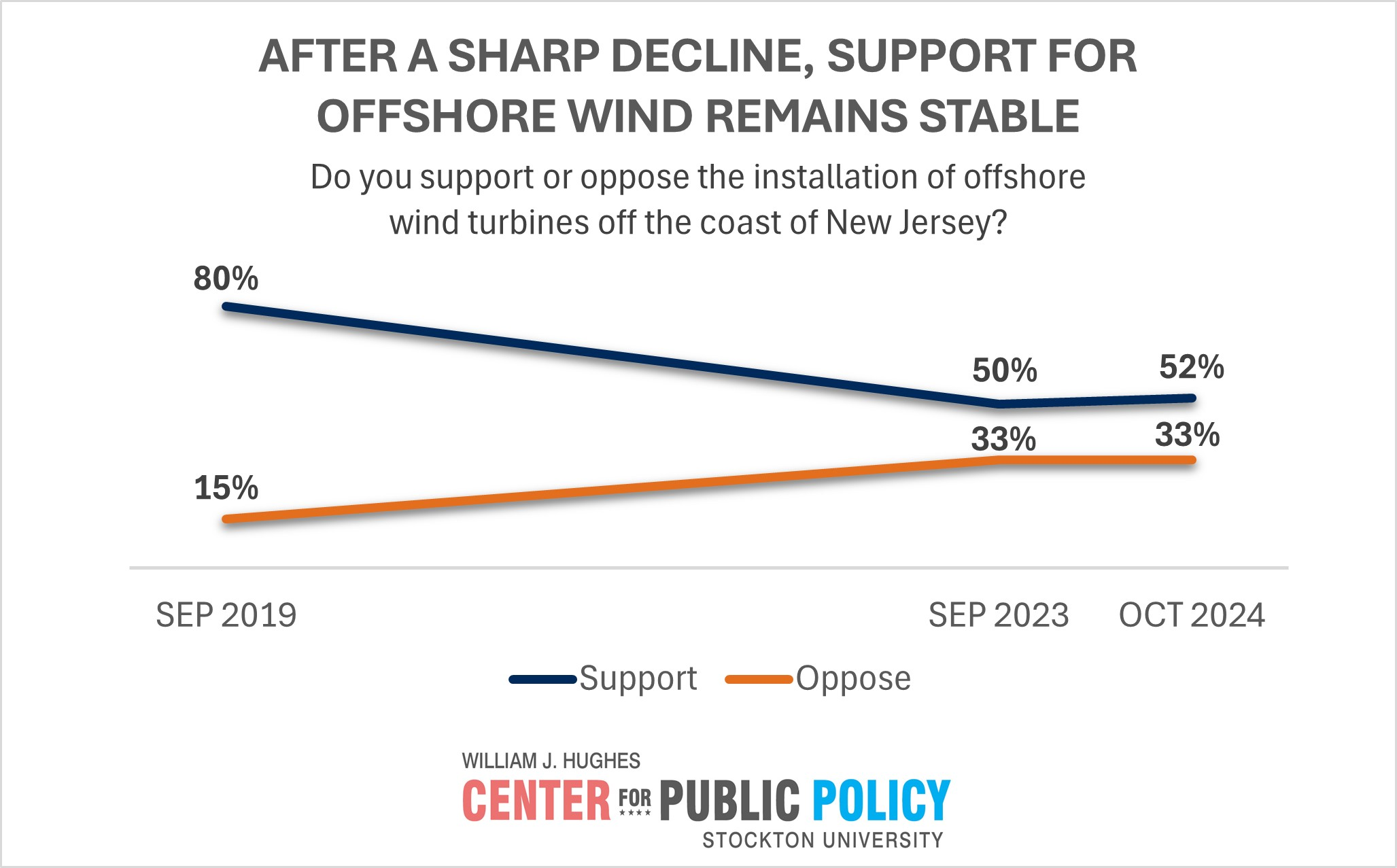
Attached are the full results of a Stockton University poll that assessed New Jersey voters’ support for offshore wind development. Stockton’s methodology is explained on the last page of the attachment (also pasted below).
Observations:
The poll does not appear to be agenda driven, either for or against offshore wind development.
The sharp decline in public support (first slide below) was contrary to the advocacy flow in that it occurred during a period of strong and persistent State and Federal promotion of offshore wind energy.
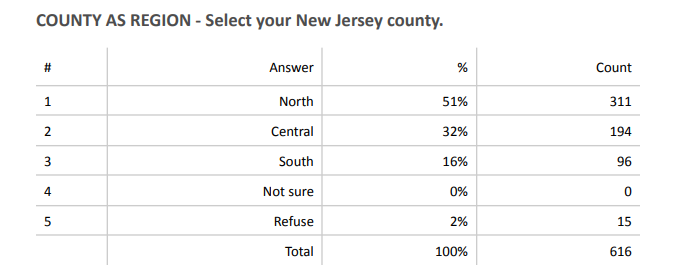
More than half of the respondents were from North Jersey, the region that is more closely aligned politically with the Governor and the Federal Administration. Only 16% of the respondents were from South Jersey where opposition to offshore wind projects is the strongest. The imbalance is understandable in that it is consistent with the regional imbalance in population.
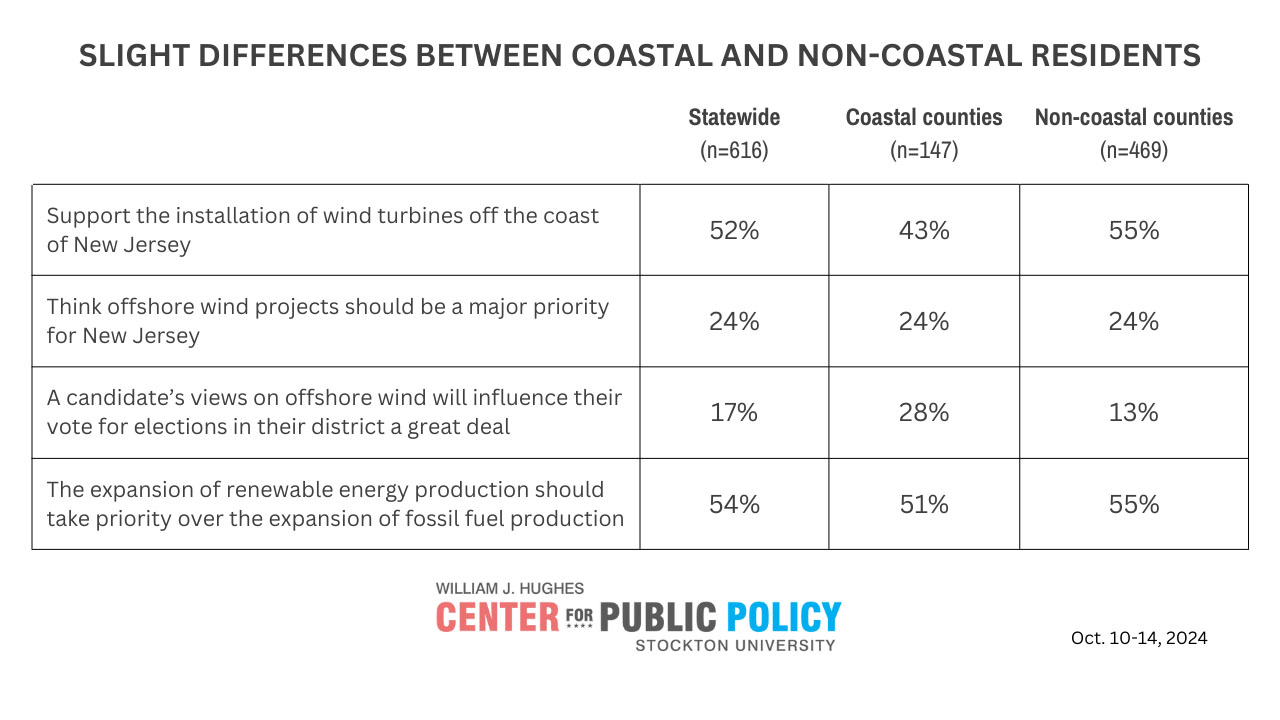
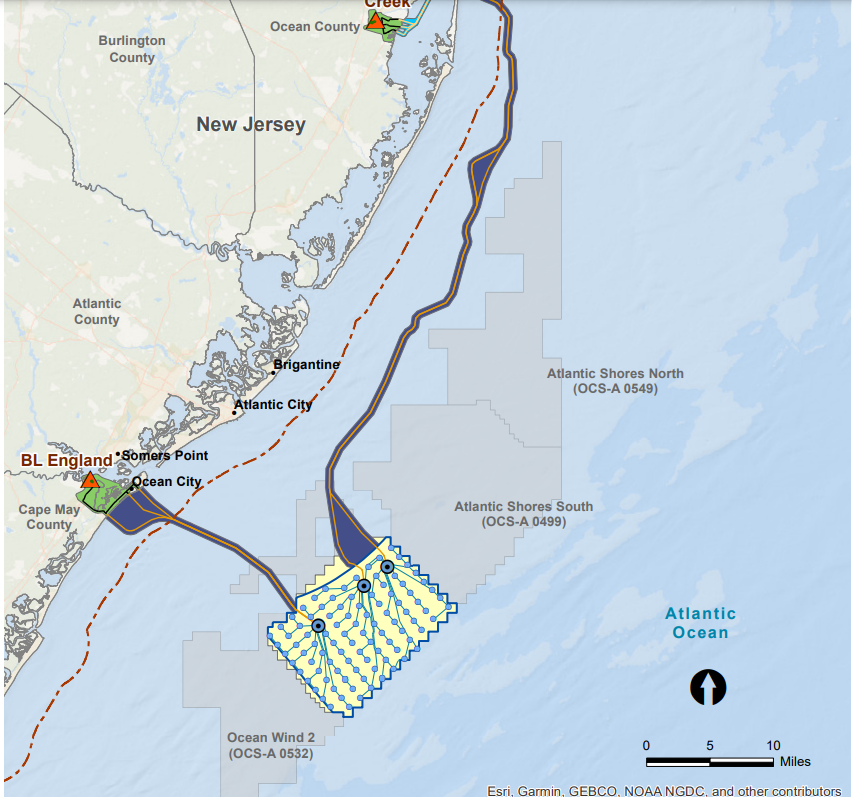
Unsurprisingly, support for offshore wind is lowest in coastal counties. In that regard, more granularity would have been nice. Cape May County is the US epicenter of resistance to offshore wind development and is engaged in litigation with the Federal government over the Ocean Wind 1 project. Polling specific to Cape May and each of the other coastal counties would be beneficial.
The polling data suggest that offshore wind projects are not a priority for most New Jersey voters. Only 24% of both coastal and non-coastal residents view offshore wind as a major priority (third slide below).
Methodology The poll of New Jersey registered voters was conducted by the Stockton Polling Institute of the William J. Hughes Center for Public Policy from Oct. 10-14, 2024. Stockton University students texted cell phones with invitations to take the survey online and Opinion Services supplemented the dialing portion of the fieldwork, which consisted of cell and landline telephone calls. Overall, 91% of interviews were conducted on cell phones and 9% on landline phones. In terms of mode, 65% were reached via dialing and 35% were reached via text-to-web. A random sample of 616 New Jersey registered voters were interviewed. Both cell and landline samples consisted of random digit dialing (RDD) and voter list sample from MSG. Data are weighted based on U.S.Census Bureau ACS 2023 data for the citizen voting age population in New Jersey on variables ofage, race, education level, and sex. The poll’s margin of error is +/- 3.9 percentage points at a95% confidence level. MOE is higher for subsets. Sampling error does not account for other potential sources of bias in polls such as measurement error or non-response.
NJ Governor Murphy, an offshore wind promoter, is not pleased:
“Today’s decision by Orsted to abandon its commitments to New Jersey is outrageous and calls into question the company’s credibility and competence,” the Democratic governor said. “As recently as several weeks ago, the company made public statements regarding the viability and progress of the Ocean Wind I project.”
Perhaps the Governor’s credibility and competence is also taking a hit, as is staking the State’s energy future on highly uncertain, intermittent, and facility-intensive power systems. .
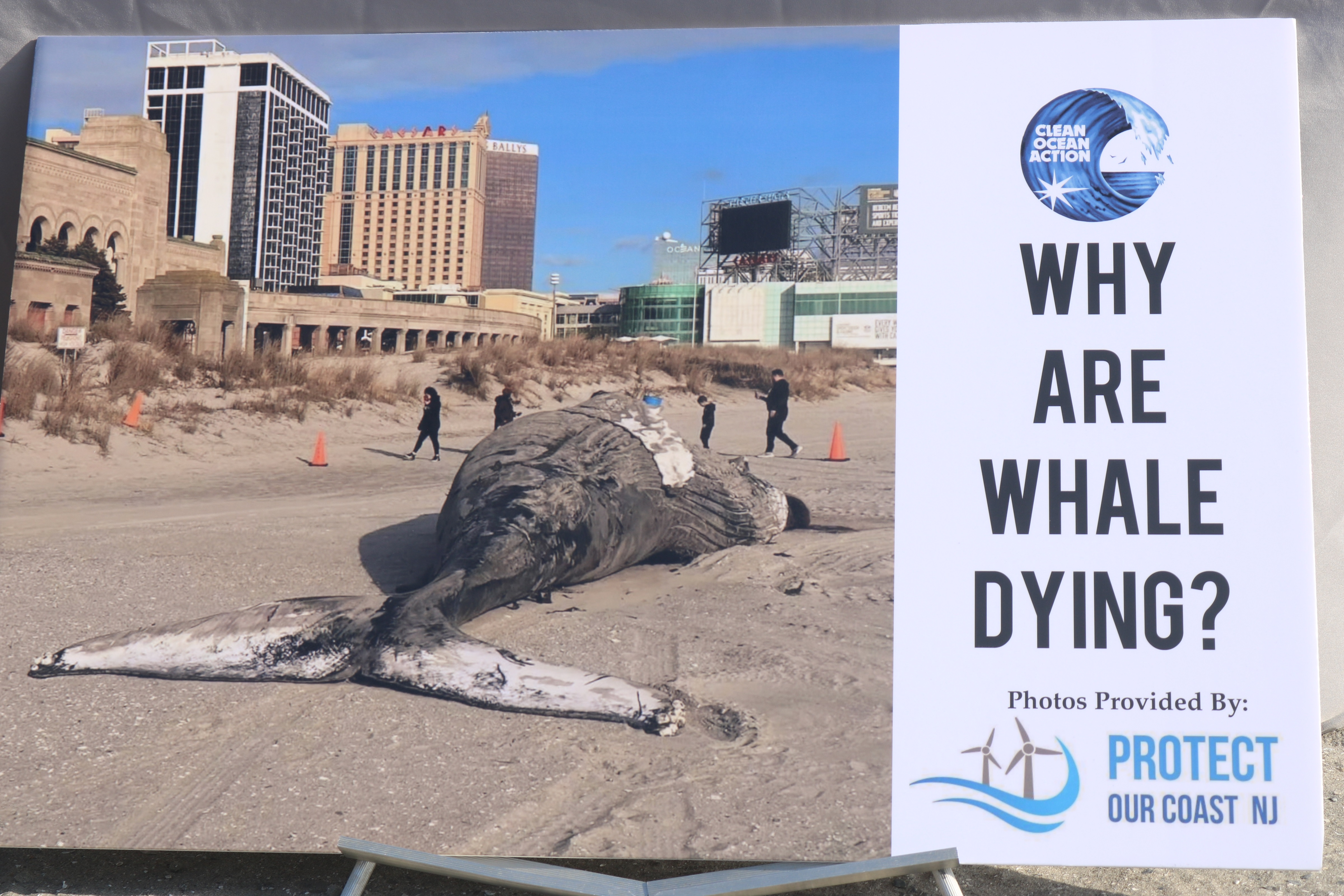
While it’s unlikely that the whale strandings are the result of pre-construction activities for offshore wind development, greater transparency on the part of the developer and regulators would be helpful:
What surveys and other offshore activities are being conducted? Where?
What is the timeframe for these activities?
Any sightings of distressed whales?
Other anomalous observations?
Absent regular activity updates, accusations and protests are likely to continue and intensify.
The plan was for SCS Energy’s PurGen One plant in Linden, NJ to burn coal to generate electricity and produce fertilizer. SCS proposed to inject 90% of the CO2 into subsurface reservoirs 70 miles offshore. The project faced strong opposition and was ultimately nixed by the State. The plan had been presented to the Federal offshore regulator (MMS), but the company was advised that there was no legal framework for disposing CO2 beneath the OCS.
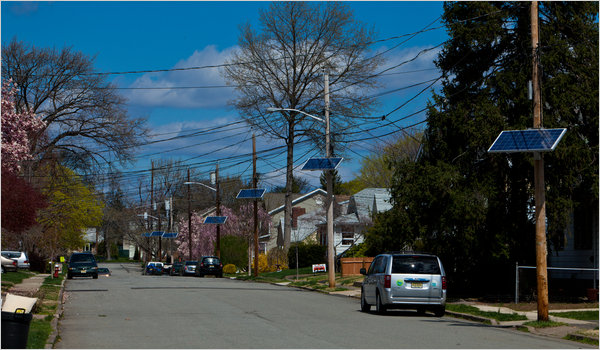
Like a massive Christo project but without the advance publicity, installations have been popping up across New Jersey for about a year now, courtesy of New Jersey’s largest utility, the Public Service Electric and Gas Company. Unlike other solar projects tucked away on roofs or in industrial areas, the utility is mounting 200,000 individual panels in neighborhoods throughout its service area, covering nearly three-quarters of the state. NY Times
So what’s next, mini-turbines on every utility pole, or worse yet, geeks like this guy hooked up to the electric grid? 🙂


 Bud's Offshore Energy (BOE)