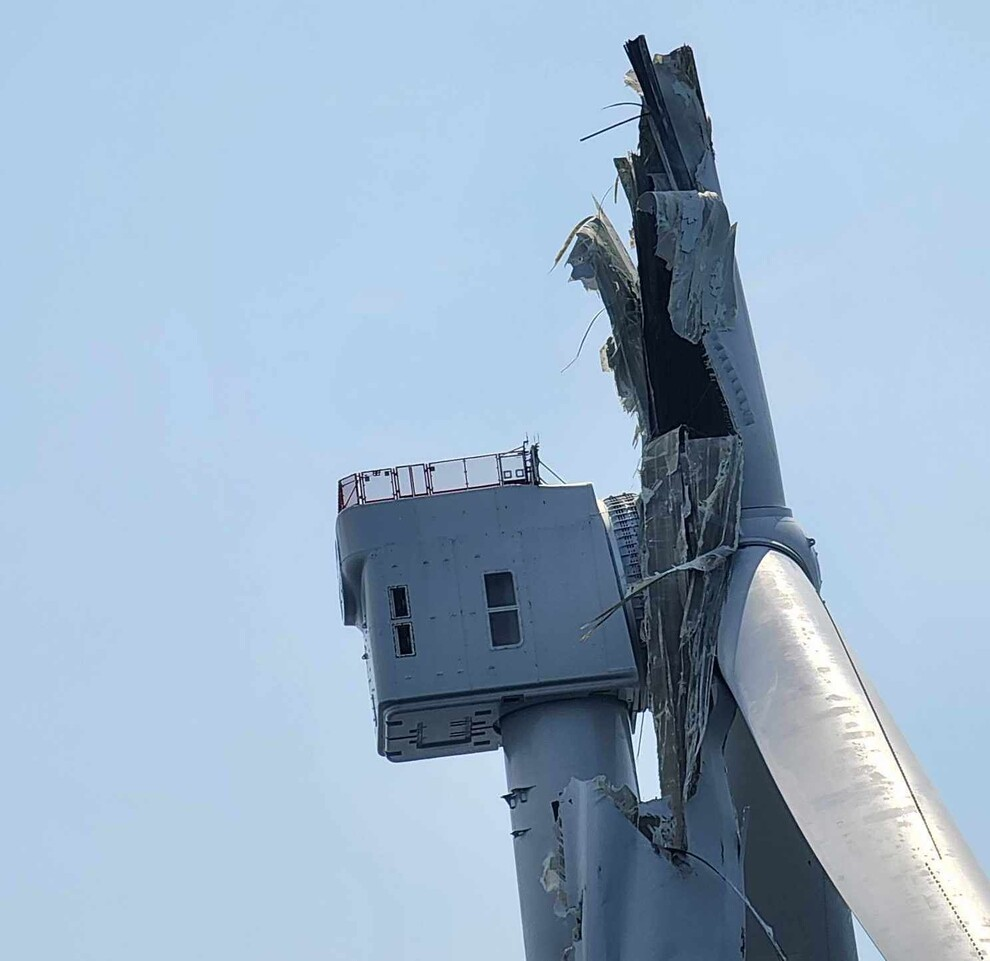
Vineyard Wind statement (7/18):
- “This morning, a significant part of the remaining GE Vernova blade detached from the turbine. Maritime crews were onsite overnight preparing to respond to this development, though current weather conditions create a difficult working environment.”
- “We are staying apprised of GE Vernova’s efforts to manage the situation, including the removal and recovery of the remaining blade attached to the turbine.”
- Staying apprised? As operator, Vineyard Wind is fully responsible. This is their situation to manage.
- BSEE has ordered Vineyard Wind to suspend power production and wind turbine generator construction.
- Kudos to BSEE for their decisive and timely action. They need to better understand what happened before allowing operations and construction to continue.
- Imagine the pressure on the regulator if the project was providing a significant portion of the region’s electricity.
- BSEE’s comment that there has been “no harm to any marine resources or mammals from the incident” is premature given the extensive marine debris and the associated risks to mammals.
What about the CVA?
- The regulations at 30 CFR § 285.707-712 assign important responsibilities to Certified Verification Agents (CVAs), independent third parties with established technical expertise. These responsibilities include detailed reviews of the design, fabrication, and installation plans.
- Oddly, the CVA’s “Statement of Qualifications” and “Scope of Work and Verification Plan” have been redacted in their entirety from Vineyard Wind’s Construction and Operations Plan (COP) (see Appendix I-C and I-D).
- Who was the CVA and why was that important information redacted?
- Were any of the CVA requirements waived per 258.705?
- Will BOEM, the lessor and Federal wind program manager, be making a statement? Will they be reassessing their COP review procedures?
- BOEM should temper their over-the-top promotion of offshore wind. The complete shutdown of the first utility scale offshore wind farm heightens public concerns about the intermittency of this power source, and the need for reliable backup sources.
 Bud's Offshore Energy (BOE)