Feeds:
Posts
Comments

Posts Tagged ‘IRF’

When an investigation has been completed and corrective action is necessary, the PSA (Norway) approach is to make the operator take ownership of the problem. The operator is directed to develop solutions and implementation schedules that are acceptable to the regulator. See the PSA directive to Statoil below following the investigation of the Gullfaks B gas release.

In contrast, there is a tendency in the US for the regulator to take ownership of the problem and thus assume responsibility for developing solutions. The regulator dictates these solutions to the operator (and perhaps the entire industry), sometimes without sufficient discussion or analysis. Of course, US regulators may not have a choice in the matter as the political system often demands that the regulator take action, perhaps before the investigation is even completed (or started!).

Which approach presents the greater opportunity for success? Most regulators would say the former, and that was the consensus view at the International Regulators’ Offshore Safety Conference in Vancouver.


Read Full Post »

I am honored to be serving as one of the judges for this year’s Safety in Seas Award. As it has been every year since 1978, this prestigious award will be presented at NOIA’s Annual Meeting in April. To the best of my knowledge, Safety in Seas is the oldest safety award program for offshore oil and gas operations. This year’s nominations are very impressive. Congratulations to the participating companies and individuals!

I have had the pleasure of participating in other offshore safety awards programs including the Carolita Kallaur Awards and the MMS Safety Awards For Excellence (SAFE). Unfortunately, the latter program appears to have been suspended or terminated, presumably as a result of last year’s blowout.  That is unfortunate. The SAFE program was initiated in 1983, and District and National awards had been presented each year. The winners took great pride in their safety achievements. As many as 800 people packed the annual awards event in Houston to recognize the winners, promote safety achievement, and draw attention to safety issues.

Past achievements don’t guarantee future success in any endeavor, be it sports, the arts, business, or even politics. However, we don’t stop recognizing champions because they might fail in the future, we don’t stop presenting Academy Awards because future movies might be disappointing, and we don’t stop holding elections even though we never seem to get it right.

It’s been a tough five years for the US offshore industry – recovering from a series of major hurricanes and an unprecedented drilling blowout. Investigations continue and changes are necessarily being made. During these challenging times, positive recognition is more important than ever.  We must learn from successes as well as failures, and reinforce outstanding offshore safety leadership. I look forward to the presentation of the Safety in Seas Award and hope that SAFE program will resume in the near future, either under the direction of the Federal government or separately.

British-Borneo USA, Inc.

DOI Asst. Secretary Sylvia Baca and MMS Associate Director Carolita Kallaur present 2000 SAFE Award (moderate activity category) to British Borneo USA

Read Full Post »

Be sure to check them out!

Read Full Post »

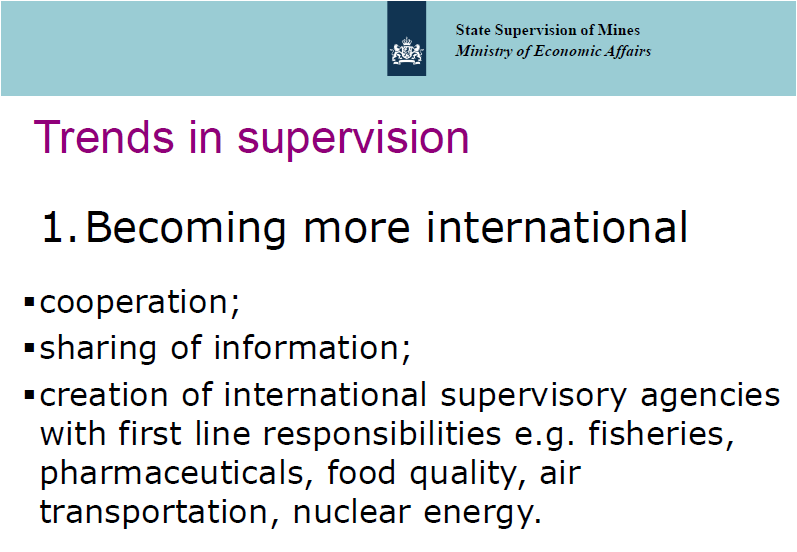
The above slide is from the excellent presentation that Jan de Jong (Inspector General, State Supervision of Mines, the Netherlands) never got to deliver in Vancouver. As session chair, Jan graciously yielded his time to his panelists.

Jan’s presentation notes the growing importance of international cooperation. This trend has the potential to improve regulatory capabilities, expand data availability and access, reduce regulatory costs through the sharing of resources, reduce costs for industry through greater international consistency and regulatory certainty, and improve international relations.  The Netherlands, Russia, Norway, Cuba, the US, and everyone else should be on the same team when it comes to offshore safety and pollution prevention.  Some near-term suggestions follow:

  • Except where regional conditions dictate otherwise, the same standards should be applied worldwide.  Government and industry should be collectively questioning, testing, and improving these standards. Remember that the goal is continuous improvement, not mere compliance.
  • An international information system should provide for the collection and verification of incident and performance data.
  • Using international data and expertise, a cooperative risk assessment program should be initiated.
  • An organized international audit capability should be established to evaluate operators and regulators.
  • To improve access to expertise and reduce costs, a network of specialists should assist regulators worldwide.
  • Industry training requirements should be uniform and consistently applied, and regulator training programs should be consolidated regionally or internationally.
  • The international research network should be expanded.
  • To ensure that accidents are investigated independently and to minimize the potential for political influences on the investigation process, an international accident investigation capability should be established.
  • The safety culture message should be promoted worldwide.  Successes and failures should be cooperatively examined.

Read Full Post »

The conference summary is now posted.

Presentations

Read Full Post »

The following are the consensus findings and recommendations of the 200 operations, safety, and regulatory specialists who participated in the International Regulators’ Offshore Safety Conference (18-20 October, Vancouver):

  • Regulatory regimes function most effectively when a single entity has broad safety and pollution prevention responsibility.  Gaps, overlap, and confusion are not in the interest of safety or regulatory efficiency.
  • The regulator’s core responsibilities and objectives must be clearly identified.  Managers must minimize distractions so that regulatory personnel can focus on these objectives.
  • Safety management and regulatory priorities should be identified through a comprehensive risk assessment program.   Training and competency development programs should be updated to reflect the new risk information.  Contracting strategies should be reviewed to assess their safety and risk implications.
  • Government and industry should promote an improvement mentality, not a compliance mentality. Continuous communication among regulators, operators, contractors, workers, industry associations and public interest groups is essential for continuous improvement.
  • Operators and contractors must manage their companies to achieve safety objectives and must continually assess the effectiveness of their management programs. Regulators should challenge industry to resolve potential safety problems rather than seek to resolve the problems for them.
  • Regulators should serve as catalysts for learning by distributing information, hosting workshops, participating in research, and identifying gaps in standards and best practices.  Wherever possible, the best standards should be identified and applied internationally.
  • Accident investigations should be conducted independently and findings should be promptly and broadly distributed.  Industry or government should maintain comprehensive and verified incident data bases.  Offshore companies should regularly discuss the causes and implications of past accidents with their employees.
  • Industry and government cannot rely solely on incident data to identify risks.  New indicators must be explored and assessed, particularly for major hazards and safety culture. Worker input is also essential.
  • Peer-based audit programs should be considered for both regulators and operators.
  • Industry and regulators should make better use of technology for real time monitoring of safety parameters.
  • Sustaining outstanding safety performance is critical to the reputation of industry and government.  All personnel should be trained to be safety leaders and should be empowered to stop work without blame.
  • Industry and government should Investigate other actions and programs that might help promote, sustain, and monitor a culture of safety achievement.

This is very good, fundamental guidance for all governments and companies.

Read Full Post »

Click here to view the presentations from the International Regulators’ Offshore Safety Conference in Vancouver.

Read Full Post »

Viewed in Vancouver

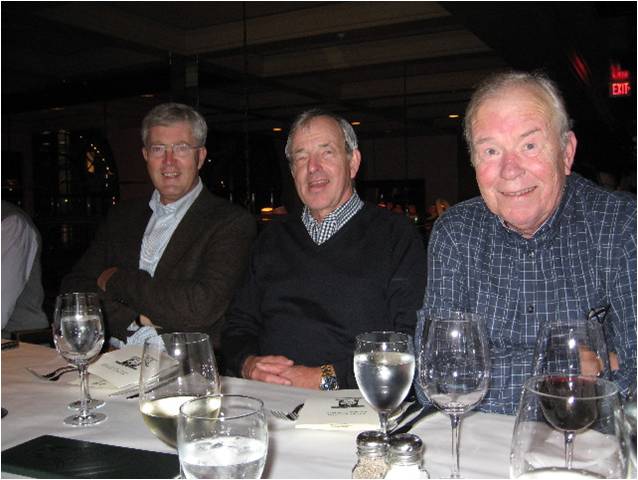
Jan de Jong (Inspector General, State Supervision of Mines, the Netherlands), Max Ruelokke (CEO, Canada - Newfoundland and Labrador Offshore Petroleum Board), and Odd Finnestad (BOE Executive VP for International Programs and IRF Historian)

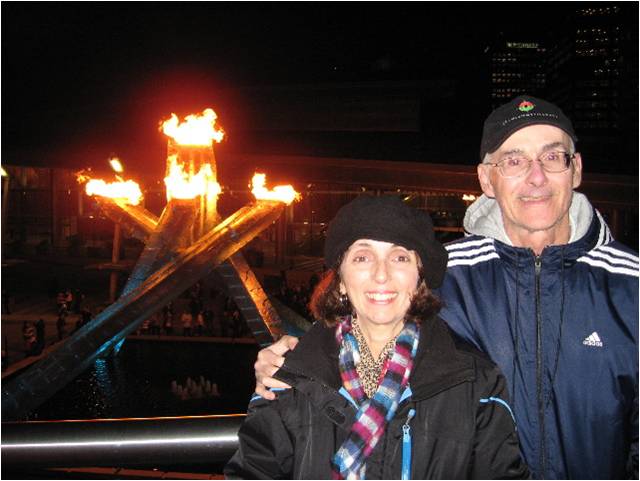
They re-lit the Olympic Torch in our honor. Well, not exactly. The torch was lit for a ceremony naming the plaza after Jack Poole, a driving force in bringing the Olympics to Vancouver. Sadly, Jack died of cancer a few months before the games opened.

While we are awaiting the official pictures of the Vancouver conference, you can look at some of Karen’s by clicking here.

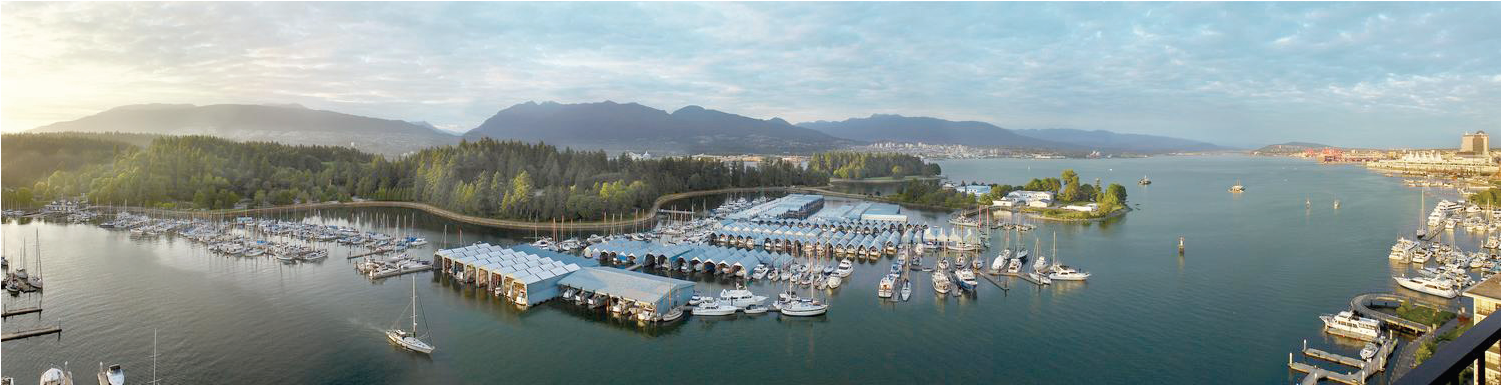
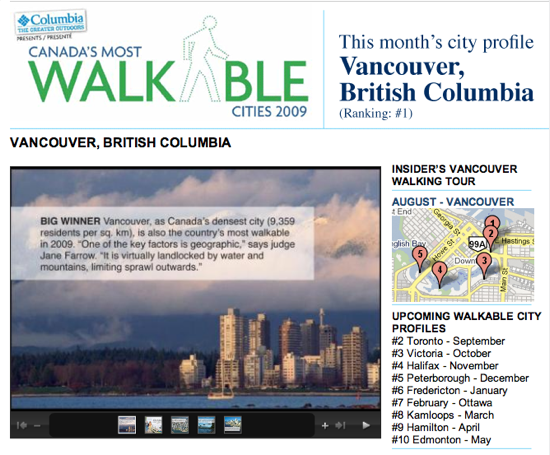
Vancouver is a great city and the weather was pretty close to perfect.  I like walkable cities with interesting neighborhoods, and Vancouver ranks near the tops.  If you get a chance, check it out.

Read Full Post »

Firstly, major kudos to the Canadians for organizing a great conference in Vancouver, a wonderful city.  The Newfoundland-Labrador and Nova Scotia Petroleum Boards, and the National Energy Board were outstanding hosts, and Max, Howard, Stuart, Sean, Bharat, and the folks at Venue West did a great job with the arrangements. The International Regulators’ Offshore Safety Conference was a huge success thanks to their efforts.

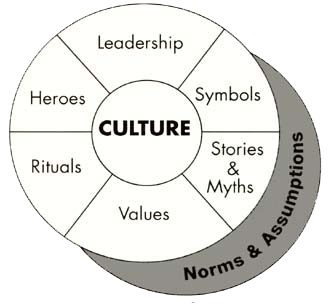
The international leaders in Vancouver were in full agreement that the key to long term safety achievement is the strength and vitality of the safety culture in the operating companies, contractors, and regulatory organizations.  How is such a culture encouraged and achieved?  As NOPSA CEO Jane Cutler has said “safety culture is what you do when no one is watching.”  Inspections are a necessary regulatory tool, but if they are too frequent they send the message that the government is responsible for safety, and that operators and workers can relax their guard.  As Magne Ognedal (PSA-Norway) has frequently said, safety must be managed by the “owner” of the facility and the risk, with the government holding the owner accountable and insisting on excellence.

Steve Walker, UK HSE chief, said that regulators must encourage a “beyond compliance” culture and serve as catalysts for learning and achievement. Regulators can never be satisfied; they should be negative thinkers searching for the operations, processes, and behaviors that might trigger the next major accident.  Dr. Mark Fleming from St. Mary’s University in Halifax believes that safety culture can in fact be regulated, not in the traditional sense, but by requiring companies to have systems in place for promoting and measuring the organizational culture.

Regulators must also look at their own safety culture.  Are they focused solely on compliance and “command and control,” or are they investigating risks, assessing management programs, and evaluating performance?  Are regulatory employees free to investigate and inquire, or are they mere implementers of management directives?  Are employees rewarded for sustaining the hierarchy or challenging  the status quo?  Are they expected to explain why accidents can’t happen again or figure out how they can?

Much more on these and other Vancouver topics in the near future.

Read Full Post »

We are pleased that Mexico’s new regulatory agency CNH will be participating in the International Regulators Offshore Safety Conference in Vancouver. North American cooperation on offshore safety and regulatory issues is critical to the energy and economic futures of all countries in the region.

Read Full Post »

« Newer Posts - Older Posts »