Feeds:
Posts
Comments

Posts Tagged ‘flaring intensity’

This misleading headline was featured in Reuters’ “Power Up” newsletter (26 Jan 2023):

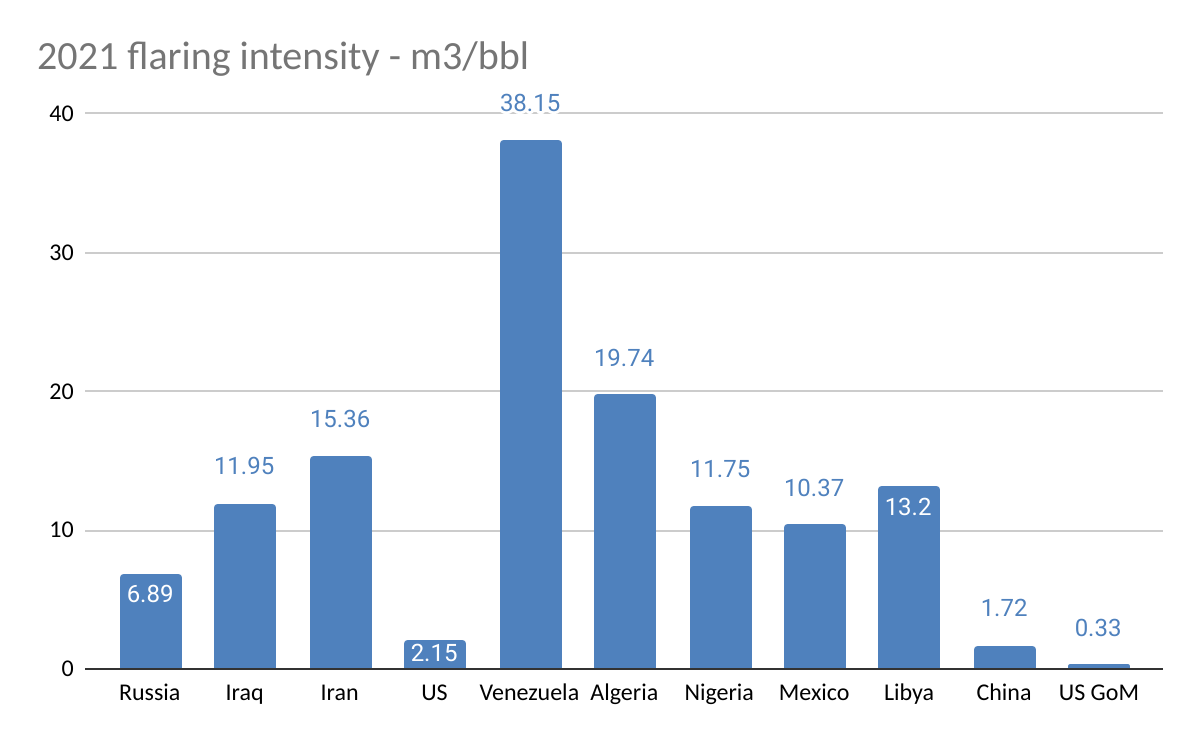
An objective flaring assessment would have also considered the volume of oil and gas produced. The World Bank uses flaring intensity (m3 flared per bbl of oil produced) to normalize their flaring data and provide perspective. The chart below is derived from World Bank flaring intensity data and Gulf of Mexico data from mandatory flaring and venting reports for the same year (2021). These normalized data sharply contradict the Reuters message.
Reuters might also have noted (World Bank table below) that the US flaring intensity score declined by 46% between 2012 and 2021. Each of the other “top flaring” countries had flaring intensity increases during that period.
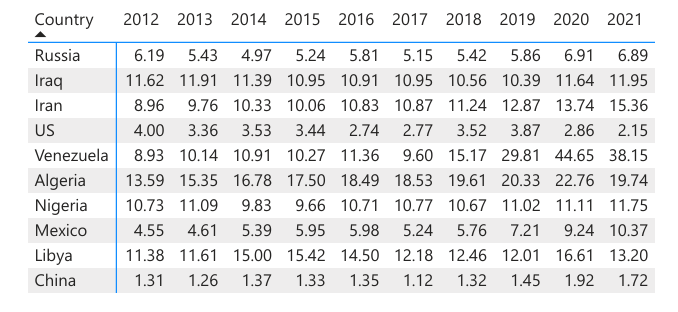
World Bank

Finally, while I applaud the World Bank’s efforts to monitor worldwide flaring, some issues with their methodology were identified in a prior BOE post.
Read Full Post »

Using the World Bank’s worldwide flaring data and ONRR flaring and venting data for the GoM, I compared GoM flaring intensity for 2021 with that of the World Bank’s top ten flaring nations. This is just one example of why US offshore production is a preferred and vital component of our energy mix.

Further discussion: Kudos to the World Bank for their use of satellite data to estimate flaring volumes worldwide. Their primary performance indicator is flaring intensity (volume flared per bbl of oil produced). Absent better worldwide reporting regimes, satellite data are essential. However, there are issues with the World Bank’s system that merit further consideration:

  • Satellites miss some flares and vented gas (a more significant GHG concern) is not detected
  • A prior review of Gulf of Mexico data indicated that the World Bank flaring estimates are low.
  • The flaring intensity indicator penalizes higher gas-oil ratio (GOR) wells. Production upsets of the same duration yield higher flaring intensity scores at higher GOR facilities.
  • Associated gas is an environmentally favorable energy source that should not be discouraged. Most Gulf of Mexico gas production is now from oil wells. Efficient collection and utilization is the key.
  • There will always be some production upsets that result in flaring. The objective should be to minimize the % of oil-well and gas-well gas that is flared, irrespective of the amount of oil production. See the recent GoM summary data posted here and here.

Read Full Post »