Feeds:
Posts
Comments

Posts Tagged ‘fair market value’

The table below illustrates the dramatic decline in bidding for Atlantic wind leases over the past 2 years. (The California sale is also included in the table.)

offshore areasale dateleases soldacres leasedbonus bids
($ millions)
$/acre
NY/NJ2/20226488,0004,3708955
California12/20225373,268757.12028
Central Atl.8/20242277,94892.65333
Gulf of Maine10/20244439,09621.9 50

Accepting that bidding at the 2/2022 sale, which averaged nearly $9000/acre, was irrationally exuberant, bidding at this week’s sale was still incredibly weak. Even the bids at the Central Atlantic sale, just 2 months ago, averaged $333/acre, 6.7 times higher than the Gulf of Maine bids.

Energy giants Equinor, Repsol, and Total were among the eligible Gulf of Maine bidders that opted not to participate.

Do the Gulf of Maine bids pass BOEM’s fair market value tests? Apparently so; the sale notice established $50/acre as the minimum bid, and that is where the bidding started and ended. Invenergy and Avangrid had no competition and presumably got the tracts they wanted at the lowest possible price. We’ll see how this works out for the companies and power consumers.

Read Full Post »

Given the current guidance for implementing the OCS Lands Act’s “fair market value” mandate, all 12 of BOEM’s Sale 261 bid rejections (table below) were warranted:

  • All but one of the rejections was on a single bid tract.
  • BOEM’s Mean of the Range-of-Value (MROV) estimates were 2.6 to 18.7 times the rejected bonus bids.
  • The Adjusted Delayed Value (ADV), which takes into account the effects of delaying bonuses and future royalty payments, ranged from 1.3 to 9.2 times the high bids.
  • Perhaps the closest calls were Chevron’s two Walker Ridge bids which had ADV to bid ratios of only 1.3 to 1.4.

The main concern going forward is the absence of a consistent, predictable leasing schedule for the 3.7% of the OCS that may be considered for leasing. BOEM’s new methodology, which will be applied at the next lease sale (whenever that might be), does not require the bureau to estimate the delay period between the sale being evaluated and the projected next lease sale. Given that the new 5 year plan calls for a maximum of 3 lease sales, the gap between sales has become a much more significant factor just as the new guidance is being implemented.

The new 5 year “leasing plan” is intended to restrain OCS production in deference to “net zero” pathways. This strategy discourages interest from exploration and production companies. US offshore leases, which are by far the world’s smallest, are even less attractive when you don’t know if and when you will be able to acquire the nearby tracts that may be needed for economical deepwater development. This is not the way to obtain fair market value for public resources.

BlockNo. of bidsHigh Bid ($)MROV($)
ADV($)
High BidderMROV/bid
ADV/bid
MC 7111584,7006,600,000
2,400,000
bp11.3
4.1
MC 8961641,6286,100,000
1,600,000
Shell9.5
2.5
GC 1821800,0853,900,000
2,600,000
Anadarko4.9
3.2
GC 1831800,0859,100,000
6,000,000
Anadarko11.4
7.5
GC 2261800,0852,100,000
1,600,000
Anadarko2.6
2.0
GC 2272974,62813,000,000
9,000,000
Shell13.3
9.2
GC 34511,095,61513,000,000
5,300,000
Murphy11.9
4.8
GC 3461845,8155,100,000
2,000,000
Murphy6.4
2.4
GC 5491800,08515,000,000
6,900,000
Anadarko18.7
8.6
AT 2371909,8998,300,000
3,000,000
Equinor9.1
3.3
WR 2851859,8376,200,000
1,200,000
Chevron7.2
1.4
WR 3291595,8374,400,000
770,000
Chevron5.7
1.3
MROV=Mean of the Range-of-Value
ADV=Adjusted Delayed Value, which takes into account delaying bonuses and royalties

Read Full Post »

15,531 of the 15,537 comments on the bid adequacy rule were from a single organization, Friends of the Earth. I have no problem with the Friends of the Earth campaign given that their comment letter is pertinent to the topic. Their main point is that the bid adequacy process fails “to factor in the climate and social costs of continued Outer Continental Shelf oil and gas lease sales into the bid process.” Although that may be a reasonable position, those issues are addressed in the programmatic and sale specific environmental reviews which factor into when and where sales are held, tract exclusions, special lease stipulations, and the comprehensive operating regulations. Once bids are submitted, the issue (and the sole purpose of the bid adequacy rule) is whether those bids represent fair market value for the oil and gas resource potential of the leases being offered.

Given that 96.3% of the US OCS is off-limits to oil and gas leasing, only 0.7% is currently open to exploration, and the new 5 year plan includes the fewest lease sales in OCS program history, it’s rather a stretch to argue that environmental concerns are not being prioritized.

The State of Alaska submitted very good comments (attached) that point to the historical differences in Gulf of Mexico and Alaska leasing. The State argues that a simpler approach to determining fair market value would encourage exploration and development on offshore lands that have seen little of either in recent years. Knowing BOEM’s expectations prior to the sale, perhaps through higher minimum bid requirements, would ensure that companies do not underbid and that tracts are successfully leased.

The Gulf of Mexico leasing program of today is looking more like the frontier area leasing of the past. As previously noted, the uncertainty regarding future sales changes the historic GoM leasing dynamic. The next opportunity for purchasing unleased GoM tracts is now a troubling unknown. This would seem to make it less prudent to reject bids based on uncertain prospect evaluations. Absent leasing and exploration, the true resource and revenue potential will never be known.

It was good to see the strong comments submitted by my former Minerals Management Service colleagues Dr. Marshall Rose and Ted Tupper. Marshall, who was our Chief Economist, commented that the proposed rule did not identify the problem and explain how the rule addressed that problem. Ted, a senior statistician, points to past failures of the bid adequacy process and proposes specific changes. It’s great to see the passion that our retired employees have for the program they were so instrumental in developing and managing.

The rule was finalized without any substantive changes.

Read Full Post »
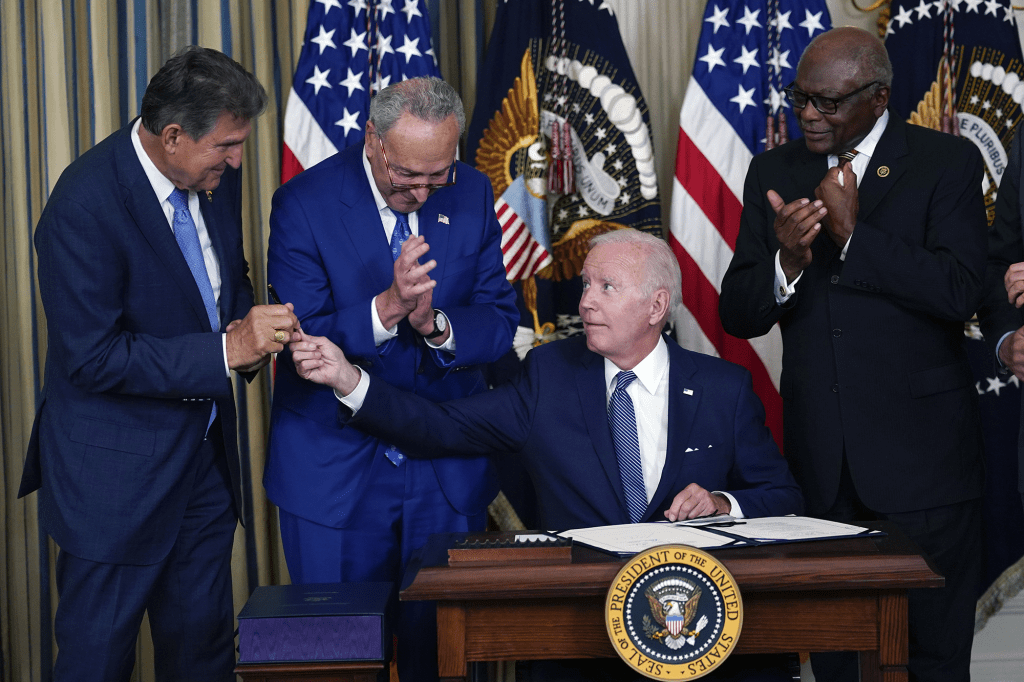
Per legislation signed by the President on Aug. 16, 2022:

(b) LEASE SALE 257 REINSTATEMENT.—
(1) ACCEPTANCE OF BIDS.—Not later 30 days after the date of enactment of this Act, the Secretary shall, without modification or delay
(A) accept the highest valid bid for each tract or bidding unit of Lease Sale 257 for which a valid bid was received on November 17, 2021; and
(B) provide the appropriate lease form to the winning bidder to execute and return.

The Department of the Interior has been silent on their implementation of this provision. We are particularly interested in:

  1. how the 94 carbon sequestration bids will be handled
  2. whether any bids will be rejected on fair market value grounds

Read Full Post »