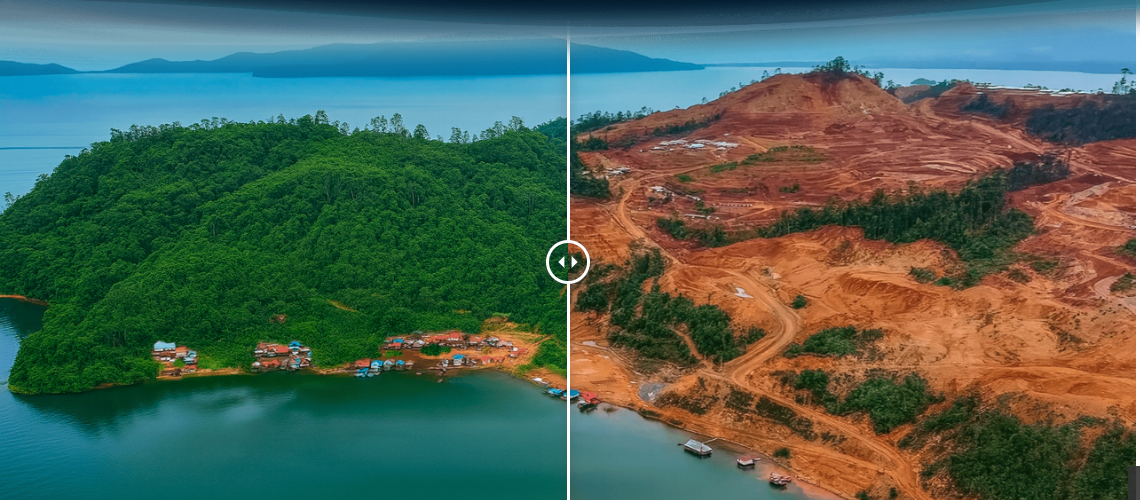
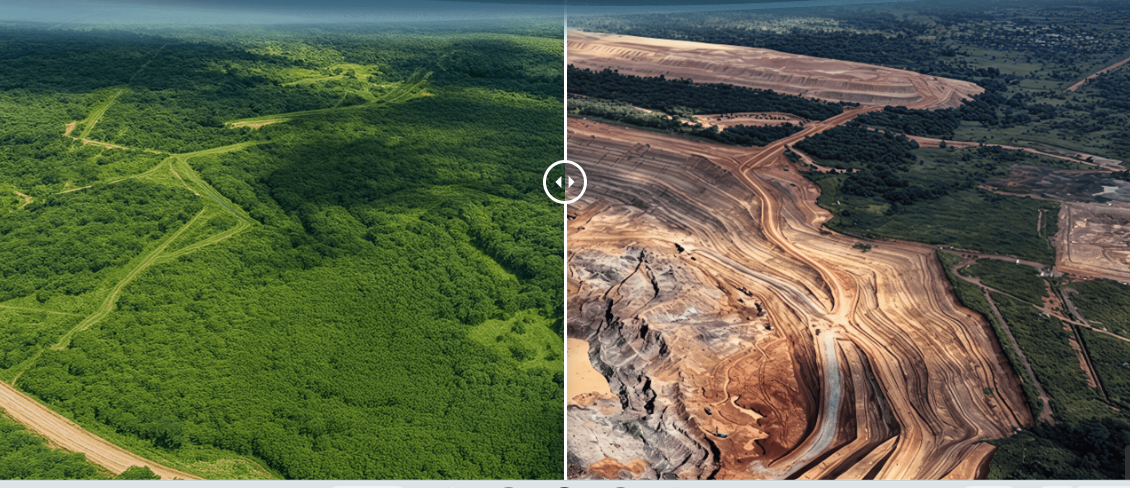
Terrestrial Indonesian nickel mine site before and after miningBefore and after: terrestrial Chilean copper mine siteDeep-sea nodule field before and after collection by Impossible Metals
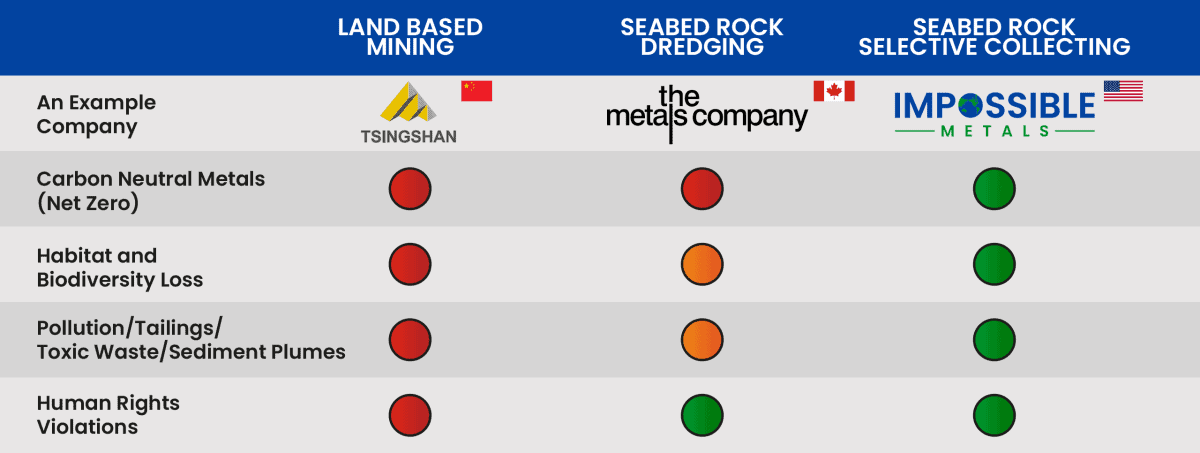
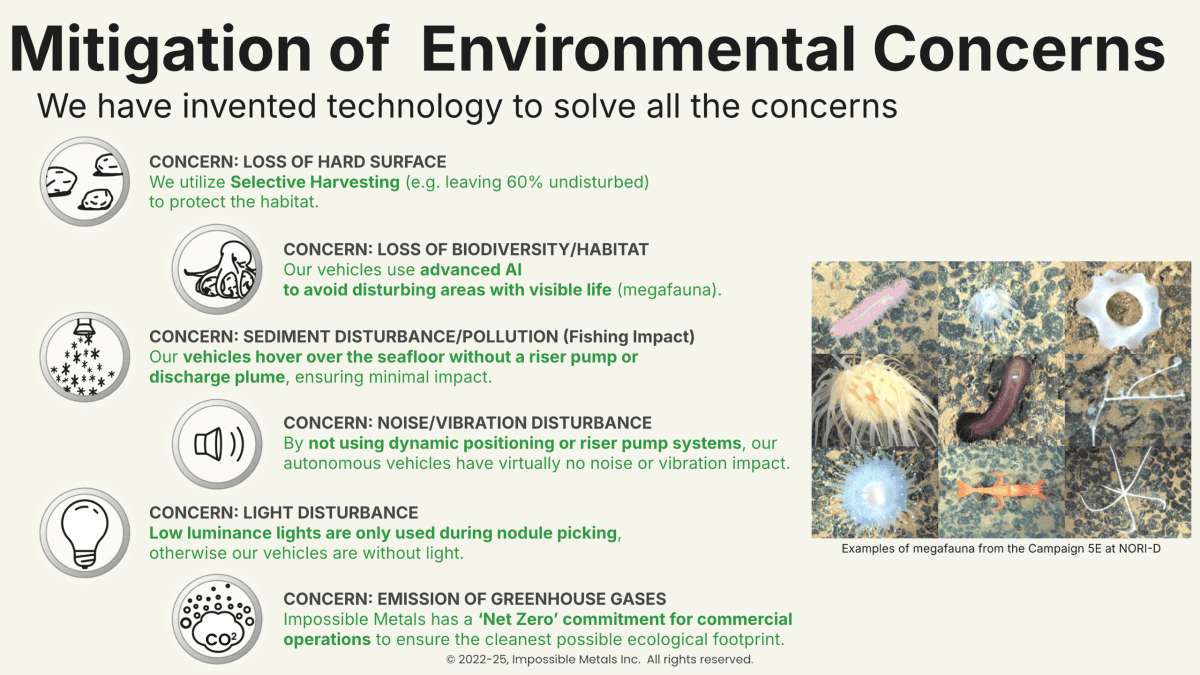
An Impossible Metals table (below) understandably favors their methods vs. those employed by deep-sea mining rival The Metals Company. However, both approaches are far preferable, environmentally and socially, to onshore metal mining.
On August 11, 2025, TMC USA received notice of full compliance from the National Oceanic and Atmospheric Administration (NOAA) on its exploration applications, and reconfirmation that TMC USA has priority right over both exploration areas
Both applications entered the certification stage in late July, which we expect to be approximately 100 days
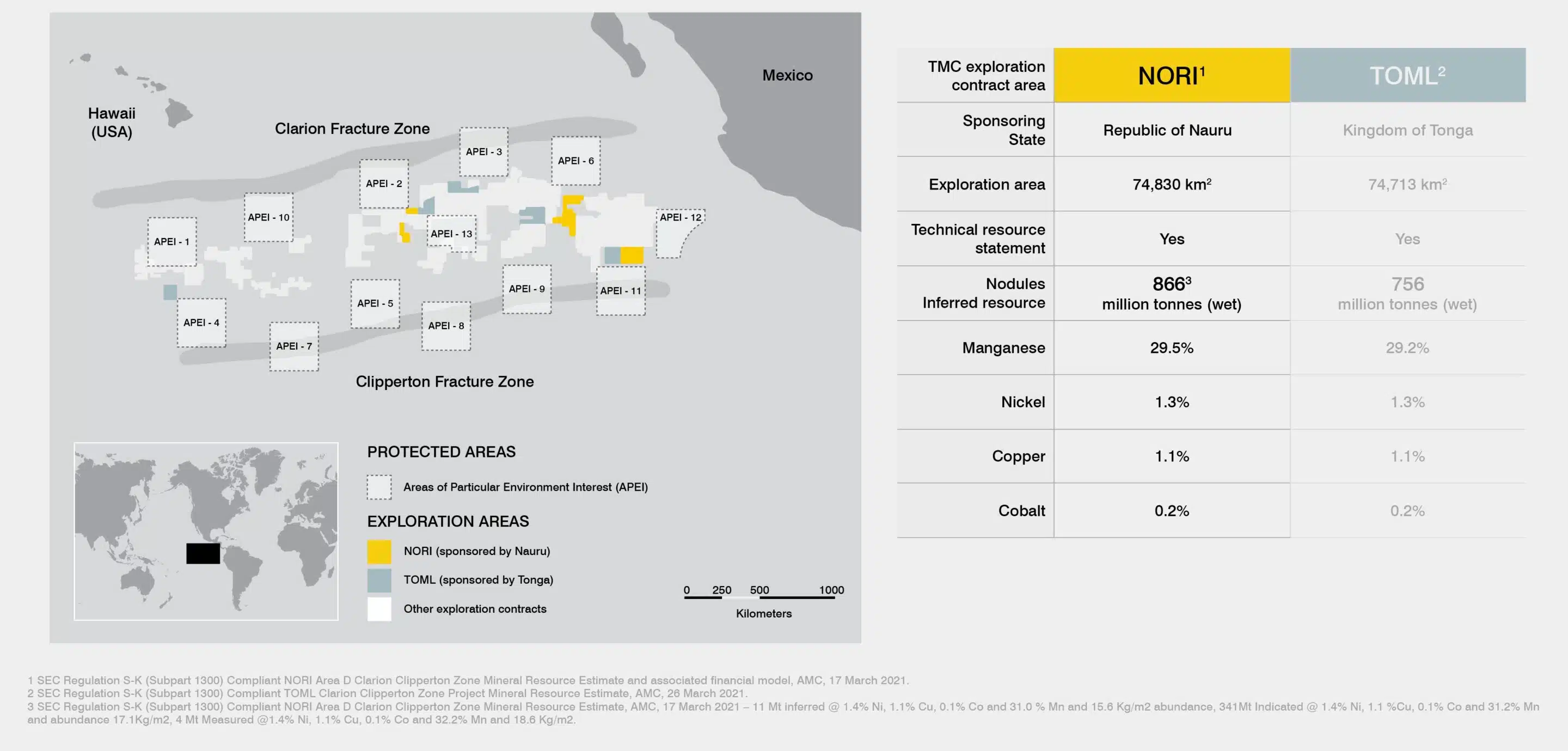
In light of recent U.S. regulatory developments, TMC expects to commence commercial production from the NORI-D Area in the fourth quarter of 2027 if we receive a commercial permit before scaling to an average annual production rate of 10.8 million tonnes of wet nodules per annum (Mtpa) at steady state (2031 through 2043) production, with an expected 18-year life of mine (LOM);
Meanwhile, after missing deadlines in 2020 and 2023, the International Seabed Authority (ISA) again failed to deliver a Mining Code as communicated in their 2023 roadmap during the second part of their 30th session in July 2025. No new roadmap or new target date for adopting the final Mining Code has been agreed. The next ISA meeting is scheduled for March 2026. (Hence the importance of direct permitting through the US/NOAA.)
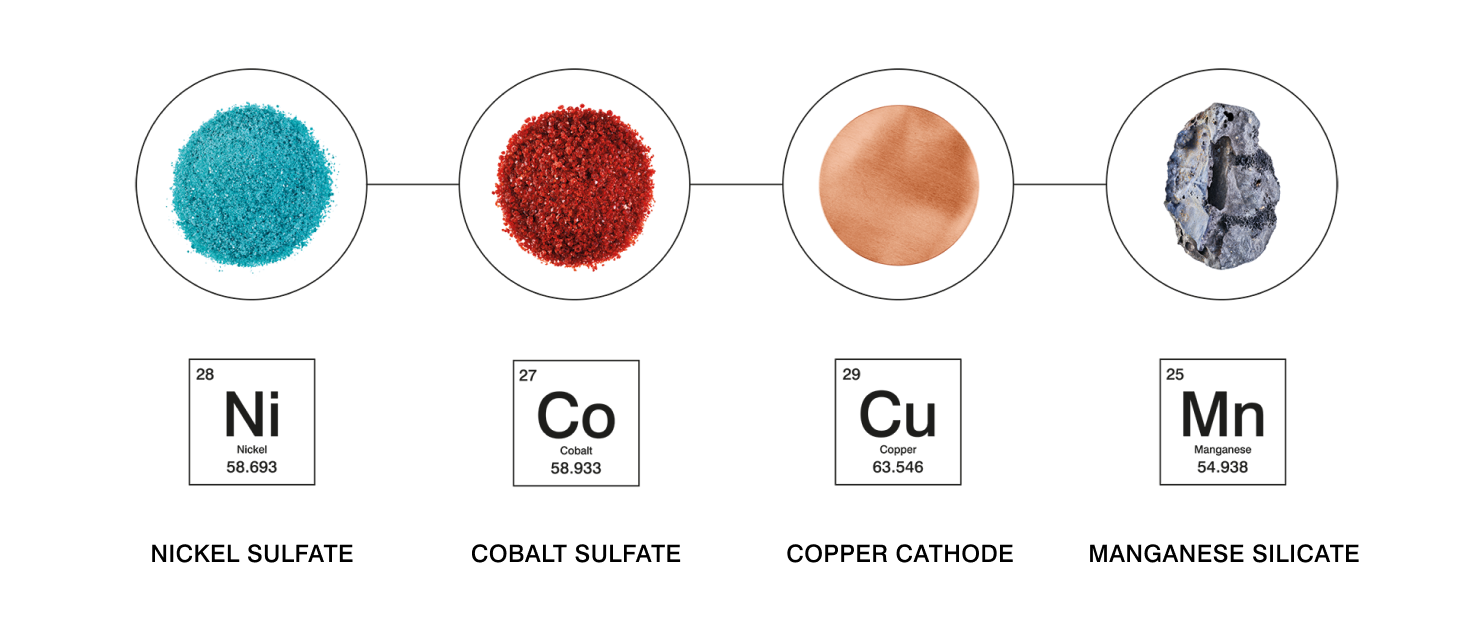
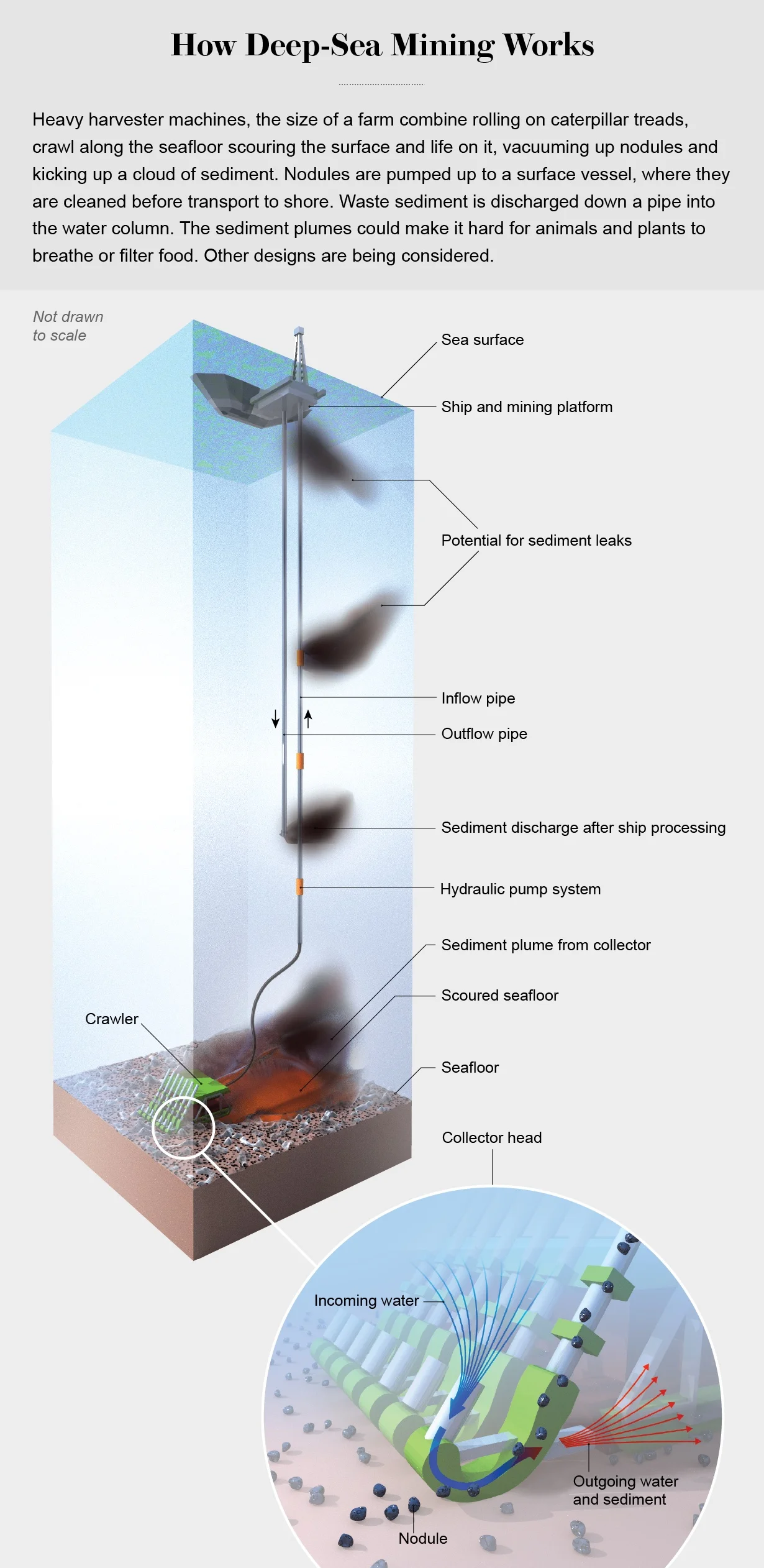
One nodule contains high grades of four key metals, meaning that four times less ore needs to be processed to obtain the same amount of metal. Nodules also contain no toxic levels of heavy elements, and the entirety of a nodule can be used, making near-zero-solid-waste production possible. Because nodules sit unattached on top of the seafloor, they will not require drilling or blasting for retrieval.
🇺🇸🚢 ⛏️ We’re witnessing a wave of glorified pseudoscience and fantasy activism around the ocean floor—this idea that the deep sea is some mystical sanctuary of life and that any attempt to extract resources from it is an unforgivable sin against Gaia. Spare me.
The bottom of the ocean is not the Garden of Eden. It’s a black, silent, high-pressure wasteland—largely lifeless, uninhabitable, and filled with the very minerals we need to break free from Chinese supply chain domination. You want a clean energy future? Then stop whining about the only scalable path to get there.
China has already begun strip-mining the ocean floor without asking for your permission. They don’t care about the blobfish or the bacteria colonies around volcanic vents. They care about winning. And every time we moralize ourselves into inaction, we gift them another geopolitical advantage wrapped in Western guilt.
Let’s cut the delusion. There is no future where America stays on top without securing its own critical minerals. Recycling won’t save us. Wind and solar need metals. Batteries need rare earths. Data centers need semiconductors. And semiconductors need the materials sitting at the bottom of the ocean.
You don’t get to demand green tech, reject land mining, block seabed access, and still pretend you’re “saving the planet.” That’s not leadership. That’s learned helplessness.
So yes, I support Trump’s executive action. Because someone has to make the grown-up decision. Either we lead this resource race with responsibility and strength—or we watch tyrants carve up the planet while we post crying-face emojis and argue about what’s sacred 10,000 feet below sea level.
Let the race for the bottom begin. 🇺🇸🚢
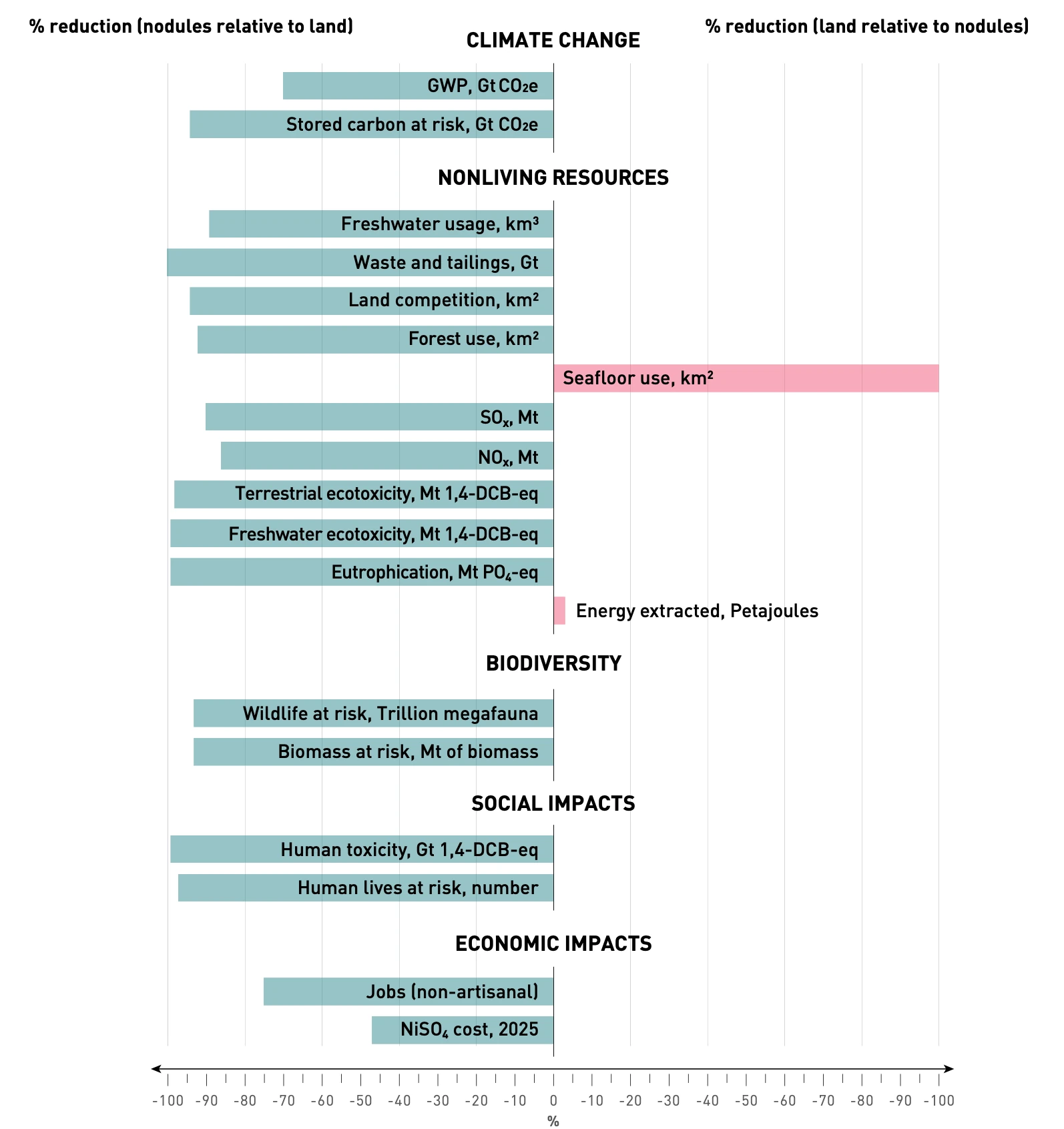
Deep sea vs. land mining:
From a paper by Daina Paulikas and Dr. Steven Katona, with input from Erika Ilves, Dr. Greg Stone, Anthony O’Sullivan, and a review from Todd Cort and Cary Kroninsky at Yale. While the industry-funding introduces the potential for bias, it nonetheless provides a comprehensive and thorough comparison.
I’m posting Sunday’s 60 Minutes segment that focused on deep sea mining and the failure of the US to ratify the UN Convention on the Law of the Sea (UNCLOS). Supplementary comments:
Most Federal employees involved with ocean energy policy, past and present, have supported US government ratification of UNCLOS.
The offshore industry has long supported UNCLOS. Industry trade associations, including API, IADC, and NOIA, are on the record as favoring ratification.
While concerns about UN management of deep sea mining access are understandable, some coordinated administrative structure is needed.
The Metals Company and other companies pursuing deep sea mining opportunities clearly disagree with the assertion that ocean floor mineral harvesting is not economically viable.
11/21/2023: Nauru Ocean Resources Inc. (NORI) shares data from their 2022 test mining on the impacts of seafloor sediment plumes. See the informative video embedded below.
12/7/2023: 31 members of congress send letter to Secretary Austin (attached) regarding the importance of deep-sea polymetallic nodules from a national security standpoint.
1/3/2024: National Defense Authorization Act (NDAA) is signed into law, and includes provisions directing the Department of Defense to submit a report to the House Armed Services Committee assessing the domestic processing of seafloor polymetallic nodules by March 1, 2024. See text pasted below.
1/11/2024: The Wall Street Journal reports on growing US political support for deep sea mining.
“the committee directs the Assistant Secretary of Defense for Industrial Base Policy shall, by March 1, 2024, submit a report to the House Armed Services Committee assessing the processing of seabed resources of polymetallic nodules domestically. The report shall include, at a minimum, the following: (1) a review of current resources and controlling parties in securing seabed resources of polymetallic nodules; (2) an assessment of current domestic deep-sea mining and material processing capabilities; and (3) a roadmap recommending how the United States can have the ability to source and/or process critical minerals in innovative arenas, such as deep-sea mining, to decrease reliance on sources from foreign adversaries and bolster domestic competencies.
The District Court of Amsterdam has ordered Greenpeace International to immediately disembark from the research vessel commissioned by TMC subsidiary Nauru Ocean Resources Inc (NORI) to conduct legally-mandated environmental impact assessments requested by the Legal and Technical Commission of the International Seabed Authority (ISA)
Since November 23rd, Greenpeace’s unsafe and unlawful activities have hindered independent scientists in conducting environmental and scientific studies to assess ecosystem function and recovery one year on from NORI’s pilot nodule collection system test
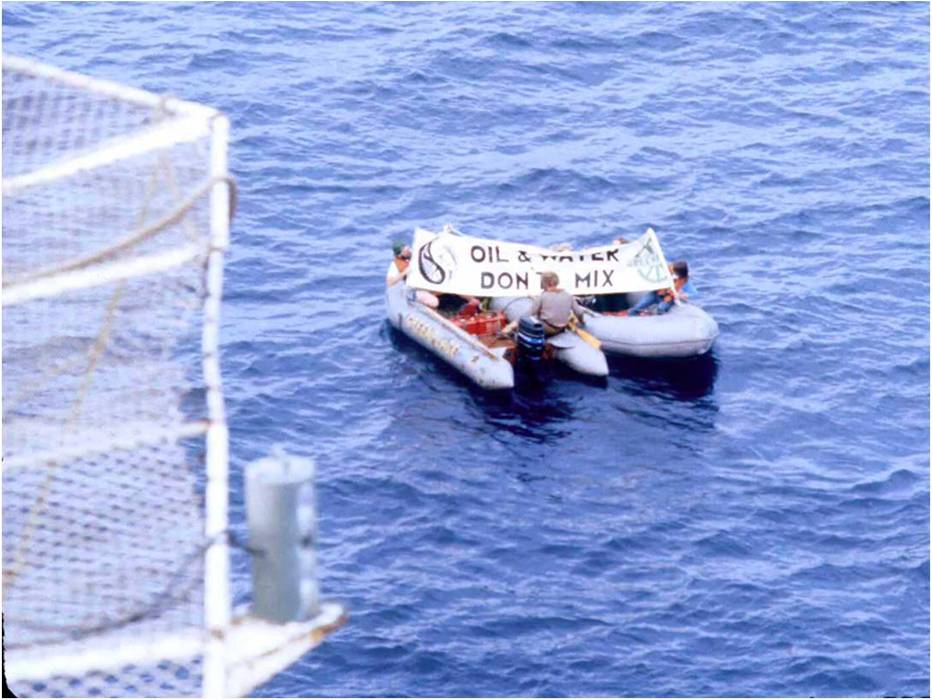
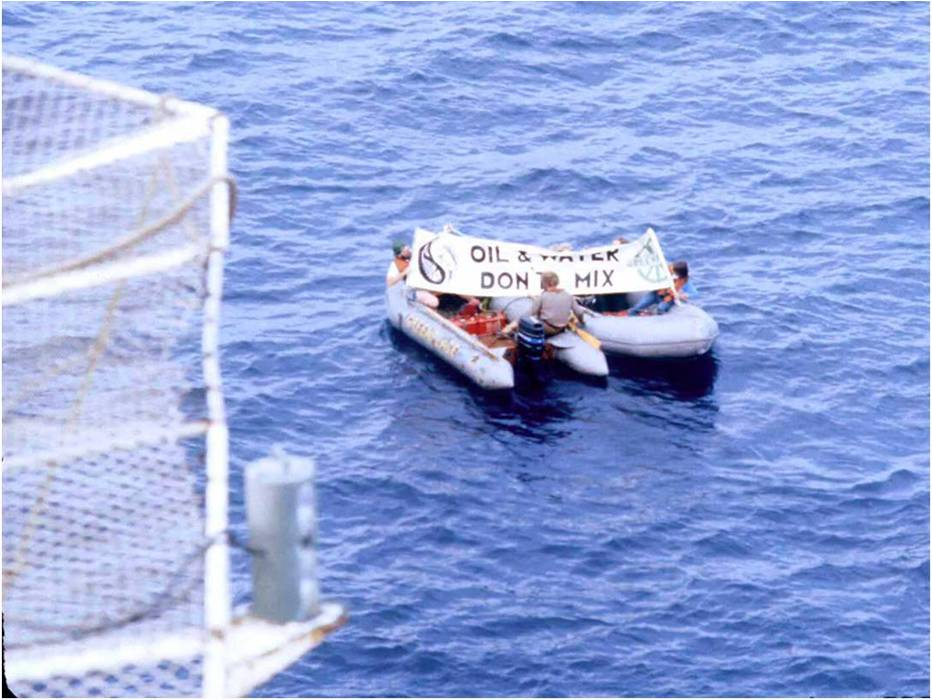
A bit of history: We experienced Greenpeace protesters on Georges Bank way back in 1981. They were dispatched from the Rainbow Warrior which visited the Zapata Saratoga, 155 miles SE of Nantucket. Given the remote location, the protest was unexpected. However, the drilling operation was not disrupted and no action was taken against Greenpeace. Four years later, the Rainbow Warrior was bombed by French commandos while in port in Auckland, NZ prior to planned protests against French nuclear testing in the South Pacific. Sadly, one crew member was killed during this incident.
Greenpeace protesters at the Zapata Saratoga on Georges Bank, 1981
Mining’s larger future will rest largely on how ISA (the International Seabed Authority) finalizes its rule book amid the rush to scour the seafloor. ISA has arare chance to regulate an industry before the industry has begun.
Thoughts:
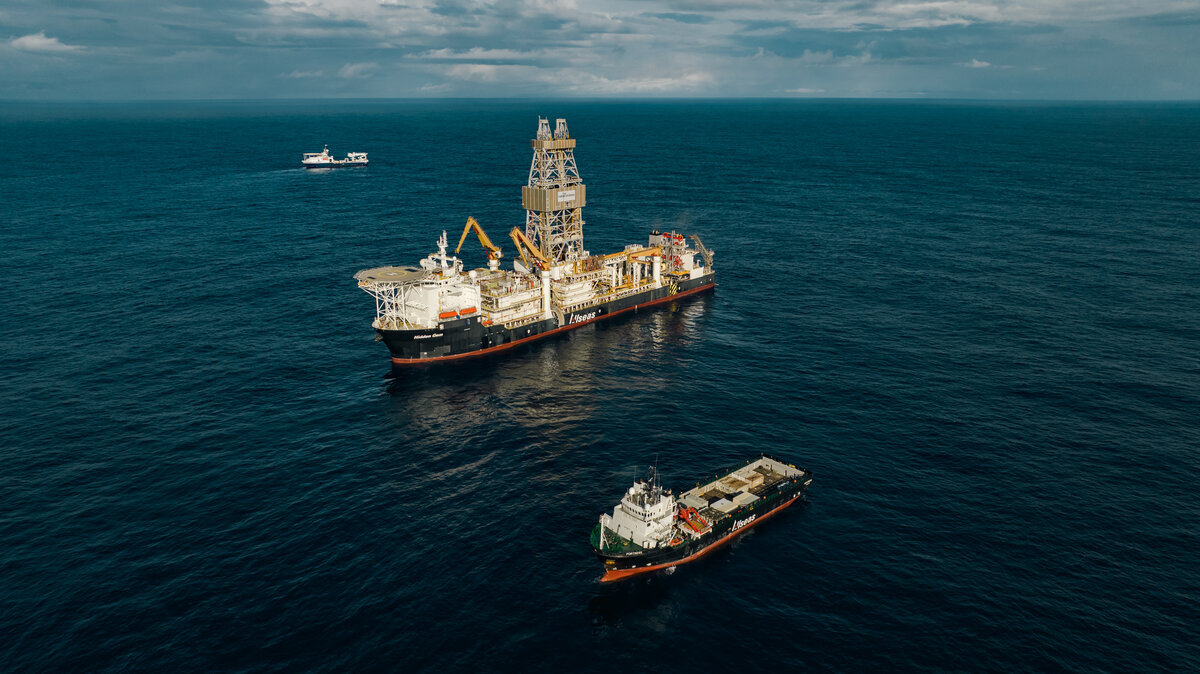
Deep sea mining is not an entirely new industry. The technology and procedures evolved from other industries, most notably deepwater drilling, and from decades of ocean exploration. Keep in mind that the Hidden Gem mining vessel is a converted deepwater drillship.
The offshore oil and gas industry’s risk assessment and safety management practices can be adapted to deep-sea mining.
Effective regulations are not static. The deep-sea mining regulations should not be considered “final” when they are blessed by ISA and the governing body.
The more prescriptive elements of regulations are dependent on operational experience, observations, and performance data. These must evolve over time.
Timely revisions to equipment and procedural requirements through updates to operator management systems and industry standards are critical. In most cases, formally revising regulations takes much too long and is an ineffective means of mitigating emerging risks.
Long, detailed regulations are indicative of a weak regulatory regime, not a strong one. Optimal regulations specify goals, not methods, and are implemented by focused regulators who inquire, challenge, analyze, and where necessary penalize.
The respective roles of the operating companies and the regulating authority must be clearly articulated.
With continuous improvement as the primary objective, the regulator should develop a strategy for measuring safety and environmental performance.
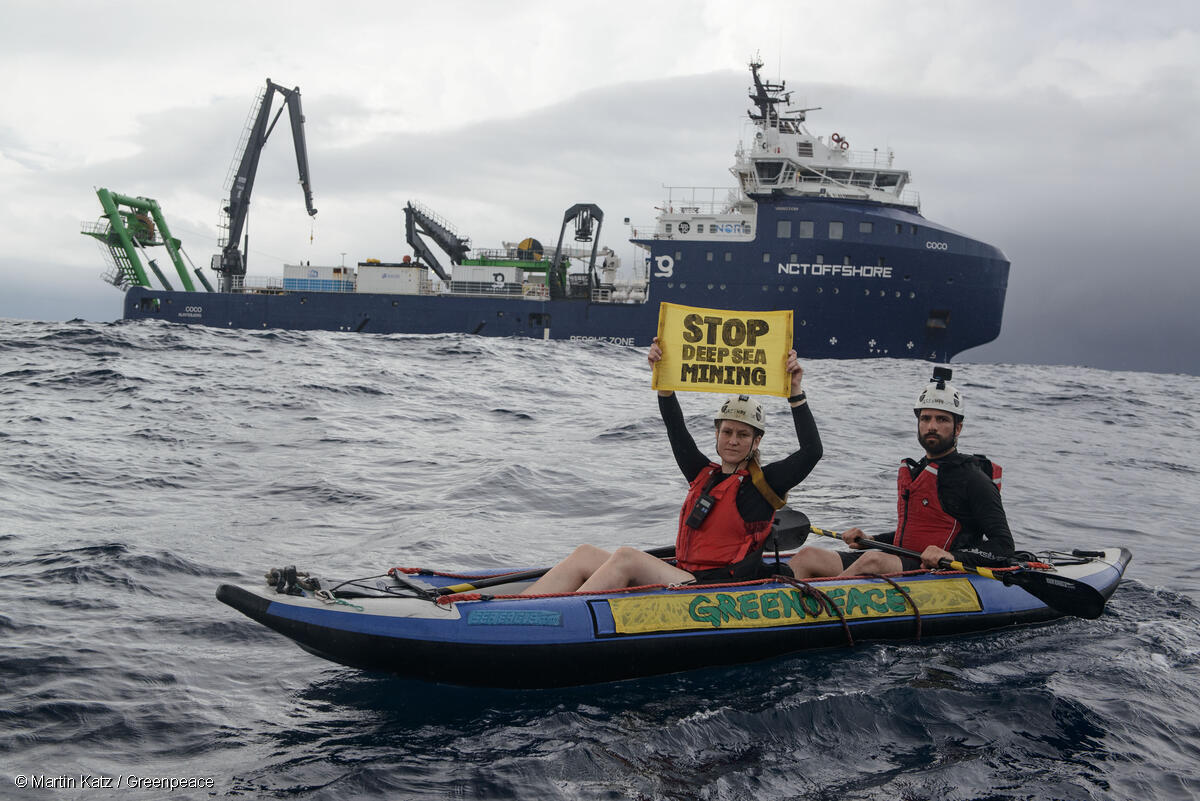
News articles are reporting that The Metals Company is conducting studies in the Pacific. These articles erroneously include a file photo of the Hidden Gem, which is not involved with this research. The MV Coco, an impressive research vessel that is pictured below with the obligatory Greenpeace protesters, is conducting the studies.
On a related note, below is an interesting video about last year’s nodule recovery trials using the Hidden Gem’s integrated collection system.
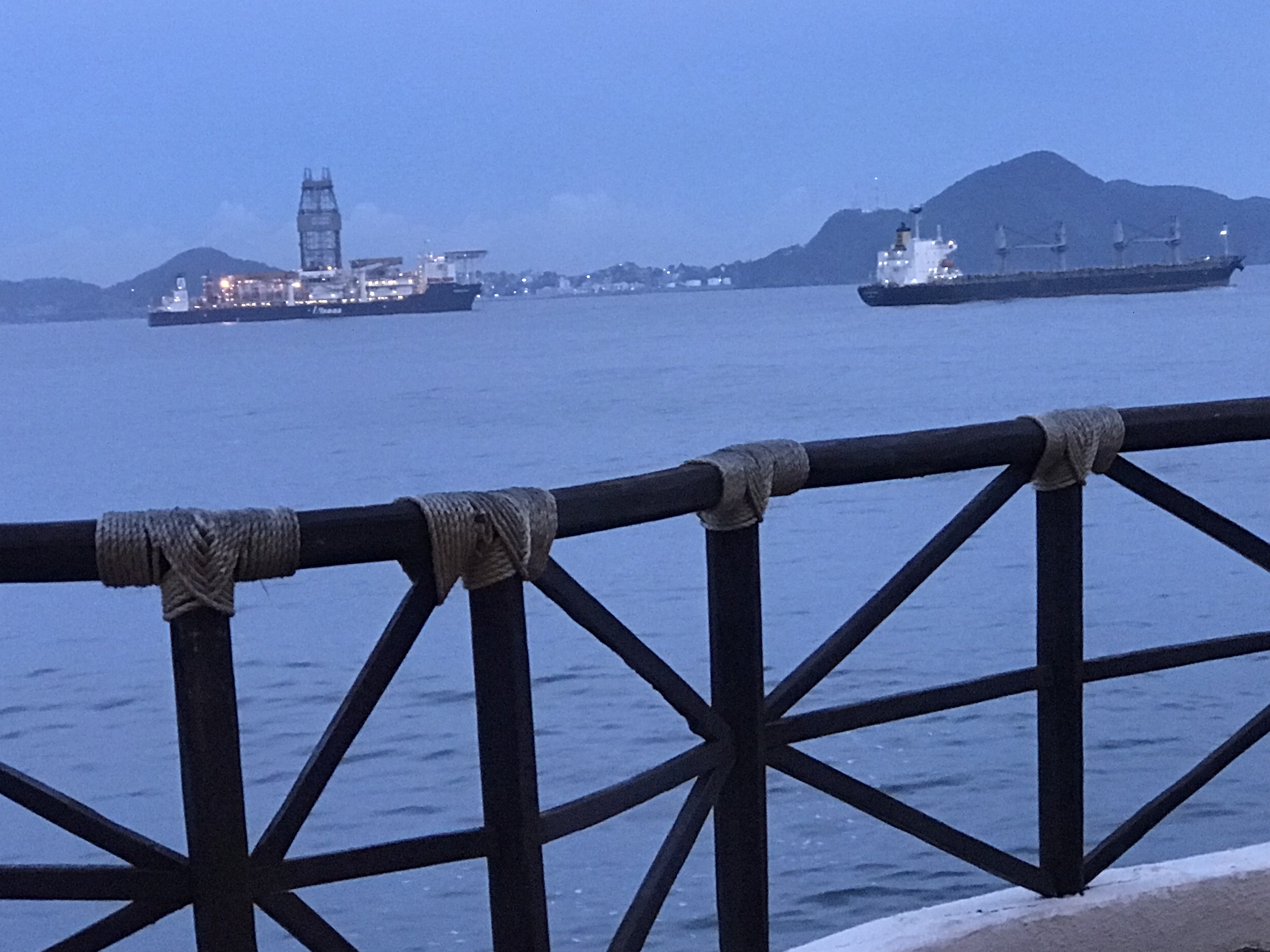
Andrew Konczvald’s reports from Manzanillo, Mexico about the presence of the Hidden Gem (pictured above), a converted deepwater drillship, have renewed BOE interest in deep sea mining, a topic that is full of political, environmental, legal, and operational intrigue:
Ocean mining has served as cover for a CIA mission! The Glomar Explorer was built by Howard Hughes to recover a Russian submarine beneath 16,500′ of water in the Pacific. Interestingly, some manganese, the material the Glomar Explorer was supposedly researching, was also recovered. (As a young engineer, I read fascinating trade journal articles about the Glomar Explorer and its mining capabilities. Little did I know that it was all a ruse!)
The US is not a party to the UN Law of the Seas (UNCLOS) Convention under which the International Seabed Authority (ISA) was established in 1994 to oversee deep sea mining. Purportedly, the US is reluctant to cede any high seas authority to the UN. Doing so might preclude escapades like the recovery of the Russian submarine 😉
Despite the need for metals to support their electrification goals, some environmental groups are staunchly opposed to deep sea mining. Their concerns range from disturbing the ocean’s natural carbon sink to impacts associated with noise and pollution from mineral recovery and transportation.
TMC contends that the environmental impacts and social costs associated with deep sea mining are far less than for onshore mining.
Meanwhile the Hidden Gem remains parked near Manzanillo. Stay tuned.






 Bud's Offshore Energy (BOE)