Feeds:
Posts
Comments

Posts Tagged ‘Chevron Doctrine’

API is challenging the Dept. of the Interior’s 5 year oil and gas leasing plan, which includes the fewest lease sales in program history. That challenge was filed on 12 February, 60 days after Secretary Haaland approved the 5 plan and the first day appeals could be filed pursuant to 43 U.S. Code § 1349.

18 weeks after the API suit was filed, the Supreme Court overturned the Chevron Doctrine. That doctrine (described above) instructed judges to defer to agency interpretations when the language in a law was unclear.

Interior’s 5 year OCS oil and gas leasing plan provides for the fewest (3) lease sales in history and may not have included a single sale were it not for legislation prohibiting the issuance of offshore wind leases unless an offshore oil and gas lease sale was held during the prior year.

This unprecedented oil and leasing decision was based on “the need to confront the climate crisis through reducing greenhouse gas emissions” and on achieving “net zero pathways.” Neither of those objectives is articulated in the OCS Lands Act or other governing legislation.

Extending the Secretary’s general safety and environmental authority for OCS operations to include global climate considerations is a stretch and the type of interpretive administrative decision that the Supreme Court struck down.
Read Full Post »

In a major decision, the Supreme Court overturned the Chevron doctrine, which for four decades led judges to defer to how federal agencies interpreted a law when its language wasn’t clear. In a later post, we will speculate on how this ruling could affect the offshore regulatory program.

About the Chevron doctrine:

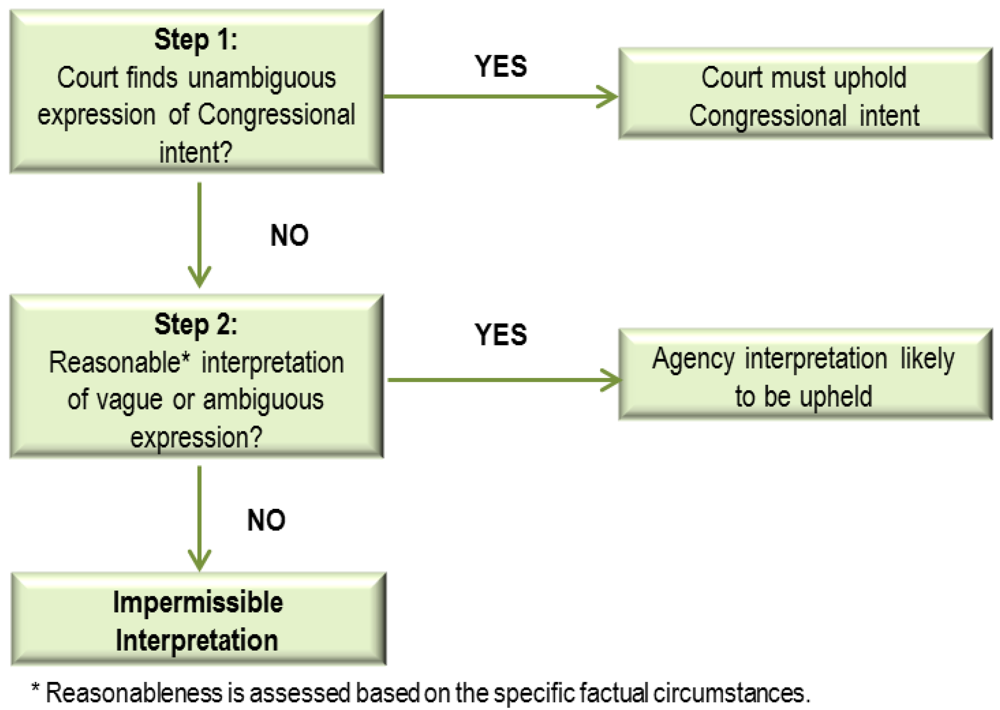
One of the most important principles in administrative law, the “Chevron deference” was coined after a landmark case, Chevron U.S.A., Inc. v. Natural Resources Defense Council, Inc., 468 U.S. 837 (1984). The Chevron deference is referring to the doctrine of judicial deference given to administrative actions. In Chevron, the Supreme Court set forth a legal test as to when the court should defer to the agency’s answer or interpretation, holding that such judicial deference is appropriate where the agency’s answer was not unreasonable, so long as Congress had not spoken directly to the precise issue at question. 

previous post on the Chevron doctrine

Read Full Post »

The Supreme Court will hear a case that could significantly scale back federal agencies’ authority, with implications for regulations affecting the US offshore program. The court could overturn a precedent known as the “Chevron doctrine” that instructs judges to defer to federal agencies when interpreting ambiguous federal laws.

Few Supreme Court doctrines have been stretched more by regulators and lower-court judges than Chevron deference, which says judges should defer to regulators’ interpretations when laws are supposedly ambiguous. The High Court agreed Monday to give Chevron a much-needed legal review.

WSJ

About the Chevron doctrine:

One of the most important principles in administrative law, the “Chevron deference” was coined after a landmark case, Chevron U.S.A., Inc. v. Natural Resources Defense Council, Inc., 468 U.S. 837 (1984). The Chevron deference is referring to the doctrine of judicial deference given to administrative actions. In Chevron, the Supreme Court set forth a legal test as to when the court should defer to the agency’s answer or interpretation, holding that such judicial deference is appropriate where the agency’s answer was not unreasonable, so long as Congress had not spoken directly to the precise issue at question. 

Cornell Law
Market Chess

Read Full Post »