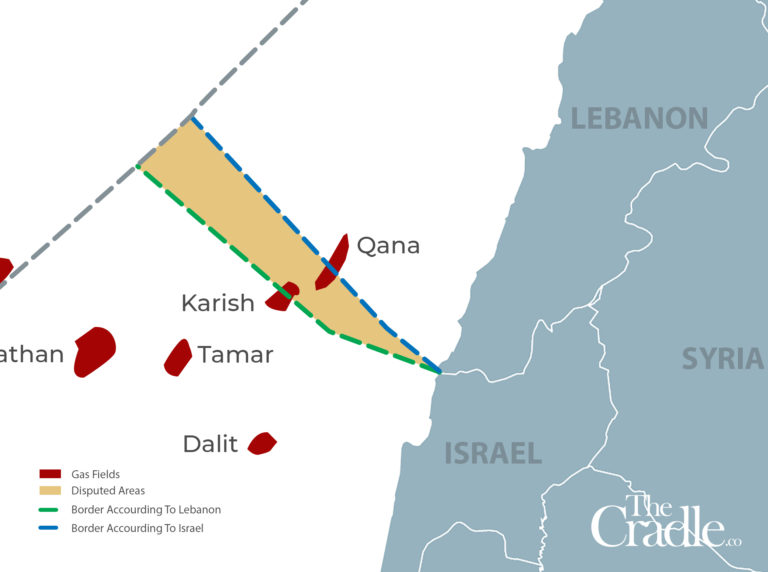
In a world where diplomacy seems to be lacking, it’s nice to learn that Israel and Lebanon have reached an agreement on their maritime boundary, and that both countries are satisfied. Based on press reports, it appears that the Qana gas field will fall under the control of Lebanon and that Israel will control the Karish field. Good for Lebanon, good for Israel, and good for energy!
Sept 22 (Reuters) – Talos Energy Inc (TALO.N) said on Thursday it will buy EnVen Energy Corp, a private producer in the deepwater U.S. Gulf of Mexico, in a $1.1 billion deal including debt.
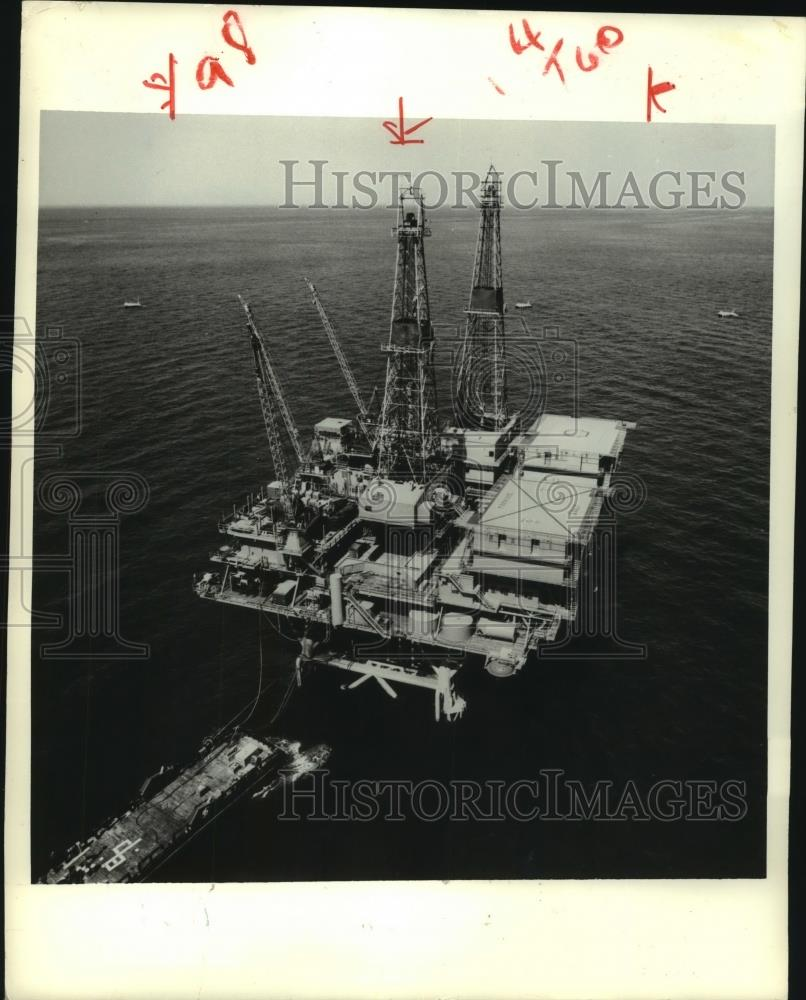
As the data below demonstrate, this is a significant merger from a regional perspective. In 2021, the combined company would have been the sixth largest GoM producer of both oil and gas. The two companies are operating 105 platforms, and their 8 deepwater (>1000′) platforms are 14% of the GoM total. Their compliance records, while not at Honor Roll levels, are better than the GoM average based on INCs/inspection. Some major decommissioning projects loom (see the second table below), and the extent to which the merged company is financially prepared for these obligations is unknown. Particularly noteworthy is the Cognac platform, which was the world’s first platform installed in >1000′ of water.
EnVen
Talos
2021 Oil (MMbbls)
9.6
17.5
GoM oil rank
13
7
2022 Gas (Bcf)
12.6
34.8
GoM gas rank
16
9
2021/2022 well starts
8
8
platforms: total
14
91
platforms >1000′
4
4
BSEE inspections
37
176
2022 INCs (W, CSI, FSI)
12/4/1
38/23/10
INCs/inspection
0.46
0.40
INC=incident of noncompliance; W=warning; CSI=component shut-in; FSI=facility shut-in
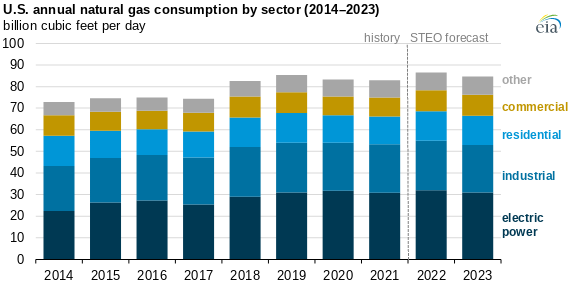
In our September Short-Term Energy Outlook (STEO), we expect natural gas consumption to increase by 3.6 billion cubic feet per day (Bcf/d) in the United States during 2022 to average 86.6 Bcf/d for the year, the most annual U.S. natural gas consumption on record. We forecast that U.S. natural gas consumption will increase in all end-use sectors this year. We expect the U.S. electric power sector to grow by 4% in 2022 to 32.1 Bcf/d, exceeding the 2020 record by 1%, which is the highest growth rate among all sectors.
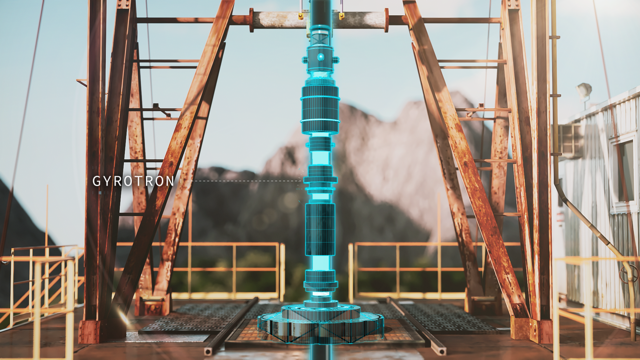
Quaise Energy’s ultradeep geothermal energy concept is most intriguing and media interest continues to build. Ultradeep geothermal has a big advantage over other renewable concepts which have much greater space and aesthetic challenges and suffer from intermittency. As is very well explained in the quote below, it’s now up to Quaise to demonstrate gyrotron drilling and the associated technology in pilot projects.
“A lot of the technology advances [needed] are coming into that proof step where you’ll have physical proof that they work. So I would say we are ready to launch, if we can just bring together the right utility, the right contract and engineering expertise, and the right site to launch the proofs to show that this can be done,” said Ken Wisian, a geothermal geophysicist and associate director of the Bureau of Economic Geology at the University of Texas, Austin. “The picture could be accelerating dramatically over the next few years. We just need the proof projects to land.”
For others who are fascinated by ultradeep geothermal energy, MIT News has posted an update on Quaise Energy. Quaise wants to use x-rays to drill ultradeep geothermal wells at old coal and gas power plants.
“The company plans to vaporize enough rock to create the world’s deepest holes and harvest geothermal energy at a scale that could satisfy human energy consumption for millions of years. They haven’t yet solved all the related engineering challenges, but Quaise’s founders have set an ambitious timeline to begin harvesting energy from a pilot well by 2026.”
Quaise will use conventional rotary drilling technology to reach basement formations before switching to high-power millimeter waves that vaporize boreholes through rock and provide access to deep geothermal heat. See our previous post on this excitingconcept.
Through her research of Pennsylvania’s Marcellus Shale play, Lee found that highly concentrated lithium was found in the produced water (water produced as a byproduct during the extraction of oil and natural gas) along with produced natural gas and oil.
“We found lithium in the petroleum-based rock brines, which opens new pathways to address the shale plays as a substantial source of lithium, given that they are ubiquitous in the U.S.,” Lee said.
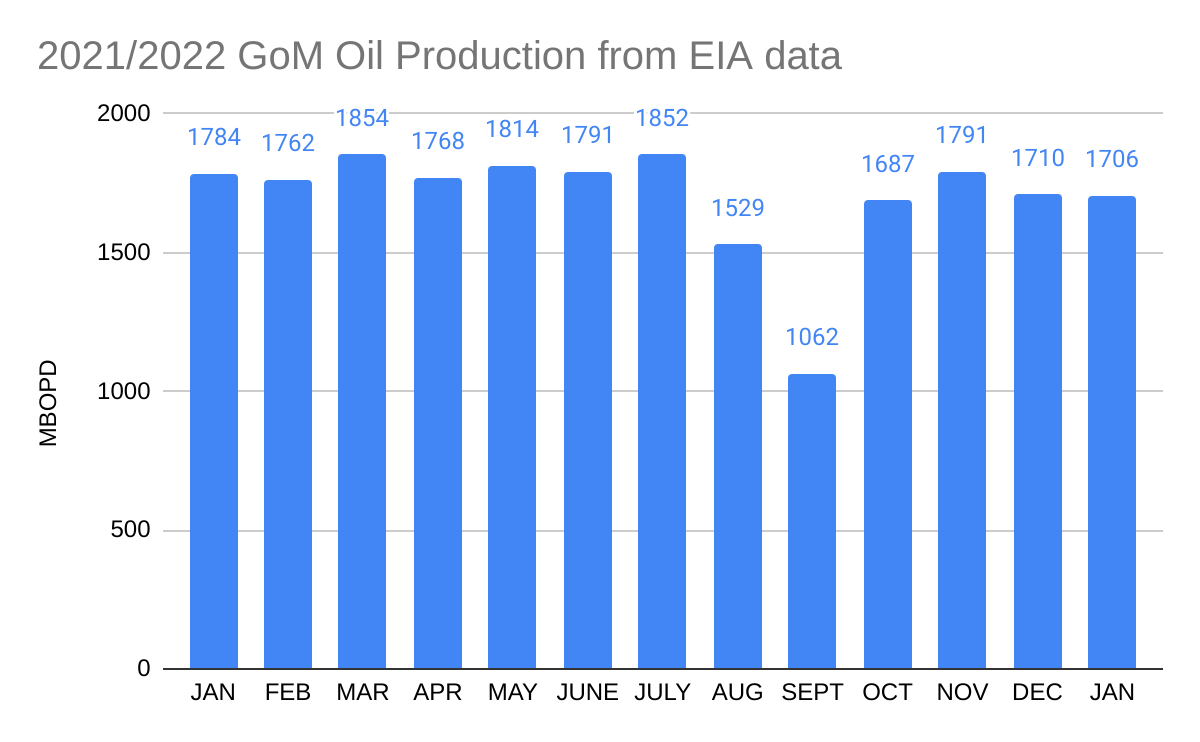
U.S. crude oil production in the forecast averages 12.0 million b/d in 2022, up 0.8 million b/d from 2021. We forecast production to increase another 0.9 million b/d in 2023 to average almost 13.0 million b/d, surpassing the previous annual average record of 12.3 million b/d set in 2019.
The short-term forecast doesn’t say how much of that production will come from the Gulf of Mexico. Last year, EIA forecast 2022 Gulf production to average 1.75 BOPD which seems about right based on the the most recent production data.



 Bud's Offshore Energy (BOE)