Feeds:
Posts
Comments

Archive for the ‘Alaska’ Category

An internal memo from the U.S. Interior Department suggesting that the agency set the highest possible royalty fee on potential oil and gas development before last year’s Cook Inlet lease sale is drawing blowback from the Democratic chair of the Senate Energy and Natural Resources Committee.

West Virginia Sen. Joe Manchin said in a statement he was “appalled” by the memo, which he said was leaked and prioritized a “radical climate agenda” over the energy needs of Alaskans and the U.S.

Anchorage Daily News

From the decision memo:

While a 16 ⅔ percent royalty may be more likely to facilitate expeditious and orderly development of OCS resources and potentially offer greater energy security to residents of the State of Alaska, a reasonable balancing of the environmental and economic factors for the American public favors the maximum 18 ¾ percent royalty for Cook Inlet leases.

Sale 258 Decision Memo

The lower royalty rate probably would not have made much difference in the outcome of this sale, which only drew one bid, but the attitude expressed in the decision memo is rather disappointing given the Department’s mission, as expressed in the OCS Lands Act, to make resources available for expeditious and orderly development.

What might have made the sale more attractive was royalty suspensions, Option D.5.b (below). This would have been the best means of supporting the objectives of Senator Manchin, the other authors of the congressional leasing mandate, and the State of Alaska.

Option D.5.b: Offer Royalty Suspensions
BOEM could offer royalty suspensions with the goal of making resources available for expeditious and orderly development. However, BOEM does not recommend royalty suspensions as the recommended lease term options are expected to balance the goals outlined earlier in this memo

Sale 258 Decision Memo

Those who are concerned by the Sale 258 Decision Memo should be more troubled by the Proposed 5 Year Leasing Plan, most notably this stunning sentence which justifies the minimalist plan and signals a phasing out of offshore oil and gas leasing:

The long-term nature of OCS oil and gas development, such that production on a lease can continue for decades makes consideration of future climate pathways relevant to the Secretary’s determinations with respect to how the OCS leasing program best meets the Nation’s energy needs.

5 Year Leasing Program, p.3

Read Full Post »
Did they write this news release with a straight face? Almost a shutout (could still be if the only bid is rejected). And they need 3 hours to process the results! 😉

That said, good for Hilcorp! They have a vision, and I hope they are successful.

As directed by the Inflation Reduction Act (IRA) of 2022, BOEM held Cook Inlet OCS Oil & Gas Lease Sale 258 on Friday, Dec. 30. 

The reading of the bids was conducted via livestream. The lease sale is now concluded. One bid was received on one block. The bid, in the amount of $63,983, was submitted by Hilcorp Alaska LLC.

Final sale results are currently being processed and will be posted to this page by 1 p.m. Alaska Time.

Following today’s sale, there will be a 90-day evaluation process to ensure the public receives fair market value before a lease is awarded, and a Department of Justice review of antitrust considerations. If a lease is awarded it will be posted to BOEM’s website when the review process is completed.

BOEM

Read Full Post »

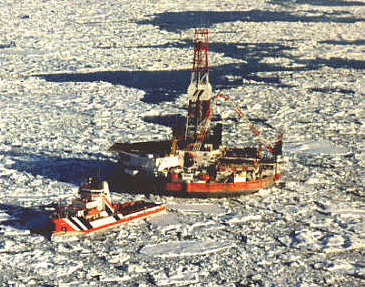
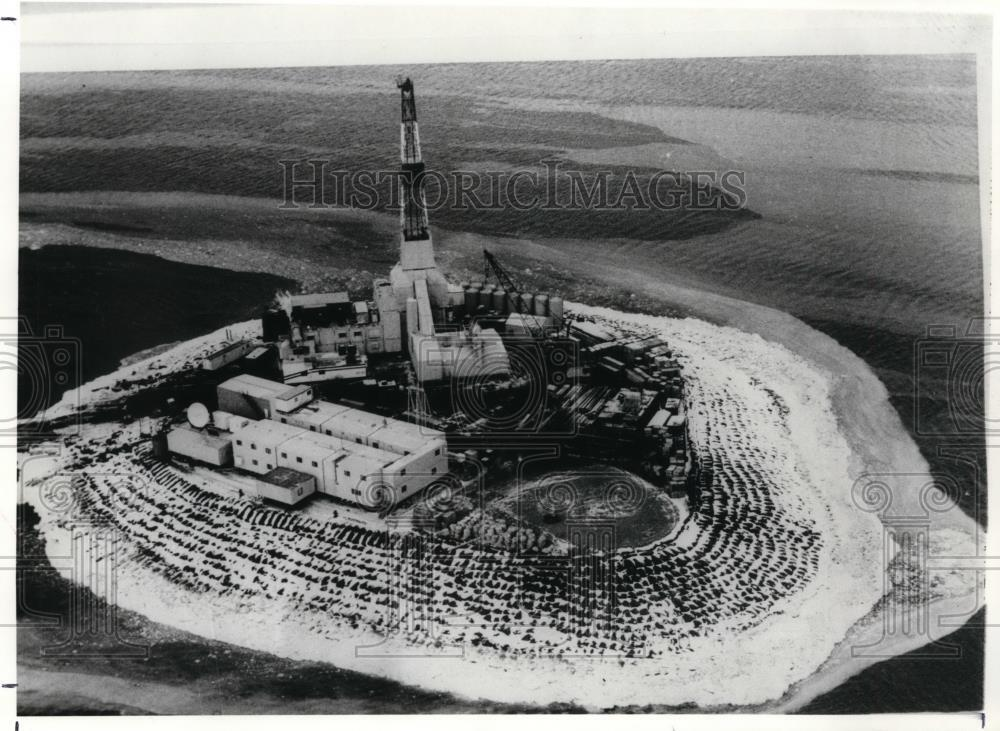
Northstar, Beaufort Sea

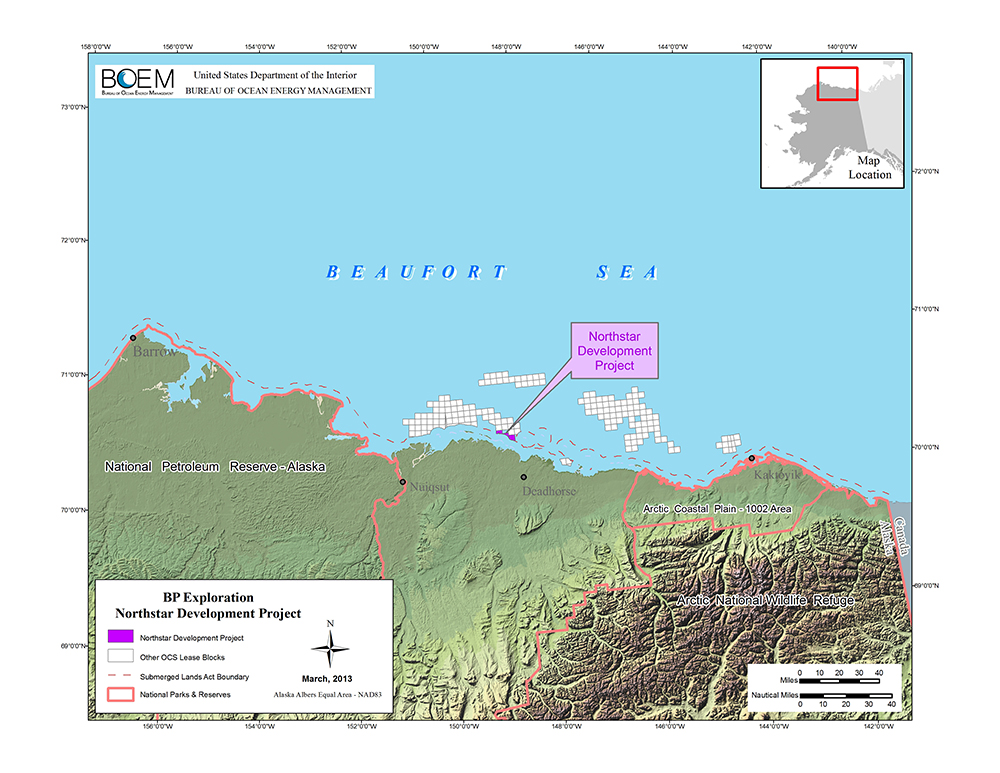
The only current Alaskan OCS production is from Northstar, a joint State-Federal Unit in the Beaufort Sea. The production island is in State waters, but 7 of the wells produce from the Federal sector. The field was originally developed by bp, but Hilcorp is the current operator. To date, BSEE has conducted 5 inspections of the facility in 2022, and no incidents of noncompliance (INCs) were identified.

Per BOEM records, 4 companies operate Pacific (California) OCS facilities that are currently producing. Three of those operators have superior 2022 inspection records. No INCs were issued to either Exxon (11 Santa Ynez Unit inspections) or Freeport-McMoRan (24 Platform Irene inspections). Only 2 warning INCs were issued during 12 inspections of Beta Operating Co. platforms Ellen, Elly, and Eureka in the Beta Unit offshore Long Beach.

Marine life on Platform Eureka, from this Hakai article

Read Full Post »

Read Full Post »

  • Secretary of the Interior Haaland committed to releasing the Proposed Program by June 30, 2022. Will that deadline be met? BOE’s guess is that the deadline will be met. However, the White House Climate Policy Office, which seems to control energy policy, may have other ideas.
  • Number of regions in which lease sales will be proposed: BOE thinks 2, the Gulf of Mexico and Alaska. There is no chance of >2. A GoM only proposed program is possible, but we doubt that Alaska will be eliminated at this early stage.
  • Number of lease sales proposed: BOE guesses a total of 7 sales, 5 in the GoM and 2 in Alaska. The “under” is probably a better bet than the “over,” unless they eschew area-wide GoM sales and propose an increased number of more targeted sales.

For comparison, the previous six 5-Year Programs have included 10-12 GoM sales (11.3 average), 1-8 Alaska sales (4.3 ave.), 0-1 Atlantic sales (0.3 ave.), and no Pacific sales.

Read Full Post »

Locked down for 561 days!

Chronology

What the law says vs. current reality

Remember this

Catch 22

Now <500 producing leases for the first time in more than 5 decades!

Read Full Post »

Alpine drill site, CP photo

In March, a gas release incident occurred while drilling a disposal well in the Alpine field on the North Slope of Alaska. While there were no injuries or environmental impacts, the investigation and findings will help minimize well construction risks during future operations. The report is attached.

Some comments:

  1. I like the way the report, related information, and all situation reports were posted in a timely manner on the Alaska Oil and Gas Conservation Commission (AOGCC) homepage. It’s refreshing that the AOGCC homepage is 100% substantive and completely devoid of the spin and propaganda you find on most government and corporate websites. (For comparison purposes, check out the Department of Energy and Department of the Interior homepages.)
  2. The ConocoPhillips (CP) incident report is concise, logically organized, and clearly written.
  3. The findings are consistent with the data, and the supporting figures are legible and understandable.
  4. Instead of blaming the crew or using the “human error” cop out for the leak-off test execution and subsequent monitoring issues, the report rightfully attributes those failures to company procedures and communications. This reflects well on CP’s understanding of the human and organizational factors that contribute to safety performance, and CP/AOGCC efforts to foster a strong safety culture. (Remember the shameful prosecution of well site leaders Bob Kaluza and Don Vidrine following the Macondo blowout.)

Read Full Post »

These bills probably aren’t going anywhere at this time, but would help strengthen the integrity of the US offshore program. The bills are generally consistent with the views expressed by Senators Manchin (D-WV) and Kelly (D-AZ) in a letter to the President.

  • The Unleashing American Energy Act requires a minimum of two oil and gas lease sales to be held annually in available federal waters in the Central and Western Gulf of Mexico Planning Area, and in the Alaska Region of the Outer Continental Shelf.
  • The Securing American Energy and Investing in Resiliency Act requires the Department of the Interior to conduct all remaining offshore oil and gas lease sales in the current leasing plan and issue leases won as a result of Lease Sale 257.
  • The Strategy to Secure Offshore Energy Act requires the publications of the 2022-27 plan for offshore oil and gas lease sales by the time the current plan expires on June 30, 2022.

Read Full Post »

While the Fieldwood Energy violations drove up the number of Incidents of Non-Compliance (INCs) in the Gulf of Mexico in 2021, most operating companies appear to have had good compliance records. Among companies that were subjected to at least 10 facility inspection and drilled at least one well, BHP Billiton, Eni US, and Murphy (listed alphabetically) had the most impressive compliance records. These three operators were cited for 7 or fewer INCs, none of which required a facility to be shut-in. Other operators that exceeded those activity thresholds and had excellent compliance records were (listed alphabetically) Anadarko, ANKOR Energy, Chevron, EnVen, Shell, and Walter Oil and Gas.

In the Pacific Region, Beta Operating Co., Chevron (now overseeing the former Signal Hill properties), and Exxon had excellent compliance records, although none of these facilities produced for the full year. In Alaska, Hillcorp had an excellent record at the Northstar Unit. (This is a gravel island facility in the State waters of the Beaufort Sea, but some of the wells produce from portions of the reservoir that are in the Federal sector).

Unfortunately, only summary inspection data are posted online. Without knowing the specific violations and circumstances, it’s not possible to fully assess the risk exposure. These oil and gas operations are conducted on public lands and are monitored by Federal employees. Inspection data and reports should be publicly accessible without having to submit Freedom of Information Act requests.

As has previously been discussed, incident updates should also be posted in a timely manner. Reference is made to this important recommendation in the 2016 National Academies report entitled Strengthening the Safety Culture of the Offshore Oil and Gas Industry:

Recommendation 4.2.2: Because accident, incident, and inspection data all are needed to identify and understand safety risks and corrective actions, the committee recommends full transparency such that regulators make all these data readily available to the public in a timely way, taking into consideration applicable confidentiality requirements.

Read Full Post »

In the early 1990’s, Department of the Interior (DOI) and Department of Energy (DOE) leadership dabbled at re-branding the OCS Oil and Gas Program by reversing the order of the words. Clever? Perhaps by Washington public relations standards. One senior manager even changed his license plate from “OCS OIL” to “MMS GAS” (not much competition for those tags 😃). Technical staff were less enthused about this simplistic marketing gimmick that misrepresented the historical and scientific facts about oil and gas production. For many years, natural gas was a byproduct of oil production that was commonly flared. (This practice continues in some regions of the world, although to a lesser extent than in the past.)

Understandably, the Oil and Gas Journal wasn’t very impressed by the change. I saved a copy of their 1/24/1994 editorial (attached) on the subject. Per the OGJ:

We at the Journal love natural gas. But that doesn’t warrant an attempt to repeal the laws of nature and ignore the weight of tradition by renaming everything “gas and oil” this and that.

John L. Kennedy, Editor, Oil and Gas Journal, 1/24/1994)

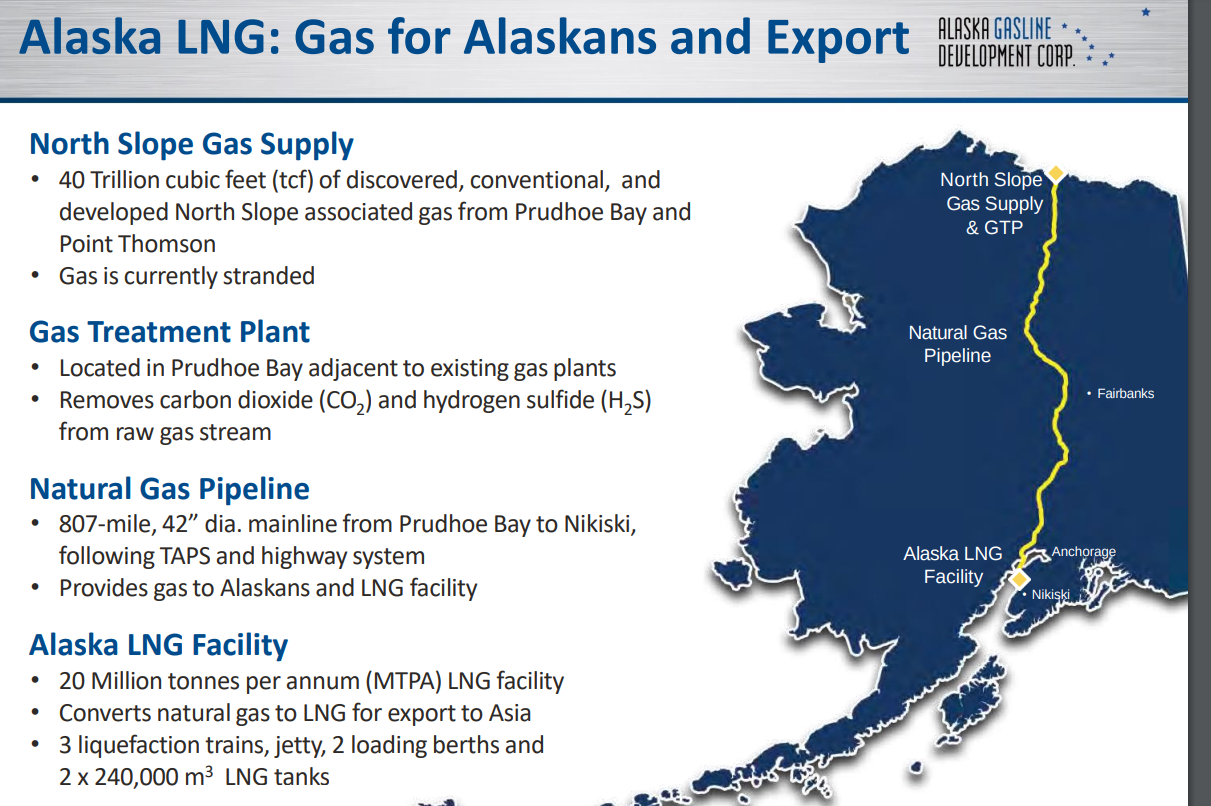
To their credit, BOEM and BSEE web pages and announcements during recent administrations (both parties) indicate a preference for the more traditional “oil and gas.” (The DOE website largely ignores the existence of either oil or natural gas.) Surprisingly, the American Petroleum Institute (API), an industry trade organization with more than 100 years of history, is now consistently using “natural gas and oil.” This rearrangement of words is not entirely consistent with the interest of API’s members. In the offshore sector, the primary interest of API members is in finding and producing oil. if you think otherwise, look at the EIA GoM gas production data. Most of the Gulf’s declining gas production is now associated with deepwater oil production, and BSEE rightfully requires that this gas be used for fuel or transported for sale. Similarly, gas is a secondary consideration for API members exploring in Alaska given that 35 trillion cu ft of North Slope gas still awaits a pipeline.

Oil companies, and those who represent them, should be proud of their current and historical role in producing oil (and gas) for our economy, security, and way of life; and of the men and women who have toiled to locate and produce petroleum resources for the benefit of society. Are there better energy alternatives? Perhaps, but issues with these alternatives remain to be resolved, and oil and gas will continue to be important. Let’s focus on producing these resources as safely, cleanly, and reliably as possible.

Read Full Post »

« Newer Posts - Older Posts »