Feeds:
Posts
Comments

Archive for March, 2023

From Hersh’s substack:

The agency did its job and, with the help of German intelligence, concocted and planted stories about an ad hoc “off the books” operation that had led to the destruction of the pipelines. The scam had two elements: a March 7 report in the New York Times citing an anonymous American official claiming that “[n]ew intelligence…suggests” that “a pro-Ukrainian group” may have been involved in the pipeline’s destruction; and a report the same day in Der Zeit, Germany’s most widely read weekly newspaper, stating that German investigative officials had tracked down a chartered luxury sailing yacht that was known to have set off on September 6 from the German port at Rostock past Bornholm island off the coast of Denmark. 

“It was a total fabrication by American intelligence that was passed along to the Germans, and aimed at discrediting your story,” I (Hersh) was told by a source within the American intelligence community.

The comments following the “SHEERPOST” re-posting of the Hersh update piece are also interesting.
Read Full Post »

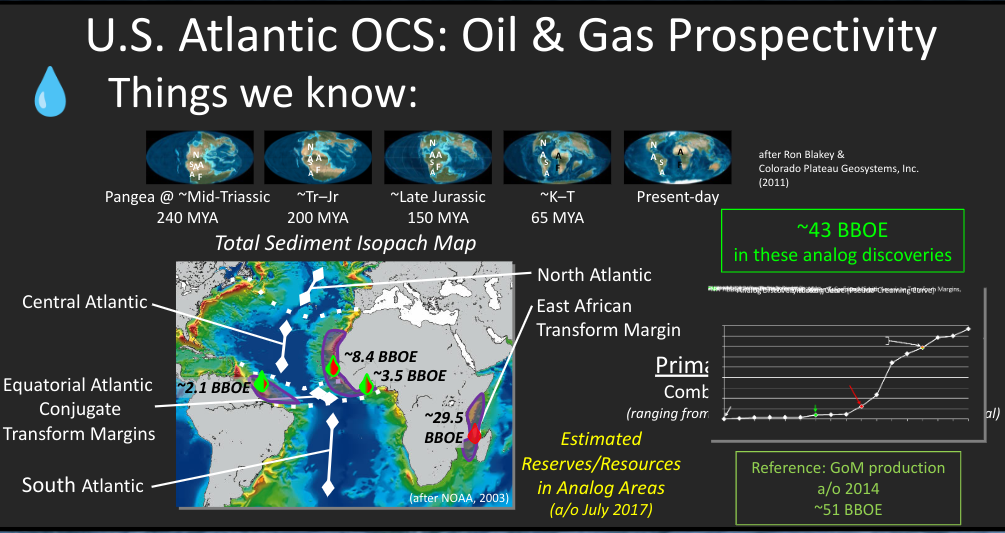
Last week, my colleague Keith Meekins attended a presentation by petroleum geologist Samuel Epstein. Like the late Paul Post, a leading expert on the petroleum geology of the Atlantic OCS, Epstein believes the US Atlantic has major resource potential. Per Epstein:

Untested ultra-deep potential hydrocarbon resources are located in the BOEM play area 8, termed the BCT Structural Belt Jurassic-Cretaceous Interior Shelf. Thus, significantly more risked recoverable reserves, due to 1) Two salt ridges penetrating Middle Jurassic age sediments identified in seismic records located to the north of the Schlee Dome, analogous to the ultra-deep salt related Norphlet Formation, offshore Gulf of Mexico and the onshore East Texas, Pearsall Field and 2) stratigraphic plays including below a 60 m thick and 7500 km square evaporitic feature in Early Jurassic rocks flanking the Schlee Dome.

Looking more broadly at Atlantic resource potential, Paul Post had estimated that the US Atlantic could contain 21.4 billion BOE with the major caveat that the presence of a working petroleum system was required and that could only be determined through drilling. Per Paul:

The US Atlantic stands out. It has not been explored in paleo deep- and  ultra-deepwater using exploration concepts proven successful in similar settings.

Paul Post slide

Also, see “Opportunity Lost

Read Full Post »

Relax; just kidding about the California part (or am I? 😉).

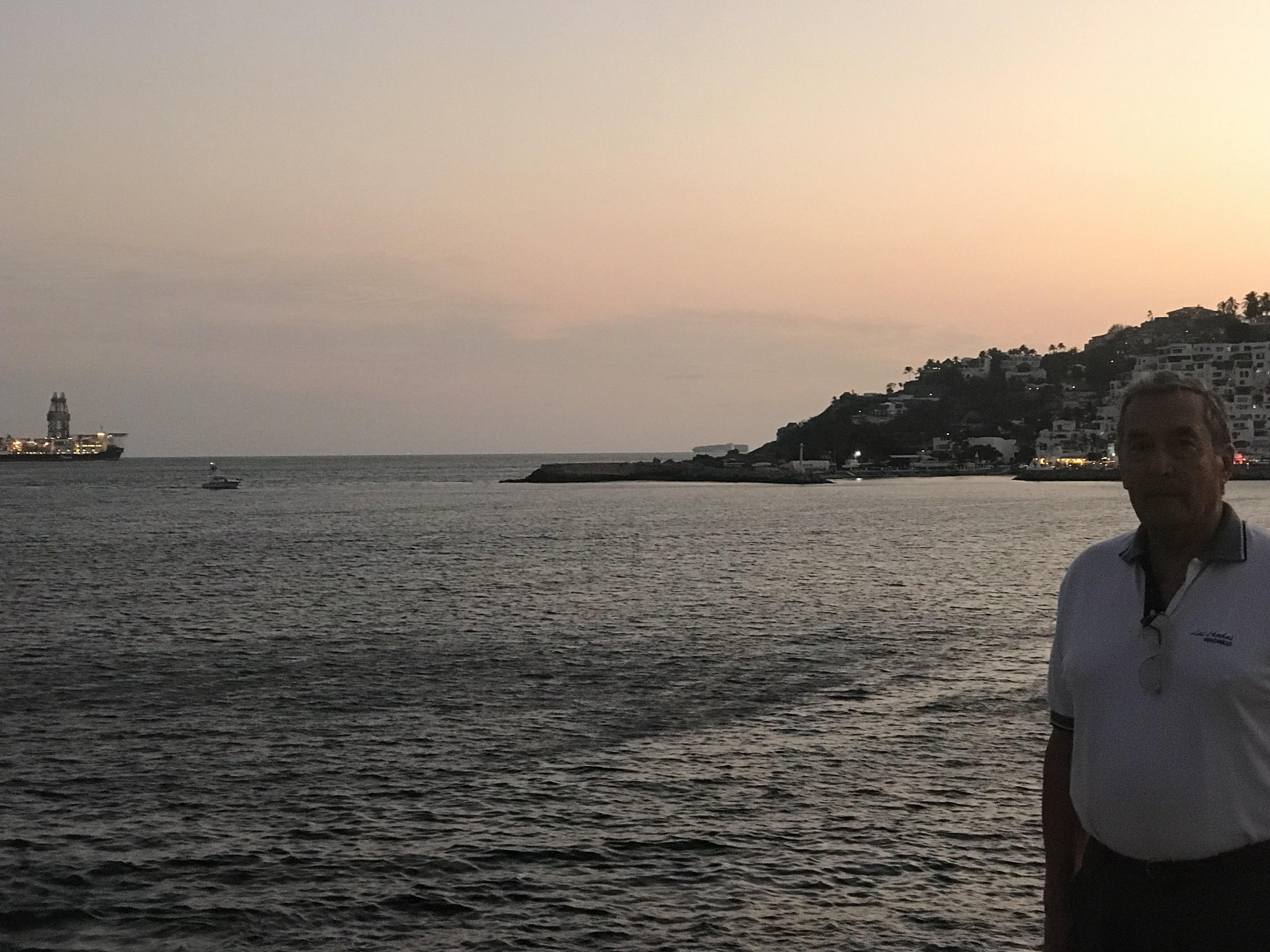
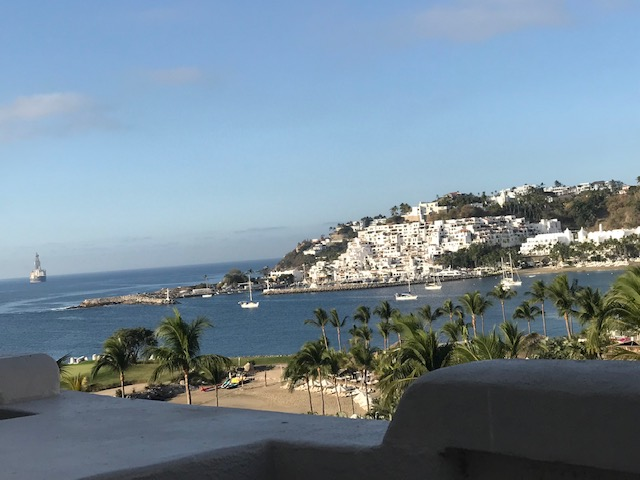
BOE’s Mexican correspondent, Andrew Konczvald, took pictures of what looks like a deepwater drillship parked near the beautiful Pacific coast resort town of Manzanillo. Upon further review, our crack investigators determined that the rig is the Hidden Gem, a deepsea mining vessel, owned by The Metals Company (TMC). Last year, TMC conducted a pilot nodule collection program in the Clarion Clipperton Zone between Hawaii and Mexico.

Read Full Post »

The terms for congressionally mandated Gulf of Mexico Sale 261 have been proposed. As is also the case for Sale 259, the royalty for leases in <200 m or water is 50% higher than for prior sales. This is partly because of the royalty floor (16 2/3%) established in the Inflation Reduction Act, and partly because the Dept. of the Interior opted for the highest royalty allowed (18 3/4%). The royalty for shelf leases is thus the same as for deepwater leases with much greater production potential.

Rental terms for leases in <200 meters of water are higher and more punitive (for delayed development) than for previous sales and for deepwater leases.

Minimum bid requirements are unchanged from sales 256 and 257, and are higher for deepwater leases ($25/acre for <400m and $100/acre for >400m).

Bottom line: While the terms for deepwater leases are unchanged from Sales 256 and 257, that is far from the case for shelf leases where royalty rates were increased by 50% and rentals were increased by 43% for all lease years.

SaleDate% royalty
(<200m)
year 1-5/6/7/8+ rentals
($/acre, <200m)
year 8+ rentals for
leases in 400m+ ($/acre)
25611/18/202012.57/14/21/2816
25711/17/202112.57/14/21/2816
2593/29/202318.7510/20/30/4022
2619/27/202318.7510/20/30/4022

Read Full Post »

The BBB or BoerBurgerBeweging (Farmer-Citizen Movement) party won 17 seats in the Senate, more than any other party.

Read Full Post »

“Golden Driller”
Golden Driller in wrestling singlet

Far from golden, but this was me 53 years ago! Lots of safety lessons, good and bad, were learned. Bud

Read Full Post »

Yesterday, Lars Herbst attended the EIA’s Annual Energy Outlook presentation. The slides are attached.

Below is a custom chart from the EIA data tables. While EIA predicts growth in renewable generating capacity, US oil and gas production are nonetheless projected to increase slightly through 2050.

Read Full Post »

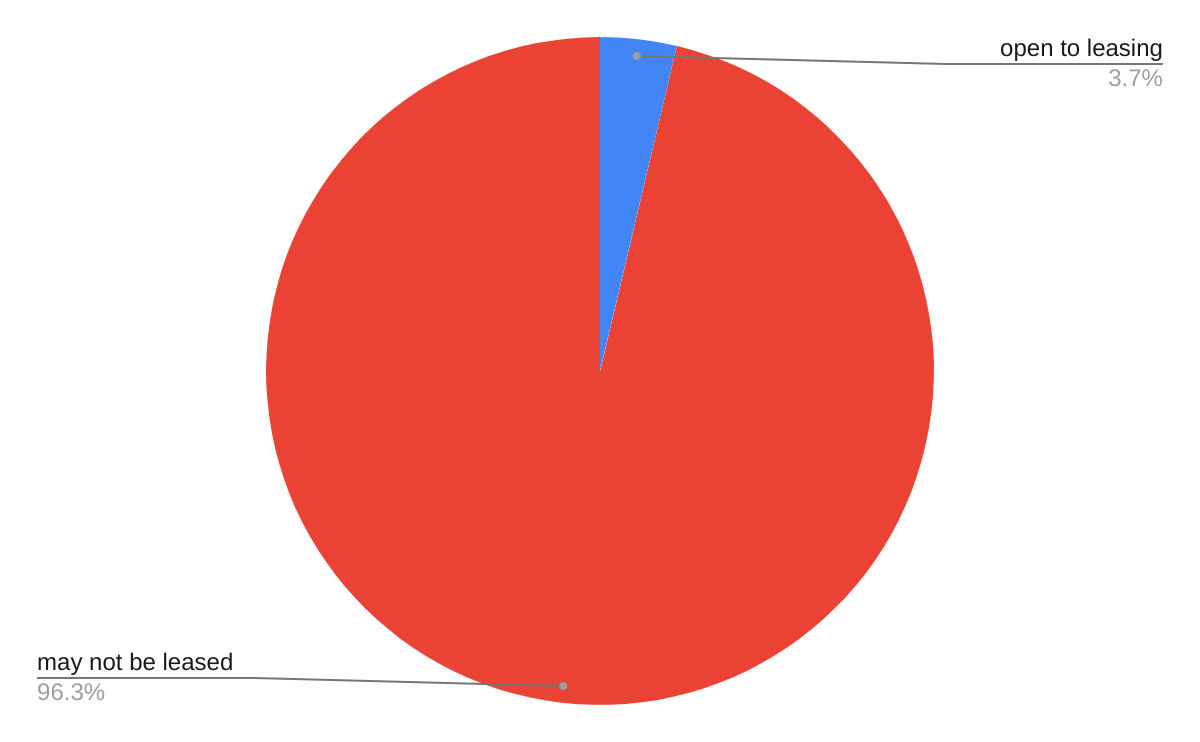
Of the 1.7 billion acres of Federal land on the US Outer Continental Shelf, only about 73 million acres in the Gulf of Mexico and 1 million acres in the Cook Inlet may be offered for oil and gas leasing. Official or de facto exclusions prohibit leasing in the entire US Atlantic, the entire US Pacific, all Alaska areas except the Cook Inlet, and most of the Eastern Gulf of Mexico. No other coastal nation has restricted access to oil and gas resources to this extent.

As demonstrated in recent sales, many of the tracts being offered have little or no production potential. Only 308 tracts (1.7 million acres) received bids in GoM Sale 257. 94 of the high bids were for sequestration purposes and were arguably invalid. Sale 258 in the Cook Inlet only received a single bid.

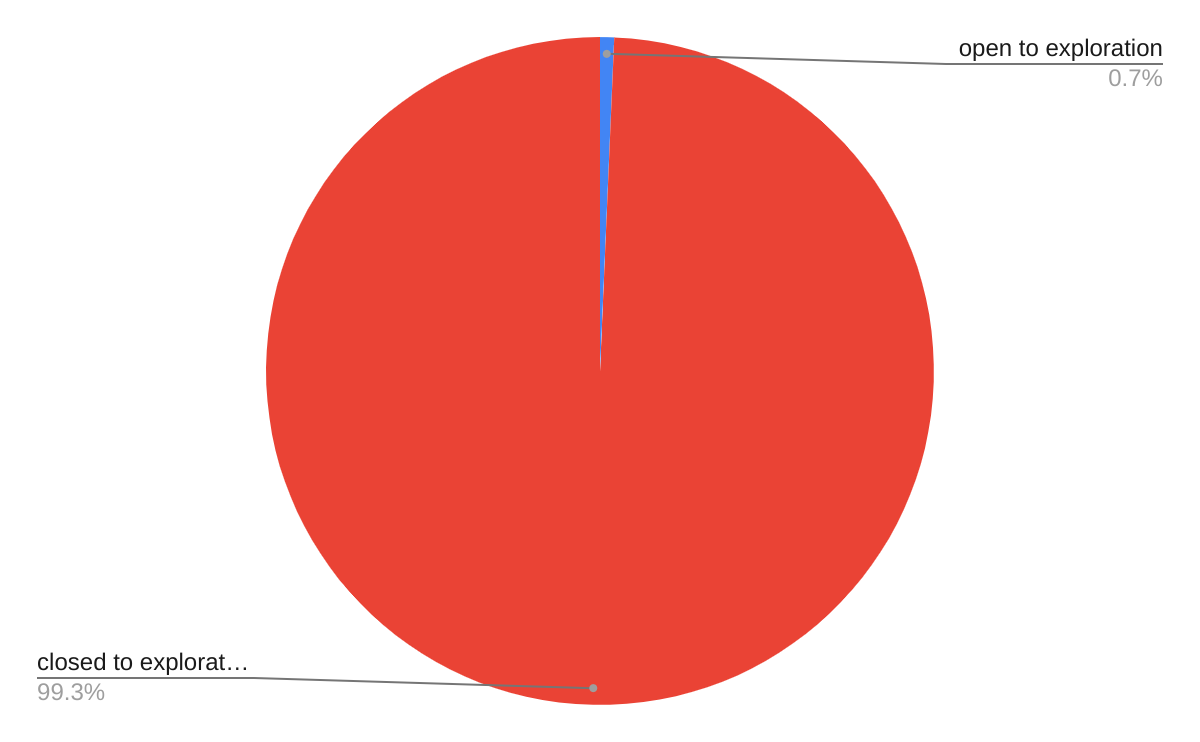
The number of active leases, currently 2153, has been at a historically low level for the past 2 years. Only 0.7% of our OCS is leased and thus open to exploration. 26% (552) of these leases are already producing, leaving a historically low number of nonproducing leases.

Oil is where you find it, not where you wish it was or want it to be. Denying access to all but a small portion of the OCS limits exploration strategies and prevents publicly owned resources from supporting our economy in the manner intended by the OCS Lands Act.

Read Full Post »

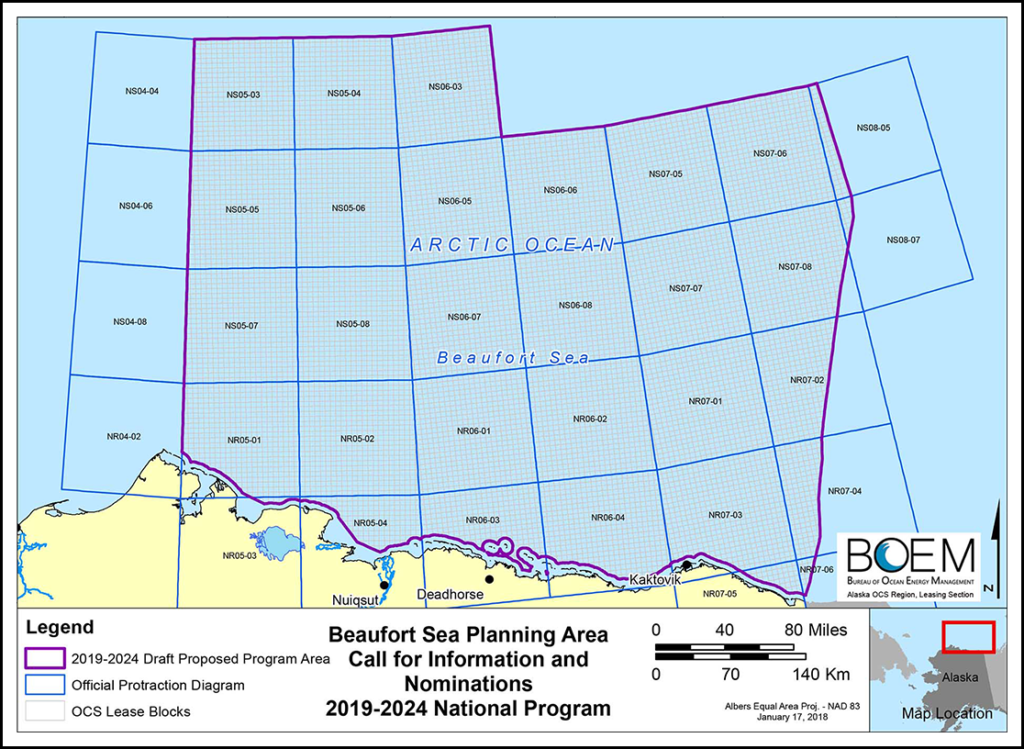
The shrinking of the OCS oil and gas program continues. In an attempt to placate opponents of the Willow project, the President has removed the entire Beaufort Sea from oil and gas leasing consideration. Unsurprisingly, the opponents of Willow are no less irate.

Under the authority granted to me in section 12(a) of the Outer Continental Shelf Lands Act, 43 U.S.C. 1341(a), I hereby withdraw from disposition by oil or gas leasing for a time period without specific expiration the areas designated by the Bureau of Ocean Energy Management as the Beaufort Planning Area of the Outer Continental Shelf that have not previously been withdrawn.  

White House directive

The 5 Hilcorp leases identified above (Northstar and Liberty projects) are all that remains of the once promising Beaufort Sea planning area.
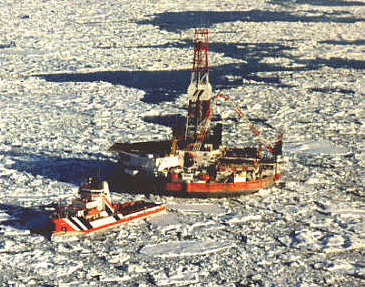
The Kulluk, pictured above, was a unique conical shaped and ice strengthened drilling vessel that operated in the US and Canadian Beaufort from 1983-1993.
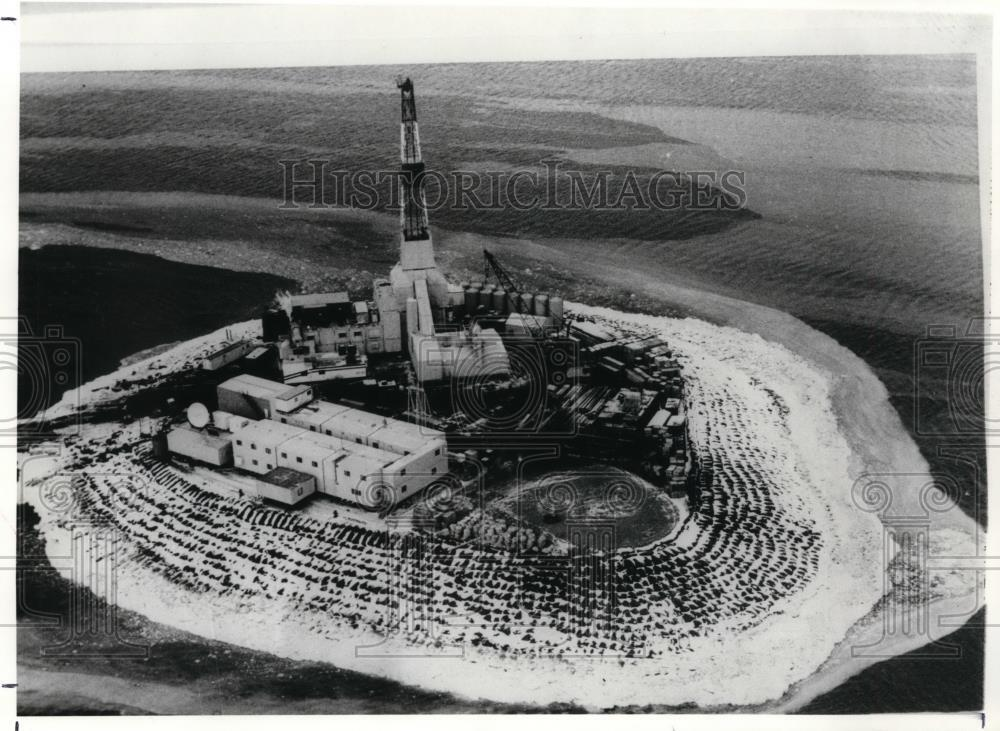
BP’s Mukluk well being drilled from an artificial island in the US Beaufort Sea in 1983. The $120 million exploratory well was the most expensive in history, but did not find commercial quantities of hydrocarbons.

Historical background

Read Full Post »

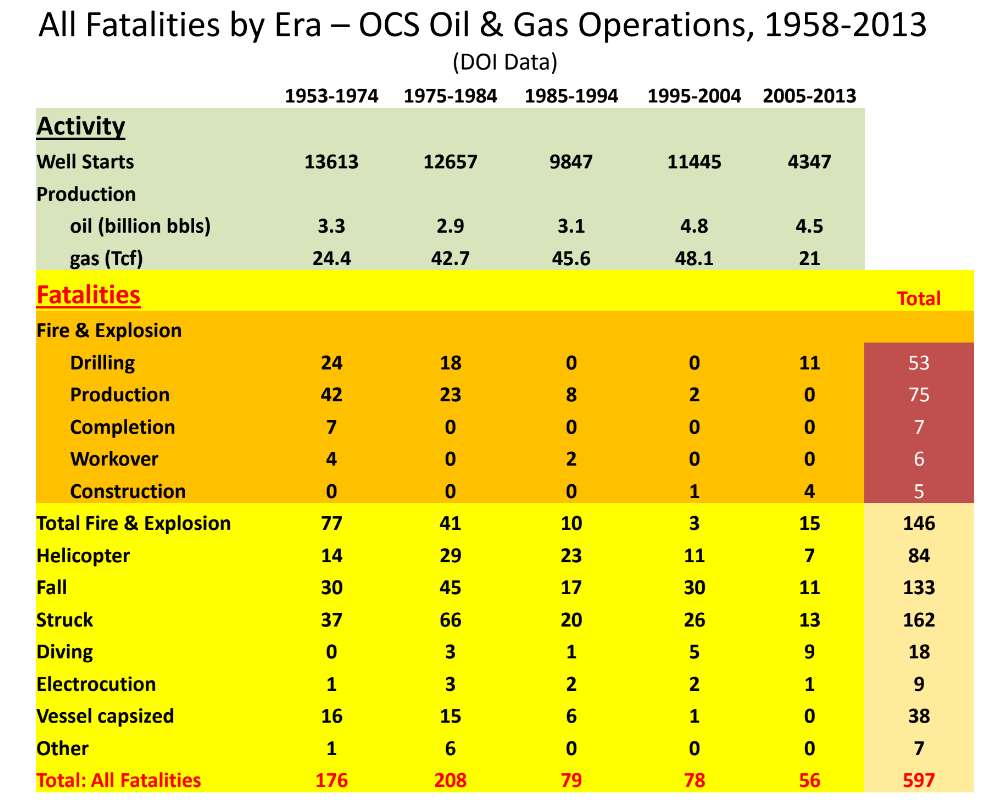
Per yesterday’s post, below are US OCS fatality data from a 2014 presentation. Ten year intervals were selected for 1975-2004. The longer 1953-1974 era was selected so the activity indicators (well starts and production) would be comparable with the next 3 intervals. The last interval (2005-2013) was limited because the presentation was prepared in 2014.

Fire/explosion fatalities exceeded fall/struck fatalities only in the first interval (1953-1974). As one would expect, the fire/explosion deaths were associated with a limited number of better known incidents (e.g. Main Pass 41, Bay Marchand, Macondo). While the overall trend is favorable, fall/struck incidents and helicopter fatalities at offshore platforms have proven to be more chronic.

I hope to update these data in the not too distant future.


Read Full Post »

« Newer Posts - Older Posts »