
Posted in Uncategorized on April 21, 2010| Leave a Comment »
Posted in accidents, well control incidents, tagged accidents, blowouts, Deepwater Horizon, drilling, offshore oil, safety, well control on April 21, 2010| Leave a Comment »
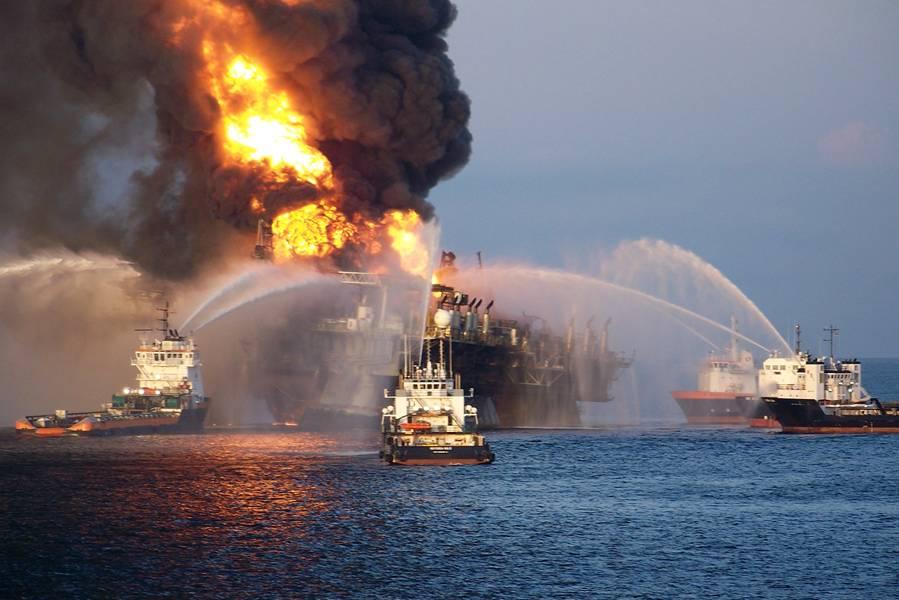
Coast Guard Photo
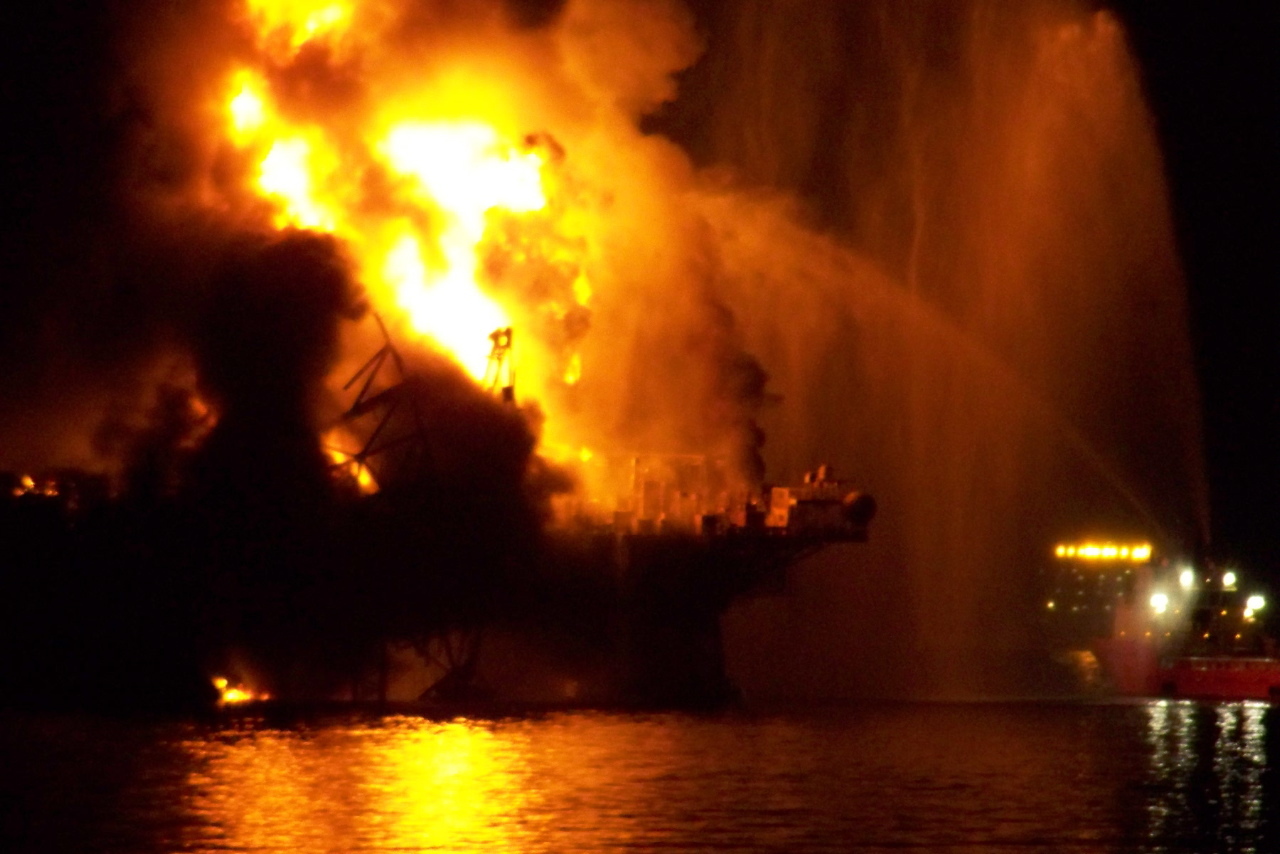
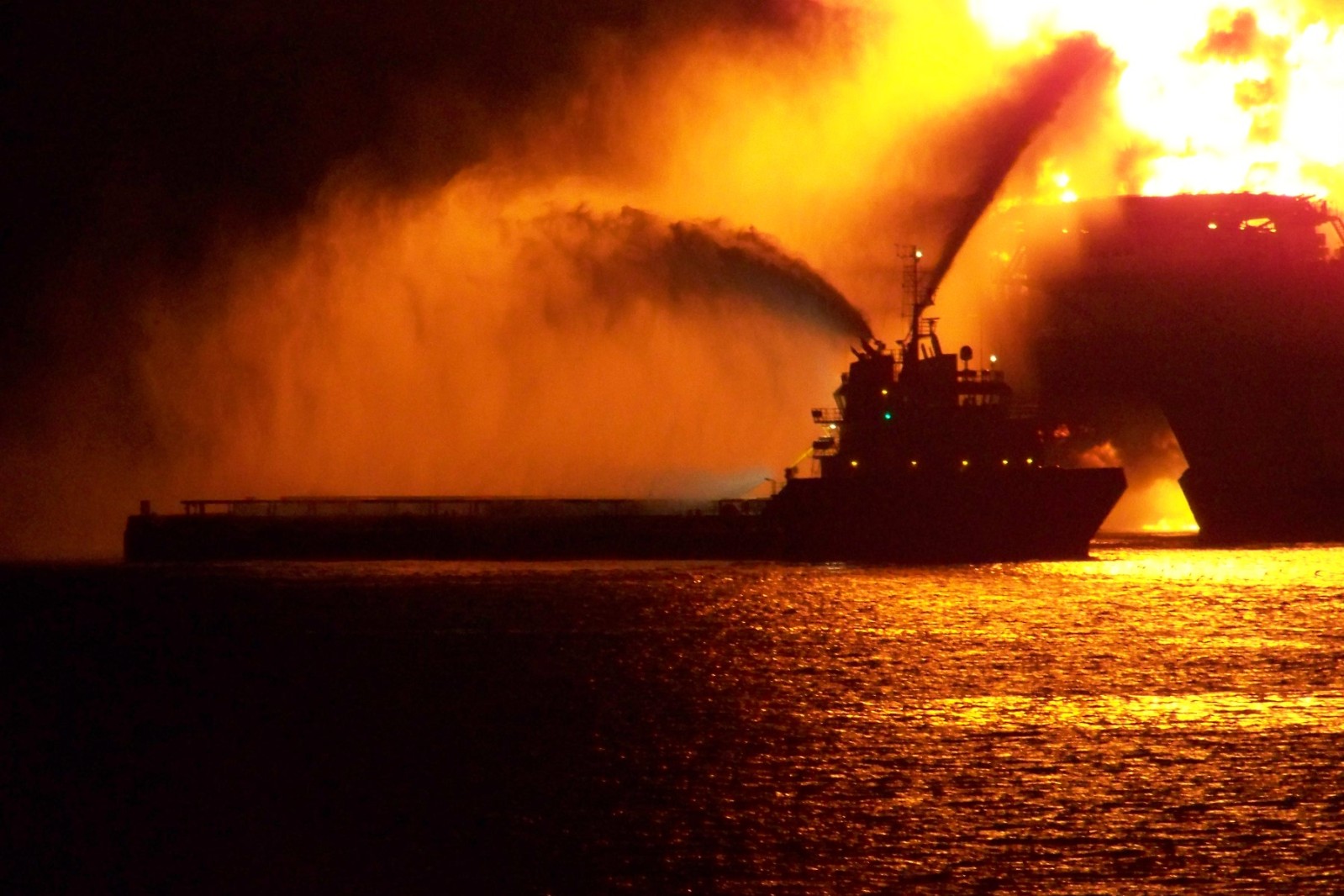
“It’s burning pretty good and there’s no estimate on when the fire will be put out.” Mike O’Berry, US Coast Guard
The Coast Guard is hoping to locate the missing in an escape capsule or life raft. link
All BP personnel are reported to be safe.
Posted in Uncategorized on April 21, 2010| Leave a Comment »
Posted in Uncategorized on April 21, 2010| Leave a Comment »
Posted in accidents, tagged accidents, Deepwater Horizon, drilling, offshore, offshore oil, safety on April 21, 2010| 1 Comment »
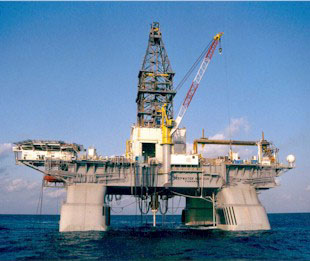
Deepwater Horizon
The Coast Guard is reporting an explosion last night on the Deepwater Horizon, a Transocean drillship working for BP in the Gulf of Mexico. The Horizon was working in Mississippi Canyon Block 253 about 52 miles off the coast of Venice.
Details are sketchy, but 126 people are reported to have been evacuated. Local news is reporting 8 critical injuries and some missing personnel.
Posted in accidents, Offshore Energy - General, Regulation, well control incidents, tagged Australia, blowouts, Magne Ognedal, Montara, offshore oil, Regulation, safety on April 20, 2010| Leave a Comment »
My experience is that you unfortunately often need a major accident or even a disaster to engender political support for streamlining regulatory regimes. Moreover, history shows that major accidents apparently must happen in your own jurisdiction to have such an effect on political support. Magne Ognedal
Magne’s astute comment repeatedly came to mind while I was reading the Montara testimony. Our political systems are good at reacting, but are not so good at making tough decisions when the spotlight is elsewhere. Crises provide the political capital needed to make major changes, but seldom yield the best solutions.
Will the Montara blowout provide the impetus needed for other countries to review and improve their offshore regulatory regimes? These Montara issues should be of concern to all of us:
I’ll stop at ten (now eleven :)).
Many of these issues will be discussed at the International Regulators’ Offshore Safety Conference in Vancouver (18-20 October). I hope you plan to attend!
Posted in accidents, well control incidents, tagged accidents, Australia, blowouts, drilling, Montara, offshore oil, safety, well control on April 16, 2010| Leave a Comment »
Like mowing a 40 acre field with a 1/4 inch lawn mower. ~ Ed Tennyson, 1989
Reading today’s transcript reminded me of my colleague Ed Tennyson’s famous comment about the response to the Valdez spill in Prince William Sound, Alaska. Ed’s comment, which appeared on the front page of the Wall Street Journal, was typically colorful and fitting. A media darling, Ed was given a time-out for that one, but rebounded nicely.
I’m not suggesting that the Montara spill and response were a mismatch of Valdez proportions. The Montara responders seemed to be competent and made reasonable decisions. However, the testimony does suggest the need for some improvements in the response regime. A few observations:
Howe (Commission): I have been absolutely struck by the technology and the accuracy of the transcript and the promptness with which it comes up
Amen to that; great job by the recorders!
Posted in accidents, well control incidents, tagged accidents, Australia, blowouts, drilling, Montara, offshore oil, safety, well control on April 15, 2010| Leave a Comment »
Q. Mr. Berger (Commission): Do you recall my putting to both Mr Marozzi and Mr Whitfield a commentary on Mr Marozzi’s evidence to the effect that it was not a good day for the Northern Territory?
A. Mr. Trier (NT DoR) Yes.
Q. Having sat through Mr Marozzi’s evidence and the other evidence that you have heard in the Inquiry, you would agree with that assessment, wouldn’t you?
A. Yes, I agree
Q. That would be fairly sobering evidence, I take it, for you to hear, given your role within the department?
A. I am not trying to be smart. That’s an understatement.
Comment: Mr. Trier and Mr. Whitfield, senior managers with the Northern Territory Department of Resources, demonstrated the approach that managers should take when their organization is partially or fully accountable for a major accident – be contrite, promise changes, and seek external guidance. The Montara blowout was a pollution spectacular that reflects poorly on all of us. While assigning blame, we should make sure that our own houses are in order and that we are doing everything we can to prevent a recurrence – anywhere in the world.
Q. Berger: You also heard evidence that Mr Marozzi considered PTT one of the less risky, or safest, operators that he was dealing with; do you remember that evidence?
A. Trier: Yes, I do.
Comment: I wonder what the other NT operators think about that statement? How would you like to be like to be ranked below PTTEP?
Other comments:
Posted in accidents, well control incidents, tagged accidents, blowouts, drilling, Montara, offshore oil, safety, well control on April 14, 2010| 2 Comments »
Sometimes I feel a little foolish spending hours each day reading Montara transcripts and commenting to my small blog audience. Then I get a call or an email message from people who are closely following this investigation and understand its significance – regulatory experts like Odd Finnestad in Norway, experienced engineers like Tom Maunder in Alaska, serious reporters like Anthea Pitt with Upstream and Kevin Spear with the Orlando Sentinel, and representatives from all sectors of the offshore industry. That’s when I realize the effort is worthwhile. Even more gratifying was Mr. Berger’s acknowledgment (beginning on page 109 of today’s transcript) of my Day 18 blog entry. I appreciate the Commission’s outstanding efforts on behalf of offshore safety, and their interest in the opinions expressed on BOE.
Q. Mr. Berger (Commission): So you say it is not your job to read the daily drilling report to determine whether things like barriers have been installed offline in a batch drilling operation?
A. Mr. Marozzi (Northern Territory Department of Resources): I’m not saying that.
Q. That’s someone else’s job, is it?
A. I’m not saying that. It is my job, but I can only do it to a level that our resources allow.
Q. These daily drilling reports are hardly War and Peace, are they? They’re typically two or three pages; that’s right, isn’t it?
A. That’s true, yes.
Comment: I couldn’t resist this entirely fitting “Not My Job” mention. If an important task is not your job, you need to either make it your job, or see to it that the operations cease until someone has been identified to do the job and do it well.
THE COMMISSIONER: All I’ve heard is that Mr Marozzi and his unit don’t have the resources to respond properly. I doubt very much if the department doesn’t have sufficient resources, should it so choose, to allocate sufficient resources to this task. It’s a matter of choice on their behalf, I would have thought, but that’s something that can be established at some stage over the next day or do.
Comment: The Commissioner has clearly been in the government long enough to know it’s all about priorities, and perhaps senses that the NT DoR’s were a bit misplaced.
Other comments:
Posted in accidents, well control incidents, tagged accidents, Australia, blowouts, drilling, Montara, offshore oil, safety, Timor Sea, well control on April 13, 2010| Leave a Comment »
Q. Berger (Commission): Even if you do have a drilling background, Mr Marozzi, I suggest that how drilling activities are undertaken is often as important, if not more so, than what is going to be undertaken?
A. Marozzi (Northern Territory Department of Resources): Not really. To the operator, yes, but not really to the regulator. It doesn’t really matter how it is done, to the regulator, in a lot of cases.
To this outside observer, it was not a good day for the Northern Territory Department of Resources. While it is premature to speculate on the Commission’s conclusions and the followup actions by the Australian government, today’s testimony has not helped the NT cause. The witness’s attitude seems to be that if it’s good enough for the operator, it’s good enough for the regulator; and it’s not a good time to be giving that impression. While, operator responsibility should be a fundamental tenet of any regulatory regime, the regulator needs to verify the effectiveness of the management and operational systems. This can be accomplished through some combination of audits, inspections, program and plan reviews, performance measures, and other means. However, the regulator cannot be passive in any type of regime – performance-based, prescriptive, or hybrid.
 Bud's Offshore Energy (BOE)