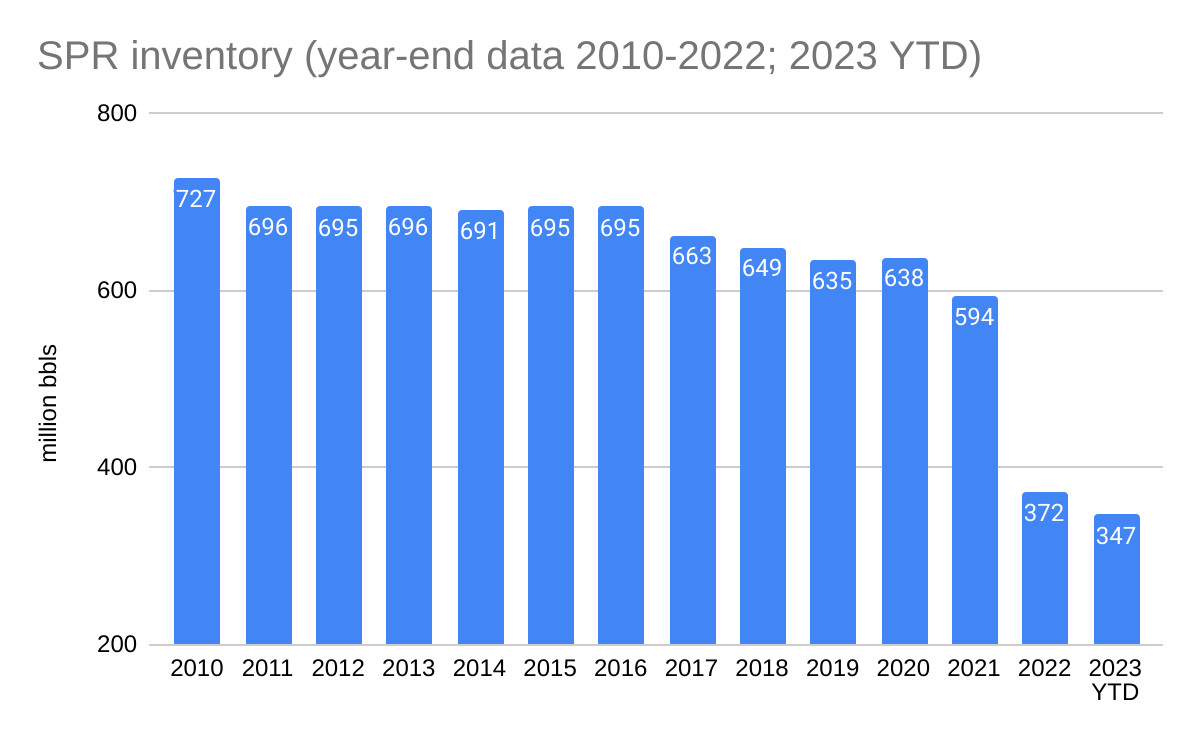
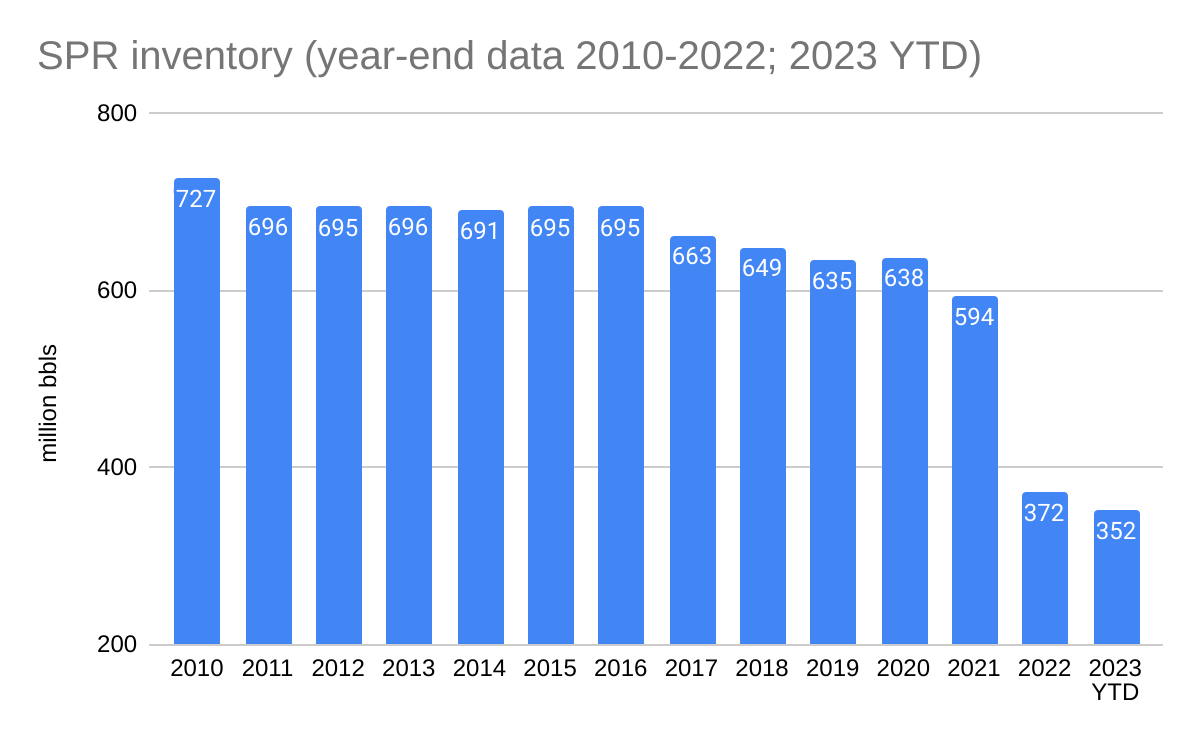
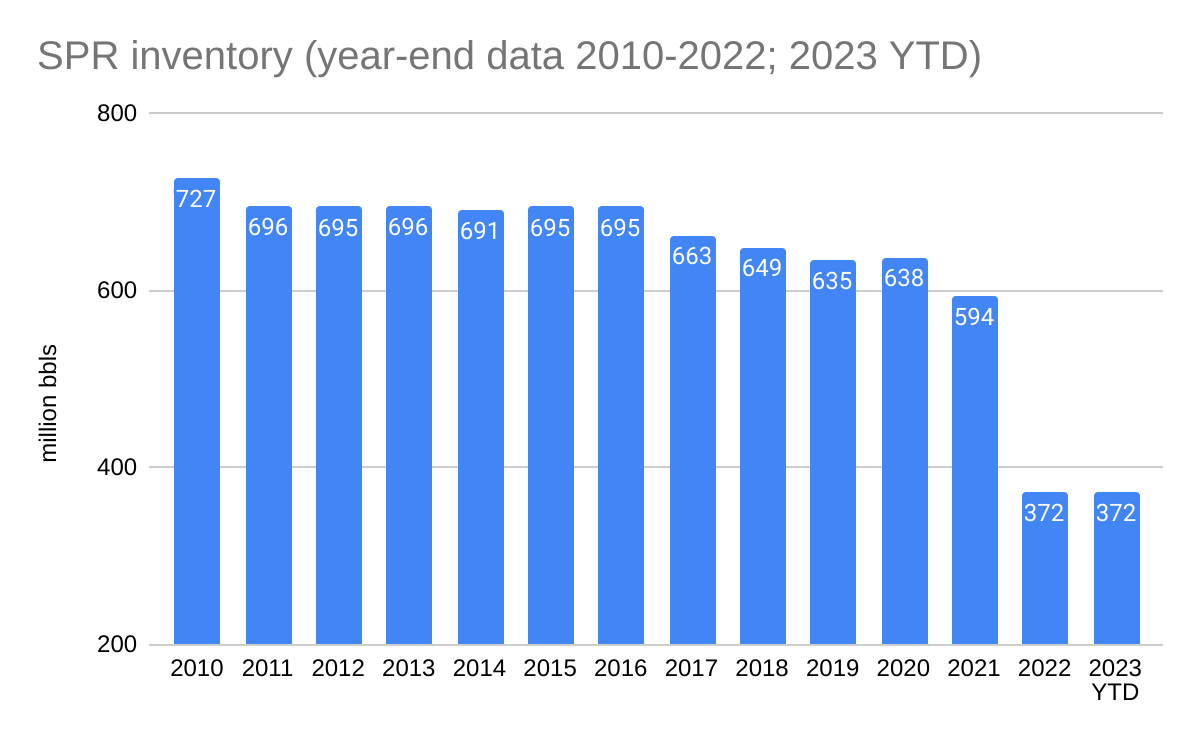
Keep in mind that DOE only intends to buy when prices are <$72/bbl, that the maximum refill rate is 685,000 bopd, and that acquisition, operational, and maintenance delays are to be expected .Filling the reserve to its 727 million barrel capacity was a 28 year process.
WASHINGTON, D.C. — Today, the U.S. Department of Energy’s (DOE) Office of Petroleum Reserves announced that contracts have been awarded for the acquisition of 3 million barrels of U.S. produced crude oil for the Strategic Petroleum Reserve (SPR). These contracts follow the Request for Proposal that was announced on May 15, 2023. Furthering the Biden-Harris Administration’s three-part replenishment plan, DOE also announced a new Notice of Solicitation to purchase approximately 3.1 million additional barrels of crude oil to the Big Hill SPR site this September.
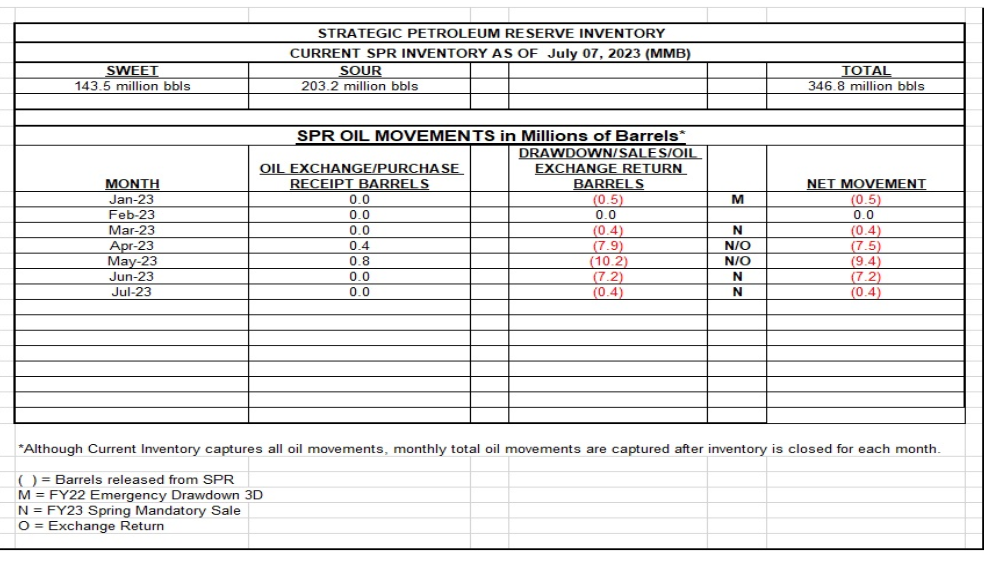
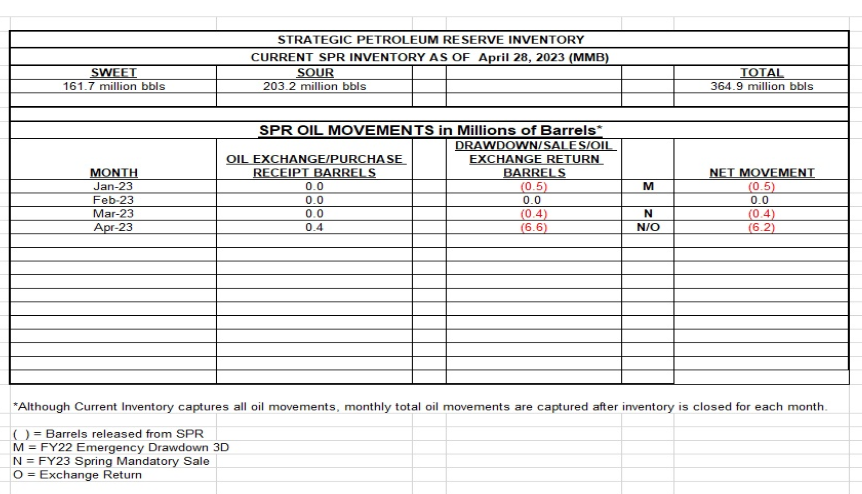
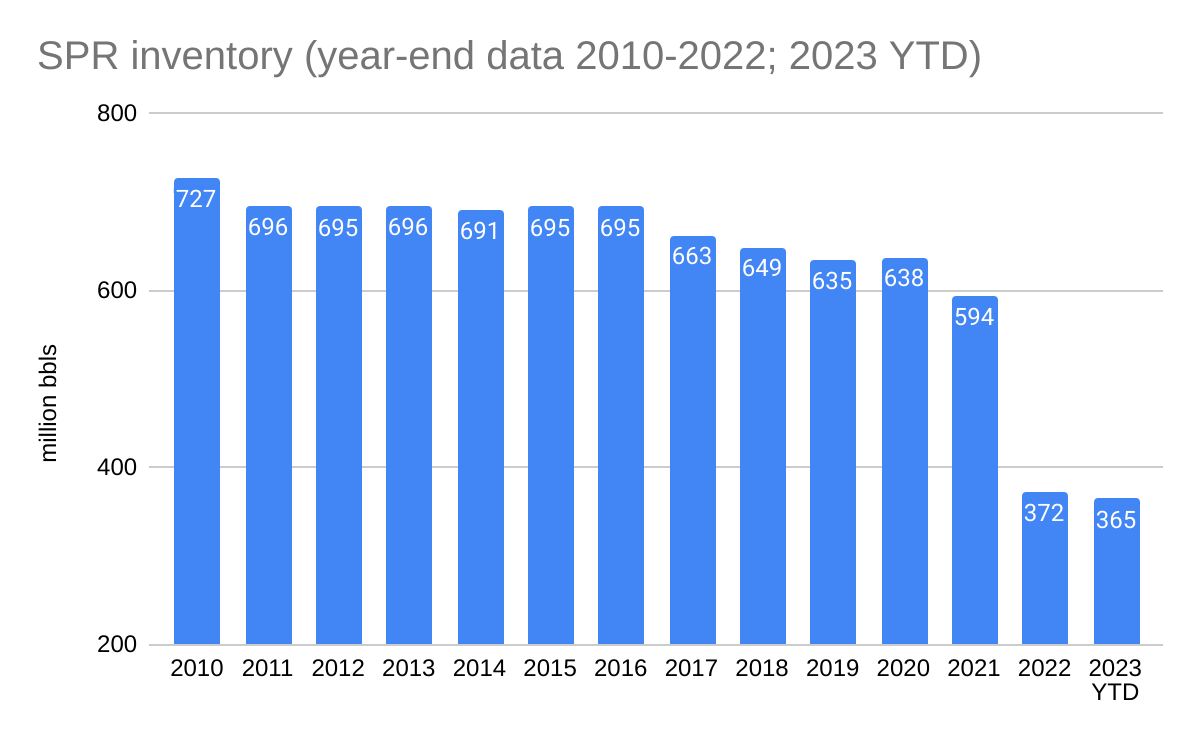
The Strategic Petroleum Reserve is now down to 351.7 million bbls, the lowest since 8/26/1983. The 6 million bbls in contracted and proposed purchases will replace only 30% of the oil withdrawn just in 2023 YTD, 2.0% of the amount withdrawn since 1/1/2021, and 1.6% of the volume needed to refill the SPR to capacity.
Given that 2024 is an election year, the prospects for substantial purchases next year would seem to be poor.
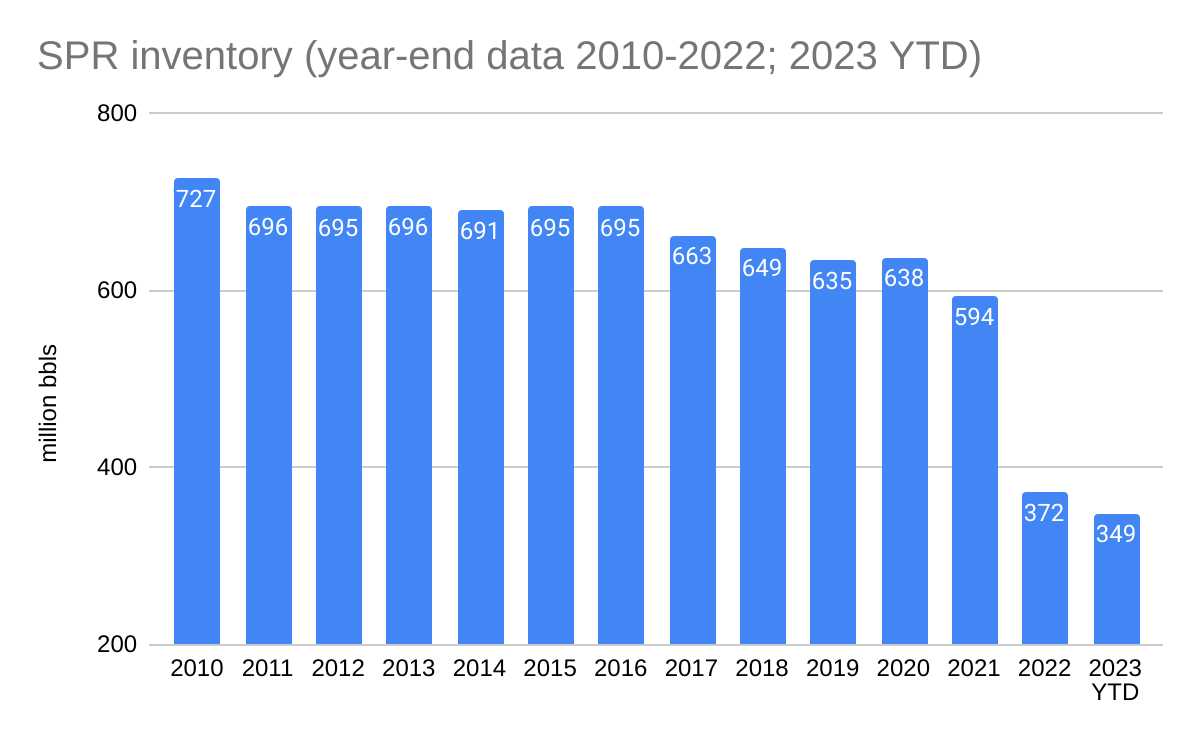
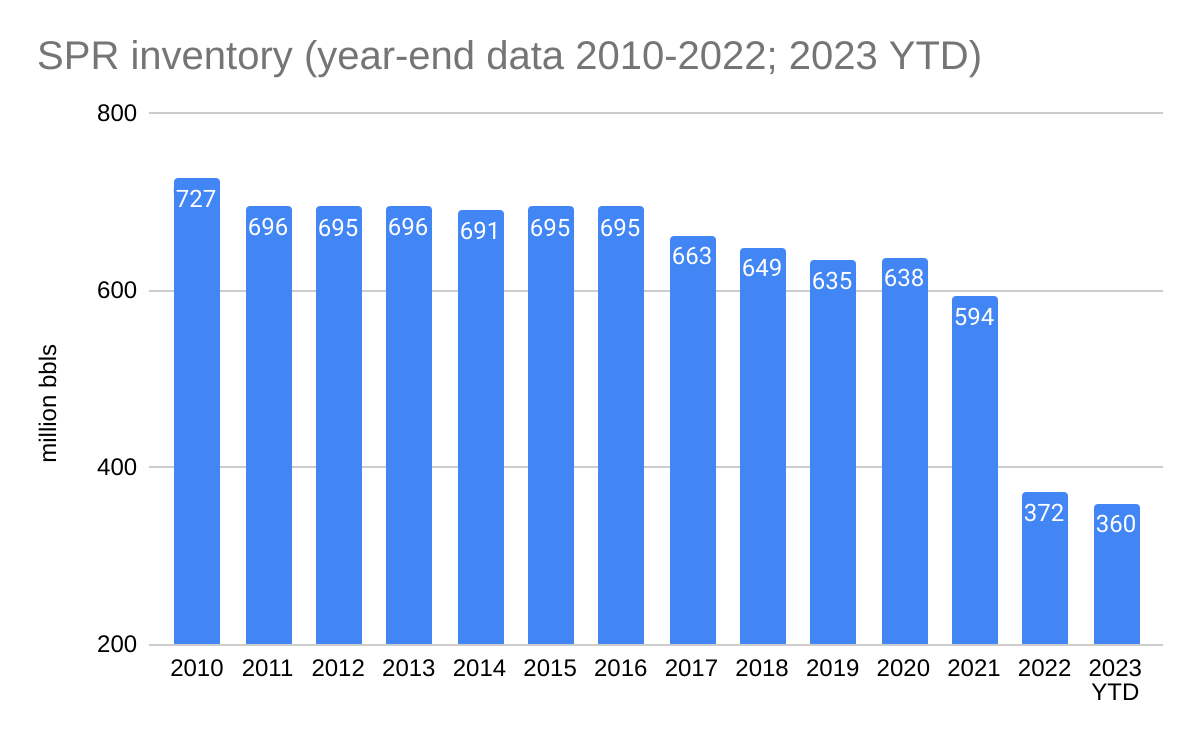
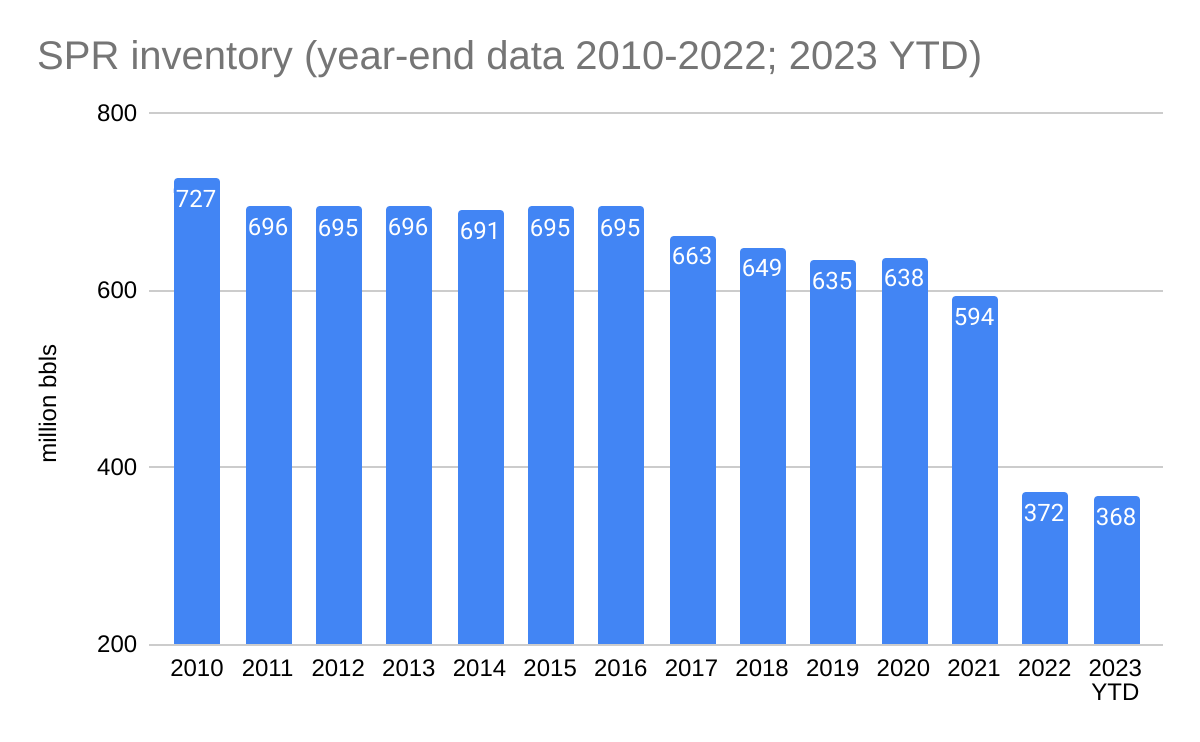
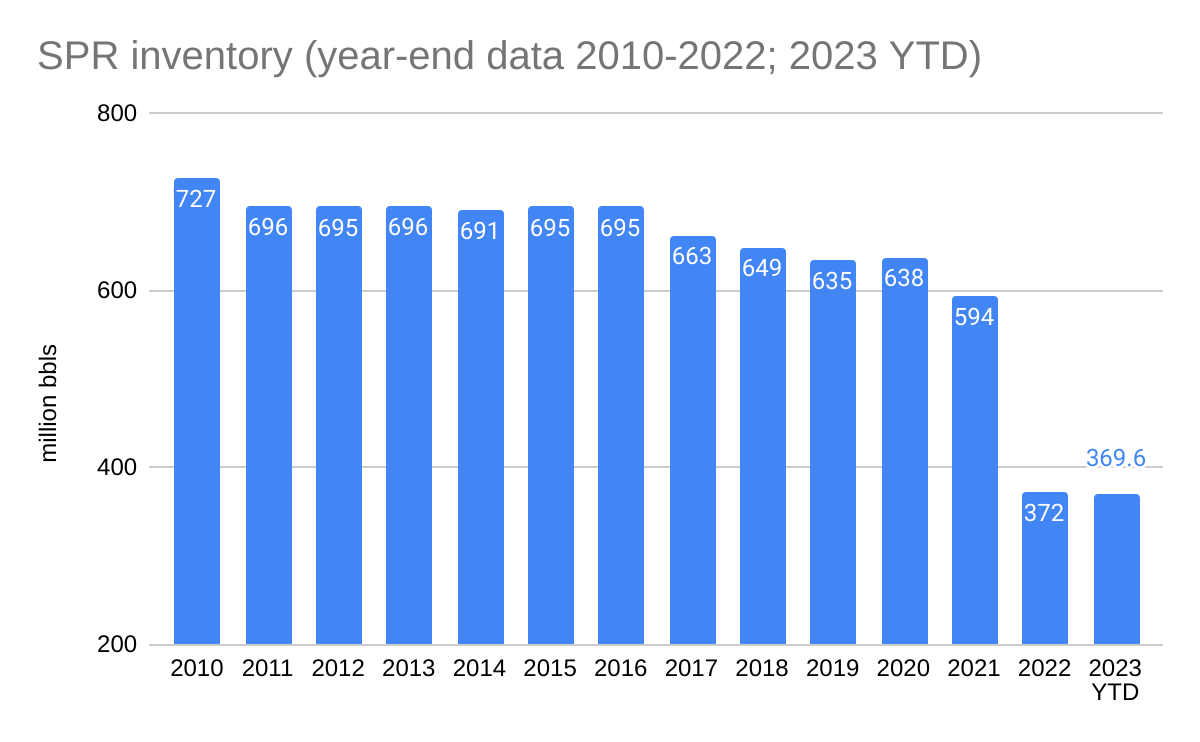
Per the latest update (5/12/2023), the Strategic Petroleum Reserve is down to 359.6 million barrels, more than 2 million bbls below the previous week. The “deficit” (i.e. the volume needed to completely refill the reserve) is now 367 million bbls, and you can’t print oil. The reserve volume is the lowest since 9/23/1983, when the SPR was still being filled.
A complete refill at the maximum rate would require 536 days.
This excludes acquisition, operational, and maintenance delays, which are likely to be significant.
Just adding 100 million barrels would require at least 146 days
Purchases of that magnitude significantly affect oil markets. Total US oil production is currently about 12 million bopd.
Filling the reserve to its 727 million barrel capacity was a 28 year process.
But fear not, DOE is soliciting the replacement of 0.1 to 1.0% of the oil that has been withdrawn from the SPR since January 2021. This amounts to only 2.5 to 25% of the oil sold from the reserve in 2023 alone (when we were supposedly refilling the reserve) and 0.04 to 0.4% of capacity!
DOE issued a solicitation May 15 for the oil, with delivery to occur Aug. 1-31, at a minimum offer quantity of 300,000 bbl and a maximum offer of 3 million bbl. Requests for earlier deliveries will be accommodated to the extent possible on a best-efforts basis.
Per Bloomberg, DOE says they could begin refilling the reserve this fall “if the price is right.” What if it isn’t?
Keep in mind that the maximum refill rate is 685,000 bopd. A complete refill at the maximum rate would thus require 533 days, not counting acquisition, operational, and maintenance delays. Filling the reserve to its 727 million barrel capacity was a 28 year process.
Lastly, when will DOE conduct the strategic SPR review called for by the General Accountability Office (GAO) in 2018, well before DOE began rashly withdrawing oil to moderate prices? DOE concurred with GAO’s priority recommendation for periodic strategic reviews of the SPR that would be submitted to Congress. DOE told GAO that they “would complete a SPR Long-Term Strategic Review by the end of fiscal year 2021–5 years from the last review in 2016.” That review has still not been completed.
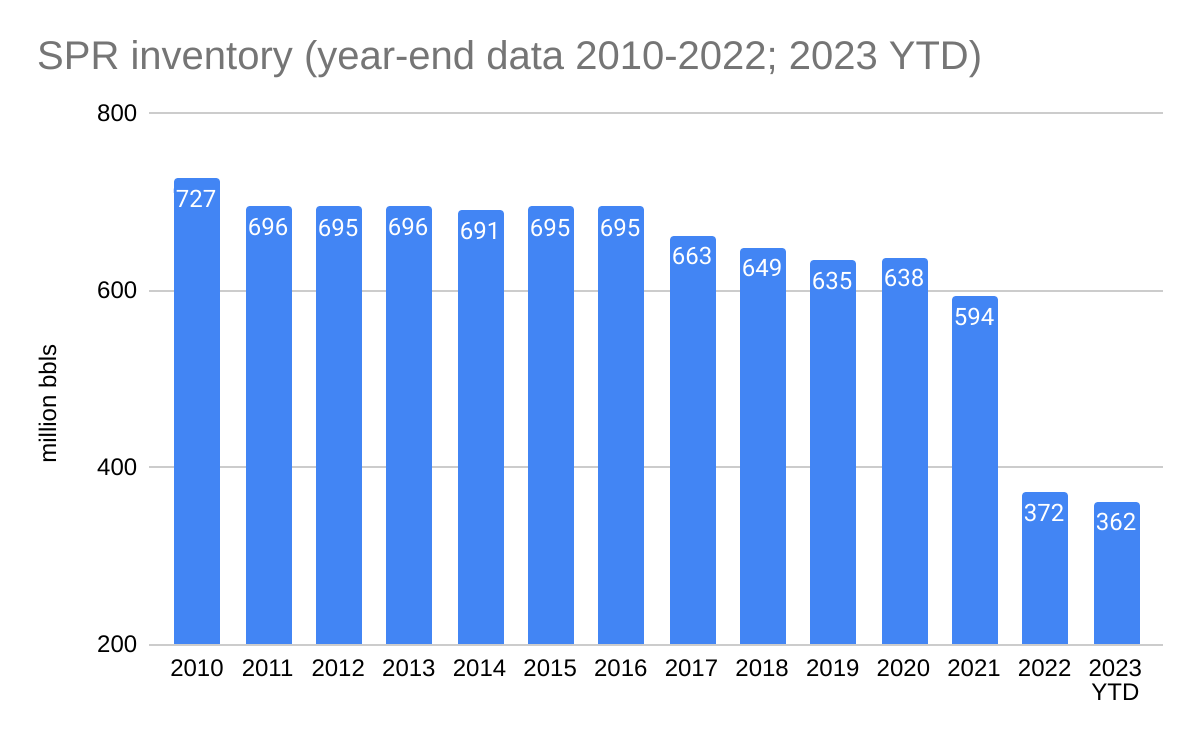
After 12 consecutive weeks at the 371.6 million barrel level, the SPR has declined another 2 million barrels to 369.6 million barrels as of 4/7/2022. The SPR is now at its lowest level since 11/11/1983 when the reserve was still being filled.
Keep in mind that the SPR deficit is now 357 million barrels, and the maximum refill rate is only 685,000 bopd. So a complete refill at the maximum rate would require 521 days plus acquisition, operational, and maintenance delays. Filling the reserve to its 727 million barrel capacity was a 28 year process.
DOE management nonetheless seems maddingly unconcerned.
That is the amount of oil the US government has “borrowed” from the Strategic Petroleum Reserve without replacing. At $80/bbl, that’s ~$28 billion worth of oil. Not refilling the SPR exposes the US to much greater costs, in terms of economic and national security risks. Those who were around during the 1970’s certainly remember the embargoes and the resulting disruptions that led to the establishment of the SPR.
This is the hole we are in as a result of non-emergency SPR sales for price moderation purposes. Meanwhile, Congress has proposed the following legislation:
The last bill is interesting, but has little chance of passing and would be difficult to implement given other legislative, judicial, and administrative constraints on leasing and production. Having a plan is one thing; implementing it is quite something else.
…especially when the market price is higher than the price the government wants to pay. Per EIA data, the “tank” has been flat-lined at half-full for the past month.
So far, the agency has not repurchased any barrels. The DOE announced earlier this month (Jan.) that it would not finalize a proposed buyback of 3 million bbl, because it did not receive offers that met its terms for price or quality.


 Bud's Offshore Energy (BOE)