Feeds:
Posts
Comments

Posts Tagged ‘operator responsibility’

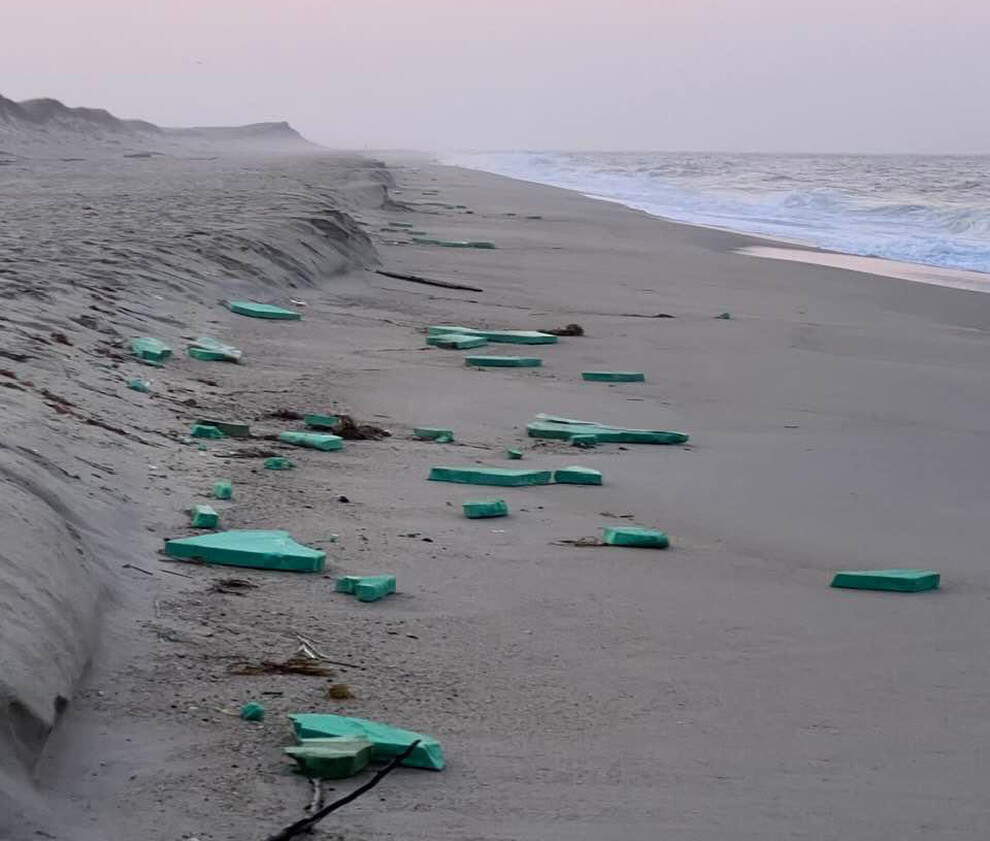
Debris from the failed Vineyard Wind blade littering the south shore of Nantucket in July 2024. Nantucket Current photo.

Nantucket reached a settlement agreement (attached) with turbine manufacturer GE Vernova (GEV), praising that company while criticizing Vineyard Wind (VW), the lessee and operator:

“The Town of Nantucket commends GE Vernova for its leadership in reaching this agreement. By contrast, the Town has found Vineyard Wind wanting in terms of its leadership, accountability, transparency, and stewardship in the aftermath of the blade failure and determined that it would not accept Vineyard Wind as a signatory to the settlement,” the town stated Friday morning.

Comments:

  • For a relatively modest sum ($10.5 million) paid by the contractor (GEV), the agreement further limits the Town’s ability to hold Vineyard Wind, the lessee and operating company, accountable. See sections 4, 5(a), and 9 of the agreement.
  • The Town’s ability to challenge the project was already compromised by their unpopular “Good Neighbor Agreement.”
  • What ever happened to operator responsibility? This fundamental tenet of the OCS oil and gas program also applies to offshore wind. Vineyard Wind should be the party that is fully accountable for the damages associated with their project. VW can seek compensation from GEV, but VW is the accountable party.
  • Can you imagine if BP had attempted to stay on the sidelines while Transocean and other contractors settled claims associated with the Macondo blowout? Unthinkable!
  • Nantucket should have insisted on VW’s participation, rather than excluding them.
  • Do we need an Offshore Wind Liability Trust Fund, ala the Oil Spill Liability Trust Fund?
  • What does the lessor, the Federal govt, have to say about damage compensation? Are civil penalties forthcoming? When will we finally see the BSEE investigation report!

Read Full Post »

Guyana’s Oil Spill Bill (attached) has much in common with the Oil Pollution Act of 1990 that we implemented for US offshore faciities and the International Convention on Oil Pollution Preparedness, Response and Co-operation that I attended in 1990. A couple of issues warrant highlighting:

Operator/licensee responsibility:The definitions correctly establish the operator or license holder as the responsible party. This means that in the event of a well blowout while drilling from a mobile drilling unit, the licensee/operator would be the responsible party. This aligns with the “operator responsibility” mantra that is fundamental to the US offshore program. Drilling and other contractors are managed by the operator and are the operator’s responsibility.

Unlimited liability: The liability section (Part VI) establishes an unlimited liability standard for the responsible party. As previously discussed in more detail, this is a daunting, open-ended obligation that would trouble permittees in any industry. The unlimited liability provision could preclude responsible independent operators, including Guyanese companies, from seeking licenses.

The unlimited liability standard (par. 17) is qualified with a provision (pasted below) that also favors major international companies.

The unlimited liability provision therefore does not seem to apply to parent companies idemnifying a project. This was a point of contention during the parliamentary debate. The Kaieteur News delves into the issue and is not entirely convinced by the Government’s defense. Their article closes as follows:

It is important to note that stakeholders have argued that since ExxonMobil Guyana Limited (the responsible party) does not have adequate assets, the burden of oil spill-related costs could be left on Guyana, especially in the absence of unlimited coverage from the parent company. These and other “flaws” have prompted Guyanese to urge President Irfaan Ali not to assent to the Bill, passed in the National Assembly on May 16, 2025. Be that as it may, the Ministry maintained that the “robust statutory framework now established protects Guyana and its people.”

Read Full Post »