Details on the Ocean Ranger disaster, 15 Feb 1982
Posts Tagged ‘Ocean Ranger’
Saturday marked the 43rd anniversary of the Ocean Ranger tragedy. Newfoundland remembers, so should we.
Posted in accidents, Canada, Offshore Energy - General, tagged 84 fatalities, Grand Banks, Hibernia, Newfoundland, Ocean Ranger, tragedy on February 18, 2025| Leave a Comment »
Should Ocean Ranger artifacts be returned to Newfoundland?
Posted in accidents, Canada, Offshore Energy - General, tagged artifacts, Charles Smith, Marine Institute, Newfoundland, Ocean Ranger on February 19, 2024| Leave a Comment »
Short answer: Yes!
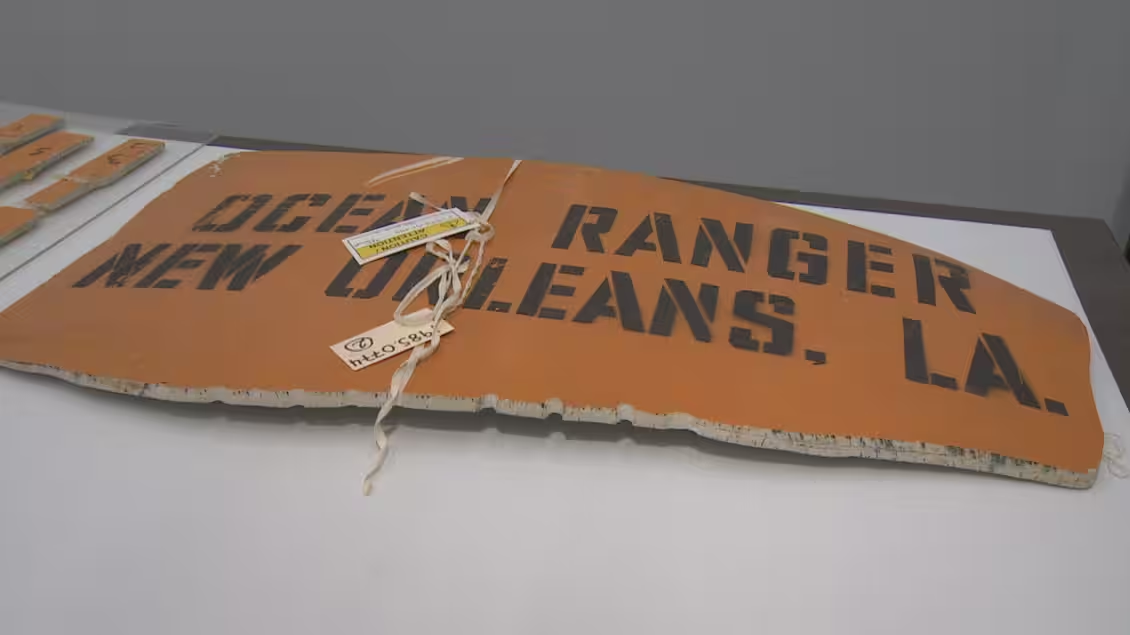
A good article and video on the topic are linked. During my last visit to St. John’s, the late Charles Smith gave me an excellent tour of the Marine Institute that is featured in the video. The Institute is an outstanding training facility that has reduced operating risks offshore Newfoundland and elsewhere.
Ocean Ranger tragedy revisited
Posted in accidents, Canada, Offshore Energy - General, tagged 41 years ago, Newfoundland, Ocean Ranger on February 15, 2023| Leave a Comment »
A more detailed look at the Ocean Ranger tragedy
Posted in accidents, Offshore Energy - General, tagged 40th anniversary, Canada, never forget, Newfoundland, Ocean Ranger, unsinkable on February 15, 2022| Leave a Comment »
40th anniversary of the Ocean Ranger tragedy – Feb 15th
Posted in accidents, Georges Bank, Offshore Energy - General, tagged 40th anniversary, Grand Banks, Newfoundland, Ocean Ranger on February 14, 2022| Leave a Comment »
This is an excellent tribute written by two brothers who lost their father in the Ocean Ranger tragedy. I highly recommend that you listen and reflect.
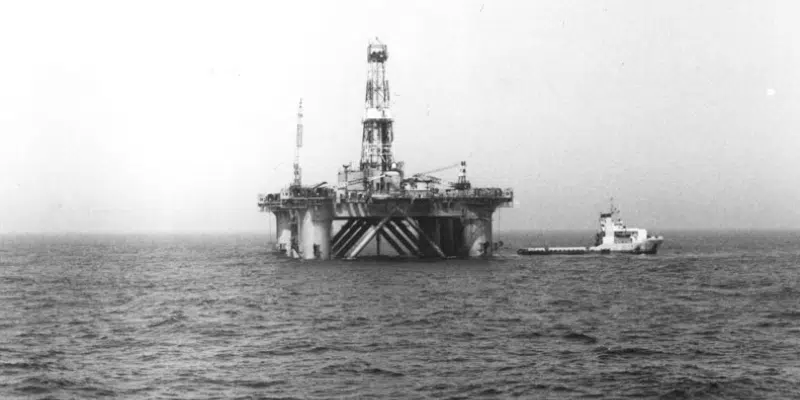
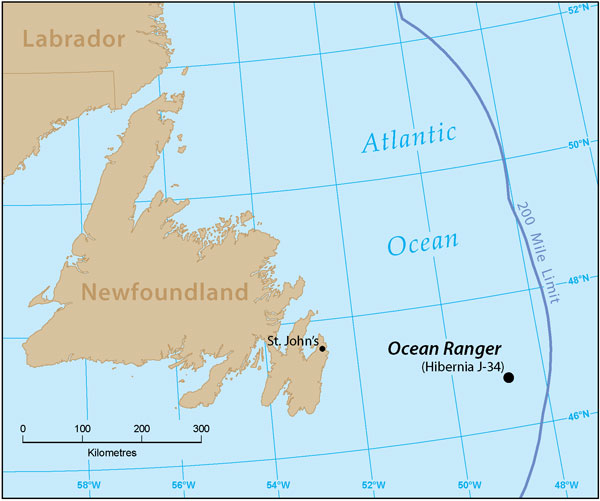
Condensed below is important background information from my notes and from an outstanding presentation by Howard Pike in St. John’s Newfoundland in 2017.
- 84 men aboard; no survivors
- Largest semisubmersible drilling rig of its day
- US registered MODU
- The “unsinkable” rig had weathered more than 50 significant storms
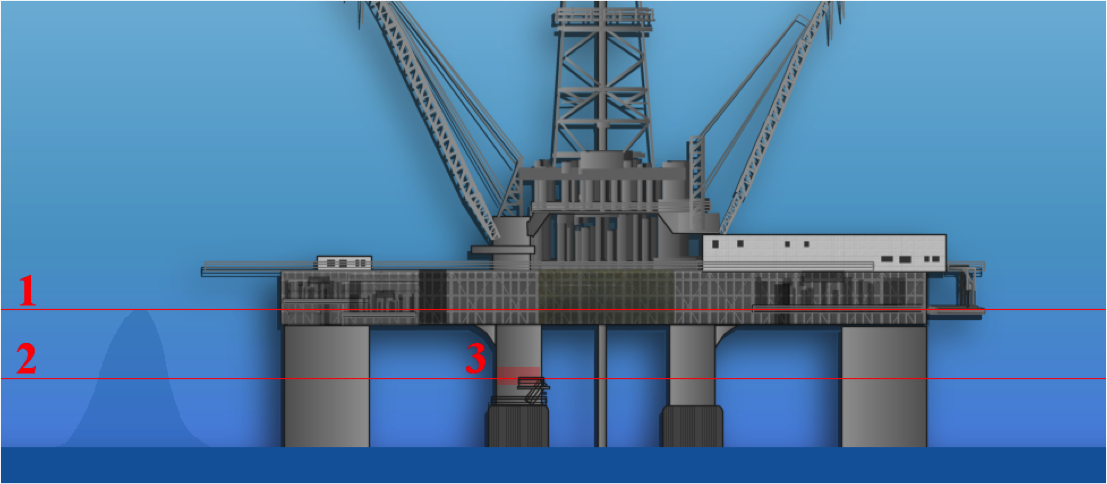
- Unlike most semisubmersibles, the ballast control room was located in one of the legs (starboard column No.3). At drilling draft, it was just 28 feet above mean sea level.
- Water depth was 240′, rig was moored with 12 anchors
- Ballast control operators had minimal training
- Incident with the ballast control system just a week before the disaster.
- On February 14th, the Ocean Ranger was battered by a severe storm; wave heights up to 21m; rogue wave damaged deck items on nearby Sedco 706
- Crew stopped drilling when the heave exceeded 15′, forced to shear the drill pipe during the disconnect process
- Crew did not deballast to the storm draft from the 80′ drilling draft
- Waves broke portlight in the ballast control room
- Salt water soaked the ballast control console
- Short circuits or inadvertent operator commands caused ballast tank valves in the bow to open.
- Water flooded the forward ballast tanks, and the rig began to list toward the bow.
- Crew inadvertently opened more pontoon valves
- Forward list passed the point of recovery
- The Ranger’s standby vessel, the Seaforth Highlander, was contacted but was delayed by sea conditions
- At approximately 1:10 a.m. on February 15 th , the Ocean Ranger began sending mayday signals.
- Zapata Ugland and Sedco 706, working in the area, sent their standby vessels
- At 1:30 a.m. the Ocean Ranger’s radio man sent his final transmission. The crew was boarding the lifeboats.
- Investigators later determined that as the lifeboats descended, violent winds threw them against the side of the rig, damaging some lifeboat hulls before they ever touched the water.
- Crew did not have survival suits
- Seaforth Highlander attempted unsuccessfully to rescue survivors from a damaged lifeboat
At the time of the Ocean Ranger tragedy, 3 rigs – the Alaskan Star, Rowan Midland, and Zapata Saratoga were working on Georges Bank in the US North Atlantic. The nor’easter had passed over Georges Bank before strengthening as it moved toward the Grand Banks. Among the small Georges Bank drilling community there was a kinship with those working in the even harsher environment on the Grand Banks. 40 years later, we are still greatly saddened by what transpired. Many lessons were learned and applied, but the ocean is unforgiving and we must continue to assess storm preparedness. Reflection on past tragedies is an important part of the process.
Ocean Ranger
Posted in accidents, tagged accidents, Canada, Newfoundland, Ocean Ranger on February 15, 2010| Leave a Comment »
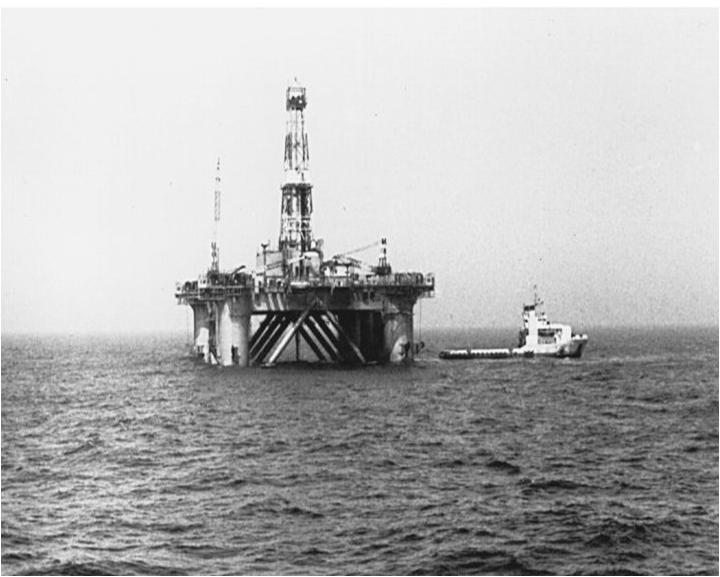
Ocean Ranger
Exactly 28 years ago (15 February 1982), the Ocean Ranger sank on the Grand Banks east of Newfoundland in one of the worst tragedies in the history of the offshore industry. Everyone associated with oil and gas operations was stung by the loss. Those of us in the USGS/MMS North Atlantic District were particularly touched by this tragic incident. We had seen what the North Atlantic can offer – “routine” 100 mph winds and 40-foot seas that tested equipment and personnel. The 84 men who died were our brothers, working in one of the world’s most challenging environments to support their families and help meet North America’s energy needs. The sinking of the Ocean Ranger and other offshore tragedies are not mere matters of chance. We must remember these incidents and work together to prevent their recurrence.
 Bud's Offshore Energy (BOE)