Feeds:
Posts
Comments

Posts Tagged ‘MPOG’

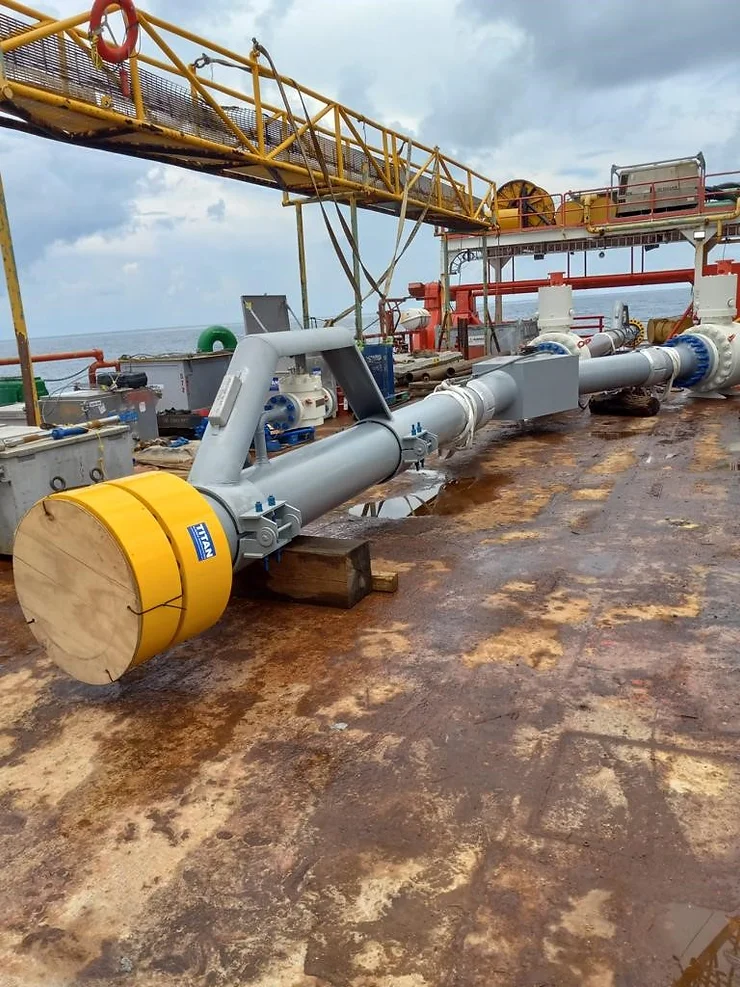
Above: Pigable Y connector for the 6.5-mile 18-inch pipeline extending from a subsea connection in MP289 to a subsea connection with MPOG in MP268 with a capacity of up to 80,000 barrels per day.

A colleague shared his research on the November 2023 Main Pass Oil Gathering (MPOG) connector leak in the Gulf of Mexico. Given the extraordinary amount of time it takes to produce accident reports these days, it may be a while before we see the NTSB report. (Keep in mind that we are still waiting for their final report on the December 2022 helicopter crash at the West Delta 106 A platform.)

The pipeline associated with the leak is BSEE Segment No. 11015, an 18” oil line permitted under Panther Operating Company, LLC . MPOG and Panther are owned by Third Coast ( MAIN PASS OIL GATHERING PROJECT COMPLETION (third-coast.com) . Information on this company website shows that a project was completed for the installation of a new segment 20793 and the new line placed in service on August 20, 2022.

The picture shown in the website for this project (pasted above) shows what looks like a subsea pigable Y connection, which means the main line had to be cut for this connector to be installed. The location of this subsea tie-in for the new segment is in MP 268 and the approximate distance from the Mississippi River delta is 44 miles.

As for other subsea connections, the nearest to shore is in MP 144 about 27 miles from the delta. The report on the leak says that it occurred 19 miles from delta, so not sure if there are any connectors. This distance from the delta would be in the vicinity of MP 72 and mapping information shows no connections in this area, only pipeline crossings. See attached map for PSN 11015.

Read Full Post »

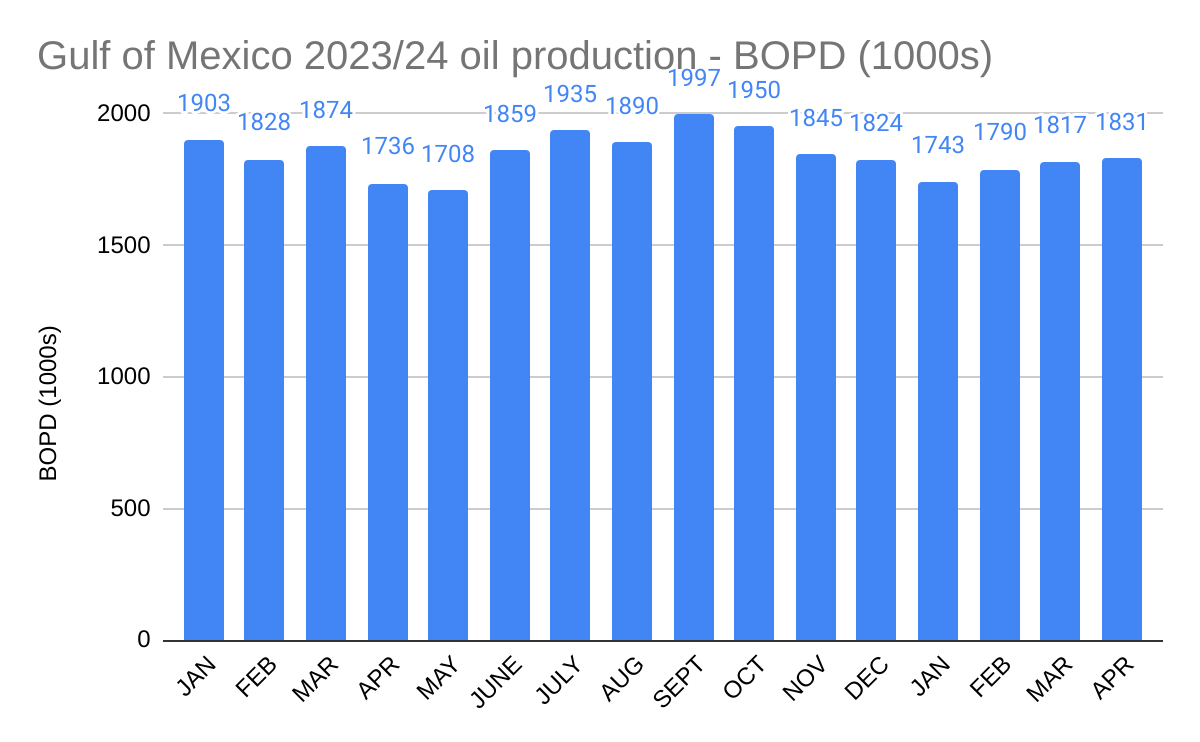
EIA has released the April oil production data. The Federal waters of the Gulf of Mexico produced 1.831 million BOPD in April, which is essentially level with corrected March production (1.817 million).

GoM production fell more than 12% from nearly 2 million BOPD in September 2023 to 1.743 million BOPD in January 2024 before climbing back to 1.8 million BOPD over the past 3 months (see chart below). What’s up?

Read Full Post »

To what extent was the Main Pass Oil Gathering (MPOG) system shut-in responsible for the Nov. to Feb. production decline (chart below)? The MPOG wasn’t cleared for production until earlier this month, so we may not know until the investigation report is published and the EIA posts April 2024 production data (2 month lag).

The NTSB is leading the investigation on the MPOG spill. This short summary is all they have posted so far, but we should see a preliminary report soon. The NTSB’s final reports are frequently delayed. They still haven’t finalized their report on the Dec. 2022 Gulf of Mexico helicopter crash.

Read Full Post »

After 5 months of investigation, the Main Pass Oil Gathering (MPOG) system has finally been cleared for production. (The Coast Guard update only says that the pipeline passed the integrity test, but I assume the operators may resume production though the MPOG system.)

Only a small connector leak that was previously reported was identified during the extensive integrity testing. The Coast Guard had advised that the connector leak was not the source of the large sheen that was observed in November.

So what was the source of the November sheen and what was the basis for the 1.1 million gallon spill volume estimate? The sheen was not indicative of a spill of that magnitude. Did the Coast Guard et al assume a worst case loss from the MPOG system, even though no leak had been identified?

Is this the most oversight ever for a pipeline integrity test?

The removal and replacement of the spool piece and the subsequent integrity test of the MPOG line were conducted under the close supervision of the Unified Command and Pipeline and Hazardous Materials Safety Administration. During both operations, spill response vessels were on site, along with divers, remotely operated vehicles, helicopters equipped with trained oil observers and multi-spectral imaging cameras, and other containment and recovery equipment. No material discharge of oil was observed during these operations.

Unified Command

The NTSB has the lead in the investigation into the source of the sheen. Don’t expect any findings soon.

Read Full Post »

from EIA data

Reports in Nov. indicated that ~60,000 bopd were shut-in as a result of the presumed Main Pass Oil Gathering system pipeline leak. The Coast Guard subsequently reported that other pipelines in the area were shut-in as the search for a leak continued. The bulk of the Nov./Dec. production decline of ~80,000 bopd (from Oct. levels) was probably attributable to those pipeline system shut-ins.

Read Full Post »

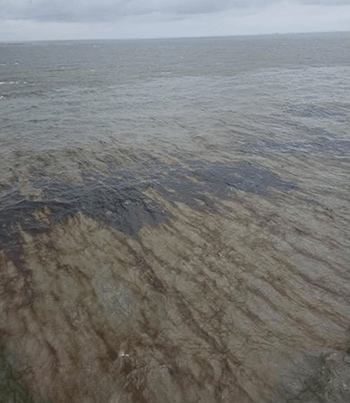
After 3 months of investigation, only a small connector leak has been identified in or near the Main Pass Oil Gathering system. According to the Coast Guard, that leak was not the source of the large November spill (pictured). The absence of findings raises many questions:

  • Is the Main Pass Oil Gathering system still being implicated? Surrounding pipelines?
  • Was a vessel or some other source responsible?
  • Were sheen samples fingerprinted and are those results definitive?
  • Given that the source has not been identified, what was the basis for the large (and rather sensational) spill volume estimate? The sheen was not indicative of a spill of that magnitude.
  • How much production has been shut-in since the slick was first identified? November production data indicate a GoM-wide oil production decline of ~80,000 bopd decline from September.

Given the public claims that were made about the size and potential implications of this spill, the authorities need to be more forthcoming regarding their findings to date.

Read Full Post »

MPOG System in red

On Nov. 17, the Coast Guard reported a “crude oil release” in the Gulf of Mexico near the Main Pass Oil Gathering (MPOG) company’s pipeline system southeast of New Orleans. After 3 weeks of investigation, no pipeline leak has been identified.

The cause and source of the incident remain under investigation. The entire length of the main pipeline has been assessed to date, along with 22.16 miles of surrounding pipelines with no damage or indications of a leak identified. Remotely operated vehicles (ROVs) and divers continue to reassess the main pipeline and surrounding pipelines as a sustained effort to locate the source of the suspected release.

US Coast Guard

So what was the source of the spill? Another pipeline? Vessel?

Read Full Post »