Feeds:
Posts
Comments

Posts Tagged ‘fracking’

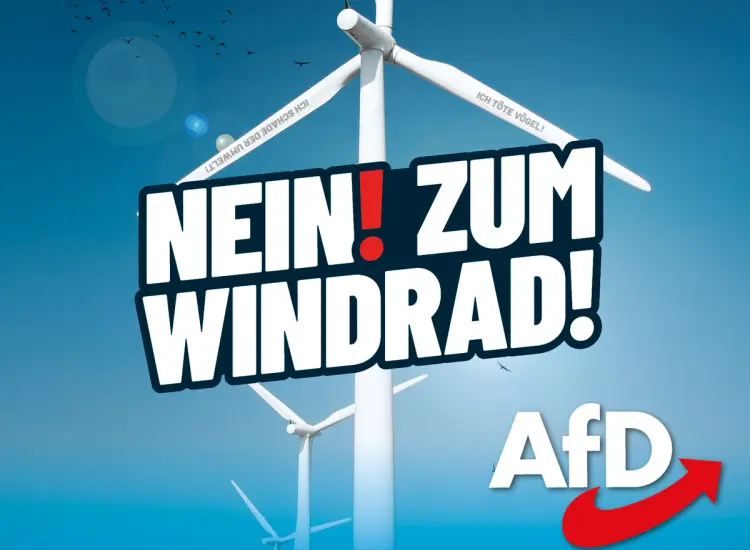
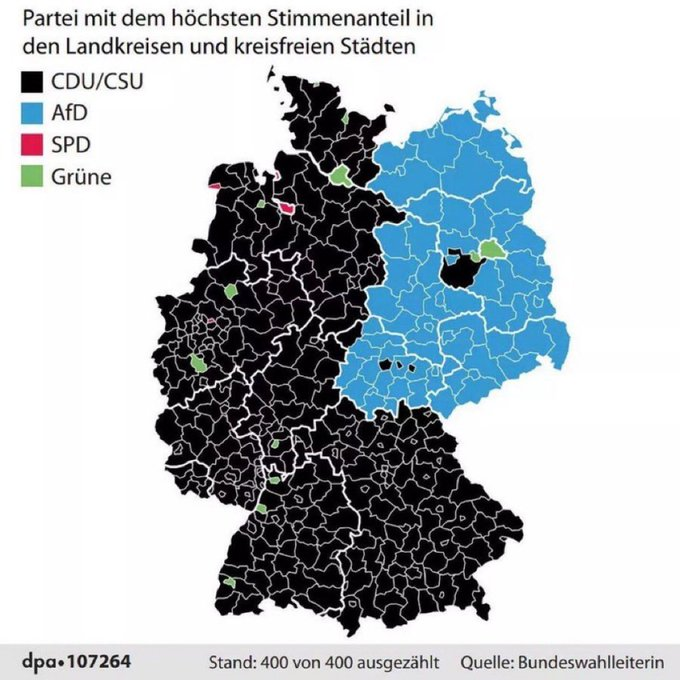
The nominally conservative CDU has vowed not to form a coalition with the “far-right” (actually conservative libertarian) AfD, and will thus have to join hands with the left-leaning SPD and Greens. This doesn’t bode well for the significant changes many believe are needed.

On the plus side for AfD supporters, the party’s growth in just 8 years has been most impressive:

  • 2017: AfD – 0 seats (4%)
  • 2021: AfD – 94 seats (12%)
  • 2025: AfD – 150+ seats (20%)

AfD was dominant in the East which fears a return of the Marxism they experienced prior to the “Wende.”
AfD’s energy policy (p.77) seems pretty sensible given the supply and cost challenges facing Germany. A few highlights:

  • The AfD supports “Protection of the Environment”, but not the “German Climate Protection Policy” and plans for “decarbonization” and the “Transformation of Society”. They want to end the perception of CO² as an exclusively harmful substance and stop Germany’s maverick policy in the reduction of CO² emissions.
  • Because the average output is so variable, renewable energy generators are not viable replacements for conventional large power stations.
  • Renewable sources necessitate a massive expansion of the electric grid systems and jeopardize grid stability.
  • Fracking: Explore Opportunities and Risks, Involve Citizens
  • Nuclear Energy: Explore Alternatives, Grant Lifetime Extensions in the Interim

Read Full Post »

Three years ago, the Colorado Oil and Gas Association brought smiles to our faces by recognizing North Face for their hypocrisy in refusing to sell jackets to an oil industry service company.

North Face, whose products are dependent on oil and gas, was given the Association’s first ever Customer Appreciation Award to draw attention to the company’s hypocrisy and chutzpah.

Fast forward three years and Chris Wright, the man behind the North Face award, has been nominated to be Secretary of Energy! BOE enthusiastically endorses this nomination!

Chris Wright’s bio: MIT engineer, shale gas innovator, entrepreneur, and more

Read Full Post »

This year’s presidential race features an oddity: a discussion about a ban on fracking. What’s striking is that such a conversation is happening at all. This talk takes participants through the Wayback Machine to the first two decades of this century, when hydraulic fracturing and horizontal drilling—together known as fracking—came to public attention. The U.S. was then the world’s largest importer of oil. Today it is energy-independent with, S&P Global estimates, more than 70% of its oil and more than 80% of its natural gas produced through fracking. The process has become essential to the nation’s energy supply and can’t be eliminated.

Not long ago the prospect of U.S. energy independence seemed fanciful. For more than four decades every president aspired to it, but their goal seemed unattainable. Many observers considered the U.S. destined to grow more dependent on imports. In recent years, however, America has achieved energy independence on a net basis. U.S. output is closing in on 13.5 million barrels of crude oil a day, exceeding that of perennial big producers Saudi Arabia and Russia by several million barrels per day. Add what are called natural-gas liquids, and the U.S. produces around 20 million barrels per day.

WSJ article

More from Dan Yergin

Read Full Post »

The Supreme Court has decided to allow the 9th Circuit decision on offshore well stimulation to stand.

From a regulatory and technical standpoint, the 9th Circuit decision is highly questionable. The limited well stimulation operations offshore California were conducted 9-31 years ago and were carefully reviewed and monitored. No fluids were released or escaped to the marine environment.

During the Obama administration (and under the capable leadership of Directors Brian Salerno and Abigail Ross Hopper), BSEE and BOEM conducted a Programmatic Environmental Assessment (EA) and issued a Finding of No Significant Impact (FONSI) from the use of specific well stimulation treatments in oil and gas activities on the Pacific OCS. The 9th Circuit decided that wasn’t enough and the SCOTUS chose not to review their decision.

Given the current state of Pacific offshore operations, the court decisions will have little or no effect on well activity now or in the foreseeable future. If the BSEE well permitting site is up-to-date, there have been no Pacific well operations in the past 3 years. For the 2 years prior to that, the only well operations were for plugging and abandonment purposes. Therefore, the main concerns are the decision to require an EIS prior to any future well stimulation operations, and perhaps more importantly, the implications of the decision on offshore operations elsewhere.

Read Full Post »

Read Full Post »

➡ Zero 2022 YTD well starts on the California OCS (per BSEE data the only well activity has been for plugging and abandonment purposes)

Many law suits including these cases:

Read Full Post »