Feeds:
Posts
Comments

Posts Tagged ‘first production’

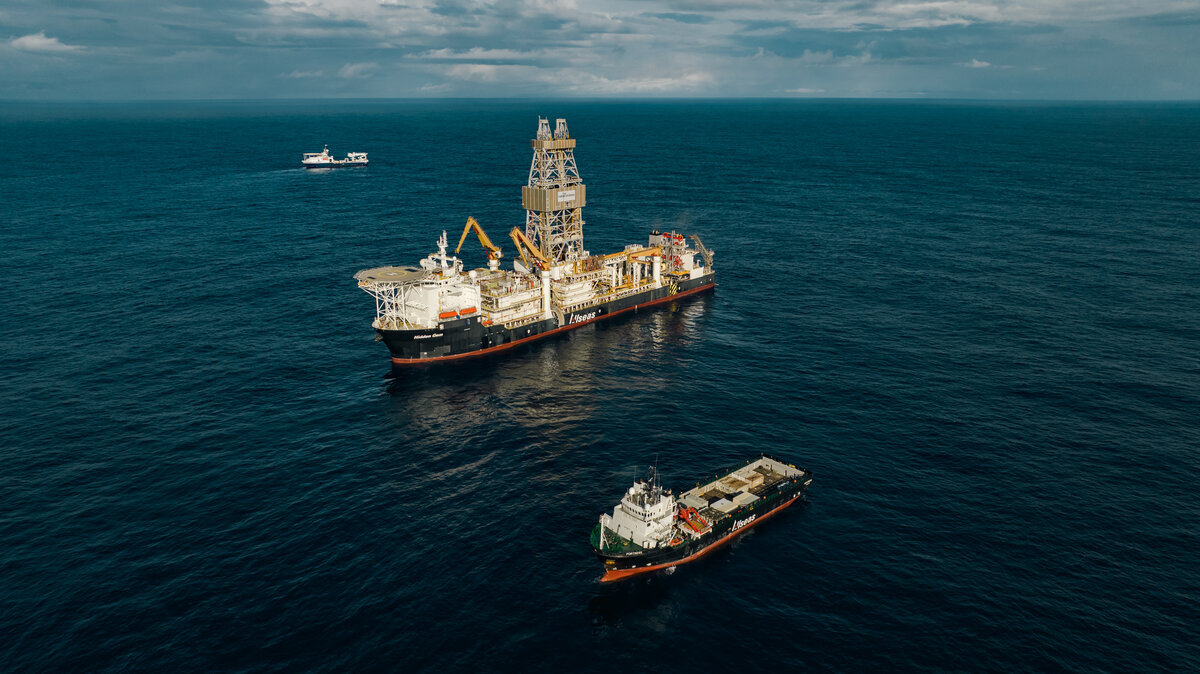
pictured:TMC pilot trials

Highlights from TMC’s Q2 update:

  • On August 11, 2025, TMC USA received notice of full compliance from the National Oceanic and Atmospheric Administration (NOAA) on its exploration applications, and reconfirmation that TMC USA has priority right over both exploration areas
  • Both applications entered the certification stage in late July, which we expect to be approximately 100 days
  • In light of recent U.S. regulatory developments, TMC expects to commence commercial production from the NORI-D Area in the fourth quarter of 2027 if we receive a commercial permit before scaling to an average annual production rate of 10.8 million tonnes of wet nodules per annum (Mtpa) at steady state (2031 through 2043) production, with an expected 18-year life of mine (LOM);

Meanwhile, after missing deadlines in 2020 and 2023, the International Seabed Authority (ISA) again failed to deliver a Mining Code as communicated in their 2023 roadmap during the second part of their 30thΒ session in July 2025. No new roadmap or new target date for adopting the final Mining Code has been agreed. The next ISA meeting is scheduled for March 2026. (Hence the importance of direct permitting through the US/NOAA.)
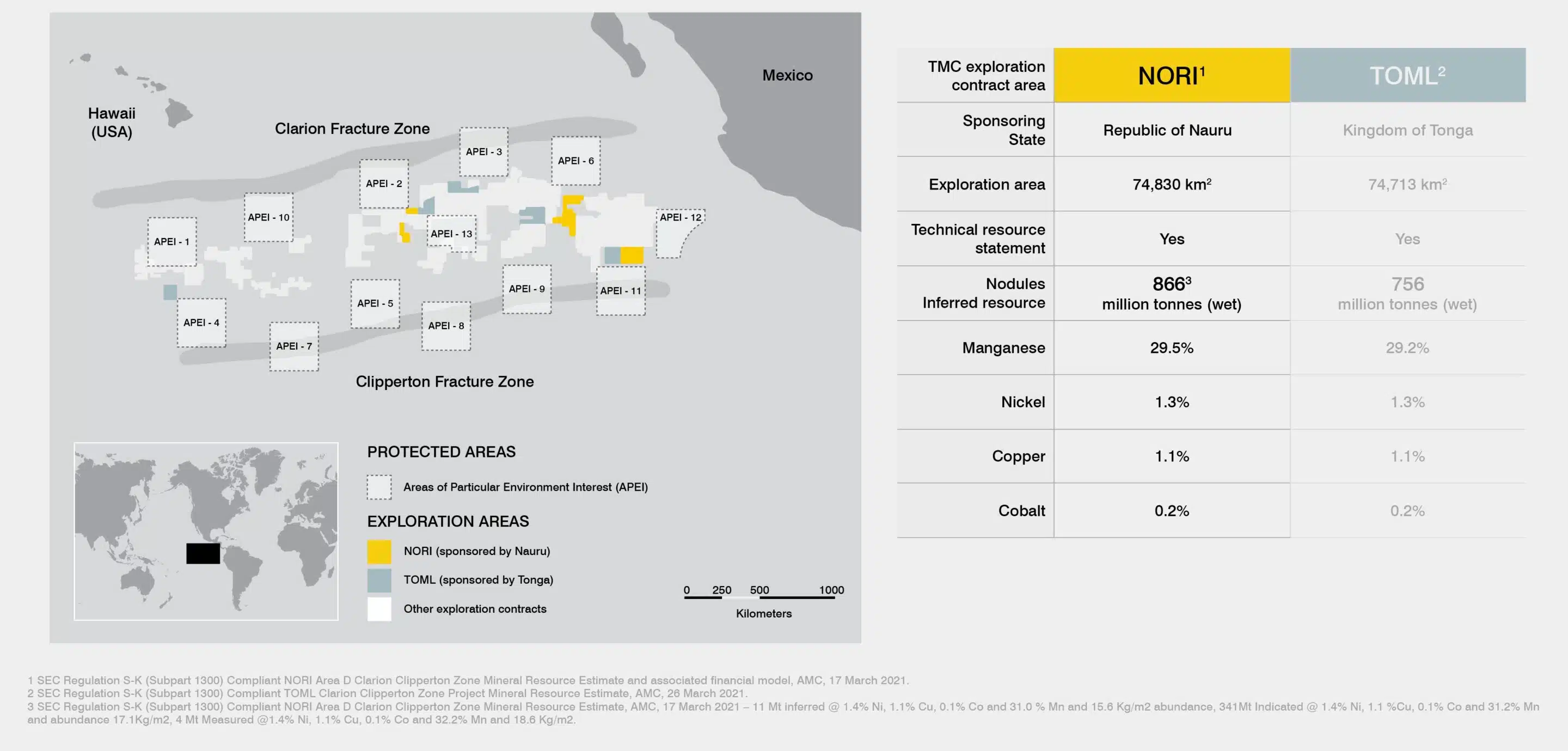

NORI area
polymetallic nodule

More posts about deep sea minerals

Read Full Post »

Winterfell from the water surface (5400′ water depth). The field is produced with subsea wells tied back to Oxy’s Heidelberg platform, which is 13 miles away. Deepwater development is characterized by high energy density and low facility density.

Beacon Offshore Energy (BOE, but not this blog πŸ˜‰) and its partners, all independent producers, have initiated production at the Winterfell project in the Green Canyon area of the Gulf of Mexico. The 3 initial wells are expected to produce 20,000 bbls of oil equivalent (again BOE πŸ˜‰) per day. The Winterfell partners are:

  • Beacon Offshore Energy, operator
  • Kosmos Energy
  • Westlawn Americas Offshore
  • Red Willow Offshore
  • Alta Mar Energy
  • CSL Exploration

Read Full Post »

converted semi-submersible initiates production at the Argyll field

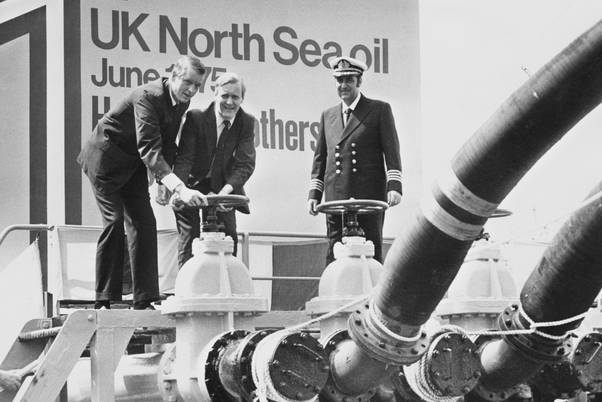
JL Daeschler, a pioneering subsea engineer who lives in Scotland, has fond memories of his interactions with Fred and Ferris Hamilton, the brothers whose company was the first to produce oil in the UK sector of the North Sea (1975). Their small company aced the super-majors by initiating production at the Argyll Field with subsea wells and the Transworld 58, a converted semi-submersible drilling rig. Their rig conversion was an early predecessor to the modern floating production units that have become the surface facilities of choice for deepwater development.

JL recalls that Ferris and Fred took time to discuss any problem with any employee. Should there be arguments, they were often followed by more relaxed discussions about sailing, cars, cooking, and other topics of mutual interest. The brothers would travel from Denver for the annual Christmas dinner in Aberdeen, and invited everyone from the warehouse crew to the production manager. There was a great sense of community among the employees and contractors.

As JL notes, there were no satellite positioning systems, and real time communications with the rig were short and limited to the normal marine radio channels. This was a remarkable era of achievement for the North Sea and the offshore industry, as operations expanded and technology advanced to support them. I have much respect for these offshore pioneers and their contributions to societies around the world.

Related articles:

British Secretary of State for Energy Tony Benn, center, with Frederic Hamilton and Captain Harry Koutsoukos opening a valve to release the first oil from the North Sea into the BP refinery on the Isle of Grain in 1975.

Read Full Post »