John Smith, decommissioning specialist and BOE contributor, has shared his comments (attached) on the Marine Fisheries Habitat Protection Act. This legislation would expand the successful reefing programs on the OCS by facilitating the conversion of retired production platforms into artificial reefs.
John Smith’s excellent decommissioning presentation at the recent Western States Petroleum Assoc. luncheon in Santa Barbara is attached. John used an amended version of Bob Byrd’s OTC powerpoint, adding slides on the proposed California Marine Legacy Act amendments.
For those who have been following the Santa Ynez Unit story, Harmony, Heritage, and Hondo are the platforms in that unit. Platform Harmony, where production resumed on the date of John’s presentation (5/15), is in 1198′ of water and is one of the world’s largest offshore structures.
This CBC story, which includes excellent video interviews, was brought to my attention by Newfoundlander Howard Pike, an engineer and offshore safety leader.
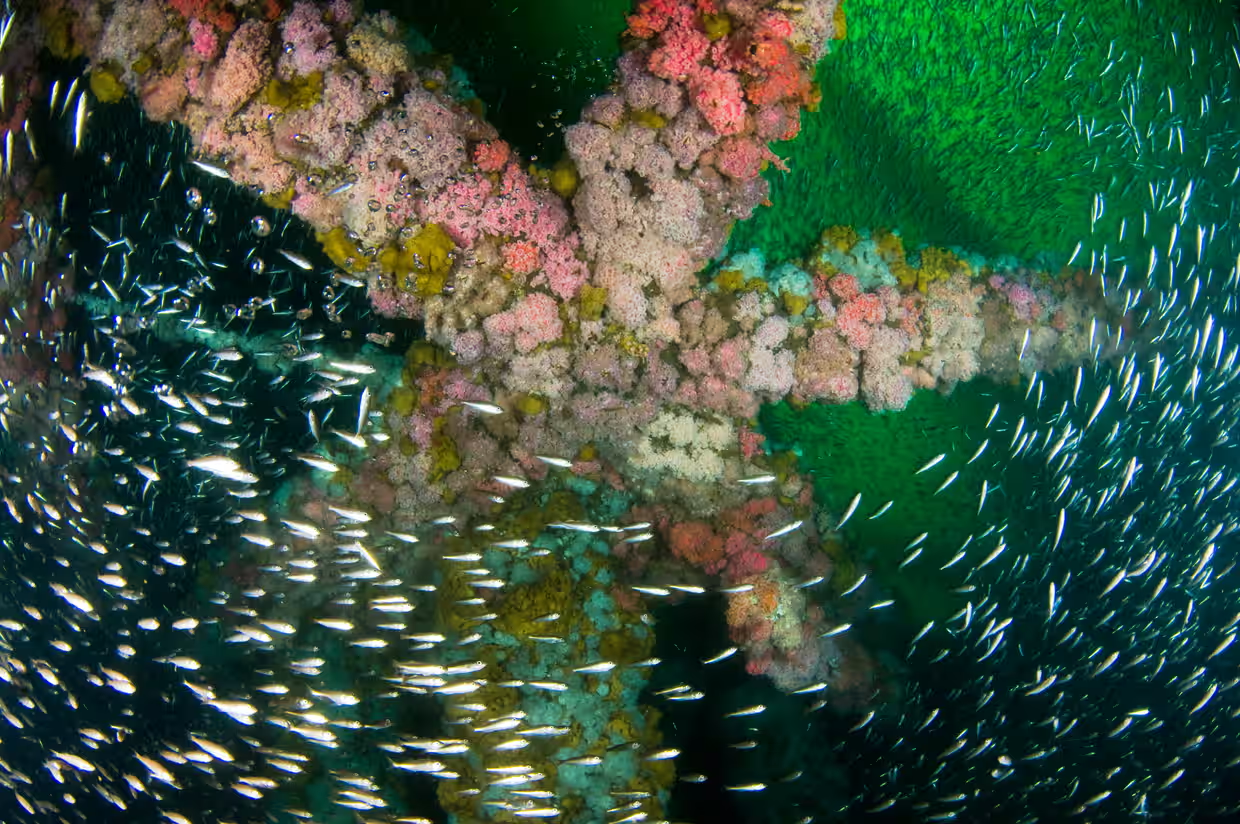
We know a lot about Rigs-to-Reefs, and the importance of active and reefed platforms in providing the habitat, shelter, and food that is necessary to increase biodiversity and productivity. However, the carbon reduction potential of artificial reefs has received little attention.
The linked CBC story is particularly interesting in that it includes interviews with artificial reef researchers who are assessing the carbon capture aspects. To date the results are encouraging:
As for the impact on climate change, the researchers say they have found some evidence that an artificial reef could hold more carbon compared to a natural reef.

 Bud's Offshore Energy (BOE)