“Country roads” take us to Moundsville, West Virginia where new records were set drilling a “postcard well.”
In addition to the records noted in the picture, these impressive company marks were achieved:
24-hour footage record: 12,370 feet
daily footage record: 2,774 feet/day
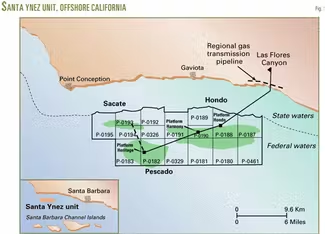
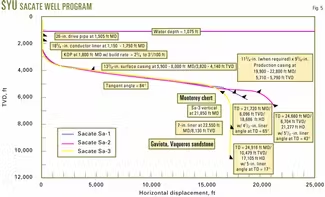
The record US offshore lateral well is in the Santa Ynez Unit, which has been much discussed on this blog and elsewhere in light of Sable Offshore’s efforts to resume production. In 2010, Exxon drilled a well with a horizontal reach of 6 miles from Platform Heritage into the Sacate field (see the diagrams below).
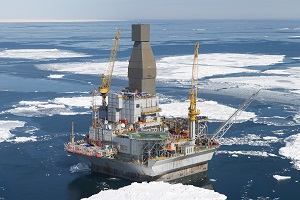
The world’s longest horizontal reach well appears to be the O-14 well drilled by the Sakhalin-1 Consortium in the Sea of Okhotsk, Russia, in April 2015. This well had a horizontal reach of 14,129 meters (46,358 feet).
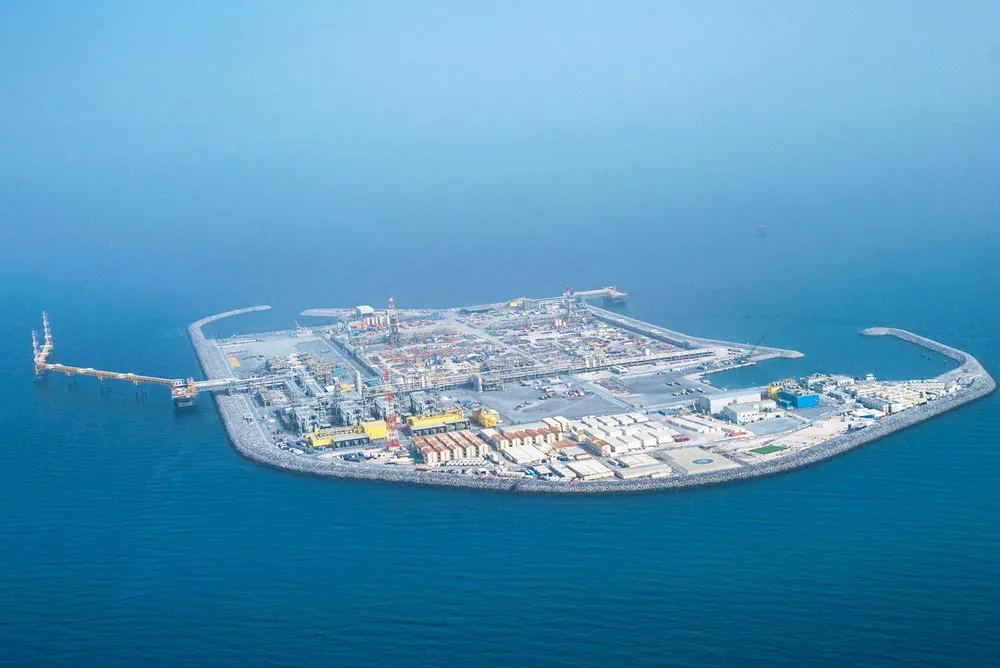
ADNOC, the Abu Dhabi National Oil Company, has the world record (2022) for the longest well (50,000′) in the Upper Zakum field. However, no horizontal reach distance is provided, so it is assumed that the Sakhalin well had the longer reach.
Artificial islands at Adnoc’s Upper Zakum field.Photo: Adnoc
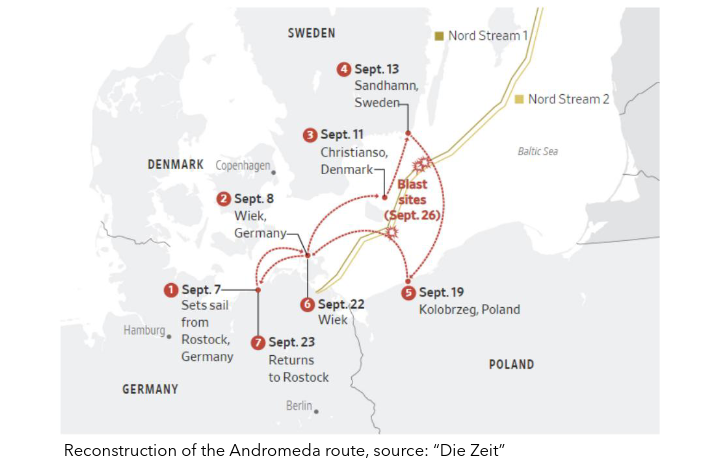
Just when we were settling on Der Spiegel’s account of the Nord Stream sabotage, Michael Kobs provides reasons for skepticism. Are the detailed revelations in Der Spiegel part of a coordinated effort to relieve governments of any responsibility and glorify the destruction of economically important pipelines?
“Since the German arrest warrant for a participant in the Nord Stream terrorist attack, efforts have also increased in Germany to portray the terrorist attack as a “legitimate” or even “admirable” war effort. However, the greatest effort is to relieve the burden on state actors. And so, since recently, the alleged perpetrators seem to be chatting without reservation, spreading out every little detail in front of journalists, and putting every (already revealed) fact in the “right” non-governmental light.” ~Michael Kobs
Meanwhile, independent journalist Jeffrey Brodsky continues to delve deeply into Nord Stream issues. A recent interesting and detailed piece refutes assertions that Gazprom and Russia somehow benefited from the Nord Stream attack. Mr. Brodsky provides evidence to the contrary concluding that the destruction of the pipelines has contributed significantly to Gazprom’s financial problems. He noted that:
Gazprom announced a loss of $6.9 billion for 2023, marking its first annual loss in more than two decades.
Nord Stream 1 supplied EU nations with a whopping 35% of all Russian gas imports.
Gazprom contributed $80 million of Russia’s $407 million in Federal govt revenues in 2022, and was a source of revenue that Russia would not want to jeopardize.
Unsurprisingly, the “experts” and politicians who argued that the Nord Stream sabotage would benefit Gazprom and Russia have failed to modify or correct their assertions. Mr. Brodsky concludes his detailed analysis as follows:
“However, despite the numerous facts that have emerged since the attack, the damage caused to Russia and Gazprom by the sabotage remains willfully ignored. Politicians and experts who claimed that the sabotage would be beneficial to Russia or Gazprom financially, legally or geopolitically seem to have merely skimmed the first chapters of the Nord Stream story. So far, almost none of them have publicly corrected themselves after hastily familiarizing themselves with its complex plot. But since the perpetrator of the sabotage has not yet been unmasked, they still have the opportunity to pre-order the unfinished sequel to the book. Perhaps it will end up being an international bestseller. ~ Jeffrey Brodsky
Putin suggests that people consider who had an interest in sabotaging the pipelines and who had the capability. He also asks why Germany isn’t allowing gas to flow through the one Nord Stream line that wasn’t damaged.
German investigators are sceptical of claims that Russian naval ships sabotaged the Nord Stream gas pipelines and are instead pursuing leads that point to the Ukrainian authorities, according to a report.
The vacuum of official information has been filled by speculation variously pinning the blame on the United States, Russia, the Ukrainian secret services and an unnamed businessman in Ukraine. All three states have denied responsibility.
“We don’t rule out anything, but that it is a state actor who is directly or at least indirectly behind this is of course our absolute main scenario, given all the circumstances.”
This intelligence leak seems rather convenient in that it absolves both the US and Ukrainian governments, but who knows?
U.S. officials said that they had no evidence President Volodymyr Zelensky of Ukraine or his top lieutenants were involved in the operation, or that the perpetrators were acting at the direction of any Ukrainian government officials.
Whoever blew up the Nord Stream pipelines was not entirely successful in that one of the Nord Stream 2 lines was apparently undamaged. What is next for that line? Will the two Nord Stream 1 and the other Nord Stream 2 pipelines be repaired?
Glomar Worker continues to check both strings of NordStream 2 pipeline.
Likely objective is to check String B integrity for certification to be re-commissioned, and to assess cost/scope of repairing String A.
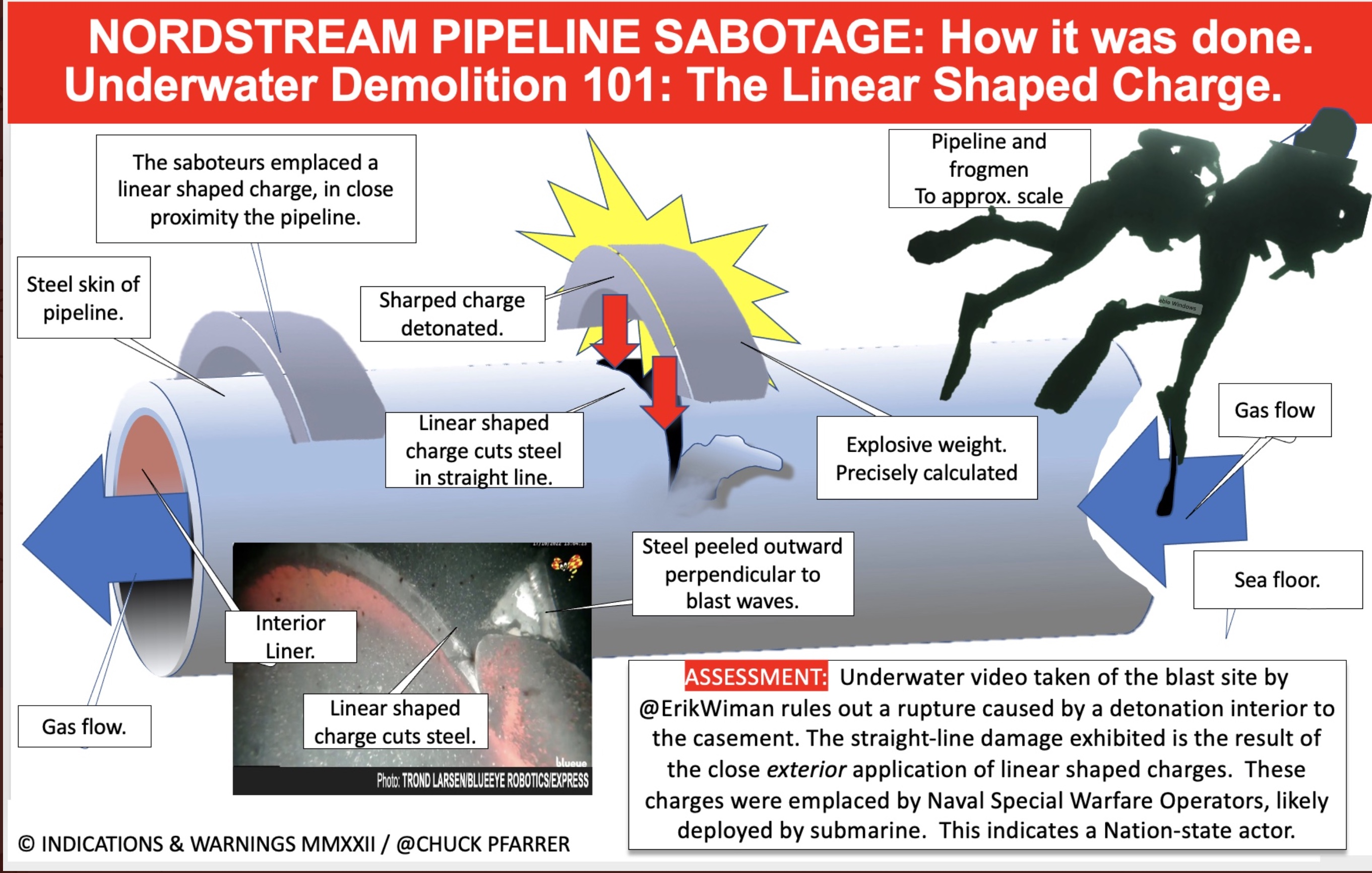
Last June, the Navy divers, operating under the cover of a widely publicized mid-summer NATO exercise known as BALTOPS 22, planted the remotely triggered explosives that, three months later, destroyed three of the four Nord Stream pipelines, according to a source with direct knowledge of the operational planning.
Victoria Nuland’s glee over the Nord Stream damage (video clip below) is particularly galling to those responsible for offshore production, worker safety, and environmental protection. Does she realize that the Gulf of Mexico has more than 13,000 miles of active offshore pipeline that could be similarly targeted, and that the US has 2.6 million miles of onshore pipelines?
Whether or not the US was involved in the Nord Stream sabotage, Ms. Nuland’s schadenfreude is disturbing given the economic and security implications of the attack.


 Bud's Offshore Energy (BOE)